

Florida’s last two governors, Rick Scott and Charlie Crist, to battle in November
Crist, who served a single term as governor as a Republican, wins the Democratic nomination to face off with incumbent Republican Scott
 TALLAHASSEE, Florida (CFP) — This November, Florida voters will choose between their current governor and his immediate predecessor in what’s likely to be an expensive and pitched battle for the state’s top job.
Former Governor Charlie Crist won the Democratic nomination for governor in the August 26 primary, besting former State Senator Nan Rich with 74 percent of the vote. Republican Governor Rick Scott, 61, did even better in his primary, taking 88 percent against two little known opponents.
Crist’s win caps a remarkable political makeover for a man who started out in politics as a conservative Republican, serving as attorney general before getting elected governor in 2006.
In 2010, he gave up the governorship to pursue an open U.S. Senate seat. When he fell way behind the eventual winner, GOP U.S. Senator Marco Rubio, in the polls, he bolted the GOP and ran unsuccessfully as an independent. in 2012, after endorsing President Obama for re-election, he became a Democrat and then jumped into the governor’s race.
In her campaign, Rich tried to make the case to Democrats that, unlike Crist, she was a longtime party loyalist. But her campaign never caught traction.
In a victory speech to supporters in Fort Lauderdale, Crist said the general election will be “about making sure that Floridians get their Florida back.”
“Our Florida is one where fairness and opportunity trump money and partisanship,” he said. “Our Florida is one where common sense and compassion come before cynicism and cronyism. And most importantly, our Florida is one where the government works for and answers to the people, not the special interests.”
Scott did not make a public speech on election night, instead releasing a statement saying the November election will be about “talk versus action.”
“That means Florida will have a choice between a governor who sent our state into a tailspin and a governor who gets results,” he said. “Charlie Crist failed as governor, lost 830,000 jobs, and tried to run off to Washington – and now he wants his job back.”
Scott, an multimillionaire former health care executive, pumped $75 million of his own money to win the governorship in 2010 in his first run for political office. He is expected to have a significant financial advantage over Crist in a state with numerous, expensive media markets, although Crist has so far raised more than $20 million.
Polls show the race as a dead heat with a little more than two months left before the general election.
U.S. Rep. Scott DesJarlais wins Tennessee GOP nod after opponent concedes
State Senator Jim Tracy decides not to contest 38-vote loss in the state’s 4th District
♦By Rich Shumate, Chickenfriedpolitics.com editor
 MURFREESBORO, Tennessee (CFP) — U.S. Rep. Scott DesJarlais has won renomination in Tennessee’s 4th District after his Republican primary opponent, State Senator Jim Tracy, decided to concede rather than contest his razor-thin 38-vote loss in the August 7 primary.
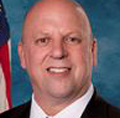
U.S. Rep. Scott DesJarlais
Tracy’s decision caps a remarkable comeback by DesJarlais, who overcame a messy personal scandal and a cancer diagnosis to clear a major hurdle in his quest to return for a third term in Congress.
In an August 25 statement, Tracy said he didn’t want to put state and local elections officials and his supporters “through additional weeks of litigation, with uncertainty as to who the nominee will be.”
“A contest would not be the right thing for the Republican Party and the conservative cause in Tennessee,” he said.
DesJarlais won by just 38 votes out of more than 76,000 cast in the 4th District, which takes in the south-central part of the state. Given the district’s strong GOP tendencies, he will be favored for re-election in November over Democrat Lenda Sherrell, a retired accountant from Monteagle.
DesJarlais, 49, was facing voters for the first time since lurid details emerged from the case file of his bitter 2001 divorce from his first wife. In it, the congressman admitted having a string of extra-martial affairs and — perhaps even more damaging for an avowed right-to-life lawmaker — encouraging his then-wife to have two abortions.
DesJarlais (pronounced Dez-yar-lay), a medical doctor, also admitted having relationships with two female patients, which prompted the Tennessee State Board of Medical Examiners to reprimand him for unprofessional conduct and fine him $500.
Details about DesJarlais’s divorce became an issue in his contentious 2012 re-election campaign, which he won with just 56 percent of the vote. However, he successfully fought to prevent release of the full transcript of the case file until after the election.
In July, in the middle of the primary campaign, he announced that he had been diagnosed with neck cancer and was undergoing chemotherapy.
Trial set for September in McDaniel’s challenge in Mississippi Senate runoff
Attorneys for U.S. Senator Thad Cochran want judge to dismiss McDaniel’s suit because it was filed too late
♦By Rich Shumate, Chickenfriedpolitics.com editor
 JACKSON, Mississippi (CFP) — State Senator Chris McDaniel’s legal challenge to results of his June 24 GOP U.S. Senate primary runoff loss in Mississippi will begin September 15, a state judge has ruled.
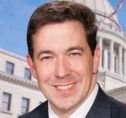
State Senator Chris McDaniel
In an August 21 order, Hollis McGehee, the retired judge appointed to hear McDaniel’s challenge, said the trial must be completed by October 3 — three weeks after the state’s deadline for printing ballots for the November election. The trial will be held in Jones County, where McDaniel lives and where his suit was filed.
McDaniel went to court to overturn the results of the runoff, asking McGehee to either declare him the U.S. Senate nominee instead of incumbent U.S. Senator Thad Cochran or order another vote. Certified results from the runoff show Cochran beating McDaniel by 7,667 votes.
But attorneys for Cochran are asking McGehee to dismiss the case, saying that McDaniel missed a 20-day deadline to go to court to overturn the election. The judge has set a hearing on Cochran’s motion for August 28.
McDaniel led Cochran in the first round of voting on June 3. But after making direct appeals to Democratic and independent voters to cross over and vote in the runoff, Cochran erased McDaniel’s lead and won by 7,667 votes — a move that enraged McDaniel’s supporters.
About 67,000 more people voted in the runoff than in the primary, and in Hinds County — which includes the predominantly black city of Jackson — Cochran’s margin of victory was 11,000 votes, nearly double what it was in the first round.
State law only allows voters to cross over to vote in the Republican runoff if they didn’t vote in the Democratic primary in the first round. McDaniel’s attorney, Mitch Tyner, has said there were at least 3,500 crossover votes that should not have been allowed.
Tyner also maintains another 9,500 votes were “irregular,” and 2,275 absentee ballots were improperly cast. Those votes, together, are more than Cochran’s margin of victory.
McDaniel went to court after the executive committee of the Mississippi Republican Party declined his request to overturn the results of the runoff and declare him the winner.

U.S. Senator Thad Cochran
The bitter Senate race in Mississippi pitted Cochran and the state’s Republican establishment against Tea Party activists and outside conservative groups — such as the Senate Conservatives Fund, FreedomWorks and the Club for Growth — that strongly backed McDaniel.
Cochran was one of five Southern Republican senators targeted in primaries this year. All five survived.
If Cochran survives the legal challenge, he will face former Democratic U.S. Rep. Travis Childers in November.
Florida judge upholds new U.S. House map, but it won’t be used until 2016
Leon County Circuit Judge Terry Lewis’s ruling clears the way for the state’s August 26 primary
♦By Rich Shumate, Chickenfriedpolitcs.com editor
TALLAHASSEE, Florida (CFP) — Just days before Florida’s primary, a state judge has approved a redrawn map for the state’s 27 congressional districts but delayed its implementation until the 2016 elections.

Florida Circuit Judge Terry Lewis
The August 22 ruling by Leon County Circuit Judge Terry Lewis clears the way for the August 26 primary to proceed without the possibility of a special election later in the year under the redrawn map.
The ruling was a victory for the leadership of the GOP-controlled legislature, who maintained that imposing the new map now would have wreaked havoc on the state’s electoral process.
“Thankfully, the court listened to supervisors of elections and the Secretary of State and rejected plaintiffs’ plan, which would have thrown the 2014 elections into chaos and could have resulted in our state being without congressional representation for weeks or even months,” said State Senate President Don Gaetz in a statement.
However, the groups that sued to strike down the map, including the League of Women Voters, say they will appeal the ruling, contending that the changes made by the legislature during a special session earlier in the month didn’t go far enough to fix the unconstitutional gerrymandering that prompted Lewis to strike down the original map.
Lewis ruled that the new map “adequately addresses the constitutional deficiencies” he found in the original map drawn after the 2010 Census.
While conceding that alternatives offered by the plaintiffs might be less gerrymandered, Lewis said the legislature isn’t required “to produce a map that the plaintiffs, or I, or anyone else might prefer.”
“The legislature is only required to produce a map that meets the requirements of the constitution,” Lewis said. He also said the plaintiffs had failed to prove that using the new map this year was “legally and logistically doable.”
In July, Lewis ruled that two districts in northwestern and central Florida — the majority black 5th District and the Republican-leaning 10th District — violated two constitutional amendments Florida voters approved in 2010 designed to limit political gerrymandering.
Under the new rules, districts cannot be drawn to benefit any political party and must be geographically compact. However, the amendments left redistricting in the hands of legislators, rather than turning it over to an independent outside panel.
In the original map, the 5th District, held by Democratic U.S. Rep Corrine Brown, was a majority black district that meandered from Jacksonville over to Gainesville and then down to Orlando. At one point, it is the width of a highway. The 10th District, held by Republican U.S. Rep. Daniel Webster, was anchored in central Florida west of Orlando but had an appendage that wrapped around Orlando to take in GOP voters to the east in Seminole County.
Lewis ruled that the map draw packed black voters into the 5th District to make surrounding districts more Republican and that the appendage was added to the 10th District to help Webster, both of which were unconstitutional.
In the new map, the 5th District still runs from Jacksonville to Orlando, but some black voters in the Orlando area were shifted to adjacent districts and some more rural areas were added south of Jacksonville to make the district geographically wider. The new district is 48 percent black. The new map also removed the appendage from Webster’s district.
Because House districts must have equal population, the changes to those two districts required slight changes in five surrounding districts in central Florida.
The League of Women Voters proposed a different map that would have the 5th District running due west from Jacksonville past Tallahassee — a change that would have required a wholesale revision of the map statewide.
A Democratic alternative rejected by the legislature didn’t as far as the plaintiff’s map, but it would have made the 7th and 10th districts more evenly split between Republicans and Democrats.
Although Florida is evenly divided politically, Republicans enjoy a 17-10 advantage in the state’s congressional delegation, largely due to their control of the redistricting process. The new map is not expected to change the delegation’s partisan balance.
Poll: Kay Hagan and Thom Tillis in dead heat in North Carolina U.S. Senate race
Poll has Democrat Hagan and Republican Tillis within the margin of error
♦By Rich Shumate, Chickenfriedpolitics.com
 RALEIGH (CFP) — Democratic U.S. Senator Kay Hagan and her GOP challenger, State House Speaker Thom Tillis, are in a statistical dead heat in Senate race in North Carolina, a new poll shows.

U.S. Senator Kay Hagan
The Suffolk University/USA Today poll showed Hagan’s support at 45 percent to 43 percent for Tillis, which was within the poll’s margin of error of plus or minus 4.4 percent.
The poll found a significant gender gap in the race. Hagan held an 18-point lead among women, while Tillis had a 14-point lead among men.
Hagan, 61, who is seeking a second term, is one of the top Republican targets in this election cycle. Tillis, 53, won a hotly contested GOP primary to win the right to take her on.
Outside groups supporting both candidates have already poured more than $10 million into the race.
 Chicken Fried Politics