
Home » 2014 (Page 4)
Yearly Archives: 2014

Clinton and Giuliani appear in ads for Florida candidates they once opposed
Clinton calls Democrat Charlie Crist “the people’s governor,” as Giuliani slams Crist in an ad for Republican Rick Scott
♦By Rich Shumate, Chickenfriedpolitics.com
 MIAMI (CFP) — Just eight years after working to defeat Charlie Crist in the 2006 Florida governor’s race, former President Bill Clinton has cut a new television ad touting Crist as “the people’s governor.”
In the ad, which began airing statewide October 28, Clinton tells voters the Republican-turned-independent-turned-Democrat “really cares about making your life better.”
“I hope you’ll stand with Charlie. He needs your vote.”
Not to be outdone in the surrogate wars, the campaign of Crist’s opponent, Republican Governor Rick Scott, began airing a clip of a recent speech by former New York City Mayor Rudy Giuliani in which he slams the party-switching Crist.
“I’ve never met a person in politics that I disrespect more than Charlie Crist,” Giuliani said.
When Crist ran for governor in 2006 as a Republican, Clinton came to the Sunshine State to campaign for his opponent, former Democratic U.S. Rep. Jim Davis, while Giuliani campaigned for Crist.
In 2010, after Crist decided to forsake Tallahassee and run for the U.S. Senate as an independent, Giuliani supported one of Scott’s opponents, former Attorney General Bill McCollum, in the GOP primary.
With less than a week to go before the election, polls show the race between Scott and Crist is too close to call.
Watch the ads featuring Clinton and Giuliani:
Mississippi Supreme Court ends Chris McDaniel’s challenge in GOP U.S. Senate runoff
State’s highest court upholds lower court ruling that McDaniel waited too long to file suit
♦By Rich Shumate, Chickenfriedpolitics.com editor
 JACKSON, Mississippi (CFP) — The Mississippi Supreme Court has ended State Senator Chris McDaniel’s attempt to overturn his loss in the state’s GOP primary runoff for the U.S. Senate to incumbent Senator Thad Cochran.
In a 4-to-2 decision handed down October 24, the state’s highest court agreed with a lower court that McDaniel waited too long to challenge the results from the June 24 runoff.
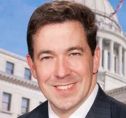
State Senator Chris McDaniel
While saying McDaniel disagreed with the decision, his attorney, Mitch Tyner, issued a statement saying that the ruling would allow Mississippi conservatives to “move forward into 2015.”
The Cochran campaign issued a statement saying the ruling “reconfirms the voters’ choice of Thad Cochran as the Republican nominee for U.S. Senate.”
Certified results from the June 24 runoff showed McDaniel losing to Cochran by just 7,667 votes.
McDaniel led Cochran in the first round of voting on June 3. But the Cochran campaign came from behind by making direct appeals to Democratic and independent voters to cross over and vote in the runoff — a move that enraged McDaniel’s supporters.
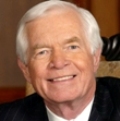
U.S. Senator Thad Cochran
About 67,000 more people voted in the runoff than in the primary, and in Hinds County — which includes the predominantly black city of Jackson — Cochran’s margin of victory was 11,000 votes, nearly double what it was in the first round.
State law only allows voters to cross over to vote in the Republican runoff if they didn’t vote in the Democratic primary in the first round. McDaniel’s campaign contended that there were enough improper crossover votes to alter the outcome of the election.
The bitter Senate race in Mississippi pitted Cochran and the state’s Republican establishment against Tea Party activists and outside conservative groups — such as the Senate Conservatives Fund, FreedomWorks and the Club for Growth — that strongly backed McDaniel.
Cochran was one of five Southern Republican senators targeted in primaries this year. All five survived.
Cochran is facing former Democratic U.S. Rep. Travis Childers in the general election. Polls show him with a double-digit lead.
Polls: Georgia’s races for U.S. Senate and governor appear headed for runoffs
None of the major candidates in either race is above the 50 percent threshold required for a win under the state’s unique election law
♦By Rich Shumate, Chickenfriedpolitics.com editor
 ATLANTA (CFP) — Races for U.S. Senator and governor in Georgia appear heading for December runoffs, thanks to close races, support for third-party Libertarians and the Peach State’s unique requirement of general election runoffs if no candidate wins a majority on election day.
A runoff could leave control of the Senate hanging in the balance until January 6 if Georgia’s race is needed to decide the balance of power.

Democratic nominee Michelle Nunn
Recent polling in the Senate race between Democrat Michelle Nunn and Republican David Perdue shows both candidates neck-and-neck within the margin of error but short of 50 percent.
The Libertarian candidate Amanda Swafford, a lawyer and former city councilwoman in Flowery Branch, is polling between 3 and 6 percent – enough to cause a runoff if the battle between Perdue and Nunn is close.
Likewise, in the race for governor, the Republican incumbent, Governor Nathan Deal, and his Democratic challenger, State Senator Jason Carter, are within the margin of error but below 50 percent, with Libertarian Andrew Hunt, an Atlanta technology executive, polling at about 5 percent.
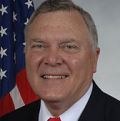
Governor Nathan Deal
Georgia is the only state in the union that has a general election runoff. The runoff for governor would be December 2, but the runoff for Senate would not happen until January 6.
Louisiana has a slightly different system in which candidates from all parties run in a primary in November, with a runoff set for December 6 if no candidate gets a majority.
The U.S. Senate race in Louisiana also appears to be heading for a runoff, with recent polls showing both incumbent U.S. Senator Mary Landrieu and her GOP challenger, U.S. Rep. Bill Cassidy, polling in the low to mid 40s.
In the Georgia Senate race, Nunn and Perdue, both political newcomers, are seeking the seat of retiring Republican U.S. Senator Saxby Chambliss. Nunn is the daughter of former U.S. Senator Sam Nunn, while Perdue is a cousin of former Governor Sonny Perdue.
In the governor’s race, Carter, the grandson of former President Jimmy Carter, has run a surprisingly strong campaign against Deal, who is seeking a second term as the state’s chief executive after serving more than 17 years in Congress.
Deal’s prospects for re-election may have been harmed by the state’s sluggish response to a January snowstorm that paralyzed metro Atlanta.
Four southern U.S. Senate races are still too close to call
GOP holding leads in Arkansas and West Virginia; Democrats holding tough in Georgia and Kentucky
♦By Rich Shumate, Chickenfriedpolitics.com editor
 WASHINGTON (CFP) — Two weeks out from election day, races for four southern U.S. Senate seats — two held by each party — are still too close to call, with control of the Senate hanging in the balance.
The latest polling shows races in North Carolina, Kentucky and Georgia are within the margin of error, while the race in Louisiana now seems certain to be heading toward a December runoff.
Depending on how these Southern races turn out, the question of which party will control the Senate could linger for more than a month before runoffs in Louisiana and possibly Georgia.
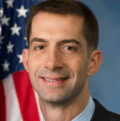
U.S. Rep. Tom Cotton
However, Republicans appear poised to pick up an open Democratic seat in West Virginia, and GOP U.S. Rep. Tom Cotton appears to have opened up a small lead over incumbent Democratic U.S. Senator Mark Pryor in Arkansas.
Democrats hold only eight out of 28 southern Senate seats. One of those seats, in West Virginia, is likely gone, and three others — in Arkansas, Louisiana and North Carolina — are in jeopardy.
The good news for Democrats is that two GOP-held seats, in Kentucky and Georgia, have turned out to be surprisingly competitive, despite the Republican tilt in both of those states.
Here are the current states of the southern Senate races:
Arkansas: The race between Cotton and Pryor has been neck-and-neck for the better part of a year, as outside groups poured tons of money into the Natural
State. But a Talk Business and Politics/Hendrix College poll released October 15 showed that Cotton has opened up an 8-point lead, the third media poll in a row that put the challenger ahead.
Louisiana: Recent polling shows Democratic U.S. Senator Mary Landrieu and her chief Republican rival, U.S. Rep. Bill Cassidy, about even but both far from the 50 percent either would need to avoid a runoff in the state’s jungle primary, where all candidates from all parties run in the same race. That would set up a December 6 runoff between the two, a head-to-head match-up that’s still too close to call.
West Virginia: This race is to pick a successor to retiring Democratic U.S. Senator Jay Rockefeller, and it looks increasingly like a GOP pickup, with U.S. Rep. Shelley Moore Capito opening up a significant lead over Democratic Secretary of State Natalie Tennant. A CBS News/New York Times/YouGov poll in early October had Capito ahead by 23 points.
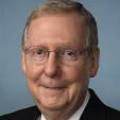
Senate Minority Leader Mitch McConnell
Kentucky: The Senate’s top Republican, Minority Leader Mitch McConnell, is in a pitched battle with Democratic Secretary of State Alison Lundergan Grimes. Recent polls have shown the race as either too close to call or with McConnell slightly in the lead.
Georgia: This race, to pick a successor to retiring Republican U.S. Senator Saxby Chambliss, is a contest between two political newcomers, Republican David Perdue and Democrat Michelle Nunn. Despite Georgia’ GOP tilt, Nunn has run a strong race, and the latest polling shows the contest within the margin of error. An interesting twist in Georgia is that if neither Perdue nor Nunn wins a majority, they would meet in a runoff December 10 — a possibility if the race is close and votes are syphoned off by third-party candidates.
North Carolina: Democratic U.S. Senator Kay Hagan is seeking a second term against Republican State House Speaker Thom Tillis. Recent polling has shown this race is also within the margin of error.
Debate between Crist and Scott in Florida starts off with nasty spat over a fan
Republican Gov. Rick Scott refuses to take the stage because of a fan placed under Crist’s podium
DAVIE, Florida (CFP) — A gubernatorial debate in Florida took a bizarre turn, when Republican Gov. Rick Scott initially refused to take the stage after a fan was placed under the podium of Democrat Charlie Crist, in apparent violation of the rules of the October 15 debate.

Florida Governor Rick Scott
Scott eventually relented and took the stage at Broward College, but not before Crist got into a contretemps with the debate moderator, Elliott Rodriguez, over whether the fan violated the rules.
“Are we really going to debate about a fan?” Crist said.
Asked later in the debate why he wanted to use a fan despite the rules, Crist said, “Why not?”
“Is there anything wrong with being comfortable? I don’t think there is.”
During the debate, Scott continued a line of attack that he has made throughout the campaign that during Crist’s tenure as governor between 2007 and 2011 — when Crist was a Republican — the state lost 832,000 jobs. Scott charged that Crist was so consumed by his ambition for higher office that he didn’t do enough to promote economic development.
“He didn’t want to do the job. He wanted to be vice president and then ran against Marco Rubio for the Senate,” Scott said. “Charlie is a lot of talk. But he’s not a lot of action.”

Former Florida Governor Charlie Crist
But Crist responded that he could not be held responsible for jobs lost during the Great Recession.
“The people of Florida know that I didn’t cause the global economic meltdown,” he said. “They are smarter than that.”
Crist also hit Scott for not pushing through the private option expansion of Medicaid that was part of Obamacare in Florida.
“People are hurting, and they are suffering,” he said, adding that “I don’t know why” Scott hasn’t pushed for Medicaid expansion.
But Scott responded that Crist was actually governor when Obamacare was passed.
“Did he go to the legislature to pass this because it’s a great idea? No,” Scott said, adding that “Obamacare is a bad law.”
To a chorus of boos from the audience, Crist also raised a line of attack that he has made throughout the campaign over fraud charges lodged against Scott’s former company, HCA, in 1997.
“The truth hurts sometimes,” Crist said. “You pled the Fifth 75 times.”
Scott was never charged in connection with the HCA fraud, although the company paid a $600 million fine. The same issue was unsuccessfully raised against Scott in 2010 when he was first elected governor.
Scott was also pressed on whether he thought Florida’s constitutional ban on same-sex marriage, passed by voters in 2008, was discriminatory.
“While I believe in traditional marriage, we have to understand people have different views,” Scott said, noting that the ban is currently being challenged in court.
Pressed further if he thought the ban was discriminatory, Scott said only, “I don’t believe in discrimination.”
Crist came back swinging, saying he supported same-sex marriage, even though in 2008, when he was a Republican governor, he supported that amendment. Scott then pounced on Crist’s inconsistency.
“We don’t know what Charlie believes on this issue because he’s taken every side on this issue,” Scott said.
Polls have shown the race for governor in the Sunshine State is too close to call.
Crist was elected governor as a conservative Republican in 2006. In 2010, he gave up the governorship to pursue a U.S. Senate seat, first as a Republican and then as an independent. He became a Democrat in 2012.
 Chicken Fried Politics