
Home » 2014 (Page 9)
Yearly Archives: 2014

Bob Barr’s political comeback falls short in Georgia
Barr, a former GOP congressman and 2008 Libertarian presidential candidate, loses U.S. House runoff
♦By Rich Shumate, Chickenfriedpolitics.com editor
 MARIETTA, Georgia (CFP) — Bob Barr, a former GOP congressman who bolted the party to seek the Libertarian presidential nomination in 2008, has fallen short in his bid to return to Congress as a Republican.
 Barr, 65, lost the GOP runoff for Georgia’s open 11th District U.S. House seat to former State Senator Barry Loudermilk, who took 69 percent of the vote to 31 percent for Barr. Loudermilk had led in the first round of balloting on May 20.
Loudermilk’s win means he will be headed to Congress because no Democrat filed to run in the 11th District, a heavily Republican enclave in Atlanta’s northwest suburbs.
Barr, a former federal prosecutor, was first elected to Congress in the Republican wave of 1994. But he was defeated in a primary in 2002 after the Democratic-controlled Georgia legislature dismembered his district, forcing him to run against another Republican incumbent, former U.S. Rep. John Linder.
By 2006, Barr had left the GOP for the Libertarian Party and was its presidential nominee in 2008. He won just 0.4 percent of the national vote.
There is precedent for Barr’s attempt at a Republican comeback. Former U.S. Rep. Ron Paul returned to Congress as a Republican in 1996 after running as the Libertarian nominee in 1988.
The 11th District seat opened up when U.S Rep. Phil Gingrey made an unsuccessful bid for the U.S. Senate.
Reality star with drug conviction files to run against U.S. Sen. Lindsey Graham
Thomas Ravenel, a once-rising GOP political star in South Carolina, seeks a comeback as an independent
♦By Rich Shumate, Chickenfriedpolitics.com editor
 COLUMBIA, South Carolina (CFP) — After successfully fending off a gaggle of GOP primary challengers, U.S. Senator Lindsey Graham will likely face a Republican-turned-independent with a checkered and colorful past in November.

Senate candidate Thomas Ravenel
Thomas Ravenel, 51, who resigned as South Carolina state treasurer in 2007 after being arrested on cocaine distribution charges, collected more than 16,000 signatures to qualify as independent. If those signatures are certified, he will be on the ballot against Graham this fall.
Ravenel spent 10 months in federal prison on the drug charges. He is also a cast member on the Bravo network’s reality show Southern Charm.
As a convicted felon, Ravenel won’t be able to vote for himself, although federal law does not prohibit felons from running for federal office.
Speaking to reporters after delivering his petition signatures on July 14, Ravenel admitted he was an “imperfect messenger.”
“My personal life is my problem,” he said. “Lindsey Graham’s public life is your problem — everyone’s problem.”
In recent media interviews, Ravenel has touted his libertarian positions, saying one of his political causes would be drug legalization.
Ravenel hails from a prominent Charleston family and is the son of former Republican U.S. Rep. Arthur Ravenel Jr. He was considered a rising star when he was elected state treasurer in 2006, but he was forced to resign after just seven months in office after being arrested on the cocaine charges.
He also pleaded guilty to drunken driving charges in New York in 2013.
While Graham’s campaign has not commented on Ravenel’s entry into the race, the South Carolina Republican Party issued a blistering denunciation, calling his campaign a publicity stunt.
“His so-called campaign an embarrassment, and the people of South Carolina don’t appreciate it one bit,” Republican spokesman Matt Orr said in the statement.
But the Palmetto State is no stranger to political redemption. Former Governor Mark Sanford won a seat in the U.S. House in 2013 despite a messy scandal involving clandestine trips to visit an Argentinian mistress.
Graham was the No. 1 target of Tea Party and outside conservative groups who tried to oust him in June’s Republican primary. He won but with just 56 percent of the vote — potentially leaving room for a conservative independent candidate such as Ravenel.
Also in the race is Democratic State Senator Brad Hutto.
Analysis: Why Chris McDaniel’s fight won’t succeed even if it does
The best possible outcome — overturning his primary loss — won’t get him to the U.S. Senate
♦By Rich Shumate, Chickenfriedpolitics.com editor
Mississippi State Senator Chris McDaniel and his supporters are still seething over his primary runoff loss to veteran U.S. Senator Thad Cochran, particularly vexed by the fact that the only way Cochran survived was with Democratic cross-over votes.
In the weeks since the runoff, McDaniel has been making noise about a court challenge to the result and has even been raising money to pay for it. His camp claims to have evidence of more than 8,000 questionable votes — a number of voters larger than Cochran’s margin of victory.
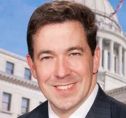
State Senator Chris McDaniel
Such a court challenge might be satisfying for people who think they were cheated out of a much anticipated victory. But would it be wise?
Consider the best possible outcome for McDaniel. It is exceedingly unlikely that a judge would just toss the result and hand the GOP nomination to McDaniel. A more possible (but not likely) scenario is that a judge throws out the primary result and orders the runoff to be rerun.
Assume, for the sake of argument, that McDaniel wins the third time around. He would be the nominee of a fiercely divided party. The atmosphere between his supporters and Cochran’s would be poisonous. The Democratic nominee, former U.S. Rep. Travis Childers, would be in the driver’s seat come November.
In that case, the Republican nomination would be a thing not worth having. And McDaniel would take the blame.
An even worse possible outcome for McDaniel would be to try to overturn the result and lose. Right now, he has political capital from being perceived as a wronged party. He still has a future in statewide politics. But if he drags Mississippi Republicans through a bitter fight, that capital vanishes.
History gives us two examples that are pertinent here.
In 1960, Richard Nixon narrowly lost the presidency under questionable circumstances. But he decided not to contest the results. Eight years later, he was president.
In 2000, Al Gore decided to put America through Florida recount hell, even though he knew he was unlikely to prevail. It was the end of his political career.
Nixonian behavior is not normally recommended. But there are times when the best thing to do in a bad situation is just walk away, no matter how unfair it might seem at the time.
Florida’s legislative leaders won’t appeal decision to strike down U.S. House map
Senate President Don Gaetz and House Speaker Will Weatherford ask judge to delay redrawing map until after November’s election
♦By Rich Shumate, Chickenfriedpolitics.com editor
 TALLAHASSEE, Florida (CFP) — Republican leaders in the Florida Legislature won’t appeal a judge’s ruling that the U.S. House map drawn in 2011 was unconstitutionally gerrymandered.
But Senate President Don Gaetz and House Speaker Will Weatherford are urging Leon County Circuit Judge Terry Lewis not to order the map redrawn until the end of the current election cycle, noting that ballots have already gone out to military and overseas voters for the August 26 primary.
“Any attempt to change the districts at this late stage of the 2014 elections process would cause chaos and confusion and would threaten the rights of our deployed military voters,” Gaetz and Weatherford said in a July 15 joint statement.
“It has been the practice in other states and in Florida to remedy maps at a future election so as not to disrupt and disenfranchise voters.”

Florida Circuit Judge Terry Lewis
In his July 10 order striking down the map, Lewis did not indicate when or how it might be redrawn. But attorneys for the plaintiffs who brought the suit, including the League of Women Voters, have said they wank the judge to change the map immediately.
The suit arose over two constitutional amendments Florida voters approved in 2010 designed to limit political gerrymandering. Under the new rules, districts cannot be drawn to benefit any political party and must be geographically compact.
However, the amendments left redistricting in the hands of legislators, rather than turning it over to an independent outside panel.
Lewis found two congressional maps — the 5th District and the 10th District — were drawn to benefit Republicans. While he rejected specific challenges to several other districts, bringing those two districts into compliance would likely trigger revisions across the state’s 27 districts.
Although Democrats are highly competitive in statewide races, Republicans hold a 17-10 majority in Florida’s congressional delegation under the map drawn by the GOP-controlled legislature.
Lewis was also highly critical of the behind-the-scenes role Republican political consultants played in drawing the map, which was supposed to be apolitical.
“They made a mockery of the legislature’s proclaimed transparent and open process of redistricting by doing all of this in the shadow of that process, utilizing the access it gave them to the decision makers, but going to great lengths to conceal from the public their plan and their participation in it,” Lewis said.
The 5th District, held by Democratic U.S. Rep Corrine Brown, is a majority black district that meanders from Jacksonville over to Gainesville and then down to Orlando. At one point, it is the width of a highway.
The 10th District, held by Republican U.S. Rep. Daniel Webster, is anchored in central Florida west of Orlando. But it has an appendage that wraps around Orlando to take in GOP voters to the east in Seminole County.
Legislative leaders have said they drew the districts to comply with the Voting Rights Act: Brown’s to create a majority black district and Webster’s to create a neighboring district in which Latino voters would have influence.
But Lewis ruled that a majority black district could have been drawn that was more compact and that putting those Republican voters in Webster’s district was unlikely to increase Latino influence.
Brown has joined with Republican leaders in defending the map,
“Minority communities do not live in compact, cookie-cutter like neighborhoods, and excessive adherence to district ‘compactness,’ while ignoring the maintenance of minority access districts, fragments minority communities across the state,” she said in a statement.
To comply with the Voting Rights Act, Republican legislators across the South have created legislative and congressional districts with black majorities, which, in order to capture as many black voters as possible, are often oddly shaped.
Because the black vote is overwhelmingly Democratic, adjacent districts have become more Republican. At the congressional level, this has meant that white Democrats have virtually disappeared, and the GOP dominates House delegations.
Florida’s 2010 constitutional amendments added a new wrinkle by forbidding both use of party considerations in redistricting and requiring geographic compactness, neither of which are required in other Southern states.
Chris McDaniel raises money for suit to overturn Mississippi GOP U.S. Senate runoff
McDaniel says his June 24 runoff loss to U.S. Senator Thad Cochran was a “sham” with “illegal voting” by Democrats
♦By Rich Shumate, Chickenfriedpolitics.com editor
 JACKSON, Mississippi (CFP) — In the clearest sign yet that State Senator Chris McDaniel isn’t going quietly into the political sunset, he has sent an email to supporters asking for money to pay for a lawsuit to overturn the results of Mississippi’s June 24 GOP runoff for U.S. Senate.
State Senator Chris McDaniel
“Thanks to illegal voting from liberal Democrats, my opponent stole last week’s runoff election, but I’m not going down without a fight,” McDaniel said.
“We’ve already found thousands of irregularities in the voting process. According to Mississippi state law, Democrats who voted in the Democratic primary cannot vote in the Republican runoff, and that is exactly what happened.”
McDaniel asked supporters to contribute at least $50 for what he described as a “long fight” to overturn the runoff.
After narrowly beating U.S. Senator Thad Cochran in the first found of primary voting on June 3, McDaniel lost to the veteran incumbent by about 6,700 votes in the runoff.
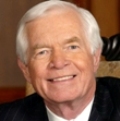
U.S. Senator Thad Cochran
Cochran’s campaign made direct appeals to Democratic and independent voters to support him in the runoff, which they were free to do if they hadn’t already voted in the Democratic primary.
The results of the second round of voting showed how well that strategy worked. About 67,000 more people voted in the runoff than in the primary, and in Hinds County — which includes the predominantly black city of Jackson — Cochran’s margin of victory was 11,000 votes, nearly double what it was in the first round.
The race in Mississippi pitted Cochran and the state’s Republican establishment against Tea Party activists and outside conservative groups — such as the Senate Conservatives Fund, FreedomWorks and the Club for Growth — that strongly backed McDaniel.
Outside groups on both sides poured millions in advertising into the Magnolia State, clogging its relatively inexpensive airwaves.
McDaniel and his conservative Tea Party supporters cried foul over Cochran’s cross-party strategy, and he has refused to concede defeat. A conservative watchdog group, True the Vote, has already filed a federal lawsuit to overturn the election.
In another bizarre twist in this bitter race, Mark Mayfield, a McDaniel supporter who was arrested during the campaign for his alleged role in videotaping Cochran’s invalid wife in her nursing home, committed suicide after McDaniel’s runoff loss.
Cochran is one of five sitting Southern GOP senators targeted for defeat by Tea Party activists and outside conservative groups. So far, Cochran and three other incumbents have survived, with one contest still to come in August in Tennessee.
If his runoff win holds up, Cochran will face Democratic former U.S. Rep. Travis Childers in the fall.
 Chicken Fried Politics