
Home » 2015 (Page 3)
Yearly Archives: 2015

Charlie Crist launches run for Florida congressional seat
Crist’s latest race comes after two statewide losses and two party switches
♦By Rich Shumate, Chickenfriedpolitics.com editor
 ST. PERTERSBURG, Florida (CFP) — After losing two statewide elections in four years and changing parties twice, former Florida Governor Charlie Crist will try to resurrect his political career with a run for Congress in 2016.
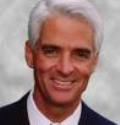
Former Florida Governor Charlie Crist
Crist announced October 20 that he will seek the Democratic nomination in Florida’s 13th U.S. House District.
“Public service is in my heart. I can’t help it. I guess that’s fairly obvious,” Crist said at his campaign kickoff. “But somebody has to step up, and somebody has to lead.”
His decision immediate drew fire from Republicans, who noted that Crist had said back in March that he would not run for office in 2016.
“What happens when the King of Flip-Flopping promises NOT to run for office in 2016… he runs for office in 2016,” said a statement on the Florida GOP’s website.
The 13th District seat opened up after the incumbent, Republican U.S. Rep. David Jolly, decided to run for the U.S. Senate. Jolly’s decision came as the Florida Supreme Court is poised to redraw the state’s House districts, which is likely to make the 13th District, centered in the St. Petersburg area, more Democratic.
Crist, 59, was elected as governor in 2006 as a Republican. In 2010, instead of running for re-election, he decided to run for the U.S. Senate, bolting the GOP to run as an independent when it became clear he was going to lose the primary to the eventual winner, U.S. Senator Marco Rubio.
After losing that race, Crist became a Democrat and made an unsuccessful run for governor in 2014, losing to Republican Governor Rick Scott.
Crist will face at least one Democratic primary challenger, Eric Lynn, a former Pentagon official. After Crist’s announcement, he issued a statement pointedly noting that, unlike Crist, he was a “life-long Democrat.”
“I’m looking forward to a spirited primary and a spirited debate on important Democratic issues,” Lynn said.
Republicans are also expected to put up a fight to keep the seat, with former St. Petersburg Mayor Rick Baker being mentioned as a possible GOP candidate.
State of the Races: U.S. Senate 2016
GOP favored in 7 of 9 Southern contests; Democrats have a shot at 2
♦By Rich Shumate, Chickenfriedpolitics.com editor
 (CFP) — The 2016 election will feature nine contests across 14 Southern states, all of which are currently held by Republicans. And there appears to be precious little opportunity for Democrats to make inroads in the GOP’s regional hegemony.
Florida and North Carolina appear to be the best shots Democrats have to reverse the region’s GOP tide, although the decision by Marco Rubio to run for re-election significantly bolsters Republican chances in the Sunshine State. Louisiana is another possibility if the 24-candidate free-for-all in the Pelican State’s all-party jungle primary creates an unexpected Democratic opportunity. The other six races are foregone conclusions, barring some unforeseen Republican calamity.
Republicans currently hold 24 of the 28 Southern Senate seats, including both seats in 11 out of the 14 Southern states.
Here is the 2016 rundown:

Shelby
Alabama: Republican U.S. Senator Richard Shelby is running for a seventh term. Democrats aren’t putting up a fight, letting their nomination go to a marijuana rights activist. Given that a Democrat hasn’t won a Senate race in the Yellowhammer State since 1990, Shelby is virtually assured of another term, at the end of which he’ll be 88 years old. RATING: SAFE GOP

Boozman
Arkansas: Republican U.S. Senator John Boozman is seeing a second term, despite suffering an aortic aneurysm in 2014 that kept him away from Washington for two months. The Democrats were unsuccessful in getting their top pick, former Governor Mike Beebe, to run, though they did manage to recruit a credible challenger in Conner Eldridge, a former federal prosecutor from Fayetteville. Still, a statewide race is a hard slog these days for a Democrat in the Natural State. RATING: PROBABLY GOP

Rubio

Murphy
Florida: Republican U.S. Senator Marco Rubio’s decision to reverse course and seek re-election significantly improved Republican prospects for keeping this seat. Rubio will face U.S. Rep. Patrick Murphy from Jupiter, who won the primary over liberal firebrand Alan Grayson with support from the Democratic establishment. Rubio has to be considered a favorite here, but if Hillary Clinton turns out to have coattails in the Sunshine State, this could be a race in November. RATING: GOP FAVORED

Isakson
Georgia: Republican U.S. Senator Johnny Isakson is running for re-election, despite publicly disclosing that he has been diagnosed with Parkinson’s disease. Peach State Democrats have recruited Jim Barksdale, the owner of an Atlanta investment firm, to take on Isakson. However, that strategy didn’t work in 2014 with Michelle Nunn, and there is little indication that Isakson is in trouble this time around. RATING: PROBABLY GOP

Paul
Kentucky: Now that Republican U.S. Senator Rand Paul ended his presidential run, he will be a prohibitive favorite for re-election. Democrats have managed to recruit a high-profile challenger with deep pockets, Lexington Mayor Jim Gray. But in a state that hasn’t sent a Democrat to the Senate since 1992, Gray will have a big mountain to climb. RATING: PROBABLY GOP

Vitter
Louisiana: After losing a bid for governor, Republican U.S. Senator David Vitter announced he would not seek re-election to the Senate, leaving his seat up for grabs. A gaggle of 24 candidates are seeking the seat, running in the state’s all-party jungle primary in November, with the top two advancing to a December runoff.
Democrats running include Public Service Commissioner Foster Campbell and Caroline Fayard, a New Orleans lawyer. The Republican side of the ballot includes two sitting U.S. House members, Charles Boustany of Lafayette and John Fleming of Minden; State Treasurer John Kennedy; Joseph Cao, a Vietnamese-American who represented the New Orleans area in Congress from 2009 to 2011; and Rob Maness, who made a spirited but unsuccessful Tea Party-backed bid for the Senate in 2014. White racist David Duke also filed on the GOP ticket.
While Republicans should be favored to keep this seat, Vitter’s loss to a Democrat in the governor’s race shows a flip for the Democrats is possible, if they can unite behind a high-profile challenger. Democrats could also benefit by having fewer candidates dividing up their vote in the primary. RATING: PROBABLY GOP

Lankford
Oklahoma: Republican U.S. Senator James Lankford is facing voters for the second time in two years after being elected to serve out the remainder of former U.S. Senator Tom Coburn’s term in 2014. Given that Lankford cruised to victory with 68 percent of the vote last time and Democrats haven’t won a Senate race in Oklahoma in 25 years, this race is a foregone conclusion. RATING: SAFE GOP

Burr
North Carolina: Republican U.S. Senator Richard Burr is running for a third term, and he dodged a major bullet when former Democratic U.S. Senator Kay Hagan, who was bounced from the Senate in 2014, decided not to run against him. Instead, he will face Deborah Ross, a former state legislator and Duke University law professor. North Carolina is a state where Democrats can still win statewide races, but Ross starts from well behind. RATING: PROBABLY GOP

Scott
South Carolina: Republican U.S. Senator Tim Scott, the only black Republican in the Senate, is facing voters for the second time in two years, after being appointed in 2013 to replace former U.S. Senator Jim DeMint. This time, he’s running for a full term in his own right, and he has not drawn a major challenger. He took 61 percent of the vote in 2014; count this race as a slam dunk. RATING: SAFE GOP
U.S. Rep. Daniel Webster enters contest for House speaker
Florida Republican calls for decentralizing power, empowering backbenchers
♦By Rich Shumate, Chickenfriedpolitics.com editor
WASHINGTON (CFP) — U.S. Rep. Daniel Webster of Florida has announced he will run for House speaker to replace outgoing Speaker John Boehner on a platform of decentralizing the GOP leadership’s control of the House agenda by pushing down “the pyramid of power.”

U.S. Rep. Daniel Webster
“What I want to see is a principle-based, member-driven Congress,” Webster said in a September 28 appearance on Fox News where he announced his candidacy. “We don’t have that now. I’d like to have us have it.”
“We can show ourselves as leaders by opening up the process, by allowing lots of debate and lots of amendments and lost of opportunities for members,” he said.
Webster, 66, from Winter Haven in Central Florida, is serving his third term in the House. Prior to his service in Congress, Webster served 28 years in the Florida legislature and was state House speaker from 1996 to 1998.
Webster is running to replace Speaker John Boehner, who announced September 25 that he was stepping down amid conflict within the Republican House conference between Boehner’s allies and conservative backbench critics.
Earlier this year, Webster ran against Boehner in an unsuccessful attempt to bounce him from the speaker’s chair. Afterward, Boehner removed Webster from the powerful House Rules Committee.
Conservative critics of Boehner have complained about attempts to punish members who defied the House GOP leadership.
Webster will face one of those leaders, House Majority Leader Kevin McCarthy of California, in the race for speaker.
On The Trail: Rand Paul pitches smaller government, constitutional rights at New Hampshire event
Kentucky senator says labeling genetically modified foods would be overregulation
♦By Patrick Scanlan, Chickenfriedpolitics.com contributor
 SALEM, New Hampshire (CFP) — Before an enthusiastic crowd of about 75 voters, U.S. Senator Rand Paul of Kentucky took his GOP presidential campaign to the first-in-the-nation primary state of New Hampshire, offering up his critique of a government that he says has become too large, spends too much money and is too oppressive toward its citizens.
In a September 25 town hall event organized by the Greater Salem Chamber of Commerce, Paul expressed his wish that “our government should be minding their own business more,” citing examples of NSA spying, welfare programs, and Planned Parenthood funding.

Rand Paul in Salem, New Hampshire
He did not, however, place the blame solely on Democrats, saying these problems aren’t solely the fault of one party. He said the first priority of the national government should be defense, while most other programs, especially social programs, should be left up to state governments to design and implement.
Paul also said the Republican Party can attract younger voters by advocating strict protection of constitutional guarantees in the Bill of Rights. In that regard, he highlighted his support for the Second Amendment right to keep and bear arms, touching on another issue important to conservative voters.
Paul also answered questions from attendees at the event, who hailed from New Hampshire as well as neighboring Massachusetts.
One question concerned dealing with undocumented immigrants, to which Paul responded by saying that “immigrants who came to the U.S. are by and large good people, but we must secure the border.”
A woman representing group supporting labeling of genetically modified foods asked Paul how he would vote on current legislation imposing such labeling, an issue important to many New Hampshire residents who are part of local and sustainable food movements. He responded that if the movement is popular, then labeling should be left up to the marketplace because he views this, and other similar issues, as overregulation.
When asked about Iran, Paul reiterated that negotiations and open communication are essential to maintaining an effective relationship with Iran. He said that sanctions have gone a long way to pushing Iran in the right direction, but he still does not trust the Tehran regime.
Florida Republicans discuss how new non-voting prisoners might sink U.S. Rep. Corinne Brown
Court-ordered redistricting has moved a number of state prisons into Brown’s district, decreasing the minority voting population
♦By Rich Shumate, Chickenfriedpolitics.com editor
JACKSONVILLE (CFP) — Florida Republicans are hoping that court-ordered congressional redistricting will pack enough non-voting prisoners in U.S. Rep. Corinne Brown’s district to imperil the 12-term Democratic lawmaker.

U.S. Rep. Corrine Brown
Attendees at a meeting of North Florida Republicans held in August discussed the implications of a new configuration for Brown’s district that includes a number of prisons, which will drop the African-American voting population in the district and improve GOP prospects.
A recording of the meeting was originally obtained by Politico Florida.
Prefacing her remarks by making sure there were no reporters in the room, State Rep. Janet Adkins, R-Fernadina Beach, called the redistricting “a perfect storm” for Brown.
Adressing a Republican official from a Baker County, which is being added to Brown’s district and has a large prison population, she said, “You can be the person who can help get rid of Corrine Brown.”
“We do not take into consideration where these people live. It would not be constitutional to take into consideration where they live.”
Adkins later issued an email apologizing if her remarks “offended anyone,” explaining that the conversation was her attempt to explain the ongoing controversy over reapportionment.
Adkins comments were not new. In fact, they echo complaints Brown herself has made about including 18 state prisons in the newly configured 5th District. She has filed suit in U.S. District Court to block the redistricting, which had been ordered by the Florida Supreme Court after it stuck down the current congressional map in July.
A circuit court judge in Tallahassee began a hearing September 24 to choose among seven competing maps. The state Supreme Court will make the final decision.
State lawmakers were unable to agree on a redrawn map during a special session in August. However, both the House and Senate versions of the map change Brown’s district from a north-south configuration to an east-west alignment stretching from central Jacksonville west through counties along the Georgia border to the Tallahassee area.
That change would add rural areas of North Florida, including four counties that are home to a number of state prisons. Adkins alluded to that fact in her remarks at the meeting, asking the other attendees, “What’s the primary industry in North Florida?” The answer was “prisons.”
Because prisoners count toward the population size of a district but cannot vote, including the prisons will reduce the overall size of the voting age population. And to the degree that prison populations are disproportionately made up of minorities, the minority population of the district will drop as a result.
Brown’s current district has a black voting age population of 50 percent. The new district’s black voting age population is 45 percent, including the new felons who cannot vote.
The state Supreme Court ruled in July that Brown’s north-south district—which snaked through northeast and central Florida from Jacksonville to Orlando to pick up black voters and was at one point the width of a highway—violated two anti-gerrymandering amendments Florida voters added to the state constitution in 2010. It also struck down seven other districts, leading to a wholesale redrawing of the congressional map.
The high court ruled that lawmakers in the GOP-controlled legislature impermissibly drew the lines to improve their party’s electoral prospects, something the anti-gerrymandering amendments forbid.
Listen to a recording of the Republican meeting:
 Chicken Fried Politics