
Home » 2015 (Page 5)
Yearly Archives: 2015

GOP U.S. Rep. David Jolly, facing a newly drawn district, switches to U.S. Senate race
Decision comes after the Florida Supreme Court orders changes likely to make Jolly’s district more Democratic
♦By Rich Shumate, Chickenfriedpolitics.com editor
 ST. PETERSBURG, Florida (CFP) — In the wake of a Florida Supreme Court decision ordering changes in the state’s U.S. House map, Republican U.S. Rep. David Jolly has decided to jump into the open U.S. Senate seat in 2016, rather than face re-election in what will likely be a more Democratic district.
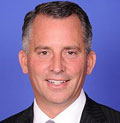
U.S. Rep. David Jolly
In a statement announcing his campaign July 20, Jolly, 42, who won his House seat in a special election in 2014, said he would run “on an unwavering platform that will reject the politics of division and class warfare that have defined the current administration.”
Lolly also called for creating “a new economy founded on the principle that individuals and families, not government bureaucrats, create success.”
Jolly’s entry into the Senate race adds to a crowded Republican field that already includes U.S. Rep. Ron DeSantis and Lieutenant Governor Carlos López-Cantera.
Jolly currently represents Florida’s 13th District seat in Pinellas County, in the Tampa Bay area. He succeeded the late GOP U.S. Rep. C.W. “Bill” Young, who held the seat for more than 42 years before his death in 2013.
Jolly’s win frustrated Democratic hopes of picking up one of only three Republican-held seats in the South that President Obama carried in 2012. He went on to re-election in the 2014 general election and was expected to run again in 2016.
But the Florida Supreme Court threw a monkey wrench into those plans July 9, ruling that the Republican-controlled state legislature unconstitutionally gerrymandered the map to help the GOP’s electoral prospects. The high court ordered the state legislature to redraw eight districts, including Jolly’s.
The Supreme Court objected to the legislature’s decision to shift African-American voters in St. Petersburg into the neighboring 14th District, across the bay in Tampa, to make the 13th more Republican-friendly, which justices said violated a requirement that districts be geographically compact wherever possible.
Shifting those voters back would have made Jolly’s swing district harder to retain.
The Supreme Court’s ruling might also force another U.S. House member into the Senate race on the Democratic side.
The court ruled that the 5th District — an oddly shaped district that snakes through northeast and central Florida from Jacksonville to Orlando to pick up black voters and is at one point the width of a highway — must be redrawn in an east-west configuration from Jacksonville towards the Panhandle.
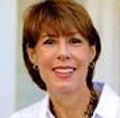
U.S. Rep. Gwen Graham
That change is likely to shift the Panhandle-based 2nd District , held by U.S. Rep. Gwen Graham, D-Tallahassee, to the south, which would make it more Republican and more difficult for her to carry. That prompted Democratic strategists to talk up a possible Graham Senate bid, although the congresswoman herself has remained non-committal.
Former Florida Governor Charlie Crist has announced he will seek the Democratic nomination for Jolly’s seat if the legislature, as expected, draws his St. Petersburg home into the district.
The Republican-turned-indepenent-turned-Democrat lost statewide races for the U.S. Senate in 2012 and for governor in 2014.
U.S. Rep. Alan Grayson off and running for Senate seat in Florida
Outspoken liberal firebrand’s campaign sets up a battle royale in the Democratic primary
♦By Rich Shumate, Chickenfriedpolitics.com editor
 ORLANDO (CFP) — U.S. Rep. Alan Grayson, the firebrand liberal notorious for caustic comments about Republicans, has announced his candidacy for the U.S. Senate in 2016, setting up what is likely to be a bruising Democratic primary battle in the Sunshine State.
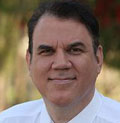
U.S. Rep. Alan Grayson
“I am unbought and unbossed,” Grayson, D-Orlando, said in a video announcing his Senate bid posted to his campaign website July 9. “I own nothing to anyone but the people.”
Grayson is running in defiance of Democratic party leaders, who are backing moderate U.S. Rep. Patrick Murphy, D-Jupiter and had hoped to avoid what is likely to be a divisive Democratic primary.
On the day of his announcement, Grayson provided a flavor of what’s to come in an interview with WKMG-TV in Orlando, in which he accused Murphy of being a closet Republican and said the Senate race “is going to live until the end of time.”
“People understand what I stand for. Patrick wants to cut Social Security, cut Medicare, and Patrick gave $2,300 to Mitt Romney’s campaign,” he said. “Patrick’s running in the wrong primary. He should be running as a Republican because that’s who he really is.”
To bring home the flavor of his political persona, Grayson is calling his campaign website SenatorWithGuts.com.
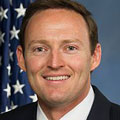
U.S. Rep. Patrick Murphy
For his part, Murphy greeted Grayson’s announcement by issuing a statement saying he was looking forward “to a clean, honest discussion of the issues in this primary.”
Grayson, 57, a Harvard-educated lawyer, burst onto the national scene after his election to Congress in 2008 with a floor speech in which he said the GOP’s health care plan was for the uninsured “to die quickly.” He has called Republicans “knuckle-dragging Neanderthals,” likened the Tea Party to the Ku Klux Klan and once compared former Vice President Dick Cheney to a vampire.
In 2009, he had to apologize after calling a female lobbyist “a K Street whore.” He is also known to subject reporters to profanity-laden tirades for stories he doesn’t like.
Grayson’s controversial profile cost him his House seat in 2010, a campaign in which he referred to his opponent, U.S. Rep. Daniel Webster, as “Taliban Dan” in a television ad. But Grayson returned to Congress in 2012, winning in a newly created Orlando-area district.
In addition to his hyperbolic comments, Grayson is also involved in a nasty divorce with his wife of 25 years, Lolita, whom he accused of bigamy and tried to have arrested for using a joint credit card to buy groceries. Lolita Grayson has charged that the congressman was unfaithful and abusive.
In his kickoff announcement, Grayson took an unabashed liberal line, calling for ending taxes on Social Security benefits, expanding Medicare to cover dental and vision care and ensuring that “every job should provide enough money to become part of the middle class.”
The Senate seat opened up when Republican U.S. Senator Marco Rubio decided to run for president. Democratic leaders are fearful that Grayson’s is too controversial and too liberal to win a statewide race in Florida — squandering an opportunity to pick up a seat that is vital to the party’s hopes of taking back the Senate.
The Democratic Senatorial Campaign Committee is backing Murphy, 32, who was a registered Republican until he switched parties to run for the House in 2012. He was re-elected in 2014 with nearly 60 percent of the vote in a competitive district.
On the Republican side, U.S. Rep. Ron DeSantis has jumped into the Senate race, and Lieutenant Governor Carlos López-Cantera is also expected to run.
Florida Supreme Court strikes down state’s congressional map
High court gives state legislature 100 days to draw new map to fix problems with eight districts
♦By Rich Shumate, Chickenfriedpolitics.com editor
GAINESVILLE, Florida (CFP) — The Florida Supreme Court has struck down the state’s map of congressional districts, ruling that the Republican-controlled state legislature unconstitutionally gerrymandered the map to help the GOP’s electoral prospects.
In a 5-to-2 ruling issued July 9, the high court agreed with a lower court ruling last year that the 2011 redistricting process had been “tainted” by partisan gerrymandering, which was outlawed by Florida voters in a constitutional amendment passed in 2010.
The trial court had ordered changes in two districts, but the Supreme Court went further, ruling that eight of the state’s 27 districts were improperly drawn and giving legislators 100 days to come up with a new map that complies with the anti-gerrymandering amendment. The new map will be in place for the 2016 elections.

U.S. Rep. Corrine Brown
While the high court did not order the entire map to be redrawn, reworking the eight districts in question is likely to have an impact on many of the surrounding districts, particularly in northeast Florida, where justices ordered an oddly shaped, black plurality district represented by U.S. Rep. Corrine Brown to be completely reconfigured.
Responding to testimony in the trial court that showed Republican legislators and consultants had met behind closed doors to draw the congressional maps, the Supreme Court majority also encouraged the legislature “to conduct all meetings in which it makes decisions on the new map in public and to record any non-public meetings for preservation.”
There was no immediate word from legislative leaders as to when a special legislative session might be convened to redraw the congressional map.
The ruling was a victory for the League of Women Voters and Common Cause, which filed suit to overturn the maps. Pamela Goodman, the president of the league, called the decision a victory “against devious political scheming.”
“The Florida Supreme Court took the Florida Legislature to the woodshed,” she said in a statement. “Their egregious behavior using partisan political operatives in the redistricting process was appropriately reprimanded.”
The Republican-controlled legislature decided not to appeal the trial court’s ruling in 2014, which led to a special session of the legislature to make minor changes in the map. But the League of Women Voters appealed to the Supreme Court, arguing that those changes didn’t go far enough.
The eight districts found to be unconstitutional are equally split between Democrats and Republicans. But the changes ordered by the court are giving Democrats hopes of making inroads in Florida’s congressional delegation. Despite the state’s even political split, Republicans hold a 17-to-10 advantage among House members.
The two biggest changes ordered by the high court are in the 5th District, represented by Brown, D-Jacksonville, and the 13th District, held by U.S. Rep. David Jolly, R-St. Petersburg.
The Supreme Court ruled that Brown’s north-south district — which snakes through northeast and central Florida from Jacksonville to Orlando to pick up black voters and is at one point the width of a highway — should be redrawn in an east-west configuration from Jacksonville towards the Panhandle. The current black voting age population in the district is 48 percent.
While moving the district could create an opening for a minority candidate in the Orlando area, it might also present problems for U.S. Rep. Gwen Graham, D-Tallahassee, whose 2nd District includes areas along the Georgia border that would be shifted into the 5th District.
Brown, one of just three African-Americans in Florida’s congressional delegation, had joined with Republicans in the legislature in defending the map. She blasted the high court’s decision in a statement, saying it was “seriously flawed and entirely fails to take into consideration the rights of minority voters.”
While Brown did not indicate if she might file a federal lawsuit to stop the court-mandated redistricting, she did say that “as a people, African-Americans have fought too hard to get to where we are now, and we certainly are not taking any steps backwards.”
U.S. Rep. David Jolly
In the 13th District, which takes in most of Pinellas County, the Supreme Court held that the legislature’s decision to shift African-American voters in St. Petersburg into the neighboring 14th District, across the bay in Tampa, to make the 13th more Republican-friendly violated a requirement that districts be geographically compact wherever possible.
Shifting those voters back into the 13th District could make life more difficult for Jolly, who won the seat in a special election last year. But Jolly’s office issued a statement after the ruling saying he was not concerned about the prospect that his district might be redrawn.
“The courts and the legislature will determine next steps, and Congressman Jolly will remain focused solely on doing his job and serving all of Pinellas County,” the statement said. “If he continues to do the job he was elected to do, the politics will take care of itself.”
Here are the other districts that are affected by the Supreme Court’s ruling:
21st District and 22nd District – These two districts, in Palm Beach and Broward counties in South Florida, run parallel to each other, one along the Atlantic Coast and the other inland. The Supreme Court agreed with the plaintiffs that these two districts would be more geographically compact if they were made wider and stacked on top of each other, although the high court stopped short of ordering the legislature to adopt that configuration. The 21st District is represented by U.S. Rep. Ted Deutch, D-Boca Raton; the 22nd District by U.S. Rep. Lois Frankel, D-West Palm Beach.
25th District – The court’s objection to this district was that legislators split Hendry County, a rural county with a majority minority population, between the 25th District and the adjacent 20th District, instead of putting the county entirely in the 25th. The legislature argued that it split the county to comply with the Voting Rights Act, but the high court said legislators had not proven that putting the county in a single district would compromise the electoral prospects of minority voters. The district, which would become more Democratic if all of Hendry County is included, is represented by U.S. Rep. Mario Diaz-Balart, R-Miami.
26h District and 27th District – The court objected to the legislature’s decision to split the city of Homestead, south of Miami, between these two districts, which had the effect of creating two Republican-leaning districts, rather than one safe district for each party. The high court ordered the legislature to put all of Homestead in one district. District 26 is represented by U.S. Rep. Carlos Curbelo, R-Miami; District 27 by veteran U.S. Rep. Ileana Ros-Lehtinen, R-Miami. Whichever of them gets Homestead will have to deal with more Democratic voters, although Ros-Lehtinen said she had “no worries” about the prospect that her district lines might shift.
Former U.S. Senator Jim Webb enters 2016 Democratic race with shot at Hillary Clinton
Webb, who left the Senate in 2012, says Americans “need to shake the hold” of political elites
♦By Rich Shumate, Chickenfriedpolitics.com editor
 RICHMOND (CFP) — Saying the United States “needs a fresh approach to solving the problems that confront us and too often unnecessarily divide us,” former U.S. Senator Jim Webb of Virginia has announced that he will seek the 2016 Democratic presidential nomination.
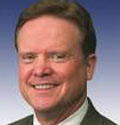
Former U.S. Senator Jim Webb
“I understand the odds, particularly in today’s political climate where fair debate is so often drowned out by huge sums of money,” Webb said in a message announcing his candidacy posted on his campaign website July 2. “Our fellow Americans need proven, experience leadership that can be trusted to move us forward.”
In his opening campaign salvo, Webb positioned himself as an outsider in the race, noting that “more than one candidate in this process intends to raise at least a billion dollars.”
“Highly paid political consultants are working to shape the ‘messaging’ of every major candidate,” he said. “We need to shake the hold of these shadow elites on our political process.”
Webb also took a direct swipe at the Democratic frontrunner, former Secretary of State Hillary Clinton, for her initial support of the 2003 invasion of Iraq, which Webb publicly opposed.
“Let me assure you, as president, I would not have urged an invasion of Iraq,” Webb said. “I warned in writing five months before that invasion that we do not belong as an occupying power in that part of the world and that this invasion would be a strategic blunder of historic proportions.”
When she ran for president in 2008, Clinton defended her vote authorizing the use of military force in Iraq — a vote which was used against her with great effect by Barack Obama. But in a 2014 book, she conceded that her vote was a mistake.
Webb also said he would have opposed military intervention in Libya in 2011 — which Obama authorized and Clinton supported as secretary of state — and that the subsequent terrorist attack on a U.S. diplomatic outpost in Benghazi on her watch “was inevitable.”
Webb, 69, is a U.S. Naval Academy graduate who served in Vietnam and was the secretary of the Navy during the Reagan administration. In 2006, he won a surprise victory to the Senate, narrowly ousting incumbent Republican George Allen in an election in which anti-war sentiment lifted Democratic fortunes.
In the Senate, Webb was considered a centrist who frequently bucked the party line, including an assertion that Obamacare would be a “disaster” for the Democratic Party. In 2012, facing the prospect of a contentious rematch with Allen, he decided not to run for re-election and left the Senate after a single term.
More recently, Webb sounded a cautionary note on the renewed drive to remove the Confederate battle emblem in the wake of the Charleston church shootings, saying in a Facebook post that “we all need to think through these issues with a care that recognizes the need for change but also respects the complicated history of the Civil War.”
“The Confederate Battle Flag has wrongly been used for racist and other purposes in recent decades. It should not be used in any way as a political symbol that divides us.”
Recent national polls have shown Webb’s support for the Democratic nomination in single digits, well behind Clinton and second-place U.S. Senator Bernie Sanders of Vermont.
In the message launching his campaign, Webb touted his sponsorship in the Senate of a GI Bill providing benefits to veterans of the Iraq and Afghanistan and his support for reform of the criminal justice system.
“It’s costing us billions of dollars. It’s wasting lives, often beginning at a very early age, creating career criminals rather than curing them. It’s not making our neighborhoods safer,” he said.
Like a number of other presidential contenders in both parties, Webb also sounded a note of economic populism.
“Let’s work to restore true economic fairness in this great country, starting with finding the right formula for growing our national economy while making our tax laws more balanced and increasing the negotiating leverage of our working people,” he said. “Our goal will be to increase the financial stability of the American workforce.”
Webb also said he would “work toward bringing the complex issue of immigration reform to a solution that respects the integrity of our legal traditions, while also recognizing the practical realities of a system that has been paralyzed by partisan debate.”
Webb is the only Southerner among the five candidates seeking the 2016 Democratic presidential nomination, although Clinton was a resident of Arkansas before moving to New York to run for the Senate in 2000.
Eight Southerners are seeking the Republican nomination: U.S. Senators Ted Cruz of Texas, Marco Rubio of Florida, Rand Paul of Kentucky and Lindsey Graham of South Carolina; former governors Jeb Bush of Florida, Mike Huckabee of Arkansas and Rick Perry of Texas; and Governor Bobby Jindal of Louisiana.
Analysis: South’s changing demography erodes attachment to the Lost Cause
♦By Rich Shumate, Chickenfriedpolitics.com editor
 The newfound drive to retire the Confederate battle flag from the public arena may have been fueled by the visceral emotional reaction to the racist massacre at a church in Charleston, the Confederacy’s very birthplace. But the seeming ease with which Confederate artifacts are being swept away across the South can also be explained by another factor — shifts in the region’s demography that are eroding the regional insularity underpinning romantic attachment to the Lost Cause.
 In the last 30 years, there has been a sea change in the Southern electorate. The percentage of white people born in the South — the people most inclined to want to retain vestiges of their Confederate past — is shrinking, while the percentages of African-Americans and whites born outside the region are expanding.
So even though the South may be as politically conservative as it has ever been, the constituency for public maintenance of Confederate heritage is becoming less potent, which is giving Southern politicos more freedom to maneuver across these contentious waters.
For example, in 1960 — around the time that many Southern state governments began embracing Confederate symbols in a show of defiance against the Civil Rights movement — more than 90 percent of the population of eight of the 11 former Confederate states was Southern born, according to U.S. Census figures.
The only exceptions were Florida, Virginia and Texas, but even in the most Yankee-fied of those states — Florida — 60 percent of the population was still born in the South.
1960 was also at the tail end of the Great Migration, in which 6 million African-Americans left the South for cities in the North and West, which dramatically reduced the black populations across the region In 1900, 90 percent of African-Americans lived in the South; by 1970, that figure had fallen to just 53 percent.
Fast forward to 2010. Only two former Confederate states — Louisiana and Mississippi — still had 90 percent of their populations born inside the region. Alabama was at 86 percent. But across the rest of the South, more than 20 percent of the state populations weren’t born in the South. In Florida, only 45 percent of the population was Southern born.
And those figures don’t take into account two salient factors: First, African-Americans born in the South, who would not support display of Confederate symbols, are included. And second, people born in the South whose parents weren’t born in the South are also included — another group not likely to salute the Confederate battle flag.
South Carolina Governor Nikki Haley, a conservative Republican who has been leading the charge to remove the Confederate battle flag from the statehouse in Columbia, is a case in point. She was born in South Carolina — but to Sikh parents from India with no ancestral attachment to the Confederacy.
And even in Mississippi, the only Southern state that still incorporates the Confederate battle emblem into its state flag, 9 percent of the population in 2010 was born outside the South and 37 percent was African-American — a potentially formidable coalition against public Confederate nostalgia.
In South Carolina, the non-Southern population is 25 percent, and the black population is 28 percent. Although those two groups overlap, those numbers indicate that the section of the electorate that has no attachment to Confederate heritage may be approaching a majority in the place where the Confederacy began.
At the same time as the non-Southern born population in the South was rising, so too was the African-American population. As segregation faded away and the South’s economy boomed, blacks began moving back to the region, in essence reversing the Great Migration.
For example, between 2000 and 2010, six of the seven U.S. metropolitan areas with the largest influx of African-Americans were in the South — Atlanta, Dallas, Houston, Miami, Charlotte and Orlando. The seventh, Washington, D.C., is partially in Virginia.
Topping that list was Atlanta, which is why it is not that surprising that after the Charleston massacre, Georgia’s Republican governor, Nathan Deal, ordered a redesign of a Sons of Confederate Veterans’ specialty license plate festooned with the battle emblem.
That was a far cry from the fight over removing that same emblem from the Georgia state flag, a controversy that raged for more than 10 years and led to the introduction of three state flags in two years before the current design was adopted in 2003.
Whether public exhibition of Confederate symbols is a display of heritage or a display of hate is, of course, a debate that will probably continue as long as people watch “Gone With The Wind” and drink mint juleps. But if demography is any guide, public use of those symbols is headed into the quaint mists of Southern memory.
 Chicken Fried Politics