
Home » 2016 (Page 11)
Yearly Archives: 2016

U.S. Rep. David Jolly drops out of Senate race, will seek re-election against Charlie Crist
Jolly’s decision removes another obstacle from possible re-election run by Marco Rubio
♦By Rich Shumate, Chickenfriedpolitics.com editor
 CLEARWATER, Florida (CFP) — Republican U.S. Rep. David Jolly is dropping his bid for Florida’s U.S. Senate seat and will instead run for re-election to his 13th District House seat, setting up a likely general election battle with former Florida Governor Charlie Crist.
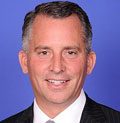
U.S. Rep. David Jolly
“I’ve got unfinished business,” Jolly said at a June 17 news conference at the St.Petersburg-Clearwater airport where he announced the switch. “Today, I’m asking my community simply for the opportunity to keep doing my job.”
Jolly, 43, was elected in a special election in 2014 and easily won a full term that fall to the seat, anchored in Pinellas County in the Tampa Bay area.
However, earlier this year, the Florida Supreme Court ordered that the state’s congressional map be redrawn, and the new map put a part of St. Petersburg with a large minority population into the 13th, turning what had been a swing district into one that favored Democrats.
Faced with the new map, Jolly decided to jump into the Senate race instead. But he failed to gain much traction in a crowded GOP field, a situation made much worse when Republican leaders in Washington began pressuring U.S. Senator Marco Rubio to seek re-election, which made it difficult for the other candidates to raise money.
Meanwhile, Republican leaders in Pinellas County, who struggled to find a strong candidate to challenge Crist, had urged Jolly to switch races and seek re-election.
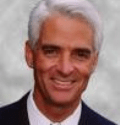
Former Florida Governor Charlie Crist
Crist, 59, was elected governor as a Republican in 2006, and, in 2010, decided to run for the Senate rather than seek re-election. However, when it became clear he would lose to Rubio in the primary, he left the GOP and became an independent to continue his Senate quest.
After losing to Rubio in the general election, Crist became a Democrat in 2012 and ran for governor in 2014, losing to Republican Governor Rick Scott. After that defeat, Crist announced he was leaving politics but changed his mind and launched a bid for Congress after the map was redrawn.
Jolly’s decision to switch races clears another obstacle for a possible re-election run by Rubio. Another Republican candidate in the Senate race, Lieutenant Governor Carlos López-Cantera has indicated that he, too, will drop out if Rubio decides to run.
Report: López-Cantera will step aside if Marco Rubio changes his mind about the Senate
Florida’s lieutenant governor tells Politico he has urged Rubio to reconsider his decision not to seek re-election
MIAMI (CFP) — Just days before qualifying is set to begin in Florida’s U.S. Senate primary, Lieutenant Governor Carlos López-Cantera has disclosed that if U.S. Senator Marco Rubio decides to run for re-election, he will end his own Senate campaign.

Lt. Gov. Carlos Lopez-Cantera
López-Cantera, who got into the Senate race at Rubio’s urging, tells Politico that when he met Rubio at the scene of the Orlando nightclub massacre, he urged Rubio to reconsider his decision not to seek re-election in 2016.
Rubio has been under increasing pressure from Republican Senate leaders to reverse course and run again. But his longtime personal and political friendship with López-Cantera has been seen as an obstacle to any Rubio candidacy.
Rubio gave up his seat to make an unsuccessful bid for the Republican presidential nomination and has insisted repeatedly that he will not be a Senate candidate. But Florida’s relatively late party primaries, at the end of August, have left him a window of time to change his mind.
Qualifying ends June 24, giving Rubio a little more than a week to make a final decision.
Rubio is seen as the strongest Republican candidate in the Senate race, which Democrats are trying to capture to wrest Senate control away from the GOP. López-Cantera and three Republican rivals have been battling for the nomination; the lieutenant governor is the only one of them who has won statewide.
There has also been speculation that another GOP Senate candidate, U.S. Rep. David Jolly of St. Petersburg, will also abandon the race and instead seek re-election to his 13th District House seat.
Jolly opted to take a pass on defending his House seat after a court-ordered redistricting added Democratic voters to what had been a swing district. However, the likely Democratic nominee for that seat is former Governor Charlie Crist, a Republican-turned-independent-turned-Democrat who lost statewide races in 2010 and 2014.
As the incumbent, Jolly would be in the best position to thwart the political resurrection of Crist, a man roundly despised in Republican circles.
The other Republicans in the Senate race include Carlos Beruff, a real estate developer from Manatee County, and U.S. Rep. Ron DeSantis, who represents a Jacksonville area House district.
On the Democratic side, U.S. Reps. Patrick Murphy of Jupiter and Alan Grayson of Orlando are battling for their party’s nomination.
GOP U.S. Rep. Randy Forbes loses primary in North Carolina
Seven-term lawmaker comes up short in reconfigured district
♦By Rich Shumate, Chickenfriedpolitics.com editor
 VIRGINIA BEACH (CFP) — U.S. Rep. Randy Forbes has become the second Republican House member to fall in a primary in 2016, after his gambit of switching districts to try to preserve his seat fell short.
In Virginia’s newly configured 2nd District, State Delegate Scott Taylor took 52 percent in the June 14 vote to 41 percent for Forbes, after a campaign that saw the veteran congressman outspend his challenger by 10-to-1.
Taylor, 36, a former Navy SEAL elected to the legislature in 2013, will now go on to face the Democratic nominee, Virginia Beach businesswoman Shaun Brown, in November. The district, centered in Virginia Beach and Hampton Roads, leans Republican.
U.S. Rep. Randy Forbes
Forbes’s demise was triggered by a federal court ruling earlier this year that racial considerations were improperly used in drawing the Old Dominion’s 3rd District. A redraw of the House map affected surrounding districts in both metro Richmond and Hampton Roads, including in the 4th District, the seat Forbes currently holds.
The court’s decision to add the cities of Richmond and Petersburg to the 4th District made it substantially more Democratic, prompting Forbes to run in the 2nd District, where GOP Rep. Scot Rigell was retiring.
But Forbes’s decision to parachute into a district where he did not live in order to save his congressional career did not go over well with some of his new constituents. Taylor, who had already been campaigning for the seat when Forbes entered the race, dismissed him as a carpetbagger.
Forbes had argued that his status as a senior member of the House Armed Services Committee would be an important asset for a district with major military installations. But that argument couldn’t save him.
In a statement after his defeat, Forbes said, “To each who have stood by us and partnered with us, I am blessed by your friendship and encouragement.
“We have had a vision for this region, for rebuilding our military, and for defending religious liberty, and while perhaps not embraced by voters tonight, we hope nonetheless (it) will be the path forward for our nation and our region.”
The other GOP House incumbent to lose a primary this year was U.S. Rep. Renee Ellmers in North Carolina.
In other House primaries in Virginia:
- In the 4th District, Republican Henrico County Sheriff Mike Wade will face off against Democratic State Senator Donald McEachin, also of Henrico County. A win by McEachin in the redrawn district would add a second African-American congressman to the state’s delegation.
- In the 5th District, GOP State Senator Tom Garrett from Buckingham County will face Democrat Jane Dittmar, the former chair of the Albermarle County Board of Supervisors. The seat was opened up by the retirement of Republican U.S. Rep. Robert Hurt.
North Carolina voters bounce Renee Ellmers from Congress
Ellmers ends campaign with disparaging comment about a female GOP official’s weight
♦By Rich Shumate, Chickenfriedpolitics.com editor
 RALEIGH (CFP) — Running in a redrawn district and facing a tsunami of outside spending aimed squarely at her, U.S. Rep. Renee Ellmers of North Carolina has lost her bid for a fourth term, becoming the first GOP lawmaker to fall in a primary in 2016.
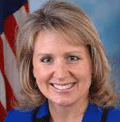
U.S. Rep. Renee Ellmers
Ellmers lost the June 7 GOP primary to U.S. Rep. George Holding, who opted to run against Ellmers after a court-ordered redraw of the Tar Heel State’s U.S. House map moved his district to another part of the state.
Her campaign ended on a bizarre note when a television camera captured Ellmers making a disparaging remark about Maggie Sandrock, a former chair of the Harnett County Republican Party, as she made her way into a polling place to vote.
“You’re eating a little too much pork barbecue. Woo,” Ellmers said in an exchange captured by Raleigh TV station WNCN.
Reacting to the comment, Sandrock, a former Ellmers supporter who now backs one of her opponents, said the congresswoman had “become a mean girl on steroids.”
Holding took 53 percent of the vote in the the 2nd District primary. Ellmers managed just 24 percent, edging past Greg Brannon, who jumped into the race after losing a U.S. Senate primary back in March.
The House primary was delayed three months after a federal court panel ordered state lawmakers to redraw the map passed after the 2010 Census. The judges ruled that two districts were improperly gerrymandered using racial considerations.
Ellmers’s district in suburban Raleigh was substantially redrawn in the new map, forcing her to run in unfamiliar territory. Her task became more difficult after Holding decided to give up his 13th District seat, which had been moved west to the Greensboro area, and run against Ellmers instead.
Ellmers, 52, a nurse, was first elected in the 2010 Tea Party wave as a critic of Obamacare, with the support of outside conservative groups such as the Club for Growth, FreedomWorks and Americans for Prosperity.
But those groups turned on Ellmers with a vengeance this year, spending more than $1 million to paint her as a Washington insider who supported wasteful spending.
In her concession speech, Ellmers said she was “disappointed” that the outside spending derailed her re-election bid, despite a high-profile endorsement from Donald Trump.
“The special interest groups with their deep pocks in Washington, unfortunately, have won today,” she said. “I hold my head up high. I’ve done what is necessary to serve the people of the (district).”
Ellmers also ran afoul of anti-abortion groups when she forced Republican leaders to carve out a rape exception in a bill outlawing abortions after 20 weeks.
In October 2015, Ellmers publicly denied rumors that she was having an extramarital affair with House Majority Leader Kevin McCarthy, which came to light after McCarthy abruptly abandoned a run for House speaker.
Holding will now face Democrat John McNeil, a Raleigh lawyer, in November, in a district with a strong Republican tilt.
Analysis: Libertarians get dream ticket, but will voters take them seriously?
Johnson and Weld will need to overcome some of their party’s more colorful positions
♦By Rich Shumate, Chickenfriedpolitics.com editor
 (CFP) –The Libertarian Party met over Memorial Day weekend in Orlando, deciding to invest its fortunes with two former Republican governors, Gary Johnson of New Mexico and William Weld of Massachusetts.
For a third party in America, that’s an unusually high-powered pedigree. And given the deep unpopularity of Donald Trump and Hillary Clinton, the Libertarians left Florida with high hopes of a breakthrough in 2016, particularly if their ticket can get into the fall debates.
But the height of the hurdle that Johnson and Weld face became apparent during the party’s presidential debate, when the candidates were asked if states should be able to issue driver’s licenses.
One after another, the candidates emphatically said no—except Johnson, who pointed out that it might not be such a bad idea for the government to make sure that people roaming around on the roadways have been vetted for basic competency.
Johnson was booed.
Here are some other statements made during the debate: Crystal meth should be as legal as tomatoes. Public education should be abolished. The Pentagon should be funded with bake sales. The second-place finisher in the presidential race, Austin Peterson, even opined that in the future, he hoped that gay people will not only be able to marry but to defend their marijuana fields with assault rifles.
And the vice presidential votes were being tabulated, a candidate for the party chairmanship took the stage, turned on some music and stripped down to his skivvies. That’s probably something we won’t see this summer in Philadelphia or Cleveland.
It was all rather entertaining, and, unlike in the Democratic and Republican contests, there was a marked absence of personal attacks between the candidates. Good for them. The question, however, is whether these positions can advance a run for the White House. Or is rigid ideological consistency the hobgoblin of electoral success?
The key to victory for any political party is to cobble together enough broad constituency groups to reach critical mass. But the Libertarians’ mishmash of unusual positions is likely to subtract from their coalition, not add to it.
For instance, religious conservatives, particularly in the South, aren’t going to cotton to their support for legalizing drugs or the fact that Johnson quit his job as head of a cannabis company to run for president. National security conservatives are going to find it difficult to get behind a militantly non-interventionist foreign policy and a drastically downsized military.
Likewise, Bernie Sanders supporters turned off by Clinton will be wary of a party that wants to eliminate virtually all social programs, turning instead to voluntary charity to take care of the old, the sick and the poor. They’re also going to have problems with a party that is as zealous in defending gun rights as the NRA.
Johnson and Weld, with their political pedigrees, may be able to transcend some of this baggage. Indeed, during the debate, Johnson often seemed to be the voice of reason, as when he said he would have signed the Civil Rights Act of 1964 (for which he was also booed.)
Certainly, Johnson can’t be held responsible for all the wild things Libertarians say, just as Republicans can’t all be held responsible for some of Trump’s more incendiary utterances. But if he and Weld distance themselves from some of the more outlandish positions of their party, they are going to draw ire from their own partisans, who proved in Orlando that they take a rather dim view of apostasy.
The Libertarians’ fondest hope is that Johnson can get to 15 percent in the polls, getting him into the debates. Then, the American public will see him as a viable alternative to Trump and Clinton, and he will catch fire, propelling Libertarians, if not to the White House, then at least to major party status.
But this presupposes that voters’ dislike of the major party nominees will be strong enough to overshadow what it is that the Libertarian Party actually believes. And Johnson has another hurdle—convincing voters he can run the country without a single member of his party in Congress. He would be forced to make an unending series of compromises with Republicans and Democrats, and compromise is something to which his party seems particularly allergic.
Of course, we have come to expect the unexpected during this topsy-turvy 2016 campaign, in which a socialist and a reality TV star are two of the last three major party candidates standing. So maybe, just maybe, Johnson and Weld can pull of the miracle. But if they do, it will be in spite of the Libertarians’ colorful positions, rather than because of them.
 Chicken Fried Politics