

U.S. Supreme Court upholds ruling invalidating North Carolina’s congressional map
Decision could affect current challenge in Texas and future GOP efforts to pack black voters into districts
By Rich Shumate, ChickenFriedPolitics.com editor
 WASHINGTON (CFP) — The U.S. Supreme Court has upheld a lower court ruling striking down the congressional map approved by North Carolina lawmakers after the 2010 census because it relied too heavily on racial considerations in drawing the new lines.
The May 22 ruling will have little impact in North Carolina because lines were already redrawn after the state lost the case in the lower court. But in the long term, it could limit the ability of Republican majorities in Southern statehouses to pack black voters into a small number of districts, thereby maximizing the number of safe GOP seats.
It could also have an impact on pending litigation in Texas, where the U.S. House map is being challenged by Latino and Democratic groups over alleged racial gerrymandering.
After the high court’s ruling, a federal judge in San Antonio overseeing the case asked Texas’s lawyers to consider whether legislators might “voluntarily” meet in special session to consider changes to the state’s map. There was no immediate response from state leaders.
The case in North Carolina was the high court’s latest attempt to resolve the tension between the 14th Amendment, which forbids using race as the primary consideration in drawing political lines, and the Voting Rights Act, which requires legislators in most Southern states to maximize the potential of minority voters to elect candidates of their choice.
At issue were the 1st and 12th districts, which were changed substantially after the 2010 census as part of an effort to make the state’s districts equal in population, as required by earlier Supreme Court rulings.
Under the new lines, the black voting age population in the 1st District rose from 48.6 percent to 52.7 percent, largely by adding majority-black areas of Durham into the district. The black voting age population in the 12th District also rose from 43.8 percent to 50.7 percent, which was done by replacing existing white voters with black voters not previously in the district.
The state had defended the changes by arguing they were made to comply with the Voting Rights Act. But the Supreme Court’s majority opinion, authored by Justice Elena Kagan, rejected that argument, noting that both seats had already been represented by African-American Democrats without the addition of more black voters.
Kagan wrote that the Voting Rights Act “gave North Carolina no good reason to reshuffle voters because of their race.”
Kagan was joined in the opinion by her fellow liberal justices, Ruth Bader Ginsburg, Sonia Sotomayor and Stephen Breyer, along with conservative Clarence Thomas, the only African-American on the court.
Three other conservatives justices — Samuel Alito, John Roberts and Anthony Kennedy — agreed with the majority that the 1st District had been impermissibly drawn but disagreed about the validity of the 12th District. The court’s newest justice, Neil Gorsuch, did not take part in the case.
After losing the case at U.S. District court, North Carolina’s legislature redrew the state’s entire map, which was used in the 2016 elections. African-American incumbents in the 1st and 12th districts — G.K. Butterfield and Alma Adams — both won, although Adams was forced to move to Charlotte and run in new territory after her home in Greensboro was drawn out of her previous district.
The new map did not change the political balance in the state’s congressional delegation, which remained at nine Republicans and three Democrats. Its only significant effect was forcing two Republican incumbents — George Holding and Renee Ellmers — to run against each other. Holding won.
Over the last 30 years, as Republicans have taken control of state legislatures across the South, majority black districts created to comply with the Voting Rights Act have sent African-American representatives to Congress, in many cases for the first time since Reconstruction.
However, the packing of black voters into these districts have reduced black voting age populations in surrounding districts, making them more Republican. One result has been that white Democrats, who were once the mainstay of Southern congressional delegations, have all but disappeared.
Only six Southern states — Florida, Texas, Tennessee, North Carolina, Kentucky and Virginia — are currently represented by any white Democrats. And out of 40 Southern Democratic representatives in Congress, only 15 are non-Latino whites, compared with 20 African Americans and five Latinos.
Out of 109 Republicans representing the region, 105 are white, three are Latino and just one, U.S. Rep. Will Hurd of Texas, is African-American.
Texas, where the congressional map is currently being challenged, presents a particular wrinkle in application of the Voting Rights Act because it contains large concentrations of both African-American and Latino voters.
While black voters tend to be strong, partisan Democrats, Latino voters are somewhat less so, which makes it difficult to advance the argument that lines are being drawn for political reasons, which is legal, rather than for racial considerations, which is not.
U.S. Rep. Mo Brooks jumps into Alabama’s U.S. Senate race
Four-term congressman says he offers “proven conservative leadership”
♦By Rich Shumate, ChickenFriedPolitics.com
 HUNSVILLE, Alabama (CFP) — Republican U.S. Rep. Mo Brooks has announced he will run in a special election to fill Alabama’s open U.S. Senate seat, adding a high-profile name to a crowded field trying to unseat the temporary incumbent, U.S. Senator Luther Strange.
 Announcing his candidacy in a series of events across the state on May 15, including in his hometown of Huntsville, Brooks touted himself as “the only candidate for the Senate who has a proven record of conservative leadership,” citing a list of accolades from business and conservative groups for his work in Washington.
“The solutions to America’s challenges are there. The roadblock to these solutions is all too often the U.S. Senate,” Brooks said. “We must elect senators with the understanding and backbone needed to face and defeat America’s challenges.”
Since 2011, Brooks, 63 has represented Alabama’s 5th District, which is anchored in Huntsville and takes in five counties in the northern part of the state along the Tennessee border.
During his announcement speech Brooks–who pointedly refused to endorse Donald Trump in last year’s presidential race–did not mention the president, a contrast with other candidates in the race who have embraced him.

U.S. Senator Luther Strange
Strange was appointed to the Senate seat in February by former Governor Robert Bentley after Jeff Sessions left to become U.S. attorney general. Although state law mandates that Senate vacancies be filled “forthwith,” Bentley delayed a special election until November 2018, giving Strange nearly two years of incumbency before he had to face voters.
But after a sex scandal forced Bentley from office, new Alabama Governor Kay Ivey reversed course and ordered a special election this year, which opened the floodgates for candidates eager to send Strange back home.
Brooks is the eighth Republican in the race, along with Roy Moore, the controversial favorite of the Christian right twice elected and twice ousted as Alabama’s chief justice; State Rep. Ed Henry, R-Hartselle, who launched the effort to impeach Bentley, and Randy Brinson, president of the Christian Coalition of Alabama.
Also expected to run is the top Republican in the Alabama Senate, Del Marsh from Anniston.
Two Democrats are also running, although any Democrat would be considered a longshot in a state where the party hasn’t won a Senate seat since 1992.
Party primaries are scheduled for August, with a runoff to follow if no candidate gets a majority. The general election is in December.
Former U.S. Rep. Corrine Brown found guilty on fraud charges
Jurors decide former Jacksonville congresswoman looted scholarship charity
♦By Rich Shumate, Chickenfriedpolitics.com editor
 JACKSONVILLE, Florida (CFP) — Corrine Brown, an icon in North Florida’s African-American community who served 24 years in Congress, is likely headed to prison after being convicted of looting a fraudulent scholarship charity to pay personal expenses.

Former U.S. Rep. Corrine Brown. D-Florida
Brown was found guilty May 11 on 18 of the 22 charges against her, including conspiracy, wire and mail fraud and filing false tax returns. No sentencing date has been set, but, given the number and magnitude of the charges, the 70-year-old former Democratic congresswoman could potentially spend much of the rest of her life behind bars.
Brown made no comment as she left the federal courthouse in downtown Jacksonville, the funding for which, as she often noted, she was instrumental in pushing through Congress.
In a statement released later by her lawyer, Brown continued to maintain her innocence and vowed to fight on.
“This fight is not over, and as I’m sure you know, I will continue to fight to clear my name and restore my reputation,” she said.
In a statement, Kenneth Blanco, the acting assistant attorney general, said Brown had “violated the public trust, the honor of her position and the integrity of the American system of government.”
“She shamefully deprived needy children of hundreds of thousands of dollars that could have helped with their education and improved their opportunities for advancement, and she lied to the IRS and the American public about secret cash deposits into her personal bank accounts,” Blanco said.
Prosecutors said Brown and her associates operated a fraudulent private charity that purported to provide scholarships for needy students but instead diverted the money to their personal accounts to pay for luxuries and other expenses. Brown used her political connections to raise money for the charity, which took in more than $800,000 put paid out just $1,200 in scholarships, according to prosecutors.
Brown’s longtime former chief of staff, Ronnie Simmons, and the president of the charity, Carla Wiley, have both pleaded guilty to charges related to the scheme, and Simmons became the star witness against Brown.
Brown took the stand in her own defense, insisting that she did not know that Evans was diverting money from the charity.
The conviction marks a tragic fall for Brown, who in 1992 became part of the first group of African-Americans in Florida’s U.S. House delegation since Reconstruction.
With a political operation built on a flair for publicity and attention to constituent service — her campaign slogan was, “Corrine Delivers” — she was never seriously challenged, despite court-ordered changes in her district and efforts by Republicans to unseat her.
However, in 2015, the Florida Supreme Court dismembered her 5th District, ruling that it was gerrymandered based on racial considerations in violation of state law. Instead of taking in African-American communities in Jacksonville and snaking down the St. Johns River valley to Orlando, the new district heads straight west to Tallahassee, giving Brown a wide swath of unfamiliar territory to defend.
The new lines, coupled with her indictment on fraud charges, led to her primary loss to U.S. Rep. Al Lawson of Tallahassee, ending her 34-year political career.
West Virginia U.S. Rep. Evan Jenkins will challenge Joe Manchin in U.S. Senate race
Jenkins hopes to parlay state’s increasing GOP tilt to unseat venerable Democratic incumbent
♦By Rich Shumate, Chickenfriedpolitics.com editor
 HUNTINGTON, West Virginia (CFP) — In 2014, GOP U.S. Rep. Evan Jenkins toppled a West Virginia political giant to get to Congress. In 2018, he’ll try to be a giant killer again.
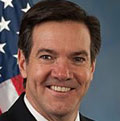
U.S. Rep. Evan Jenkins, R-West Virginia
Jenkins announced that he is giving up his House seat in an effort to defeat Democratic U.S. Senator Joe Manchin, in what is expected to become one of the South’s hottest Senate races.
In a campaign video released May 8, Jenkins went after Machin, accusing him of straying from the values he was elected to represent by supporting Hillary Clinton and Barack Obama.
“Joe changed when he got to Washington. West Virginia values? Not anymore,” Jenkins said. “Somewhere alone the way, Joe became one of them.”
Jenkins also tied himself firmly to Donald Trump, who won the Mountaineer State by a staggering 41 points in 2016, his second strongest showing in any state, behind only Wyoming.
“With Donald Trump in the White House, we’ve got a real chance to turn things around,” Jenkins said. “He needs our help, and I need your help … We can’t let liberal New York millionaires and D.C. lobbyists buy this race or the Senate.”
Jenkins, 56, was elected in 2014 to represent the 3rd District, which takes in the southern and western parts of the state. In that race, he unseated Nick Rahall, a Democrat who had been in Congress since 1977 and was, like Manchin, a political institution in West Virginia.
Jenkins had served 18 years in the state legislature as a Democrat before switching parties to run against Rahall.
West Virginia’s changing political climate has made Machin is a top Republican target in 2018. In 2014, the GOP captured all three U.S. House seats and a majority in the state legislature for the first time since 1931. In 2016, Shelley Moore Capito became the first Republican to win a U.S. Senate election since 1956.
Trump’s win was also the fifth in a row for Republican presidential candidate, in what had been considered a Democratic stronghold into the 1990s.

U.S. Senator Joe Manchin of West Virginia
However, Machin, 69, is a political institution in West Virginia, where he was first elected to political office in 1982 and was governor for six years before being elected to the Senate in 2010.
Manchin has styled himself as a political moderate, opposing legal abortion, supporting a balanced budget amendment and opposing efforts by the Obama administration to curtail use of coal, which is a mainstay of the West Virginia economy. He also broke ranks with other Democratic senators to support Trump’s Cabinet nominees and his selection of Neil Gorsuch for the U.S. Supreme Clourt.
One question mark in the race will be the issue of gun rights. Although Manchin has long received support from the National Rifle Association, he drew fire from some gun rights advocates after co-sponsoring legislation to strengthen background checks on firearms after the Sandy Hook school shooting in Newtown, Connecticut in 2012.
Jenkins took direct aim at Manchin on the gun issue in his opening campaign video, accusing the senator of violating a pledge he made in his first campaign to protect gun rights.
Jenkins’s decision to run against Manchin will open a House seat in West Virginia that could be a potential target for Democrats, although the GOP will be favored.
Jenkins may also have to survive a primary for the right to oppose Manchin, as state Attorney General Patrick Morrisey is thought to be eyeing the race.
5 Southern Republicans break ranks to oppose House Obamacare repeal
But 5 GOP lawmakers in other potential swing districts help pass new health care law
♦By Rich Shumate, Chickenfriedpolitics.com editor
 WASHINGTON (CFP) — Five Republican members of the U.S. House defied party leaders and President Donald Trump to oppose a bill to repeal Obamacare and replace it with a new blueprint for U.S. health care, but five other GOP lawmakers holding potentially vulnerable seats took a different tack and voted to go along with the American Health Care Act.
Two of the Southern GOP no votes on May 4 came from Will Hurd of Texas and Barbara Comstock of Virginia, who both represent districts that Hillary Clinton carried in 2016. A third lawmaker from a district Clinton carried, Ileana Ros-Lehtinen of Florida, also voted no but is retiring in 2018.

Hurd
Hurd, whose district stretches across a wide swath of West Texas, issued a statement after the vote saying the plan pushed by GOP leaders “does not address the concerns of many of my constituents, including adequate protections for those with pre-existing conditions and the challenges faced by rural healthcare providers.”

Comstock
Comstock, whose district is anchored in the Washington, D.C. suburbs, said in a statement that her “goals on healthcare reform are to provide patient-centered reforms that provide better access to high quality, affordable care and cover pre-existing conditions without lifetime limits. ”
“I did not support the AHCA today because (of) the many uncertainties in achieving those goals,” she said.
The other two Republicans who voted against the bill, Thomas Massie of Kentucky and Walter Jones of North Carolina, did so not out of any fear of Democratic competition but because they believe the repeal measure doesn’t go far enough.
“As recently as a year ago, Republicans argued that mandates were unconstitutional, bailouts were immoral and subsidies would bankrupt our country,” Massie said in a statement after the vote. “Today, however, the House voted for a healthcare bill that makes these objectionable measures permanent.”
Jones had earlier said the attempt by House Republican leaders to push an Obamacare bill repeal through the House on a rushed schedule was “shameful,” and he called for scrapping the bill in its entirety and starting over.
Of the 138 Southern Republicans in the House, 133 voted in favor of the AHCA. Five of those members represent districts where Democrats could conceivably use their votes for the new health care law to try to unseat them. In fact, if any one of them had voted no, the bill — which passed by just a single vote — would have failed, which will allow Democrats to make the argument that each of them bears responsibility for its passage.

Curbelo
This group of members who supported the bill includes two of the region’s most vulnerable House Republicans, Carlos Curbelo and Brian Mast, both from Florida. Curbelo represents a district in Miami-Dade and Monroe counties that Clinton carried; Mast’s district, which includes St. Lucie, Martin and northern Palm Beach counties, has changed parties in three of the last four election cycles.

Mast
In a statement, Mast said the GOP health care plan “returns control of health care from Washington back to you and restores access to quality, affordable options that are tailored to your individual needs.” He also pushed back against Democratic criticism that a provision in the new law allowing states to waive mandates for coverage of pre-existing conditions would imperil coverage for the sickest Americans.
“This bill mandates that people cannot be denied coverage because of pre-existing conditions and allocates almost $140 billion in additional funding that will subsidize coverage for people with pre-existing conditions to ensure they costs are low,” Mast said. “Those claiming otherwise are the same people who said ‘if you like your doctor, you can keep you doctor,” and they’re putting partisan politics ahead of the people in our community.”
Also voting yes were John Culberson of Texas, whose metro Houston House district was carried by Clinton; Mario Diaz-Balart, whose majority Latino district in metro Miami and southwest Florida went for Trump by less than 2 points; and Ted Budd of North Carolina, whose Greensboro-area district went for Trump by 9 points.
In a statement, Diaz-Balart conceded the AHCA was “far from perfect.” But he said the House needed to act because Obamacare “is collapsing,” leaving just one insurance provider in two of the three counties he represents.
“Knowing the people I represent could very well lose their coverage … is disturbing,” he said. “It would be irresponsible for Congress not to act in order to prevent this from happening.”
Budd also conceded in a statement that “the legislative process is a human process with all the flaws that entails. The results of that process are never perfect, and this bill isn’t either.”
“What I believe it will do is significantly reduce insurance premiums in our state, and help put the individual insurance marketplace on a more sound financial footing,” he said.
Also voting yes was Pete Sessions of Texas, whose metro Dallas district was also won by Clinton. However, Sessions, who has been in the House since 1997 and won re-election by more than 50 points in 2016, is not considered vulnerable to a Democratic challenge.
All 40 of the Democrats representing districts in the South voted against the AHCA.
 Chicken Fried Politics