
Home » 2017 (Page 3)
Yearly Archives: 2017

Allegations of sexual impropriety by Roy Moore roil Alabama U.S. Senate race
Woman says Moore had sexual contact with her when she was 14; three others allege he pursued them as teenagers
♦By Rich Shumate, ChickenFriedPolitics.com
 MONTGOMERY (CFP) — Republican U.S. Senate candidate Roy Moore is sharply denying a published report alleging that he initiated sexual contact with a 14-year-old girl in 1979 when he was 32 and working as a prosecutor in Alabama, calling it “totally false” and a “desperate political attack.”

Alabama U.S. Senate candidate Roy Moore
Three other women also told The Washington Post that Moore pursued them when they were teenagers, although none of those women allege that any sexual contact beyond kissing took place.
The salacious allegations about Moore, coming just a month before a special election to fill the Senate seat, sparked alarm among GOP leaders, with Senate Majority Leader Mitch McConnell saying “if these allegations are true, [Moore] must step aside.”
However, if Moore were to withdraw, Alabama law would not allow Republicans to replace him on the ballot, which would force them to use a write-in campaign to prevent the coveted Senate seat from falling into the hands of Democrat Doug Jones.
Moore fought back against the allegations with a statement in which he called the story “completely false” and “a desperate political attack by the National Democrat Party and the Washington Post on this campaign.”
Noting that Moore has run public office numerous times over the last 40 years, his campaign issued another statement saying “if any of these allegations were true, they would have been made public long before now.”
“This garbage is the very definition of fake news and intentional defamation,” the statement said, noting also that the Post’s editorial board has endorsed Jones. (However, it should be noted that in American newspapers, the editorial board operates independently from news reporters.)
Suggestions of sexual impropriety could pose a special problem for Moore, 70, because his legal and political careers have been built on unapologetic Christian conservatism, which is frequently on display in most of his speeches.
Moore was twice removed as chief justice of the Alabama Supreme Court after defying federal court orders on displaying the Ten Commandments and issuing marriage licenses to same-sex couples. He is also the founder and president of the Foundation for Moral Law, which advocates social conservative views in court.
In the Post story, Leigh Corfman said Moore pursued her after meeting her outside an Alabama courthouse in 1979, when she was 14. She said they made two trips to his home, and, during the second trip, Moore touched her sexually over her underwear and had her do the same to him. At the time, Moore had not yet married his wife, Kayla.
The Post quoted a childhood friend of Corfman’s who said shetold her about her interactions with Moore around the time they happened; Corfman’s mother said her daughter told her about it a decade later, after Moore had become a local judge.
The three other women said Moore asked them out when they were teenagers. One girl’s mother forbade her from going out with the much-older Moore; the other two said their contact with Moore did not progress beyond kissing, and one said she and Moore drank wine together.
Corfman told the Post that she has voted Republican in the last three presidential elections and didn’t come forward until now because she feared the possible ramifications. The Post also reported that none of the women had made campaign donations to Jones or Moore’s Republican primary rival, U.S. Senator Luther Strange.
The allegations in the Post have further eroded Moore’s already shaky relationship with fellow Republicans in the Senate, all of whom backed Strange in the primary. And in the current climate of heightened sensitivity to allegations of sexual harassment and sexual misconduct, Republicans were quick to put daylight between themselves and Moore.
At least nine Republican senators said publicly that Moore should withdraw if the allegations are true. On Twitter, U.S. Senator John McCain went even further, calling allegations “deeply disturbing and disqualifying,” and adding that Moore “should immediately step aside and allow the people of Alabama to elect a candidate they can be proud of.”
Even Alabama’s other senator, Richard Shelby, joined the chorus; he was quoted by Politico as saying that “if that’s true, he doesn’t belong in the Senate.”
However, Moore — who twice put his job as chief justice on the line to defy federal courts — is unlikely to heed calls to step aside, especially coming from McConnell. Moore has said loudly and often that he would vote against McConnell as Republican leader if he gets to Washington.
Under Alabama law, Moore could withdraw from the race, and any votes cast for him would not count. However, the deadline to replace him on the ballot was 76 days before the December 12 election, which has come and gone.
The only possible option for Republicans would be to launch a write-in campaign, either for Strange or some other candidate. In 2010, U.S. Senator Lisa Murkowski used that technique to secure re-election in Alaska after losing a primary, although the logistics would be more difficult in Alabama, which has six times more population.
The allegations against Moore also might change the calculations for national Democrats, who have been reluctant to put money into the Alabama race despite polls showing that Jones is within striking distance.
Pressure to go all in for Jones increased after the November 7 election in Virginia, where Democrats swept three statewide races and nearly overturned the Republican majority in the lower house of the legislature.
The imbroglio surrounding Moore marks the second time in a year that a sex scandal has rocked politics in the Yellowhammer State.
In April, former Governor Robert Bentley resigned under threat of impeachment after pleading guilty to two misdemeanors stemming from his efforts to extricate himself from a scandal over his relationship with former aide Rebekah Mason.
Strange was appointed to the Senate seat in February by former Governor Robert Bentley after Jeff Sessions left to become U.S. attorney general. Although state law mandates that Senate vacancies be filled “forthwith,” Bentley delayed a special election until November 2018, which would have given Strange nearly two years of incumbency before he had to face voters.
But after Bentley resigned, new Alabama Governor Kay Ivey reversed course and ordered a special election this year. Moore went on to defeat Strange in a September primary runoff.
Earthquake in Virginia: Democrats overturn huge GOP majority in House of Delegates
Results show U.S. Rep. Barbara Comstock faces tough sledding to keep her seat in 2018
♦By Rich Shumate, ChickenFriedPolitics.com editor
 RICHMOND (CFP) — Heading into the November 7 election, Republicans enjoyed a comfortable majority in the Virginia House of Delegates, just one seat short of the two-thirds majority necessary to override the vetoes of a Democratic governor.

U.S. Rep. Barbara Comstock, R-Virginia
But after a catastrophic showing in the Washington, D.C. suburbs, they may now end up sharing power in the legislature’s lower house with Democrats. And those results spell trouble ahead for Republican U.S. Rep. Barbara Comstock, who will have to defend her seat in 2018 in the same suburban areas where Democrats rolled.
With three races still too close to call, Democrats are assured of winning at least 49 seats in the House, to 48 for Republicans. Republican candidates lead in all of the three outstanding races, but the margin in all three is small enough to trigger a recount; in one district, the GOP margin is a mere 13 votes.
If all of the races fall to the GOP, Republicans would keep control of the chamber, 51-49. But if just one flips back to the Democrats, the split will be 50-50, and neither party will have control.
State Senate races were not on the ballot; Republicans control that chamber 21 to 19.

Virginia Delegate-Elect Danica Roem
History was also made when Danica Roem, a transgender woman, won a seat in Prince William County by defeating GOP Delegate Bob Marshall, a 14-term social conservative who had described himself as Virginia’s “chief homophobe” and insisted on referring to Roem with male pronouns during the campaign.
When Roem takes office, she will be the the first transgender person in the United States to be elected and serve in a state legislature while openly acknowledging her transgender identification.
Democrats made a concerted push to cut into the 66-34 majority that Republicans held before the election, contesting 88 of the 100 seats and raising copious amounts of money, including more than $800,000 in four races. But the swing of at least 15 seats was beyond their wildest expectations.
Democratic challengers took down 12 Republican incumbents, with two more in danger in the races still too close to call. Democrats also picked up three open seats that Republicans had held, with one more open GOP seat still to be called.

Virginia Delegate-Elect Chris Hurst
Most of the carnage was in the D.C. suburbs, where seven incumbents fell, including four in Prince William County. But incumbents also lost in suburban Richmond, the Hampton Roads area, and even in a rural district near Blacksburg won by Democrat Chris Hurst, whose girlfriend, Roanoke TV reporter Alison Parker, was gunned down on live TV in 2015.
Hurst raised more than $1.1 million, a staggering summing in a constituency with just 80,000 people. And despite running in a rural Southern district, he also advocated for treating gun violence as a “public health crisis.”
Democratic Delegate candidates were helped by the top of the ticket: Lieutenant Governor Ralph Northam rolled up margins of 20 to 30 points in the northern Virginia suburbs on his way to winning the governorship over Republican Ed Gillespie, and Democratic candidates also took statewide races for lieutenant governor and attorney general.
The results in Virginia were being widely interpreted as a sign that Democrats are reaping the rewards of anger toward President Trump and congressional Republicans, particularly in suburban areas filled with upscale, college-educated voters.
Even before the November 7 election, Comstock was considered to among the most vulnerable Republicans in the U.S. House because Hillary Clinton won her 10th District in 2016 by 10 points, en route to carrying the Old Dominion, the lone Southern state in Clinton’s column.
The district stretches from Fairfax and Manassas west to the West Virginia border. However, its major population centers are in Loudon, Prince William and Fairfax counties — all areas where Northam ran up big numbers and GOP delegates fell by the wayside.
Comstock has already drawn 11 Democratic challengers. The biggest name in the pack is State Senator Jennifer Wexton from Leesburg.
Democrats roll in state elections in Virginia
Northam elected governor; Democrats sweep statewide races and make big gains in legislature
♦By Rich Shumate, ChickenFriedPolitics.com
RICHMOND (CFP) — In a huge night for Democrats, Lieutenant Governor Ralph Northam easily defeated Republican Ed Gillespie to claim Virginia’s governorship.
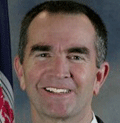
Lieutenant Governor Ralph Northam
Democrats also won two other statewide offices, and the GOP lost its once-comfortable majority in the lower house of the state legislature, a stunning feat that included election of the nation’s first-ever transgender legislator.
Northam’s 54-45 percent victory over Gillespie in the November 7 vote was nearly twice as large as Hillary Clinton’s margin of victory over Donald Trump in 2016 and was built on 20-point victories in the suburbs of Washington, D.C. and Richmond.
Holding the governorship in Virginia is a boon for Democrats frustrated by a string of heartbreaking defeats in special and off-year elections since Trump took the White House. The result, however, was a hold, not a takeaway, and it came in the lone Southern state Clinton carried.
Speaking to jubilant supporters in Fairfax, Northam offered a thinly veiled rebuke to the president’s take-no-prisoners style of politics.
“It was said that the eyes of the nation are on the commonwealth,” Northam said. “Today, Virginians have answered and have spoken. Virginia has told us to end the divisiveness, that we will not condone hatred and bigotry and to end the politics that have torn this country apart.”
After Northam was declared the winner, Trump, visiting South Korea, sent a tweet taking issue with Gillespie’s decision to distance himself from the president: “Ed Gillespie worked hard but did not embrace me or what I stand for.”
The specter of Trump hovered over the governor’s race. Gillespie did not invite the president to cross the Potomac to campaign for him, angering some in his party’s pro-Trump base, but Northam still tried to hang Trump around Gillespie’s neck, accusing the GOP nominee of figuratively “standing right next” to the president, even if literally he had not.

Ed Gillespie
In his concession speech, Gillespie thanked his campaign workers and supporters but did not mention the president.
“I felt called to serve. I hope I’ll discern what (God’s) calling is for me next,” Gillespie said.
Gillespie’s loss is his second statewide defeat in four years. In 2014, he challenged Democratic U.S. Senator Mark Warner, coming to within 18,000 votes of beating him.
In the race for lieutenant governor, Democrat Justin Fairfax, an attorney and former federal prosecutor from the D.C. suburbs, defeated Republican State Senator Jill Vogel. Democratic Attorney General Mark Herring also won his re-election race over Republican John Adams.
Perhaps the most shocking result of the night came in the races for the House of Delegates, the lower house of Virginia’s legislature. Republicans entered election day holding a 66-34 majority; Democrats ousted at least 11 incumbents and picked up three open seats that the GOP had held.
With five races still too close to call, Democrats had 48 seats and Republicans 47. Of the five races left outstanding, Republicans were ahead in three and Democrats in two. If those results hold, the chamber would be evenly divided, 50-50.
In four of the five House races still to be decided, the leads are less than 125 votes, making recounts likely.
Virginia Delegate-Elect Danica Roem
Among the winners was Danica Roem, a transgender woman who won a seat in Prince William County by defeating veteran GOP Delegate Bob Marshall, a 14-term social conservative who had described himself as Virginia’s “chief homophobe” and insisted on referring to Roem with male pronouns.
When Roem takes office, she will be the the first transgender person in the United States to be elected and serve in a state legislature while openly acknowledging her gender identity.
Northam’s win in the South’s lone off-year governor’s election gives Democrats three of the region’s 14 governorships, with Northam joining Louisiana Governor Jon Bell Edwards and North Carolina Governor Roy Cooper. The incumbent Democrat in Virginia, Governor Terry McAuliffe, was barred by state law from seeking re-election.
Northam, 58, comes to the governorship after 10 years in elected office, first as a state senator and then lieutenant governor. A former U.S. Army doctor, he has practiced pediatric neurology at a children’s hospital in Norfolk since 1992.
With his win, Democrats have now won three of the last four governor’s races in Virginia, a once solidly Republican state that has trended Democratic in recent years, primarily due to an influx of new voters into the Washington, D.C. suburbs.
Voters in Virginia set to decide governor’s race
Republican Ed Gillespie and Democrat Ralph Northam battle to lead the only Southern state Hillary Clinton carried
♦By Rich Shumate, ChickenFriedPolitics.com
RICHMOND (CFP) — Virginians decide Tuesday whether to raise their Democratic lieutenant governor to the state’s top job or turn the reins over to a senior operative from George W. Bush’s White House.
The lone off-year governor’s race in the South pits Ed Gillespie, a Bush aide and former head of the Republican National Committee, against Lieutenant Governor Ralph Northam, a pediatrician who has spent the past decade in state politics.
In addition to the marquee governor’s race, statewide races for lieutenant governor and attorney general are on the ballot, and energized Democrats are trying to flip a slew of state House seats to gain bragging rights heading into the 2018 midterms.
Polls across the commonwealth open at 6 a.m. and close at 7 p.m.
Lieutenant Governor Ralph Northam
Of seven non-partisan public polls conducted since October 29 in the governor’s race, six showed results within the margin of error, making the results statistically insignificant. Just one poll, from Quinnipiac University, showed Northam with a lead of at least 1.2 percent outside the margin of error.
However, that Quinniapiac poll showed Gillespie had made up substantial ground against Northam in the final week of the campaign, particularly among independents, among whom the difference between the candidates was statistically insignificant.
Conspicuously absent from the race — President Donald Trump, who was never invited to cross the Potomac to campaign with Gillespie, although Vice President Mike Pence did make an appearance on his behalf. Trump did, however, endorse Gillespie on Twitter.
Ed Gillespie
Virginia was the only Southern state that Hillary Clinton carried in 2016, due in part to her stronger-than-usual showing the Republican-leaning Washington, D.C. suburbs in the northern part of the state. So the Gillespie campaign had to thread a difficult needle of not galvanizing anti-Trump voters by campaigning with the president, while at the same time not antagonizing ardent Trump supporters in more conservative parts of the state.
Indeed, the potency of the Trump brand among the Republican base nearly took Gillespie down in June when, despite being a prohibitive favorite, he almost lost the party’s primary to Corey Stewart, Trump’s one-time state campaign manager.
Stewart, who is running for the U.S. Senate in 2018, told Politico that Trump supporters were “bewildered” and “offended” by Gillespie’s decision to distance himself from Trump, predicting that it would hurt Gillespie by discouraging the president’s supporters from turning out.
Northam, in turn, has tried to hang Trump around Gillespie’s neck, running a TV ad during the final weekend of the campaign accusing the GOP nominee of figuratively “standing right next” to the president, even if literally he had not.
Northam, 58, joined the U.S. Army to complete his medical training after graduating from the Virginia Military Institute and has worked as a pediatric neurologist at a children’s hospital in Norfolk since 1992. He has admitted to voting for George W. Bush in 2000 and 2004 before he became active in state politics, saying that he had been “underinformed” at the time.
In 2007, he was elected as a Democrat to the Virginia Senate, representing a district that included parts of Hampton Roads and the Eastern Shore. In 2013, he became lieutenant governor, running alongside incumbent Governor Terry McAuliffe, who, under state law, can’t run for a second consecutive term.
Northam was challenged in the primary by former U.S. Rep. Tom Perriello, who tried to counter Northam’s establishment support by mobilizing Bernie Sanders supporters. In the end, Northam won by 12 points, though he has continued to face criticism from his left flank during the campaign for supporting two controversial gas pipeline projects and opposing the establishment of sanctuary cities in Virginia.
After working as Bush’s communications director in the 2000 campaign, Gillespie, 56, started a lobbying firm in Washington and was elected chairman of the RNC in 2003. He went back to the White House in 2007 as a counselor to the president and served until the end of Bush’s second term in 2009.
In 2014, Gillespie challenged Democratic U.S. Senator Mark Warner. Though Warner’s seat was considered safe, Gillespie came within 18,000 votes of beating him, in what would have been the biggest upset of the 2014 campaign.
In the lieutenant governor’s race, Republican State Senator Jill Vogel, from Fauquier County west of Washington, is facing Democrat Justin Fairfax, an attorney and former federal prosecutor who lives in surburban Fairfax.
A controversy erupted in the closing days of the campaign when Northam’s campaign dropped Fairfax, who is African-American, from a direct mail piece sent to voters because of his opposition to the two pipeline projects Northam supports.
Critics called his exclusion racist, a charge that Northam’s camp denied. But the flap could have consequences for a race in which Northam will need strong African-American support to win.
In the race for attorney general, the incumbent Democrat, Mark Herring, is being challenged by Republican John Adams, a Richmond lawyer who once clerked for conservative Supreme Court Justice Clarence Thomas.
In addition to the three statewide races, 100 seats in Virginia’s House of Delegates, the lower house of the legislature, are up for grabs. Despite Virginia’s status as a swing state in presidential politics, Republicans currently hold 66 seats, to just 34 for Democrats.
However, Democrats are contesting 88 of those seats in 2017, including challenges in 17 Republican-held seats that Clinton carried in 2016. So the results in Virginia are likely to be viewed as a bellweather for what might happen in 2018, particularly if Democrats make gains in suburban districts near Washington and Richmond.
State Senate seats are not up in Virginia this year; Republicans control the Senate, 21 to 19.
U.S. Senator Rand Paul attacked by neighbor at his Kentucky home, police say
Paul’s neighbor, a medical doctor, has been charged with assault, as motive remains unclear
 BOWLING GREEN, Kentucky (CFP) — U.S. Senator Rand Paul of Kentucky was “blindsided” and shoved to the ground while mowing the grass outside of his Kentucky home, and his neighbor has been arrested on assault charges, according to the senator’s office and Kentucky State Police.
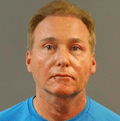
Mug shot of Rene Boucher, 59, accused of assaulting Rand Paul
Paul, who was not seriously injured after the November 3 incident, later sent out a tweet saying he and his wife “appreciate the overwhelming support after Friday’s unfortunate event. Thank you for your thoughts and prayers.”
He did not elaborate on any possible motive for the attack, nor did he discuss his relationship with Rene Boucher, 59, who is charged with fourth-degree assault in the case.
The attack took place on the afternoon of November 3 outside Paul’s home in a gated community near Bowling Green, where both he and Boucher have adjoining homes. State troopers called to the scene arrested Boucher, who “intentionally” assaulted Paul, according to police.
Boucher has worked as an anesthesiologist in Bowling Green. Prior to election to the Senate in 2010, Paul was an ophthalmologist in the western Kentucky city of 60,000.
State police told local media that the two men were acquaintances, although no additional details were provided. Given that Paul is a member of Congress, the FBI has also been contacted, state police said.
Boucher was later released from the Warren County Detention Center after posting bond. He has a court date on November 9.
The attack on Paul comes amid increased security concerns among members of Congress in the wake of contentious town hall meetings this year and the June shootings of four people during a Republican softball team practice in suburban Washington. House Majority Whip Steve Scalise of Louisiana was critically injured in that attack.
 Chicken Fried Politics