
Home » 2018 (Page 26)
Yearly Archives: 2018

Voters in Georgia, Kentucky, Arkansas and Texas will decide primary contests Tuesday
Wide open race for governor featured in Georgia; legislative races take center stage in Kentucky
♦By Rich Shumate, ChickenFriedPolitics.com editor
 ATLANTA (CFP) — Voters in four Southern states will decide primary contests on Tuesday, with a wide-open race for Georgia’s governorship topping the list of closely watched contests.
Georgia, Arkansas and Kentucky are holding primaries, while in Texas, runoffs will be held for 15 U.S. House seats that were not decided in the initial round of voting back in March, including four targeted by Democrats as pickup opportunities.
In Georgia, all eyes are on the race to succeed term-limited Republican Governor Nathan Deal, with competitive races among both Republicans and Democrats. In Kentucky, much of the attention will be on races for the state legislature, in the wake of teacher protests that have battered GOP Governor Matt Bevin’s popularity. And in Arkansas, the hottest race is a Supreme Court contest in which the incumbent sued an outside conservative group for defamation over controversial TV ads.
 In Georgia, seven Republicans are running for governor, including Lieutenant Governor Casey Cagle from Gainesville and Secretary of State Brian Kemp from Athens, who pre-election polls indicate will likely face off in a July 24 runoff. Their departures have also created wide-open races for the GOP nominations for lieutenant governor and secretary of state, where runoffs are also expected.
But it is the Democratic race for governor that is drawing national attention with the candidacy of former State House Minority Leader Stacey Abrams from Atlanta, who is trying to become the first African American women ever elected as governor of a U.S. state. Pre-election polls showed Abrams with a wide lead over former State Rep. Stacey Evans from Smyrna, although a large number of voters were still undecided.
In the Democratic race for secretary of state, former U.S. Rep. John Barrow, who lost his seat in 2014, is trying to make a political comeback against three challengers
Among U.S. House races in the Peach State, most of the attention is on the 6th and 7th districts, where Republican incumbents are seen as possibly vulnerable in districts that President Donald Trump won by a narrow margin in 2016.
In the 6th District, in Atlanta’s northern suburbs, four Democrats are vying to take on U.S. Rep. Karen Handel, who won her seat in 2017 after a hard-fought and hugely expensive special election against Democrat Jon Ossoff. Handel’s chances of keeping the seat — in a district Trump only carried by just 1.5 points — improved when Ossoff decided against a rematch.
In the 7th District, in northwest metro Atlanta, six Democrats are competing to take on U.S. Rep. Rob Woodall. While Woodall took 60 percent of the vote in 2016, Trump only won by 6 points, putting the seat within the realm of possibility for Democrats.
 In Kentucky, with no statewide races on the ballot, much of the focus has been on state legislative seats, where Democrats are hoping Bevin’s role in a fight over teacher pensions, which led to statewide protests by teachers, might translate into progress at the ballot box.
The standoff over pensions, which ended when the Republican-controlled legislature approved controversial changes after overriding Bevin’s vetoes, has roiled the Bluegrass State for months, particularly Bevin’s assertion that teacher protests might have led to abuse of children after schools had to be closed when teachers didn’t show up for work.
Bevin, who isn’t up for re-election until 2019, later apologized, but a poll from Western Kentucky University’s Social Science Research Center showed that disapproval of Bevin’s job performance spiked to 60 percent after those remarks.
While the GOP has controlled the Kentucky Senate since 2000, Democrats held the House until 2016, when Republicans finally took control for the first time in 95 years. The Kentucky House was the last legislative chamber anywhere in the South controlled by Democrats.
Republicans hold a 63 to 37 advantage in the House, which means Democrats will have to flip 14 seats to take control. While that is a tall order, those numbers are very similar to the situation in neighboring Virginia, where Democrats flipped 15 seats to come within one seat of winning control in2017
Among Kentucky’s six U.S. House seats, party nominees will be picked Tuesday in two that could become competitive in the fall, the 6th and 3rd districts.
In the 6th District, which includes Lexington and Frankfort, Lexington Mayor Jim Gray and State Senator Reggie Thomas, also from Lexington, are among a field of six Democrats vying to take on GOP U.S. Rep. Andy Barr in November. As Kentucky does not have runoffs, the top vote-getter Tuesday will face Barr in November.
Gray was the Democratic nominee for U.S. Senate in 2016, losing by 14 points to Republican US. Senator Rand Paul. However, in that race he carried Fayette County, the most populous in the 6th District.
In the neighboring 3rd District, which takes in metro Louisville, Republicans are making a play for the seat held by U.S. Rep. John Yarmuth, an unabashed liberal who has introduced articles of impeachment against Trump. Vickie Glisson, a Louisville attorney who headed the state health department in the Bevin administration, is favored over two Republican primary challengers.
 In Arkansas, six state executive offices, including governor, are up in 2018. However, Republican Governor Asa Hutchinson faces only token opposition in the primary, with two little-known Democrats vying to take him on in November. The only race with a competitive GOP primary is for secretary of state, where incumbent Republican Mark Martin is term-limited.
Among the Natural State’s four U.S. House seats, the race drawing the most attention is the 2nd District in metro Little Rock, where Democrats believe they might have a shot at ousting GOP U.S. Rep. French Hill if a national Democratic wave develops. Four Democrats are vying for the nomination to replace him, a field that includes State Rep. Clarke Tucker of Little Rock.
While Hill won re-election by 11 points in 2016, the 2nd District is the least Republican district in the state, anchored by Pulaski County, which Hillary Clinton carried in 2016. Trump won the district by less than 10 points.
The most contentious race in Arkansas is a non-partisan battle for a seat on the Arkansas Supreme Court, where incumbent Justice Courtney Hudson Goodson is being challenged by Court of Appeals Judge Ken Hixson and David Sterling, who was appointed by Hutchinson as chief counsel for the Arkansas Department of Human Services.
A week before the election, Goodson filed a defamation lawsuit against the Judicial Crisis Network, a Washington-based conservative legal group, over ads it was running against her on Arkansas TV stations which alleged she accepted gifts for donors and sought a pay raise. She also asked judges in three jurisdictions to enjoin stations from airing the ads, triggering protests from media organizations, although some of them voluntarily agreed to stop running the ads.
The JCN ads have targeted both Goodson and Hixson, although Hixson has so far not brought any legal action. Sterling has insisted that he has no connection to the group. JCN spent more than $500,000 in 2016 to defeat Goodson in a race for chief justice.
If none of the candidates captures a majority on Tuesday, the top two vote-getters will face off during the general election in November, which would drag out the contentious race for five more months.
 In Texas, Democrats will pick nominees in four targeted U.S. House seats now in Republican hands that Democrats have hopes of flipping in the fall:
- In the 7th District, in metro Houston, attorney Lizzie Pannill Fletcher will face off against liberal activist Laura Moser for the right to take on Republican U.S. John Culberson, in a district Hillary Clinton carried in 2016.
- In the 21st District, which stretches from Austin to San Antonio and takes in part of the Texas Hill Country, Republicans Matt McCall and Chip Roy will face each other in the runoff, while the Democratic primary will be between Joseph Kosper and Mary Wilson. The seat is now held by retiring U.S. Rep. Lamar Smith; Trump carried it by 10 points.
- In the 23rd District, the largest Texas district geographically which sprawls from the suburbs of San Antonio to near El Paso, Democrats Gina Ortiz Jones and Rick Trevino are vying for the right to take on incumbent Republican U.S. Rep. Will Hurd in November. Clinton also carried this majority-Latino swing district, which has changed hands four times in the last 12 years.
- In the 32nd District, in metro Dallas, the Democratic runoff is between former NFL player Colin Allred and businesswoman Lillian Salerno. The winner will face Republican U.S. Rep. Pete Sessions, who is trying to keep a traditionally Republican seat in a district that Clinton also carried.
Also in Texas, the fields will be set in four other open GOP-held districts that Republicans will be favored to keep in November:
- In the 2nd District, a metro Houston seat given up by retiring U.S. Rep. Ted Poe, the Republican runoff will be between David Crenshaw, a retired Navy officer, and State Rep. Kevin Roberts. The winner will face Democrat Todd Litton.
- In the 5th District, an East Texas seat now held by U.S. Rep. Jeb Hensarling, the Republican runoff features State Rep. Lance Gooden against Bunni Pounds, a political consultant who has been endorsed by Hensarling. The winner faces former Terrell City Councilman Dan Wood.
- In the 6th District, a seat in metro Fort Worth now held by U.S. Rep. Joe Barton, the GOP runoff is between Tarrant County Tax Assessor Ron Wright and Jake Ellzey, a former Navy fighter pilot. Democrats will choose between Jana Lynne Sanchez, a communications consultant from Waxahachie, and Ruby Faye Woolridge, an Arlington pastor who was the Democratic nominee for the seat in 2016.
- In the 27th District, a Corpus Christi-area seat that opened up after Republican U.S. Rep. Blake Farenthold resigned in April, Republicans Bech Brun and Michael Cloud will face each other in the runoff, while the Democratic runoff is between Roy Barrera and Eric Holguin. Candidates in this race are running simultaneously in the regular primary and a special election to fill the remainder of Farenthold’s term.
Barton decided not to seek re-election after after a nude selfie he had exchanged with a woman with whom he was having a consensual extramarital relationship wound up on social media.
Farenthold resigned after news reports that $84,000 in taxpayer dollars had been used to pay a settlement to a former female staffer who alleged that she suffered sexual harassment from Farenthold and another male staffer. The congressman denied the harassment allegations, while conceding that a lax management style in his Washington office created a “decidedly unprofessional” work environment.
Failed GOP U.S. Senate candidate Don Blankenship will make 3rd-party bid in West Virginia
Blankenship’s move could complicate efforts to defeat Democrat Joe Manchin, but state law might keep him off the November ballot
♦By Rich Shumate, ChickenFriedPolitics.com editor
 CHARLESTON, West Virginia (CFP) — Two weeks after coming in a distant third in a Republican primary for West Virginia’s U.S. Senate seat, Don Blankenship, a former coal baron who went to prison for his role in a deadly mine disaster, has announced he has accepted a third-party nomination for the seat, a move that could harm Republican prospects for defeating incumbent Democratic U.S. Senator Joe Manchin in November.

Don Blankenship
However, to get on the ballot, Blankenship may need to successfully challenge a state law that prevents losing candidates in major-party primaries from running in the general election under the banner of a third party, which he is vowing to do.
“The political establishment is determined to keep me—the most anti-establishment candidate in the nation—out of the United States Senate,” Blankenship said in a May 21 statement announcing that he had accepted a nomination from the Constitution Party.
“Although the establishment will likely begin their efforts against us by mounting a legal challenge to my candidacy, we are confident that—if challenged—our legal position will prevail, absent a politically motivated decision by the courts.”
Blankenship’s statement also included a comment from the Constitution Party’s vice chair, Phil Hudok, saying that the party looked upon Blankenship’s candidacy as a “great opportunity to put the principles of our party on display and to elect someone who will represent the values of West Virginians instead of those of the DC establishment.”
Blankenship, the former CEO of Massey Energy, spent a year in federal prison for violating mine safety regulations after 29 miners died in an explosion in his company’s Upper Big Branch Mine in 2010, the deadliest U.S. mine accident in the last 40 years.
He has insisted that federal mine inspectors were responsible for the accident and that he was unfairly prosecuted by the Obama Justice Department.
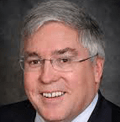
Attorney General Patrick Morrisey
Republican leaders were relieved when Blankenship was defeated in the May 8 primary by Attorney General Patrick Morrisey, after President Donald Trump intervened and urged his followers not to support Blankenship because he could not win a general election against Manchin.
However, since his defeat, Blankenship has refused to endorse Morrisey and has continued a public feud with the top Republican in the Senate, Majority Leader Mitch McConnell, who spearheaded the stop-Blankenship effort.
To get on the ballot in West Virginia, a minor party candidate needs to collect roughly 4,400 petition signatures by August 1. However, under the state’s “sour grapes” law, candidates who lose a primary in May aren’t eligible to get on the November ballot through the petition process, according to a guide for candidates prepared by the West Virginia Secretary of State’s office
In his statement, Blankenship did not indicate what legal argument he planned to advance to try to get around the prohibition.
As attorney general, Morrisey would normally be responsible for defending the state’s legal position in court. A spokesman for Morrisey’s office declined say if he would recuse himself when asked by the Charleston Gazette-Mail.
U.S. Rep. Robert Pittenger goes down in North Carolina GOP primary
Races now set in three competitive seats Democrats are targeting in November
 CHARLOTTE (CFP) — The fields are now set for three competitive U.S. House races in North Carolina, including the 9th District where Republican U.S. Rep. Robert Pittenger has become the first incumbent to go down to defeat in the 2018 election cycle.

Mark Harris
Pittenger. seeking his fourth term in Congress, was defeated in the May 8 primary by Mark Harris, a prominent Baptist pastor from Charlotte. Harris took 49 percent, to 46 percent for Pittenger.
“From the beginning, this race has been about giving the people of this district a voice, and you have stood up tonight across the 9th District, and you have made that voice loud and clear,” Harris told supporters at a victory celebration in Indian Trail.
Harris will now face Democrat Dan McCready in November for a metro Charlotte seat that Democrats have high hopes of flipping.
McCready, a Marine Corps veteran and solar energy entrepreneur, easily won the Democratic primary. The most recent Federal Election Commission reports show that he has so far raised $1.9 million for the fall race, about three times as much as Harris.
Harris is the former senior pastor of the First Baptist Church of Charlotte and former president of the State Baptist Convention of North Carolina. In 2012, he helped lead the fight for a state constitutional amendment outlawing same-sex marriage, and he made an unsuccessful bid for the U.S. Senate in 2014.
The race in the 9th District, which includes parts of Charlotte and its southern and eastern suburbs and stretches east to Fayetteville, was a rematch of a primary battle between Pittenger and Harris in 2016 that the incumbent won by just 134 votes; this time, Harris won by 814 votes.
Pittenger had the backing of House Republican leaders, and Vice President Mike Pence came to North Carolina to campaign for him. Harris countered with anti-establishment campaign that painted Pittenger as part of the Washington “swamp.”
In addition to the 9th District, Democrats are eyeing two other seats, the 2nd District and the 13th District, in an attempt to cut into the GOP’s dominance in the Tar Heel State’s congressional delegation, where Republicans hold 10 of 13 seats.
In the 2nd District, centered in metro Raleigh, Democrat Linda Coleman had an easy primary victory and will now face Republican U.S. Rep. George Holding in November.
Coleman, a former state representative and Wake County commissioner, was the unsuccessful Democratic nominee for lieutenant governor in both 2012 and 2016. However, she starts the general election with a substantial financial disadvantage against Holding, who is seeking his fourth term.
That is not the case in the 13th District, where the Democrats’ nominee, Kathy Manning, has raised $1.3 million and has $1 million in cash on hand, outstripping the Republican incumbent, U.S. Rep. Ted Budd, who has raised $880,000 and has just $362,000 on hand, according to FEC records.
Manning, a lawyer from Greensboro, is making her first bid for elective office in the district, which stretches from the northern suburbs of Charlotte to Greensboro. Budd, first elected in 2016, is trying to win a second term.
In 2016, President Donald Trump carried the 2nd District by 10 points, the 9th District by 12 points and the 13th District by 9 points.
GOP leaders dodge bullet in West Virginia as Morrisey wins U.S. Senate primary
Jailed former mine owner Don Blankenship finishes a distant third
♦By Rich Shumate, ChickenFriedPolitics.com editor
CHARLESTON, West Virginia (CFP) — Republican leaders in West Virginia are breathing a sigh of relief after Attorney General Patrick Morrisey won the party’s U.S. Senate primary, ending an insurgent bid by Don Blankenship, who went to prison for his role in a deadly mine explosion.
Attorney General Patrick Morrisey
Pre-election fears that Blankenship would win the GOP primary and hand the race to Democratic U.S. Senator Joe Manchin in November did not come to pass, as Blankenship finished a distant third.
Morrisey took 35 percent, defeating U.S. Rep. Evan Jenkins, with 29 percent and Blankenship with 20 percent.
In his victory speech, Morrisey cast the upcoming race against Manchin in ideological terms, criticizing “Washington elites” who he said “push their liberal agenda down our throats.”
“The spend our money, they raise our taxes, and they sneer at our culture, our values, our jobs and our priorities,” he said.
He also faulted Manchin — perhaps the Senate’s most conservative Democrat — with being insufficiently supportive of President Donald Trump.
“When President Trump needed Joe Manchin’s help on so many issues, Senator Manchin said no,” Morrisey said. “Senator Manchin has repeatedly sided with (Senate Minority Leader) Chuck Schumer and his liberal friends over President Trump.”
Morrisey, 50, was first elected attorney general in 2012, the first Republican to hold that post in nearly 70 years.
Although he now casts himself as a champion of West Virginia values, Morrisey grew up in New Jersey, where he ran for Congress in 2000. While working as a lobbyist in Washington in 2006, he moved to Jefferson County, in the West Virginia panhandle which is part of the Washington, D.C. metropolitan area.
With Republicans clinging to a one-seat Senate majority, the race in West Virginia — which Trump won by a stunning 42 points in 2016 — presents a prime pickup opportunity.

U.S. Senator Joe Manchin
Manchin, 70, seeking a second full term in the Senate, easily won the Democratic primary. Despite being a former two-term governor and serving in statewide office since 2001, Manchin is considered among the most vulnerable Democratic senators in the 2018 cycle because of the size of Trump’s win in 2016.
On the eve of the primary, Trump weighed in on Twitter against Blankenship, telling Mountaineer State voters that the former coal mine company CEO could not win in November. He urged them to vote for either Morrisey or Jenkins, though he stopped short of endorsing either man.
Morrisey paid tribute to Trump’s tweet in his victory speech: “Mr. President, if you’re watching right now, your tweet was h-u-u-uge.”
Blankenship, 68, spent a year in prison for violating mine safety laws stemming from a 2010 explosion at the Upper Big Branch mine, which killed 29 miners. He launched his Senate bid after being released, pouring at least $3.5 million of his own money into his campaign to brand himself as an anti-establishment outsider.
Also on the primary ballot in West Virginia was the race in the 3rd U.S. House District, which Jenkins gave up to run for the Senate.
On the Republican side, State House Majority Whip Carol Miller of Crab Orchard won her party’s nomination. In November, she will face the Democratic nominee, State Senator Richard Ojeda, an Iraq war veteran who may be the best hope Democrats have for winning a House seat in West Virginia in 2018.
GOP leaders fear Alabama-style debacle in West Virginia U.S. Senate primary
A win by jailed former mine operator Don Blankenship could ensure Democrat Joe Manchin’s re-election
♦By Rich Shumate, ChickenFriedPolitics.com editor
CHARLESTON, West Virginia (CFP) — Republican party leaders in West Virginia are bracing for the possibility that a coal mine owner who went to prison after 29 of his workers were killed by an explosion in an unsafe mine might end up as their nominee for the U.S. Senate, handing the seat to Democrats in November.
Don Blankenship
Heading into Tuesday’s primary, polls showed no clear leader in the GOP Senate race between Don Blankenship, U.S. Rep. Evan Jenkins and Attorney General Patrick Morrisey, who are all vying for the right to take on Democratic U.S. Senator Joe Manchin in November.
Blankenship, the former CEO of Massey Energy, spent a year in prison for willfully violating mine safety laws after a 2010 explosion at the Upper Big Branch mine in Montcoal killed 29 miners, the deadliest mine accident in the United States in 40 years.
GOP leaders have become alarmed at the possibility that they will be saddled with a flawed candidate and lose a winnable Senate race, a point President Donald Trump made in an election-eve tweet: “Remember Alabama. Vote Rep. Jenkins or A.G. Morrisey!”
Trump’s reference was to the race for an open Senate seat in Alabama, where Democrat Doug Jones pulled off an upset in December after the Republican nominee, Roy Moore, was accused of sexually pursuing young girls, a charge he denied.
With Republicans clinging to a one-seat majority, the race in West Virginia — which Trump won by a stunning 42 points in 2016 — presents a prime pickup opportunity that could vanish with a Blankenship victory.
Blankenship, 68, has maintained that he is innocent of the charges brought against him for the Upper Big Branch mine explosion, blaming the disaster instead on federal mine inspectors. He has poured at least $3.5 million of his own money into his Senate campaign, trying to brand himself as an anti-establishment outsider.
Among Blankenship’s targets has been the top Republican in the Senate, Majority Leader Mitch McConnell. In one ad, he calls McConnell “Cocaine Mitch,” a spurious charge based on a report that cocaine had been found on a ship belonging to a shipping company owned by the family of McConnell’s Chinese-American wife, Transportation Secretary Elaine Chao.
Although McConnell and his wife own stock in the shipping company, there is no evidence either of them or their families members had any connection with the cocaine shipment.
Until Blankenship began rising in the polls, Jenkins and Morrisey had mostly turned their fire on each other. The question now is whether either one of them will be able to defeat Blankenship and preserve Republican hopes in November.
West Virginia does not have primary runoffs, so whichever candidate wins a plurality Tuesday will get the nomination.
U.S. Senator Joe Manchin of West Virginia
Manchin, 70, is seeking a second full term in the Senate. Despite being a former two-term governor and serving in statewide office since 2001, Manchin is considered among the most vulnerable Democratic senators in the 2018 cycle because of the size of Trump’s win in 2016.
Jenkins, 57, was elected to represent the state’s 3rd District in 2014 after toppling then-U.S. Rep. Nick Rahall, a Democratic titan who had served 19 terms in Congress.
Morrisey, 50, was first elected attorney general in 2012, the first Republican to hold that post in nearly 70 years. A native of New Jersey who ran for Congress from that state in 2000, Morrisey moved in 2006 to Jefferson County, a county in the West Virginia panhandle which is part of the Washington, D.C. metropolitan area.
Also on the primary ballot are races in the the 3rd District, which takes in the lower third of the state. Seven Republicans, including four current or former state House members, are vying for the nomination to succeed Jenkins, with House Majority Whip Carol Miller of Crab Orchard establishing a strong fundraising advantage.
The likely Democratic nominee is populist State Senator Richard Ojeda, an Iraq war veteran who may be the best hope Democrats have for winning a House seat in the Mountaineer State in 2018.
 Chicken Fried Politics