
Home » 2018 (Page 28)
Yearly Archives: 2018

Texas primaries narrow crowded fields in U.S. House races
Valdez, White face off in Democratic governor’s primary; Cruz, O’Rourke in U.S. Senate race
♦By Rich Shumate, ChickenFriedPolitics.com editor
 AUSTIN — Texas primary voters have narrowed crowded fields vying for 11 open or potentially competitive U.S. House seats and the U.S. Senate, while the Democratic race for governor is heading to a May runoff to pick a nominee for an uphill climb against Republican Governor Greg Abbott.
And while Democrats have high hopes of riding a wave of enthusiasm to put a dent into the GOP’s 25-to-11 advantage in the Texas U.S. House delegation, more than 530,000 more voters chose the Republican over the Democratic ballot in the March 6 primaries, although that was a better showing by Democrats than in the last midterm primary in 2014.

O’Rourke

Cruz
In the U.S. Senate race, as expected, Republican incumbent Ted Cruz and Democratic U.S. Rep. Beto O’Rourke both easily won their primaries, setting up a November race likely to draw national attention. O’Rourke took 62 percent, and Cruz, 85 percent.
In the governor’s race, Abbott, seeking a second term, won outright with 90 percent of the vote. The Democratic runoff will be between former Dallas County Sheriff Lupe Valdez and Andrew White, a Houston investment banker and son of the late former Governor Mark White. Valdez had a strong lead in the race, 43 percent to 27 percent, over White.

George P. Bush
Republican incumbents also won in six other statewide races, including Land Commissioner George P. Bush, son of former Florida Governor Jeb Bush, who took 58 percent of the vote to beat back three challengers.
In the U.S. House races, Democrats’ top targets in November are three GOP incumbents who represent districts Hillary Clinton won in 2016: John Culberson in the 7th District in Houston; Pete Sessions in the 32nd District in Dallas; and William Hurd, who represents the 23rd District in West Texas stretching from the suburbs of San Antonio over to El Paso. All three easily won their primaries.
In the 7th District, the two Democrats who qualified for the runoff are Lizzie Pannill Fletcher, a Houston lawyer, and Laura Moser, a journalist who carried the endorsement of Our Revolution, a liberal group that sprang from Bernie Sanders’ failed presidential campaign.
This race heated up when Democratic Congressional Campaign Committee, the campaign arm of House Democrats, intervened by publishing opposition research critical of Moser because of fears she won’t be competitive against Culberson in November. However, she used the DCCC’s memo to raise money and made it past five other Democrats into the runoff with Fletcher.
In the 32nd District, Collin Allred, an attorney and former player for the NFL’s Tennessee Titans, topped the Democratic primary with 39 percent and will face Lillian Salerno, who served as a deputy undersecretary on the U.S. Department of Agriculture during the Obama administration, who got into the runoff with 18 percent.
In the 23rd District, Gina Oritz Jones, an Iraq war veteran from San Antonio who worked as a U.S. trade representative, led the race with 42 percent and will face Rick Trevino, a high school teacher from San Antonio who served as a Sanders delegate in 2016. The majority Latino 23rd District, where Hurd is seeking a third term, is a perennial swing seat that changed hands in 2010, 2012 and 2014.
In addition to the races that Democrats are targeting, there are also eight other open seats in Texas that drew crowded primaries:
- In the Houston-area 2nd District, being vacated by Republican Ted Poe, Republicans will have a runoff between State Rep. Kevin Roberts and David Crenshaw, a retired Navy officer.
- In the Dallas-area 3rd District, being vacated by Republican Sam Johnson, State Senator Van Taylor won the Republican nomination outright in the primary. He will face the winner of a Democratic runoff between attorneys Lorie Burch and Sam Johnson (no relation to the incumbent).
- In the 5th District, also near Dallas, which is being vacated by Republican Jeb Hensarling, Republican State Rep. Lance Gooden will be in a runoff against fundraising consultant Bunni Pounds for the right to take on Democrat Dan Wood, a former city councilman in Terrell. Hensarling has endorsed Pounds.
- In the 6th District south of Dallas, being vacated by Republican Joe Barton, both parties will have runoffs. The Republican runoff pits Jake Elizey, a former fighter pilot, against Tarrant County Tax Assessor Ron Wright. On the Democratic side, journalist Jana Sanchez will square off against Ruby Fay Woodridge, an Arlington pastor who ran for the seat in 2016.
- In the 16th District in El Paso, which O’Rourke is giving up to run for the Senate, former El Paso County Judge Veronica Escobar won the Democratic primary with 61 percent of the vote, making her a prohibitive favorite in this heavily Democratic, majority Latino district. Her Republican opponent will be Rick Seeberger, a strategic planner from Canutillo.
- In the 21st District in the Texas Hill Country, being vacated by Lamar Smith, a 18-candidate Republican field has been narrowed to businessman Matt McCall and Austin attorney Chip Roy. On the Democratic side, attorney and former military officer Joseph Kopser will face minister Mary Wilson.
- In the 27th District, which includes Corpus Christi and much of the Gulf Coast and is being vacated by Republican Blake Farenthold, the Republican primary will feature Bech Bruun, former chairman of the Texas Water Development Board, and Michael Cloud, the former GOP chair in Victoria County. The Democratic runoff will include Raul “Roy” Barrera, a federal court deputy in Corpus Christi, and Eric Holguin, a former congressional aide.
- In the 29th District in Houston, being vacated by Democrat Gene Green, State Senator Sylvia Garcia beat six other Democrats to win the Democratic nomination outright with 63 percent of the vote. She will face the winner of the Republican runoff between Phillip Aronoff, a physician, and Carmen Maria Montiel, a Houston TV journalist who once represented her native Venezuela in the Miss Universe Pageant.
Mississippi U.S. Senator Thad Cochran will resign April 1
Ill health forces Mississippi’s senior senator from office after nearly 46 years on Capitol Hill
♦By Rich Shumate, ChickenFriedPolitics.com
 WASHINGTON (CFP) — U.S. Senator Thad Cochran will resign from the Senate effective April 1 for health reasons, triggering a special election that will put both of Mississippi’s Senate seats up for grabs this November.

U.S. Senator Thad Cochran
“I regret my health has become an ongoing challenge,” Cochran said in a March 5 statement announcing his departure. “My hope is by making this announcement now, a smooth transition can be ensured so (the people of Mississippi’s) voice will continue to be heard in Washington, D.C.”
Governor Phil Bryant will appoint a temporary replacement for Cochran until the remaining two years of his term can be filled by a special election in November. Politico reported that Senate Majority Leader Mitch McConnell is urging Bryant to appoint himself to the vacancy, which would give him an advantage in pursuing the seat permanently in November.
Cochran’s decision comes just four days after the filing deadline closed for the state’s June primary. After months of speculation that Cochran’s seat could come open, Republican State Senator Chris McDaniel–who fought a bruising primary against Cochran in 2014–committed to making a primary run instead against Cochran’s Senate seatmate, Roger Wicker.
McDaniel could drop out of the race against Wicker and run in the special election for Cochran’s seat, although those calculations would be affected by Bryant’s decision on who will replace Cochran.
After Cochran’s announcement, McDaniel issued a statement saying he would “monitor developments” and “all options remain on the table as we determine the best way to ensure that Mississippi elects conservatives to the United States Senate.”
Cochran, 80, chairman of the powerful Senate Appropriations Committee, was hospitalized last fall for a urinary tract infection that kept him away from the Capitol for several weeks, raising questions about ability to continue in office.
While he remained chair of the committee, the No. 2 Republican on the panel, U.S. Senator Richard Shelby of Alabama, has filled in for Cochran during his frequent absences.
Cochran has served in Congress for nearly 46 years. He was elected to the U.S. House in 1972 and the Senate in 1978, becoming the first Republican elected statewide in Mississippi since Reconstruction.
His toughest race came in 2014, when McDaniel narrowly beat him in the first round of voting in the GOP primary to force a runoff. However, the Republican establishment roared back in favor of the veteran senator, who took the runoff by 7,700 votes.
McDaniel unsuccessfully challenged the result, alleging that the Cochran campaign had induced Democrats to vote illegally in the Republican primary. Under state law, Democratic voters were free to vote in the runoff if they had not voted during the first round in the Democratic primary, a tactic Cochran’s campaign openly encouraged.
The contentious 2014 campaign left bruised feelings in the Magnolia State, particularly after McDaniel supporter Clayton Kelly sneaked into a nursing home to photograph Cochran’s wife, who was suffering from dementia, in order to collect material for a political video alleging that Cochran was involved in an extramarital affair. McDaniel denied any involvement in the scheme.
Kelly later went to prison, and Rose Cochran died in December 2014. Senator Cochran married Kay Webber, a longtime staffer in his Washington office, in 2015.
Chris McDaniel launches bid to unseat Mississippi U.S. Senator Roger Wicker
McDaniel, a state senator, came close to defeating Mississippi’s other U.S. senator, Thad Cochran, in 2014
♦By Rich Shumate, ChickenFriedPolitics.com editor
ELLISVILLE, Mississippi (CFP) — Just four years after coming from out of nowhere to nearly topple Mississippi’s venerable U.S. Senator Thad Cochran, State Senator Chris McDaniel is taking aim again, but this time at Cochran’s Senate seatmate, Roger Wicker.
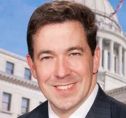
State Senator Chris McDaniel
Calling the Republican Party “untethered,” McDaniel announced his primary run against Wicker before a hometown crowd in Ellisville February 28, triggering what is likely to be a contentious struggle between the GOP’s establishment and Tea Party wings.
“It’s time to reassert who we are. Foundational principles matter,” said McDaniel, who went on to take a shot at politicians who, he said, change once they get to Washington and find themselves surrounded by “all that marble, all that money, and all those lobbyists.”
“Why do you keep sending the same old men to represent you?” McDaniel said, a dig at Wicker, 66, and Cochran, 80, who together have spent almost 70 years in Congress. “They are more concerned about (Senate Majority Leader) Mitch McConnell than they are you.”
“They betray you. They betray you to empower themselves. They forget about the regular people in Mississippi,” he said. “I’m tired of electing people from Mississippi who go to Washington to score points for the other team.”
However, McDaniel will be making his challenge against Wicker without the backing of President Donald Trump, who has tweeted his support for the incumbent:
“@SenatorWicker of Mississippi has been a great supporter and incredible help in getting our massive Tax Cut Bill done and approved. Also big help on cutting regs. I am with him in his re-election all the way!”
But if Trump is not embracing McDaniel, McDaniel made it clear that he would be embracing Trump.
“Donald Trump told us he wanted to drain the swamp. And I’m going to go there and help him drain the swamp,” he said.
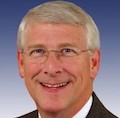
U.S. Senator Roger Wicker
After McDaniel’s announcement, Wicker released a statement saying he was “looking forward to this campaign and sharing my record of successfully fighting to reduce job-killing regulations, confirm conservative judges, enact historic tax cuts, rebuild our military, and honor our veterans.”
“We will work hard to once again earn the votes and support of all Mississippians.”
McDaniel, 45, has served in the Mississippi Senate since 2008. In 2014, he challenged Cochran, who began serving in Congress when McDaniel was in diapers, and narrowly beat him in the first round of voting to force a runoff. However, the Republican establishment roared back in favor of the veteran senator, who took the runoff by 7,700 votes.
McDaniel unsuccessfully challenged the result, alleging that the Cochran campaign had induced Democrats to vote illegally in the Republican primary. Under state law, Democratic voters were free to vote in the runoff if they had not voted during the first round in the Democratic primary, a tactic Cochran’s campaign openly encouraged.
The contentious 2014 campaign left bruised feelings in the Magnolia State, particularly after McDaniel supporter Clayton Kelly sneaked into a nursing home to photograph Cochran’s wife, who was suffering from dementia, in order to collect material for a political video alleging that Cochran was involved in an extramarital affair. McDaniel denied any involvement in the scheme.
Kelly later went to prison, and Rose Cochran died in December 2014. Senator Cochran married Kay Webber, a longtime staffer in his Washington office, in 2015.
In recent months, Cochran has been in ill health, leading to speculation that his seat might open up for McDaniel to try to fill. However, with the filing deadline for Wicker’s seat coming up March 1, McDaniel opted for a primary challenge instead.
McDaniel will be able to rely on support from Tea Party and conservative groups critical of the Senate Republican leadership, who backed him in his campaign against Cochran. He has also reportedly been meeting with Trump’s former chief strategist, Steve Bannon, as part of Bannon’s efforts to recruit challengers to run against incumbent Republican senators.
Wicker was elected to the Senate in 2006 after serving six terms in the U.S. House and won re-election easily in 2012. The winner of the GOP primary would be a prohibitive favorite in Mississippi, which hasn’t elected a Democrat to the U.S. Senate since 1982.
Democratic hopes for an Alabama-style upset in neighboring Mississippi were dashed in January when Public Service Commissioner Brandon Presley, a distant relative of Elvis Presley, decided not to run. The only Democrat to file for the seat is political newcomer Jensen Bohren, a Bernie Sanders supporter.
Report: Tennessee U.S. Senator Bob Corker to stick with retirement
Decision clears way for Senate showdown between GOP U.S. Rep. Marsha Blackburn and former Democratic Governor Phil Bredesen
♦By Rich Shumate, ChickenFriedPolitics.com editor
 WASHINGTON (CFP) — After reconsidering his decision to retire from the U.S. Senate, Republican Bob Corker has now ruled out seeking another term this year, setting up a general election match-up between U.S. Rep. Marsha Blackburn and former Democratic Governor Phil Bredesen that could determine control of the Senate.

U.S. Senator Bob Corker
In an February 27 interview with Politico, Corker’s chief of staff, Todd Womack, said the senator has decided to stick with the decision he made last September not to seek a third term, despite being urged by other Republicans to reconsider amid fears that Blackburn could have trouble keeping the seat in GOP hands in November.
A week earlier, former U.S. Rep. Stephen Fincher, Blackburn’s chief opponent in the Republican primary, ended his campaign and publicly called on Corker to run again.
Central to the considerations about whether to reverse course was Corker’s contentious relationship with President Donald Trump.
Last August, the senator said Trump “has not yet been able to demonstrate the stability nor some of the competence that he needs to demonstrate in order to be successful” and also referred to the White House as an “adult day care center.” After his criticisms triggered a presidential pillorying on Twitter, Corker said Trump “debases our country” and has “great difficulty with the truth.”

U.S. Rep. Marsha Blackburn
Blackburn, 65, who was first elected in 2002 to represent Tennessee’s 7th District, which takes in Nashville’s southern suburbs and the west-central part of the state, served on Trump’s transition team and has positioned herself as a strong supporter. She has also been critical of the current Republican leadership in the Senate, in which Corker chairs the Foreign Relations Committee.
Although the departures of Fincher and Corker have cleared the Republican field for Blackburn, she will face a formidable obstacle in Bredesen, 74, who served as governor from 2003 to 2011 and has the distinction of being the last Democrat to win a statewide election in the Volunteer State. He is also a multimillionaire who could pour his own resources into the campaign.

Former Governor Phil Bredesen
Bredesen had initially declined to run for the Senate seat after Corker announced his retirement. But in December, a week before Democrats picked up a Senate seat in Alabama that had been thought to be unwinnable, Bredesen jumped into the race. Nashville attorney James Mackler, who had been seen as the presumptive Democratic nominee, then dropped out.
With Republicans holding a slim 51-49 majority in the U.S. Senate, the unexpectedly competitive race in Tennessee complicates the GOP’s efforts to keep control. However, Democrats haven’t won a Senate race in Tennessee in 28 years.
The contest in Tennessee is one of five Southern U.S. Senate races that could potentially be competitive in 2018:
- In Texas, Republican U.S. Senator Ted Cruz will face Democratic U.S. Rep. Beto O’Rourke; Democrats haven’t won a Senate in the Lone Star State since 1988.
- In Florida, Democratic U.S. Senator Bill Nelson appears likely to face a challenge from Republican Governor Rick Scott in what is likely to be the 2018 cycle’s most expensive Senate race.
- In West Virginia, Democratic U.S. Senator Joe Manchin will face the winner of a GOP primary between U.S. Rep. Evan Jenkins and state Attorney General Patrick Morrisey, in a state Trump won by 40 points in 2016.
- In Virginia, five Republicans will vie in a June primary to take on Democratic U.S. Senator Tim Kaine, in an increasingly Democratic state that Hillary Clinton carried.
Of the 28 senators representing Southern states, only four are Democrats, three of whom are up for re-election in 2018. The fourth is Doug Jones, who won a special election in Alabama in December.
South Carolina U.S. Rep. Trey Gowdy bowing out of Congress
Gowdy, chair of the House Oversight Committee, won’t seek re-election in 2018
 WASHINGTON (CNN) — U.S. Rep. Trey Gowdy of South Carolina, who drew national attention for leading a congressional investigation into the 2012 terror attacks in Benghazi, Libya, has announced he is retiring from Congress after four terms.

U.S. Rep. Trey Gowdy, R-South Carolina
In a January 31 statement announcing his departure, Gowdy, a former federal and state prosecutor, said he planned to return to work in the criminal justice system, although he gave no specifics.
“Whatever skills I may have are better utilized in a courtroom than in Congress, and I enjoy our justice system more than our political system,” the Republican lawmaker said in his statement. “As I look back on my career, it is the jobs that both seek and reward fairness that are most rewarding.”
“The book of Ecclesiastes teaches us there is a time and a season for all things. There is a time to start and a time to end. There is a time to come and a time to go. This is the right time, for me, to leave politics and return to the justice system.”
Gowdy, who was named chairman of the House Oversight Committee last summer, becomes the eighth Republican committee chair overall, and the sixth Southern chair, to forgo a re-election bid this year.
His election will open up a seat in South Carolina’s 4th District, in metro Greenville-Spartanburg. The district is solidly Republican, so Gowdy’s successor is likely to be picked in the June primary. Filing for office begins March 30.
Gowdy, 53, was elected in the Tea Party wave of 2010. He quickly rose to prominence after former House Speaker John Boehner appointed him to head a special investigative committee that looked into a terror attack on a U.S. diplomatic compound in Benghazi, Libya, that left four Americans dead.
The most lasting impact from that investigation was the disclosure that than-Secretary of State Hillary Clinton had used a private email server during her tenure at the State Department, an issue which dogged her throughout the 2016 presidential campaign.
Gowdy joins a growing list of Southern House committee chairs who are leaving Congress, which includes Jeb Hensarling of Texas, chair of the Financial Services Committee; Diane Black of Tennessee, chair of the House Budget Committee, who is running for governor; Bob Goodlatte of Virginia, chair of the House Judiciary Committee; Joe Barton of Texas, chair of the House Energy Commitee; and Gregg Harper of Mississippi, chair of the House Administration Committee.
So far, 15 Southern House Republicans have announced they won’t seek re-election in 2018, including six from Texas and two each from Tennessee and Florida. Only two Southern Democrats aren’t running, both in Texas.
 Chicken Fried Politics