
Home » 2021 (Page 11)
Yearly Archives: 2021


Veteran Arkansas State Senator Jim Hendren leaves Republican Party to become independent
Decision by Hendren, nephew of Governor Asa Hutchinson, sparks speculation about 2022 bid for governor
♦By Rich Shumate, ChickenFriedPolitics.com
 LITTLE ROCK (CFP) — Saying he was disturbed by the corrosive effects of hyper-partisanship and the January 6 assault on the U.S. Capitol, veteran Arkansas State Senator Jim Hendren announced Thursday that he was leaving the Republican Party, becoming an independent and forming a new centrist political organization, Common Ground AR.
The move prompted speculation that Hendren could launch an independent bid for governor in 2022, setting up a general election showdown with a Donald Trump-aligned Republican candidate.

State Senator Jim Hendren, I-Arkansas, announces party switch (From YouTube)
In a statement posted to YouTube, Hendren said the attack on the Capitol was the “final straw” that prompted him to leave the GOP, which he has represented for nearly 15 years as a legislator, including four years as Senate majority leader from 2015 to 2019.
“I asked myself what in the world I would tell my grandchildren when they asked one day what happened and what did I do about it?” Hendren said. “At the end of the day, I want to be able to tell my family, my friends, and the people I serve that I did everything I could to do right by them.”
“I’m still a conservative. But I’m one whose values about decency, civility and compassion I just don’t see in my party anymore,” he said. “I haven’t changed. My party has.”
Watch video of Hendren’s full statement at end of story.
Hendren, 57, who represents a district in Northwest Arkansas, comes from a prominent and politically connected Arkansas political family. His father, Kim, is a former legislator, and he is the nephew of Republican Governor Asa Hutchinson and former U.S. Senator Tim Hutchinson.
While not mentioning Donald Trump by name, Hendren made it clear that his decision to leave was prompted by Trump’s impact on the Republican Party.
“I watched the former president actively fan the flames of racist rhetoric, make fun of those with disabilities, bully his enemies, and talk about women in ways that would never be tolerated in my home or business,” Hendren said. “As he did this from the highest office in the land, I realized that my daughters and granddaughters were hearing it, too. And I worried about the example this set for my sons and grandsons.”
“And I watched as this behavior went on with nobody holding him to account and our party leaders too often taking a back seat rather than leading,” he said.
As for a run for governor in 2022, Hendren told the Arkansas publication Talk Business & Politics that he was putting that on the “back burner,” although he said he believes there would be a “hunger” among state voters for such a candidate.
The Republican contest for governor is shaping up as a battle between former Trump press secretary Sarah Huckabee Sanders and Attorney General Leslie Rutledge, who has also been a staunch Trump supporter.
Lieutenant Governor Tim Griffin announced last week that he was dropping out of the governor’s race and would instead run for attorney general.
Responding to Hendren’s decision to leave the GOP, Republican state chair Jonelle Fulmer said Hendren had never voiced his concerns to party leaders and noted that he had welcomed support from the party, including during his re-election race in November.
“This is nothing more than an attempt to garner press for a future independent candidacy for governor, knowing that he cannot compete with the conservative records” of Sanders and Rutledge, she said.
We tweet @ChkFriPolitics Join us!

Southern Republican U.S. Senators Bill Cassidy, Richard Burr vote to convict Donald Trump
All 5 Southern Democrats join unsuccessful effort to convict and disqualify Trump from future office
♦By Rich Shumate, ChickenFriedPolitics.com editor
 WASHINGTON (CFP) — U.S. Senators Bill Cassidy of Louisiana and Richard Burr of North Carolina broke with most of their Republican colleagues to vote to convict former president Donald Trump Saturday on charges of inciting the deadly riot at the U.S. Capitol on January 6.

U.S. Senators Bill Cassidy and Richard Burr
Cassidy and Burr were the only Southern Republicans to vote for conviction in Trump’s impeachment trial; all five Southern Democrats voted to convict, including U.S. Senator Joe Manchin of West Virginia, a state Trump carried by nearly 40 points in November.
While a majority of 57 senators voted to convict Trump, the number was not enough to clear the two-thirds majority required for conviction under the Constitution.
“Our Constitution and our country is more important than any one person,” Cassidy said in a statement. “I voted to convict President Trump because he is guilty.”
In his own statement, Burr said, “I do not make this decision lightly, but I believe it is necessary.”
“By what he did and by what he did not do, President Trump violated his oath of office to preserve, protect, and defend the Constitution of the United States,” Burr said.
Cassidy was elected in November to a six-year term and won’t face voters again until 2026. Burr has announced he isn’t seeking re-election in 2022 and will retire from the Senate at the end of his current term.
Machin, in a statement, said he voted to convict Trump “to hold him accountable for his seditious actions and words that threatened our democracy.”
“It is time to move forward as one nation to focus on helping Americans suffering from the pandemic,” Manchin said. “Now more than ever, it is on each of us to seek unity over division and put partisanship aside for the good of our country.”
Twenty-one Southern Republicans voted to acquit Trump, including Senate Minority Leader Mitch McConnell of Kentucky, who had denounced Trump’s claim of election fraud on the Senate floor less than an hour before a pro-Trump mob stormed the Capitol on January 6.
However, in remarks after the vote, McConnell delivered an extensive and passionate rebuke of Trump in which he excoriated his behavior as a “disgraceful dereliction of duty,” said he bears direct responsibility for the assault on the Capitol, and suggested that he could face criminal prosecution.
But McConnell said the Constitution prevented the Senate from convicting Trump of impeachment now that he’s left office.
“We have no power to convict and disqualify a former officeholder who is now a private citizen,” McConnell said. “Impeachment was never meant to be the final forum for American justice. Impeachment, conviction and removal are a specific intra-governmental safety valve.”
Also voting to acquit was U.S. Senator Tommy Tuberville of Alabama, whose phone call from Trump during the siege of the Capitol became a focus of the impeachment case brought by House managers.
Tuberville told reporters that he had informed Trump that Vice President Mike Pence had been evacuated from the Capitol, contradicting statements from Trump’s defense attorneys that he did not know of the peril in which Pence had been placed by the pro-Trump mob.
The Southern senators who joined Cassidy, Burr and Machin in voting to convict included Georgia’s two new Democratic members, Jon Ossoff and Raphael Warnock, and two Democrats from Virginia, Tim Kaine and Mark Warner.
We tweet @ChkFriPolitics Join us!

Alabama U.S. Senator Richard Shelby announces retirement
Shelby’s departure will likely spark Republican primary battle to be his successor
♦By Rich Shumate, ChickenFriedPolitics.com editor
 WASHINGTON (CFP) — Saying that “for everything there is a season,” Alabama Republican U.S. Senator Richard Shelby announced Monday that he will not seek re-election in 2022, bringing to a close a political career that has made him that longest-serving senator in his state’s history and triggering what is likely to be a pitched battle among Republicans to replace him.
“Serving in the U.S. Senate has been the opportunity of a lifetime,” Shelby said in a statement. “Although I plan to retire, I am not leaving today. I have two good years remaining to continue my work in Washington. I have the vision and the energy to give it my all. “
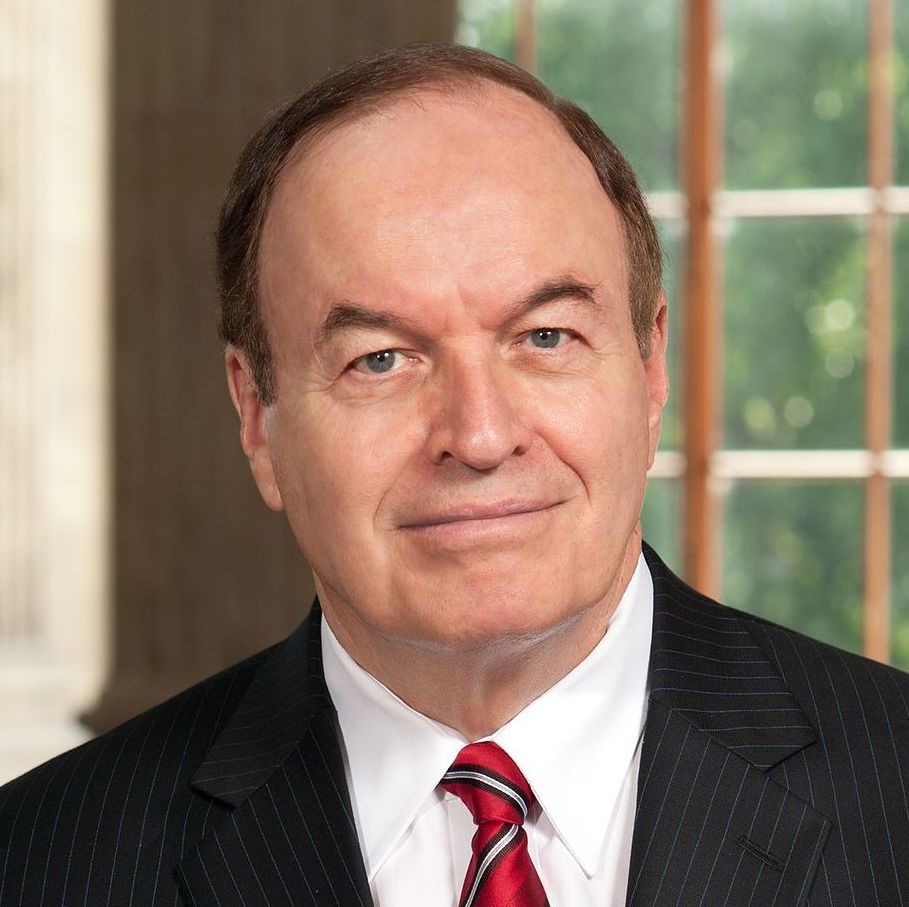
U.S. Senator Richard Shelby, R-Alabama
Shelby, 86, was elected to the U.S. House in 1978 and to the Senate in 1986, serving at various times as the chair of the appropriations, banking, intelligence and rules committees.
He was a Democrat until switching parties in 1994, as Alabama was transitioning from being solidly Democrat to solidly Republican and the GOP won control of Congress.
He routinely won re-election by large margins, mostly recently a 28-point win in 2016.
While his decision to retire is unlikely to open up a pickup opportunity for Democrats in solidly red Alabama, it is expected to trigger a free-for-all among Republicans vying to succeed him.
U.S. Rep. Mo Brooks from Huntsville and Secretary of State John Merrill have both indicated they are considering the race. Brooks ran unsuccessfully for the state’s other Senate seat in a special election in 2017; Merrill dropped out of the race for the same seat in 2020.
Other candidates being mentioned include U.S. Rep. Gary Palmer from Hoover; Katie Boyd Britt, a former Shelby aide who now runs the Business Council of Alabama; former U.S. Senator Jeff Sessions, who served a stormy tenure as attorney general in the Trump administration; and Bradley Byrne from Mobile, who gave up his U.S. House seat in 2020 to make an unsuccessful Senate run.
On key to the eventual make-up of the Senate field will be Governor Kay Ivey’s decision whether to seek another term as governor in 2022; if she doesn’t, some possible Senate candidates may opt for the governor’s race instead.
We tweet @ChkFriPolitics Join us!
Texas U.S. Rep. Rob Wright dies after battle with COVID-19
Arlington Republican’s death opens up a potentially competitive House seat
♦By Rich Shumate, ChickenFriedPolitics.com editor
 DALLAS (CFP) — Three months after being elected to a second term in Congress, Texas Republican U.S. Rep. Ron Wright died Sunday after battling COVID-19 and lung cancer, become the first sitting member of Congress to die during the pandemic.
A statement from his office said Wright died peacefully at a hospital in Dallas with his wife, Susan, at his side. He had announced January 21 that he had tested positive for COVID-19 and had been hospitalized for the past two weeks.
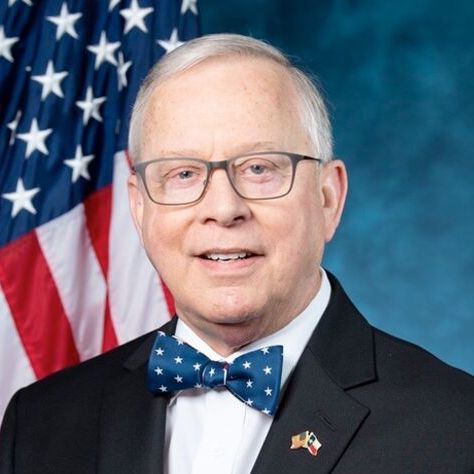
U.S. Rep. Ron Wright, R-Texas
Wright, 67, had been diagnosed with lung cancer in July 2019, about seven months after arriving in Congress, but ran for re-election in November as he continued treatment. His final vote in Congress was against the impeachment of former President Donald Trump.
Wright’s death opens up a vacancy in Texas’s 6th U.S. House District in the Dallas-Fort Worth suburbs.
Democrats had targeted Wright’s seat as a pickup opportunity in 2020, but he defeated Democrat Stephen Daniel by nearly 9 points. However, the special election will present a new dynamic because candidates from all parties will run in the same race, with the top two vote-getters meeting in a runoff if no one gains a majority.
In the 2020 election, Trump only carried the district by 3 points over President Joe Biden. About 47% of the district’s residents identify as African American, Latino or Asian.
While Wright is the first sitting member of Congress to die from COVID-19, the pandemic claimed Republican U.S. Rep-elect Luke Letlow of Louisiana, who died in December before being sworn in.
Prior to his election to Congress, Wright had served as a city councilman in Arlington and as the tax assessor in Tarrant County. He was also chief of staff for his predecessor in the House, former U.S. Rep. Joe Barton, who retired in 2019.
The district includes southeast Tarrant County and Ellis and Navarro counties to the south.
We tweet @ChkFriPolitics Join us!
U.S. House votes to strip Georgia U.S. Rep. Marjorie Taylor Greene of committee assignments
Greene expresses regret for embracing conspiracy theories but does not address past support for violence against Democratic colleagues
♦By Rich Shumate, ChickenFriedPolitics.com editor
 WASHINGTON (CFP) — On a largely party-line vote, the U.S. House Thursday took the unprecedented step of removing Georgia Republican U.S. Rep. Marjorie Taylor Greene from her committee assignments after GOP leaders refused to do so in the wake of Greene’s past online support for conspiracy theories and violence against Democrats.
Eleven Republicans joined Democrats in support of the resolution, including three GOP members from South Florida, Carlos Giménez, Mario Diaz-Balart, and Maria Elvira Salazar.
Family members of victims of the deadly 2018 high school shooting in Parkland, Florida — which Greene has in the past questioned as a hoax — lobbied members to take action against Greene.
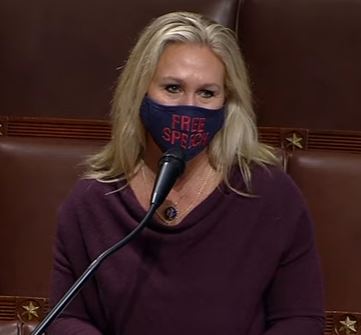
U.S. Rep. Marjorie Taylor Greene, R-Georgia, defends herself on the House floor
The move means that while Greene will remain a voting member of Congress, she won’t be able to participate in any of the committee work that is a key part of a member’s job.
The vote came after Greene took the floor to express regret about her past embrace of QAnon and conspiracy theories about school shootings and the 9/11 terror attacks, during which she also blamed the news media for mischaracterizing her views and lamented “cancel culture.”
“I think it’s important for all of us to remember that none of us is perfect,” she said, adding that if Democrats “want to condemn me and crucify me in the public square for words that I said and I regret a few years ago, then I think we’re in a real big problem.’
In her remarks, Greene did not address her past expressions of support for violence against Democrats, including liking a Facebook post in 2019 that called for putting “a bullet in the head” of Speaker Nancy Pelosi.
Those threats were front and center in House Majority Leader Steny Hoyer’s impassioned argument for the resolution, during which he brandished a campaign poster showing Greene carrying a AR-15 rifle next to pictures of three Democratic women known as “The Squad,” over a caption reading “Squad’s Worst Nightmare.”
“I ask my colleagues to look at that image and tell me what message you think it sends,” he said. “These three faces are real people.”
The three members of The Squad are Alexandria Ocasio-Cortez of New York, Ilhan Omar of Minnesota, and Rashida Tlaib of Michigan. In 2019, Greene posted a video arguing that Omar and Tlaib could not serve in Congress because they are Muslim.
Greene — calling herself a “very regular person” and wearing a mask emblazoned with the phrase “Free Speech” — explained that she became interested in the QAnon conspiracy in 2018 due to her frustration about events in Washington, including “Russian collusion,” which she dismissed as a false conspiracy theory.
“I was allowed to believe things that weren’t true, and I would ask questions about them and talk about them, and that is absolutely what I regret because if it weren’t for the Facebook posts and comments that I liked in 2018, I wouldn’t be standing here today and you couldn’t point a finger and accuse me of anything wrong,” she said.
She also noted that she did not advance QAnon during her campaign for the House last year or since she was elected to represent Georgia’s 14th District, which covers the northwestern corner of the state.
Despite previous expressions of support for conspiracy theories holding that mass school shootings were staged and expressing skepticism about official accounts of the 9/11 attacks, she said she now believes that “school shootings are absolutely real” and that “9/11 absolutely happened.”
However, she also said the news media is “just as guilty as QAnon in presenting truth and lies.”
“You only know me by how Media Matters, CNN, MSNBC and the rest of the mainstream media is portraying me,” she said. “Big media companies can take teeny, tiny pieces of words that I’ve said, that you have said, any of us, and can portray us as someone that we’re not, and that is wrong.”
In her remarks Thursday, Greene did not address one of the more outlandish conspiracy theories that she supported in 2018, which posited that wildfires in California may have been ignited by lasers from outer space by a cabal that included a Jewish-owned bank.
The fuse leading to Thursday’s vote was lit when Republican leaders appointed Greene to the budget and education committees, with the latter appointment triggering particular outrage because of her past comments about school shootings.
House Minority Leader Kevin McCarthy has condemned Greene’s earlier comments but declined to strip her of her committee assignments, prompting Democrats to take action, which McCarthy dismissed as a “partisan power grab.”
We tweet @ChkFriPolitics Join us!
 Chicken Fried Politics