

Voters heading to polls as election day finally arrives across the South
Democrats poised to possibly have their best result in a generation
♦By Rich Shumate, ChickenFriedPolitics.com editor
 (CFP) — Amid unprecedented levels of early voting, a deadly pandemic, racial unrest, and partisan political turmoil, voters across the South will give their final verdict Tuesday, as in-person voting brings the 2020 election to a conclusion.
The most watched story line will be whether Democratic presidential nominee Joe Biden can flip some Southern states into his column and whether Republican incumbents in the U.S. Senate and U.S. House can hang on amid the severe disruption to the nation’s political climate caused by the coronavirus pandemic.
Four Southern states carried by President Donald Trump in 2016 are in play, including the traditional battlegrounds of North Carolina and Florida, joined by previously safe states Georgia and Texas. A Democrat hasn’t carried Texas in 44 years; Georgia, hasn’t gone for a Democrat in 28 years.
As many as six U.S. Senate seats could also change hands, five of which are held by Republicans. And Democrats are hoping to build on their gains made in the U.S. House in 2018, particularly in Texas, where as many as seven seats could be in play.
Democrats are also trying to flip state legislative chambers in Texas, North Carolina and Georgia, which would increase their influence of the reapportionment process after this year’s census.
U.S. Senate
In Alabama, Democratic U.S. Senator Doug Jones is trying to keep his seat in a contest with the Republican nominee, former Auburn football coach Tommy Tuberville. Given the Yellowhammer State’s ruby red political leanings, Jones’s seat is seen as the GOP’s best opportunity nationally for a pick-up.
In North Carolina, Republican U.S. Senator Thom Tillis is trying to beat back a challenge from Democrat Cal Cunningham, who has led in the polls throughout the race. Cunningham is facing headwinds after admitting to an extramarital affair, although the revelations have not seemed to dent his poll numbers.
In South Carolina, Republican U.S. Senator Lindsey Graham is facing a spirited challenge from Democrat Jaime Harrison, who has raised more money for this race than any Senate candidate in history. Graham’s transformation from being a critic of Trump to one of his biggest defenders has brought national attention to the contest.
In Georgia, both U.S. Senate seats are up this year. Republican U.S Senator David Perdue is being challenged by Democrat Jon Ossoff in one race; the second is an all-party special election with 20 candidates, which has narrowed down to a chase for runoff spots between Republican U.S. Senator Kelly Loeffler, appointed to the seat last year; Republican U.S. Rep. Doug Collins, who decided to challenge Loeffler after he was overlooked for the appointment, and Democrat Raphael Warnock, the pastor of Atlanta’s Ebenezer Baptist Church, who making his political debut.
Because of a quirk in Georgia law, both of these races will head to a runoff in January if none of the candidates get a majority on Tuesday. Ossoff and Perdue have been neck-and-neck in the polls; Warnock leads the special election race but will likely fall short of avoiding the runoff.
In Texas, Republican U.S. Senator John Cornyn is facing Democrat MJ Hegar. This race has tightened as Biden’s numbers have gone up in the Lone Star State, although Cornyn still has an edge.
Two other Southern states have Senate races that have been competitive but appear unlikely to flip: Kentucky, where Senate Majority Leader Mitch McConnell is facing Democrat Amy McGrath, and Mississippi, where Republican U.S. Senator Cindy Hyde-Smith is facing Democrat Mike Espy.
U.S. House
Six Democrats who flipped Southern House seats in 2018 are in battles to keep their seats:
- Virginia 2 (metro Norfolk): Democratic incumbent Elaine Luria is facing a rematch against the man she ousted in 2018, Republican Scott Taylor,.
- Virginia 7 (Richmond suburbs, central Virginia): Democratic incumbent Abigail Spanberger faces Republican State Delegate Nick Freitas.
- Georgia 6 (Northwest Atlanta suburbs): Democratic incumbent Lucy McBath is also facing a rematch against her 2018 opponent, Republican Karen Handel.
- Oklahoma 5 (Metro Oklahoma City): Democrat Kendra Horn’s win here in 2018 was among the biggest shocks of the election. She is facing Republican State Senator Stephanie Bice.
- South Carolina 1 (Lowcountry and Charleston): Incumbent Democrat Joe Cunningham faces Republican State Rep. Nancy Mace.
- Florida 26 (South Miami-Dade and Florida Keys): Democrat Debbie Mucarsel-Powell is facing Republican Miami-Dade Mayor Carlos Gimenez.
Republicans are trying to hang on to four open seats that are in danger of flipping:
- Georgia 7 (Northeast Atlanta suburbs): Democrat Carolyn Bourdeaux, is facing Republican Rich McCormick.
- Virginia 5 (Central Virginia around Lynchburg): Republican Bob Good is facing Democrat Cameron Webb.
- Texas 22 (Southwestern Houston suburbs): Fort Bend County Sheriff Troy Nehls is trying to keep the seat for Republicans against Democrat Sri Preston Kulkarni
- Texas 24 (Metro Dallas-Fort Worth): The Republican nominee, former Irving Mayor Beth Van Duyne, is facing Democrat Candace Valenzuela.
A number of Republican incumbents are trying to keep their seats against strong Democratic challenges:
- Arkansas 2 (Metro Little Rock): Republican French Hill vs. Democratic State Senator Joyce Elliott.
- Florida 16 (Sarasota and Bradenton): Republican Vern Buchanan vs. Democratic State Rep. Margaret Good.
- Florida 18 (Treasure Coast): Republican Brian Mast vs. Democrat Pam Keith
- North Carolina 8 (Piedmont between Fayetteville and Charlotte): Republican Richard Hudson vs. Democrat Pat Timmons-Goodson.
- North Carolina 9 (Charlotte suburbs east toward Fayetteville): Republican Dan Bishop vs. Democrat Cynthia Wallace.
- Texas 2 (Houston): Republican Dan Crenshaw vs. Democrat Sima Ladjevardian.
- Texas 3 (Northern Dallas suburbs): Republican Van Taylor vs. Democrat Lulu Seikaly.
- Texas 6 (Arlington, Waxahatchie, Corsicana): Republican Ron Wright vs. Democrat Stephen Daniel.
- Texas 10 (North Austin suburbs, northwest Houston suburbs, areas between): Republican Mike McCaul vs. Democrat Mike Siegel.
- Texas 21 (Austin and Hill Country/San Antonio suburbs): Republican Chip Roy, vs. former Democratic State Senator Wendy Davis.
- Texas 25 (Suburban Austin, central Texas): Republican Roger Williams vs. Democrat Julie Oliver.
- Texas 31 (North Austin suburbs, Temple): Republican John Carter vs. Democrat Donna Imam.

Decision 2020: Has Georgia finally arrived at a political tipping point?
Democrats are in contention in presidential, U.S. Senate races, poised to pick up another U.S. House seat
♦By Rich Shumate, ChickenFriedPolitics.com editor
 ATLANTA (CFP) — When the smoke clears from the 2020 election, a whole new political day may have dawned in Georgia.
Democrats appear ready to capture another U.S. House seat, which would give them six out of 14 seats in the state delegation, nearly at parity with Republicans. They also have a shot at both U.S. Senate seats and an outside chance of capturing a majority in the Georgia House.
And, in perhaps the biggest surprise of all, Joe Biden could become the first Democrat to carry the Peach State in 28 years.
That’s a best case, rosy scenario for the Democrats, one which Republicans would no doubt dismiss as wishful thinking. But even if this optimistic scenario doesn’t all pan out, 2020 is likely to go down as the best year state Democrats have had since they suffered a collapse in 2002, losing the governorship and control of the legislature after a decade in which they had lost their grip on the state’s federal offices.
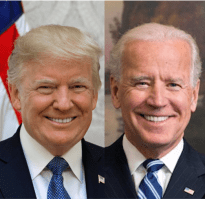
Trump, Biden neck-and-neck in Georgia polls
In 2016, Donald Trump carried Georgia by 5 points–enough to get the state’s 16 electoral votes but the weakest showing by a Republican since Bob Dole in 1996. The biggest shock in that race was Hillary Clinton carried both Cobb and Gwinnett counties, which had for decades been impenetrable Republican redoubts in the Atlanta suburbs.
These suburbs, which continued to swing toward the Democrats in the 2018 midterm elections, are key in the presidential race. Trump should get a sizable win in rural areas and small towns; Biden will easily carry the urban cores of the Atlanta and the state’s other cities; so the suburbs will be where this contest is won or lost.
Polls now show the race between Biden and Trump within the margin of error. The biggest sign the state is truly competitive: Both Trump and Biden are making October campaign stops in Georgia, which rarely gets a glimpse of presidential candidates outside of the primary season.
U.S. Senate
Because of the retirement of Republican Johnny Isakson at the end of last year, both of Georgia’s U.S. Senate seats are up this year. Republican David Perdue is seeking a second term, and Republican while Kelly Loeffler, a wealthy Atlanta businesswoman and political newcomer appointed to fill Isakson’s seat by Governor Brian Kemp, will try to keep it in an all-party special election.
Perdue is facing Democrat Jon Ossoff, who rose to national prominence in an expensive but ultimately unsuccessful U.S. House race shortly after Trump’s election. At the beginning of the race, Perdue wasn’t thought to be in much trouble, but Ossoff has closed the gap, with polls showing the race within the margin of error.
A major source of contention in the race has been the coronavirus epidemic, with Ossoff hitting Perdue for downplaying the severity of the disease during the early days of the pandemic and voting to dismantle Obamacare, which Ossoff says has provided a lifeline to virus victims.
Perdue has hit Ossoff over his fundraising from out-of-state sources, charging that Ossoff’s contributors support a “radical socialist agenda” that he would pursue as a senator.
Ossoff has raised nearly $33 million, much of it in small dollar online contributions from Democratic donors across the country. Perdue has raised about $21 million.
Because of a quirk in Georgia law, if neither Perdue or Ossoff break 50%, they will face each other in a January runoff, which could happen if a Libertarian candidate also in the race draws off enough support.
In the special election, 20 candidates are running, and polls show three are competing for spots in a January runoff: Loeffler; Republican U.S. Rep. Doug Collins from Gainesville, who has been trying to run at Loeffler from the right; and Democrat Raphael Warnock, the senior pastor at Atlanta’s Ebenezer Baptist Church, a pulpit once held by Martin Luther King Jr.
Warnock has surged to the front in the latest polls, consolidating Democratic support with an ad blitz. Loeffler and Collins are running neck-and-neck for the second spot, in a race that has divided state Republicans into two camps.
Collins, one of Trump’s most vocal defenders during last year’s impeachment fight, decided to challenge Loeffler after Kemp passed him over for the Senate appointment. But he has so far not gotten the president’s endorsement, and Loeffler has been battling him for supremacy on the right by firmly embracing Trump and taking conservative stands on social issues.
One key metric to look at on election night will be whether the Republicans in the race collectively attract more votes overall that the Democrats, which could be a sign of things to come in the runoff.
Warnock has raised the most money, at $22 million, but Loeffer has more money to spend, after tapping her considerable personal fortune for $23 million in loans. Collins trails at $6 million.
Depending on results in other states, control of the U.S. Senate could hinge on two runoff elections in Georgia in January — a circumstance that would attract massive amounts of money and national attention to the Peach State.
U.S. House
The focus in the U.S. House races with be the 6th District, in Atlanta’s near northwest suburbs, and the 7th District, in the near northeast suburbs.
Two years ago, Democrat Lucy McBath flipped the 6th District seat, defeating Republican Karen Handel, Handel is back for a rematch, but McBath — like other freshmen Democrats defending seats in districts Trump won in 2016 — has raised a mountain of money, nearly $8 million, to less than $3 million for Handel
Trump won this district by less than 2 points in 2020. Demographic changes, including more minority voters, are also contributing to its shift from red to purple, and most election handicappers are giving McBath the edge.
Handel will need a strong margin from East Cobb and North Fulton counties to offset McBath’s strength in more diverse areas such as Sandy Springs and Doraville.
In the 7th District, Democrat Carolyn Bourdeaux, who lost this race by just 400 voters in 2018, is back for another try, facing Republican Rich McCormick, a physican and retired Marine pilot. (The Republican incumbent, Rob Woodall, retired.) Bourdeaux also enjoys a fundraising advantage, $4.7 million to $2.4 million.
The largest population center in this district is Gwinnett County, where Democrats have been winning legislative seats and county offices in recent years. White voters are also now a minority here, which should help Bourdeaux.
If both McBath and Bourdeaux win, the Georgia delegation will be split 8R and 6D, closer than it has been since 1994.
State Legislature
In the battle for the state House, Democrats need to pick up 15 seats in the 180-member House to gain control, after picking up 11 seats in 2018. The party is targeting seats in the Atlanta suburbs, where Democrats have been making gains in recent years, although it is unclear if enough flippable seats remain to get to 15.
Democrats would need to pick up eight seats in the 56-member Senate to take control, which is considered much less likely.
We tweet @ChkFriPolitics Join us!

Decision 2020: Southern U.S. Senate races see cash avalanche, as Democrats set the pace
Democrats in competitive races raise eye-popping amounts, which Republican incumbents are struggling to match
By Rich Shumate, ChickenFriedPolitics.com editor
 (CFP) — How much money has Democrat Jaime Harrison raised for his race against Republican U.S. Senator Lindsey Graham in South Carolina?
Enough to give every woman, man and child in the Palmetto State $21. Graham could fork over $13 more. And if people in Kentucky could divvy up all the money raised by Senate Majority Leader Mitch McConnell and Democrat Amy McGrath for their contest, each one would pocket $33.
One of the biggest stories of the 2020 election has been the avalanche of campaign cash that candidates have been able to raise, much of it from small donors who contribute online. Campaign finance data from the Federal Elections Commission shows that in the South, as in the rest of the country, Democratic challengers have been the biggest recipients of this largesse.
 Indeed, only two Southern Republican incumbents facing competitive challenges — John Cornyn in Texas and Kellly Loeffler in Georgia — have raised more money than their Democratic rivals. But Loeffler only did so by pouring $23 million from her considerable personal fortune into the race.
Of course, the candidate who raises the most money doesn’t win; the candidate with the most votes does. Just ask Beto O’Rourke, who burned through $80 million on his way to not becoming a U.S. senator from Texas in 2018.
But the fundraising dominance of Democrats has put many challengers within shooting distance as the election approaches, and raising money can also be a reliable sign of energy and momentum behind a campaign.
Harrison, for instance, has never won political office before and is running against a man who has been in Congress for 26 years in a state that has been red for generations. But the $109 million he has raised, at last count, has helped turn this race into a dead heat — and reduced Graham to begging supporters to send him money on the Fox News Channel.
Graham has raised $68 million, which in a normal year would be exponentially more money than a Senate candidate in South Carolina would need. But this year, he is facing a $40 million gap, as Harrison blankets the airwaves of South Carolina in an advertising storm.
In Kentucky, McGrath has nearly matched Harrison’s per-person fundraising total, raising at least $90 million, or $20 per person. McConnell–who as majority leader has access to every Republican donor under the sun–has not been able to keep up, coming in at $57 million at last count.
In North Carolina, Democrat Cal Cunningham has raised $48 million, more than double the $22 million raised by Republican incumbent U.S. Senator Thom Tillis.
In Alabama, the only state where Republicans are trying to oust a Democratic incumbent, U.S. Senator Doug Jones has raised $27 million, dwarfing the $8.2 million collected by Republican challenger Tommy Tuberville.
Another state with a significant disparity between Republican incumbent and Democratic challenger is Mississippi, where Democrat Mike Espy has raised $9.3 million for his rematch against Republican U.S. Senator Cindy Hyde-Smith, more than three times as much as she has raised at $3 million.
The fundraising disparity has generated national attention on the possibility of an Espy upset — which shows how fundraising alone can change the conversation about a race.
In Georgia, which has two Senate races this year, five candidates have raised a combined $110 million, with Democrat Jon Ossoff leading the pack at $33 million. He is running against Republican U.S. Senator David Perdue, who has raised $21 million.
In the special election for the other seat, Loeffler has raised $28 million, $23 million from personal loans. Democrat Raphael Warnock has raised $22 million, while Republican U.S. Rep. Doug Colllins, who is trying to come at Loeffler from the right, trails badly at just $6 million.
Warnock, a political newcomer, surged to the front in polls of this race after he put his campaign money to use running ads. Though Collins has struggled badly in fundraising, polls show him still neck-and-neck with Loeffler for the second spot in the January runoff.
In Texas, Democrat MJ Hegar has raised $24 million compared to $31 million for Cornyn. However, she has been closing the gap with two strong fundraising quarters.
These are the figures reported with a week to go before the election. Given the prodigious pace of fundraising, the final numbers for many of these races are likely to be even larger by the time the votes are counted.
We tweet @ChkFriPolitics Join us!
Decision 2020: Can Joe Biden break through and make the South matter?
Texas and Georgia join North Carolina and Florida on list of 2020 presidential swing states
♦By Rich Shumate, ChickenFriedPolitics.com editor
 (CFP) — Twenty years ago, George W. Bush became the first Republican to sweep the entire South in a non-landslide election, and in the five presidential elections since, a Democrat has carried Virginia three times, Florida twice, and North Carolina once.
Every other state in the region went for the Republican, every time. If you add it up, that’s 64 state wins for the Republican, to just six for the Democrat.

The candidates for president
But if the pre-election polls are correct, the GOP’s lock on the South — which has been a bedrock of the party’s Electoral College fortunes — appears to be loosening, albeit slightly, in 2020. So election night may not be as much of an afterthought in the South as it has been for the past two decades.
Indeed, the results in three Southern states that report results early could point toward who is going to win the White House, even as the rest of the country finishes casting ballots.
Virginia seems almost certain to go Democratic for the fourth election in a row. North Carolina and Florida are, as expected, toss-ups, as they have been in the last three elections. But in 2020, the races in both Texas and Georgia are within the margin of error, which could complicate–if not end–Donald Trump’s hopes of winning re-election if Joe Biden wins either one.
Polls even show that in South Carolina, which hasn’t gone for a Democrat since Jimmy Carter in 1976, Trump’s lead may be in single digits. And while a win in the Palmetto State still seems like a stretch, a close race between Trump and Biden would be a sign that the president’s political fortunes have dipped even in a region he swept four years ago.
The 2020 race is also unusual in another respect — it is the first presidential race since 1972 where neither party has a Southerner on its ticket.
The list of four Southern swing states in 2020 echoes 2016, when Trump took them by single-digit margins while rolling up double-digit victories everywhere else. He won Florida by 1 point, North Carolina by 4, Georgia by 5, and Texas by 9.
In the 2018 midterm elections, Democrats made gains in the suburbs around major cities in Georgia and Texas, which is the template Democrats are using for 2020. However, they had less success in North Carolina, where Republican candidates held up better.
The Biden campaign has been up with ads in Georgia and has spent a token amount in Texas, although it has yet to commit any substantial resources to either state. Both Biden and Trump have campaigned in Georgia, although they have not yet barnstormed Texas.
These Southern states are much more important to Trump than they are to Biden, who can win the White House without them if he flips Pennsylvania, Wisconsin and Michigan back into the blue column. While Trump could survive losing either Georgia or North Carolina, if he can hold the line in the Upper Midwest, a loss in either Florida or Texas would be catastrophic.
Florida and Georgia have two of the earliest poll closing times in the country, at 7 p.m. Eastern (the Florida Panhandle stays open another hour), and North Carolina closes a half hour later. So those three states could be among the first places where winners can be declared, unless the races are extremely close.
If Trump wins these states, the result won’t tell us much about the eventual outcome. But a Biden win in any of them — particularly Florida — will point to a Democratic victory, and we will likely know the Florida result before the results in Pennsylvania, Michigan and Wisconsin.
No matter what happens in 2020, the results will almost certainly change how the presidential game is played in the South in 2024.
Four years from now, Texas and Georgia will be seriously contested by both sides, particularly if Biden wins or comes close this year. That will add two new large states where campaigns have to add significant resources, particularly in Texas, which has more than 20 TV markets.
For Republicans, who have not had to worry about the South at the presidential level for decades, more competition in the region complicates their path to the White House. For Democrats, the ability to win in the South gives them additional paths to 270 that reduce the number of must-win states elsewhere. So the long-term consequences of this election could be enormous.
That’s why, on Nov. 3, the South will matter as it hasn’t mattered in the last 20 years.
We tweet @ChkFriPolitics Join us!

Racist? Georgia U.S. Senator David Perdue under fire for mocking Kamala Harris
Perdue mispronounces first name of Democratic vice presidential nominee
♦By Rich Shumate, ChickenFriedPolitics.com editor
 MACON, Georgia (CFP) — In the middle of a close re-election race, Georgia Republican U.S. Senator David Perdue is under fire for mispronouncing the name of Democratic vice presidential nominee Kamala Harris during a rally with President Donald Trump Friday in Macon.
“KA-ma-la or Ka-MA-la? Ka-MA-la-ma-la-ma-la? I don’t know. Whatever,” Perdue told the crowd of cheering Trump supporters, creating a video that has since gone viral–and drawn rebukes from critics who are calling the mispronunciation deliberate and racist.
Video at end of story
“Senator Perdue never would have done this to a male colleague. Or a white colleague,” his Democratic challenger Jon Ossoff said on Twitter. “And everyone knows it.”
Harris is the first woman of color, and only the third woman, on a presidential ticket.

U.S. Senator David Perdue, R-Georgia, speaks at Trump rally (YouTube)
Perdue has served alongside Harris in the Senate since 2017. They also are both members of the Senate Budget Committee, which has just 19 members.
A spokesman for Perdue’s campaign, John Burke, responded on Twitter that “Senator Perdue simply mispronounced Senator Harris’ name, and he didn’t mean anything by it. He was making an argument against the radical socialist agenda that she and her endorsed candidate Jon Ossoff are pushing.”
President Trump also mispronounces Harris’s name during rallies to draw a response from the crowd.
Less than three weeks before the November election, Perdue and Ossoff are locked in a tight race, with polls showing no clear leader. Trump also appears in danger of losing Georgia, which prompted his visit to Macon.
A Democrat hasn’t won the presidential race in Georgia since 1992 or a Senate race since 2000.
The effect Friday’s viral moment might have on the outcome is unclear. Nearly a third of the state’s voters are African American.
In 2006, in a U.S. Senate race in Virginia, the Republican incumbent, George Allen, created a firestorm after being captured on video calling an Indian-American supporter of his challenger “Macaca.” Allen lost.
 Chicken Fried Politics