
Home » Analysis (Page 4)
Category Archives: Analysis

Analysis: Why Chris McDaniel’s fight won’t succeed even if it does
The best possible outcome — overturning his primary loss — won’t get him to the U.S. Senate
♦By Rich Shumate, Chickenfriedpolitics.com editor
Mississippi State Senator Chris McDaniel and his supporters are still seething over his primary runoff loss to veteran U.S. Senator Thad Cochran, particularly vexed by the fact that the only way Cochran survived was with Democratic cross-over votes.
In the weeks since the runoff, McDaniel has been making noise about a court challenge to the result and has even been raising money to pay for it. His camp claims to have evidence of more than 8,000 questionable votes — a number of voters larger than Cochran’s margin of victory.
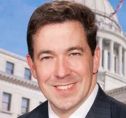
State Senator Chris McDaniel
Such a court challenge might be satisfying for people who think they were cheated out of a much anticipated victory. But would it be wise?
Consider the best possible outcome for McDaniel. It is exceedingly unlikely that a judge would just toss the result and hand the GOP nomination to McDaniel. A more possible (but not likely) scenario is that a judge throws out the primary result and orders the runoff to be rerun.
Assume, for the sake of argument, that McDaniel wins the third time around. He would be the nominee of a fiercely divided party. The atmosphere between his supporters and Cochran’s would be poisonous. The Democratic nominee, former U.S. Rep. Travis Childers, would be in the driver’s seat come November.
In that case, the Republican nomination would be a thing not worth having. And McDaniel would take the blame.
An even worse possible outcome for McDaniel would be to try to overturn the result and lose. Right now, he has political capital from being perceived as a wronged party. He still has a future in statewide politics. But if he drags Mississippi Republicans through a bitter fight, that capital vanishes.
History gives us two examples that are pertinent here.
In 1960, Richard Nixon narrowly lost the presidency under questionable circumstances. But he decided not to contest the results. Eight years later, he was president.
In 2000, Al Gore decided to put America through Florida recount hell, even though he knew he was unlikely to prevail. It was the end of his political career.
Nixonian behavior is not normally recommended. But there are times when the best thing to do in a bad situation is just walk away, no matter how unfair it might seem at the time.
Analysis: Hillary Clinton’s coy routine isn’t fooling anybody
Clinton’s latent tsunami of publicity makes no sense if she isn’t running for president
♦By Rich Shumate, Chickenfriedpolitics.com editor
 Among the least attractive characteristics of the Clintons (both she and he) is what may be charitably described as their chronic disingenuousness.
To wit, they resort to spin and subterfuge that’s too clever by half, even when the truth would do them no harm. The meaning of ‘is’ always seems to depend on what the meaning of ‘is’ is, at any given moment in time. Just like her Arkansas accent comes and goes.
Which brings us to Hillary’s recent magical mystery tour, replete with an orgy of copious, self-serving publicity that would make a Kardashian blush. The centerpiece of this effort has been her repeated insistence, that, by gosh, she just hasn’t decided yet if she’s going to run for president.
But of course she’s running for president. Would Bonnie and Clyde walk by a bank without at least attempting to rob it? Of course not.
If she’s not running for president, her recent behavior makes absolutely no sense.
She doesn’t need to make money by hawking a book. After all, she and Bill now have more dough than they or Chelsea could spend in five lifetimes, no matter how many houses (note the plural) they buy.
She certainly doesn’t need a book tour to bolster her celebrity. And it’s rather doubtful that she has any realistic ambition to win a Pulitzer prize with her weighty tome.
So that brings us to the inevitable conclusion that all of this is but a prelude to 2016.
The Ready for Hillary crowd might say, so what? Why should she telegraph her intentions now and become a target for the vast right-wing conspiracy? As Hillary might put it (with a hearty thump on the desk), at this point, what difference does it make?
Well, for one thing, her coy routine isn’t going to keep her from being fired upon by conservatives. They’ve never stopped. However, what it does do is remind many voters how allergic the Clintons are to candor.
So six months or a year from now, when Hillary finally admits that, well, by golly, she is going to run for president after all, many people will realize that, once again, they have been taken in by Clintonian double-speak.
Of course, that last statement presupposes that anyone in America actually believes that Hillary Clinton isn’t running for president. Perhaps that depends on what the meaning of ‘isn’t’ is.
Meanwhile, refusing to admit what voters already know just reminds them that, for the Clintons, the truth is always a movable feast.
Analysis: Tea Party Senate challengers can take comfort from Texas
U.S. Senator John Cornyn’s weak margin of victory shows other incumbents might be vulnerable
♦By Rich Shumate, Chickenfriedpolitics.com editor
The good news for the other four Republican U.S. senators facing Tea Party challenges this year is that Senator John Cornyn won in Texas.
The bad news? Cornyn’s win was hardly impressive.
Facing a primary field that was, to be charitable, less than viable, Cornyn failed to clear 60 percent of the vote. More than four in 10 Texas voters in his own party wanted somebody — anybody — else.
Compare that result with the Republican primary race for governor, where Attorney General Greg Abbott swept almost 92 percent of the vote against three challengers.
Cornyn’s chief Tea Party challenger, U.S. Rep. Steve Stockman, jumped in at the last minute and ran an erratic campaign. That allowed Cornyn to survive.
But imagine what might have happened if a stronger Tea Party competitor had run. No doubt some Texas conservatives who passed on this race are now kicking themselves over what might have been.
Cornyn was a Tea Party target because he is the minority whip in the Senate. Minority Leader Mitch McConnell is also facing a primary challenge from Louisville businessman Matt Bevin, who, unlike Stockman, is raising money and has the backing of outside conservative groups.
If the unhappiness with Cornyn seen in Texas is duplicated in Kentucky, McConnell could be in trouble.
Likewise, Senators Lindsey Graham in South Carolina, Lamar Alexander in Tennessee and Thad Cochran in Mississippi all face Tea Party challengers.
Alexander and Graham seem to be holding their own. Cochran, on the other hand, faces State Senator Chris McDaniel, who is also getting a boost from outside conservative groups, which sat on the sidelines in Texas.
And in addition to races with incumbents, the preferred GOP establishment candidates for seats in North Carolina, Louisiana and West Virginia are also battling Tea Party challengers. In Georgia, there’s a free-for-all among five major candidates, at least two of whom are expected to draw from the Tea Party part of the party.
Now that he’s survived the primary, Cornyn is the prohibitive favorite to win the general election. But if Tea Party challengers win in any of the other states where they have a shot, Democrats will be waiting in the wings.
That is causing heartburn in the GOP establishment. Former Mississippi Governor Haley Barbour said as much when he opined recently that a McDaniel win in the Magnolia State could open the door for a Democrat.
Cornyn’s tepid showing in Texas isn’t making that heartburn any better.
Analysis: Will Atlanta’s Snowmageddon imperil Gov. Nathan Deal’s re-election?
Snowstorm that snarled metro area comes in the middle of 2014 campaign
♦By Rich Shumate, Chickenfriedpolitics.com editor
 ATLANTA (CFP) — Georgia Republican Governor Nathan Deal appeared to be in cruise control toward re-election this fall — until Mother Nature brought an avalanche down around his head.
Deal is being widely criticized for the state government’s handling of a snowstorm that struck midday on January 28, stranding commuters on icy freeways and forcing schoolchildren to take shelter in their classrooms overnight.
After first deflecting criticism by suggesting that forecasters didn’t provide enough advace warning, Deal switched course and apologized unreservedly, telling Georgians that “the buck stops with me” for the mess.
“We didn’t respond fast enough,” he said, promising an investigation into what went wrong. “Our preparation was not adequate.”
In the aftermath of the storm, though, one big question is how much Atlanta’s Snowmageddon has damaged Deal politically.
Deal is being challenged in the May GOP primary by State School Superintendent John Barge and David Pennington, the mayor of Dalton, a small city in the northwest corner of the state.
Both Barge and Pennington have been highly critical of Deal’s handling of the storm. Pennington said Deal “failed miserably”and noted that in Dalton, officials started pre-treating roads hours before the storm hit.
Of course, Dalton has a population of just 33,000. Metro Atlanta, on the other hand, sprawls across 28 counties — nearly the size of Massachusetts — and is home to almost 6 million people. The management task is, well, substantially more substantial.
Atlanta Mayor Kasim Reed, a Democrat, has also come under fire for his handling of the snow storm. He has shot back, noting — with more than a bit of frustration — that most of the chaos didn’t take place in the city itself, which has only about a tenth of the metro area’s population.
True enough. Most of the thousands of people stranded on highways and separated from their children live in the suburbs that circle the city — places where Republicans are plentiful and elections for governor are won and lost. Not good news for Governor Deal.
State Senator Jason Carter, grandson of former President Jimmy Carter, is running unopposed for the Democratic nomination for governor. He has been more circumspect in his criticism of how the snowstorm was handled, perhaps to spare Reed, one of his key allies.
But the political implications are obvious. Even as people were still shivering in their cars, pollsters were calling voters, asking questions about Deal’s performance, according to a report in the Atlanta Journal-Constitution.
It was unclear just who was doing that polling. But clearly, Deal’s opponents smell an opportunity. While Reed is also getting his share of the grief, the mayor was already re-elected last year. For Deal, the timing couldn’t be worse.
Ironically, his first inauguration in 2011 had to be moved indoors because of a ice storm that shut the city down for four days — after which state and local officials promised to do better the next time.
The next time has arrived, and now Deal’s second inauguration could be endangered by what appears to be an inability to learn from the past so as not to repeat it.
Snow has imperiled other politicians, the most famous example being in Chicago in 1977, when Mayor Michael Bilandic was swept from office after a series of storms that paralyzed the city. Mayors in Denver and Seattle faced similar fates.
Of course, Deal is a governor, not a mayor. He doesn’t have to face voters until May, when the weather will be balmy and the snowstorm but an unhappy memory. He also has more political heft than either of his GOP rivals, and Georgia’s Republican tendencies give him an advantage over Carter.
But thanks to Snowmageddon, Deal’s road to re-election could be more, er, icy than it might have been.
Analysis: Results in Arkansas Senate election bode ill for Democrats in November
Victory by an anti-Obamacare Republican in a Democratic district may forecast trouble ahead for Mark Pryor and Mike Ross
♦By Rich Shumate, Chickenfriedpolitics.com editor
 JONESBORO, Arkansas (CFP) — The results of a special election to fill a vacancy in the Arkansas Senate are making Natural State Democrats mighty nervous.
Republican John Cooper easily defeated Democrat Steve Rockwell in a district in Jonesboro, in the northeastern part of the state.
Rockwell was a moderate businessman in the image of Governor Mike Beebe and former U.S. House Rep. Mike Ross, the Democratic candidate for governor this year.
He was also running in a what had been a Democratic district, in a part of the state that traditionally leans Democratic.
But Cooper, a retired AT&T manager, based his campaign on opposition to the state’s private-option expansion of Medicaid to cover uninsured Arkansans — an expansion made possible by the federal Affordable Care Act, popularly known as Obamacare.
Rockwell supported the private option, which Beebe pushed through the legislature last year. While the propoal had substantial Republican support at the time, a strongly anti-Obamacare faction of the GOP was incensed and has been making their displeasure known ever since.
Cooper’s victory may imperil the private option, which will come before the legislature again this year. The first time around, it passed in the Senate with just two votes to spare, one of which was cast by the man Cooper is replacing, Paul Bookout.
But perhaps more ominously for Democrats, it indicates the potency of Obamacare as a issue Republicans can use in November.
Pryor, who voted for Obamacare, is being assailed for that vote at every turn by his Republican opponent, U.S. Rep. Tom Cotton.
Ross may also face the backlash in the governor’s race. He supported Obamacare on a key vote in a House committee, although, in the end, he voted against it on the floor. But he has come out in favor of the public option in Arkansas.
Of the three Republicans in the gubernatorial primary, two — Little Rock businessman Curtis Coleman and State Rep. Debra Hobbs of Rogers — have come out against the private option. Hobbs voted against it; Coleman’s campaign Web site features a petition calling for its repeal.
The Republican frontrunner, former U.S. Rep. Asa Hutchinson, has not taken a clear position on the private option. However, he has been highly critical of Ross for his committe vote for the Obamacare bill.
Coleman and Hobbs have been trying to make hay out of Hutchinson’s lack of clarity on the private option. It remains to be seen if either one of them can ride it to victory in the primary.
But no matter who Republicans end up nominating, Obamacare is going to be the 800-pound gorilla in both the races for Senate and governor. And if the Jonesboro Senate race is a barometer of how it may play, that is not good news for Pryor or Ross.
Even more problematic may be the fact that the fight over the private option will dominate the upcoming legislative budget session, pitting Beebe and his Democratic allies in the legislature against a very noisy anti-Obamacare faction for weeks on end.
One potential silver lining for Ross and Pryor: If Republicans manage to torpedo the private option, as many as 250,000 Arkansans who will be thrown off the insurance rolls may get mad enough to fight back.
 Chicken Fried Politics