Rubio and Burr beat back challenges in Florida, North Carolina; Kennedy and Campbell will contest runoff in Louisiana
♦By Rich Shumate, Chickenfriedpolitics.com editor
(CFP) — Republicans held on to all eight of their Southern U.S. Senate seats, with Marco Rubio in Florida and Richard Burr in North Carolina turning back strong Democratic challengers.
Kennedy led with 25 percent, with Campbell at 18 percent, edging out Republican U.S. Rep. Charles Boustany at 15 percent.
Because Republicans already secured their 51-seat Senate majority, the Louisiana runoff will not affect the balance of power.
In addition to Rubio and Burr, Republican incumbents also won re-election in Alabama, Arkansas, Georgia, Kentucky, Oklahoma and South Carolina.
With the wins on November 8, Republicans will hold 23 of the 28 Southern Senate seats, with Louisiana still to be decided.
U.S. Senator Marco Rubio
In Florida, Rubio had initially decided to give up his Senate seat to pursue the Republican presidential nomination. But after losing the White House contest, he changed course and filed to run for a second term, improving the GOP ‘s prospects for keeping the seat.
Alluding to his withdrawal from the presidential race in March, he told election night supporters in Miami, “This is a lot better than the last time I did one of these.”
Rubio, who had been a critic of Trump before reluctantly endorsing him, did not mention his party’s victorious presidential standard-bearer in his speech, but he did make a plea for civility in politics.
“While we can disagree on issues, we cannot share a country where people hate each other because of their political affiliations,” Rubio said.
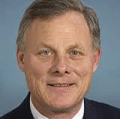
U.S. Senator Richard Burr
In North Carolina, Burr, seeking a third term, took 51 percent of the vote, defeating Deborah Ross, a former state legislator and Duke University law professor, who took 45 percent.
“I am truly humbled by the support I’ve received from people across this state,” Burr said at a victory celebration in Winston-Salem. “This is a victory for all of those who have believed in me.”
In a state notorious for exchanging Senate seats between parties, Burr becomes the first senator to win three consecutive terms since Jesse Helms in 1984.
Here are the other Southern Senate results:
Shelby
Alabama: Republican U.S. Senator Richard Shelby won a seventh term by defeating Democrat Ron Crumpton, a marijuana rights activist. by a margin of 64-36 percent. At the end of his new term, Shelby will be 88 and will have served in Congress for 44 years.
Boozman
Arkansas: Republican U.S. Senator John Boozman won a second term by taking 60-36 percent for Democrat Conner Eldridge, a former federal prosecutor from Fayetteville. Boozman suffered an aortic aneurysm in 2014 that kept him away from Washington for two months.
Isakson
Georgia: Republican U.S. Senator Johnny Isakson won a third term in the Senate by defeating Democrat Jim Barkdale, a wealthy Atlanta businessman, by a 55-41 percent margin. Isakson ran for re-election to a third term despite announcing in 2015 that he had been diagnosed with Parkinson’s disease.
Paul
Kentucky: Republican U.S. Senator Rand Paul defeated Lexington Mayor Jim Gray by a margin of 57-43 percent. Paul had pursued re-election simultaneously with a presidential campaign until he dropped out of the White House race in February.
Lankford
Oklahoma: Republican U.S. Senator James Lankford easily won his first full six-year term by defeating Democrat Mike Workman, a Tulsa political consultant, by a margin of 68-25 percent. In 2014, Lankford was elected to finish out the final two years of Tom Coburn’s term after he resigned.
Scott
South Carolina: Republican U.S. Senator Tim Scott, the only black Republican in the Senate, easily won a full six-year term by defeating Democrat Thomas Dixon, a Charleston pastor, by a margin of 61-36 percent. In 2014, Scott was elected to serve out the remaining two years of Jim DeMint’s term, after he resigned.
And in Louisiana, 24 candidates are running in an all-party “jungle” primary, with the top two vote-getters advancing to a December 10 runoff, which could potentially decide the balance of power in the Senate.
If Kennedy and Boustany can both clear the runoff, the GOP would be guaranteed of keeping the seat, now held by U.S. Senator David Vitter. But if Campbell or Fayard can come through, the December 10 runoff will be the last word on Senate races this year — and, if the Senate is closely divided, decide which party controls the chamber.
In addition to Rubio and Burr, Republican incumbents are seeking re-election in Alabama, Arkansas, Georgia, Kentucky, Oklahoma and South Carolina.
All are heavily favored, although the race in Georgia between U.S. Senator Johnny Isakson and Democratic businessman Jim Barksdale is somewhat more competitive.
In Oklahoma, James Lankford faces Mike Workman, a Tulsa political consultant, and in South Carolina, Tim Scott, the only black Republican in the Senate, faces Democrat Thomas Dixon, a Charleston pastor.
Trump carries five of seven Southern GOP primaries; Clinton takes six on Democratic side SUPER TUESDAY SOUTHERN RESULTS
♦By Rich Shumate, Chickenfriedpolitics.com editor
(CFP) — Donald Trump and Hillary Clinton rolled across the South on Super Tuesday, carrying 11 of the 14 primaries and the lion’s share of the delegates up for grabs.
The only outliers were Oklahoma, which both Trump and Clinton lost, and the Republican primary in Texas, which went for homestate U.S. Senator Ted Cruz
Trump and Clinton won Alabama, Arkansas, Georgia, Tennessee and Virginia in the March 1 vote. Clinton also won the Democratic primary in Texas
Super Tuesday was rough sledding for U.S. Senator Marco Rubio of Florida, who came in second place in Virginia and Georgia but could only manage a third-place finish in Alabama, Arkansas, Tennessee, Oklahoma and Texas.
In addition to winning Texas and Oklahoma, Cruz finished second to Trump in Alabama, Arkansas, Tennessee. He was third in Georgia and Virginia.
While Trump won most of the Super Tuesday primaries on the Republican side, he cleared 40 percent only one Southern state, Alabama, which he swept by 18 points.
Trump also notched double-digit wins in Georgia and Tennessee. His victories in Arkansas and Virginia were narrow, 2 and 3 percent, respectively.
Former Secretary of State Hillary Clinton
Buoyed by her strong support among African-Americans, Clinton rolled up huge numbers across the South. With the exception of Oklahoma, which she lost by 10 points to U.S. Senator Bernie Sanders of Vermont, Clinton’s support ranged from 64 percent in Virginia to 78 percent in Alabama.
Her margin of victory ranged from 29 points in Virginia to a staggering 59 points in Alabama.
The next Southern stops in the presidential race are:
Saturday, March 5: Kentucky (GOP caucus), Louisiana (primary)
Tuesday, March 8: Mississippi (primary)
Tuesday, March 15: Florida (primary); North Carolina (primary)
Huckabee, an ordained Baptist pastor and TV host, is making his second try for the White House
♦By Rich Shumate, Chickenfriedpolitics.com editor
HOPE, Arkansas (CFP) — Saying he wanted to take America “from hope to higher ground,” former Arkansas Governor Mike Huckabee kicked off his bid for the 2016 Republican presidential nomination with a speech to an enthusiastic crowd in his hometown May 5.
Former Arkansas Governor Mike Huckabee
“I ask you to join with me today not just so I can be president, but so we can preserve this great republic,” Huckabee said during a speech at community college in Hope, a town of 11,000 in southwest Arkansas where former President Bill Clinton was also born. “With your help, and God’s, we will make that journey.”
In the opening speech of his second presidential campaign, Huckabee sounded a note of economic populism, saying “power and money and influence have left a lot of Americans lagging behind.”
“They work hard, lift heavy things and sweat through their clothes grinding out a living, but they can’t seem to get ahead or, in some cases, even stay even,” he said. “A record number people are enrolled in government-operated help programs like food stamps not because they want to be in poverty, but because they are part of the bottom earning 90 percent of American workers whose wages have been stagnant for 40 years.”
But Huckabee, an ordained Baptist pastor, also played to his natural base of religious conservatives on the issue of same-sex marriage, blasting federal courts for “criminalizing Christianity in demanding that we abandon biblical principles of natural marriage.”
“Many of our politicians have surrendered to the false god of judicial supremacy, which would allow black-robed and unelected judges the power to make law and enforce it,” he said. “The Supreme Court is not the supreme being, and they can’t overturn the laws of nature or of nature’s God.”
Huckabee said if elected, he would push for term limits on both Congress and the Supreme Court, whose justices now serve for life, and abolish the IRS. He also took a sharp shot at President Barack Obama’s diplomatic approach toward the Islamic world.
“When I hear the current president say he wants Christians to get off their high horse so we can make nice with radical jihadists, I wonder if he could watch a western from the 50s and be able to figure out who the good guys and the bad guys are,” he said. “As president, I promise you that we will no longer merely try to contain jihadism. We will conquer it.”
Huckabee, 59, served as Arkansas governor from 1996 to 2007 and ran for president in 2008. With strong support from social conservatives, he won the Iowa caucuses and took seven other primaries, mostly in the South, before conceding to the eventual nominee, U.S. Senator John McCain.
Huckabee’s 2016 run was widely anticipated after he bowed out of his long-running Saturday evening talk show on the Fox News Channel in January. Noting his own financial sacrifice in leaving Fox, he asked his supporters for donations, while taking a swipe at Hillary Clinton, Jeb Bush and his other GOP rivals who currently hold elected office.
“I don’t have a global foundation or a taxpayer-funded paycheck to live off of. I don’t come from a family dynasty but a working family. I grew up blue collar and not blue blood,” he said, adding that other presidential candidates who currently hold elective office should resign.
“If you live off the government payroll and want to run for an office other than the one you’re elected to, then have the integrity and decency to resign the one you don’t want and pursue the one you decided you’d rather have.”
Though Huckabee moved from Arkansas to Florida when he took the job Fox after his 2008 loss, he regaled his hometown audience with details of his bucolic childhood in Hope.
“I ran trotlines all night at Bois D’Arc Lake with my dad and grandfather to catch catfish that we’d freeze and live off of for weeks,” he said. “It was here I was baptized in the Garrett Memorial Baptist Church after accepting Jesus in a vacation bible school when I was 10 years old. I truly went from Hope to higher ground.”
Huckabee is not the first presidential candidate to use Hope as a prop. In his 1992 campaign, Clinton also played up his roots in Hope, despite the fact that he had moved to the resort town of Hot Springs, in central Arkansas, at age 4.
Huckabee is the fourth Southern Republican to announce a 2016 presidential campaign, joining U.S. Senators Ted Cruz of Texas, Rand Paul of Kentucky and Marco Rubio of Florida. Other Southerners expected to seek the GOP nomination include former governors Jeb Bush of Florida and Rick Perry of Texas; U.S. Senator Lindsey Graham of South Carolina; and Governor Bobby Jindal of Louisiana.
On the Democratic side, former U.S. Senator Jim Webb of Virginia has already launched an exploratory committee for the 2016 Democratic presidential nomination — a race that’s expected to be dominated by former Secretary of State Clinton, a former first lady of Arkansas who went on to be elected to the Senate from New York.
Watch the video of Huckabee’s announcement speech:
Republican voters in Wall Street Journal/NBC News poll had the least favorable view of U.S. Senator Lindsey Graham
WASHINGTON (CFP) — A new poll finds that among the eight Southerners considering a bid for the GOP presidential nomination in 2016, U.S. Senator Marco Rubio is viewed most favorably by Republican voters.
U.S. Senator Marco Rubio
Fifty-six percent of Republican voters surveyed by in a Wall Street Journal/NBC News poll said they could see themselves supporting Rubio, while just 26 percent could not, a favorability gap of 30 points. Fourteen percent were undecided.
Not only was that the best showing among the potential Southern contenders, but it was better than every other expected candidate in the field except Wisconsin Governor Scott Walker, who had a favorability gap of 36 percent.
At the other end of the spectrum, just 26 percent of Republican voters said they could see themselves supporting U.S. Senator Lindsey Graham of South Carolina, while 51 percent — an outright majority — could not, an unfavorability gap of 31 points. However, 29 percent were still undecided about Graham.
The poll showed Republican voters may have largely made up their minds about three of the possible candidates in the race — former Arkansas Governor Mike Huckabee, former Florida Governor Jeb Bush and U.S. Senator Rand Paul of Kentucky. The percentage of undecided for all three was under 12 percent.
But substantial percentages of the GOP voters have not made up their minds about Graham, Louisiana Governor Bobby Jindal and U.S. Senator Ted Cruz of Texas, all of whom had undecided readings above 20 percent.
The margin of error in the poll, released March 11, was plus or minus 6.48 percentage points.
Here is how the other potential Southern candidates fared:
Huckabee: 52 percent could support, 40 percent could not support, 8 percent undecided. Favorability gap of 12 points.
Bush: 49 percent could support, 42 percent could not support, 9 percent undecided. Favorability gap of 7 points.
Paul of Kentucky: 49 percent could support, 40 percent could not support, 11 percent undecided. Favorability gap of 9 points.
Former Texas Governor Rick Perry: 45 percent could support, 40 percent could not support, 15 percent undecided. Favorability gap of 5 points.
Cruz: 40 percent could support, 38 percent could not support, 22 percent undecided. Favorability gap of 2 points.
Jindal: 36 percent could support, 25 percent could not support, 39 percent undecided. Favorability gap of 11 points.
On the Democratic side, former U.S. Senator Jim Webb of Virginia has already launched an exploratory committee for the 2016 Democratic presidential nomination — a race that’s expected to be dominated by former Secretary of State Hillary Clinton, a former first lady of Arkansas.


 (CFP) — Republicans held on to all eight of their Southern U.S. Senate seats, with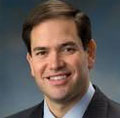


 (CFP) —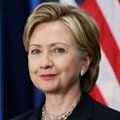
 HOPE, Arkansas (CFP) — Saying he wanted to take America “from hope to higher ground,” former Arkansas Governor
 WASHINGTON (CFP) — A new poll finds that among the eight Southerners considering a bid for the GOP presidential nomination in 2016,
  Chicken Fried Politics