
Home » Florida (Page 16)
Category Archives: Florida

Fewer than a dozen U.S. House seats in play in the South this election
Democrats looking for pickups in Florida, Texas and Virginia
♦By Rich Shumate, Chickenfriedpolitics.com editor
 (CFP) — Heading into the November 8 election, fewer than a dozen U.S. House seats across the South are in play, and most of those are the result of court-ordered redraws of congressional maps in Florida and Virginia.
If the night goes well, Democrats could pick up a net total of seven GOP-held seats — three each in Florida and Virginia and one in Texas. But if Republican incumbents manage to pull out close races, the shift could be just one seat, the 4th District in Virginia that seems certain to change hands because of the new map.
Either way, the Republican advantage over Democrats in U.S. House seats, now 116 to 38, should not budge much.
In Florida, the redraw of the map (click here to see map) should allow Republicans to pick up the 2nd District, based in the Panhandle and now held by U.S. Rep. Gwen Graham, who opted not to run after the district became substantially more Republican.
But Democrats are almost certain to counter that GOP gain by taking the Orlando-based 10th District, which under the new map is more Democratic.
Republican fortunes in Florida will come down to three incumbents facing tough fights for re-election — John Mica in the 7th District, which includes parts of Orlando and its northern suburbs; David Jolly in the 13th District in and around St. Petersburg; and Carlos Curbelo, in the 26th District, which includes part of Miami-Dade County and the Florida Keys.
Democrats are defending a seat in the 18th District, along the Treasure Coast, which U.S. Rep. Patrick Murphy gave up to run for the U.S. Senate.
In Virginia, the new map affected two Republican-held districts, the 4th and the 5th. The 4th is expected to go Democratic, but Republicans are hoping to keep the 5th.
In addition to those seats, Republican U.S. Rep. Barbara Comstock , whose 10th District seat meanders from the Washington, D.C. suburbs toward West Virginia, has become a top Democratic target.
In Texas, Republican U.S. Rep. Will Hurd is also in a tough fight in the 23rd District, which includes a vast expanse of West Texas from the San Antonio suburbs to near El Paso. In a district with a 55 percent Latino population, Hurd is facing significant headwinds with Donald Trump at the top of his party’s ticket.
Here is a rundown of the key U.S. House races around the South:

Dunn
Florida 2: With Graham stepping aside, Panama City urologist Neal Dunn should pick up this seat for Republicans over Democrat Walt Dartland, a lawyer and consumer advocate from Tallahassee.

Lawson
Florida 5: This seat opened up after the incumbent, Democratic U.S. Rep. Corrine Brown, was defeated in the primary by Al Lawson, a former state lawmaker from Tallahassee. This district was radically redrawn and now starts in Jacksonville and heads due west to Tallahassee, making it less black and more Republican. Still, Lawson is a heavy favorite over Republican Glo Smith.

Murphy

Mica
Florida 7: Mica is running again in this district in suburban Orlando. But he now has some of the Democratic voters who used to be in Brown’s 5th District, making this district much less safe that it was. He faces political newcomer Stephanie Murphy, a college professor and former national security professional who has benefited from more than $3 million in outside funding poured into the race by Democrat-aligned groups.

Demings
Florida 10: This Orlando-area district, now held by Republican U.S. Rep. Daniel Webster, was made substantially more Democratic in the redraw–so much so that Webster opted to run for re-election in the adjacent 11th District, where U.S. Rep. Rich Nugent is retiring. Democrats nominated former Orlando Police Chief Val Demings, who should carry this seat over Republican Thuy Lowe.

Crist

Jolly
Florida 13: This swing district in the Tampa Bay area features a high voltage smackdown between David Jolly and former Florida Governor Charlie Crist, the Republican-turned-independent-turned-Democrat who is trying to make a political comeback after losing the governor’s race in 2014. The redraw of Florida’s map added a portion of St. Petersburg with a large minority population to this district, making it more Democratic. Facing long odds, Jolly first opted to run for the U.S. Senate before deciding to try to keep his seat.

Perkins

Mast
Florida 18: This seat, which includes part of Palm Beach County and the Treasure Coast, is a classic swing district. With Murphy out, Democrats selected Randy Perkins, a multimillionaire businessman from Delray Beach, while Republicans went with Brian Mast, an Army veteran who lost both his legs while serving as a bomb disposal specialist in Afghanistan. Both are political newcomers.

Garcia

Curbelo
Florida 26: Like the 18th District, this seat, which includes southwest Miami-Dade County and the Florida Keys, has gone back and forth between the parties in recent cycles. The incumbent, Curbelo, faces a rematch against the man he beat by less than 5,800 votes in 2014, former Democratic U.S. Rep. Joe Garcia.

Gallego

Hurd
Texas 23: This massive district, which stretches across a vast expanse of West Texas from the San Antonio suburbs to near El Paso, has changed hands in the last three elections. The incumbent, Hurd, is that rarest of creatures, a black Republican representing a majority Latino district. His Democratic challenger is the man Hurd beat in 2014, former U.S. Rep. Pete Gallego. Hurd’s winning margin last time was just 2,400 votes, indicating just how equally divided this district is.

McEachin

Wade
Virginia 4: A new map drawn by a federal court added Richmond and Petersburg to this southeast Virginia district, making it substantially more Democratic. The incumbent, Republican U.S. Rep. Randy Forbes, left this seat to run unsuccessfully in the redrawn 2nd District, leaving an open seat that’s ripe for a Democratic pick-up. Republican Henrico County Sheriff Mike Wade will face off against Democratic State Senator Donald McEachin, also of Henrico County. A win by McEachin would add a second African-American congressman to the state’s delegation.

Dittmar

Garrett
Virginia 5: Democrats have hopes of taking this seat, which is open because of the retirement of Republican U.S. Rep. Robert Hurt. But this district, which stretches through central Virginia from the North Carolina border to the Washington, D.C. suburbs, has a Republican lean. GOP State Senator Tom Garrett from Buckingham County is facing Democrat Jane Dittmar, the former chair of the Albermarle County Board of Supervisors.

Comstock

Bennett
Virginia 10: This district starts in the western D.C. suburbs and stretches out to West Virginia. Although Comstock won handily in 2014, this is a district full of suburban swing voters who Democrats are hoping will be turned off by a Trump-led GOP ticket. She faces Democrat LuAnn Bennett, a real estate developer who is the ex-wife of former U.S. Rep. Jim Moran.
Poll: Trump may be bleeding Republican support among early voters in Florida
Poll finds that nearly 1 in 3 Republicans who voted early voted for Clinton
♦ By Rich Shumate, Chickenfriedpolitcs.com editor
 GAINESVILLE, Florida (CFP) — A unique poll of Florida voters who have already cast ballots for the November 8 election finds that Donald Trump may be bleeding Republican voters, allowing Hillary Clinton to open up a substantial lead in the early vote.
 The TargetSmart/William & Mary poll found that 27 percent of Republicans who had cast ballots at the time of the poll, taken October 25-30, said they voted for Clinton over Trump, while just 6 percent of Democrats had chosen Trump over Clinton.
If that polling result is accurate, it would mean a net shift of 206,000 votes to Clinton as of November 3, when the count of Republicans who voted early approached 1 million.
Among voters affiliated with neither party, the poll found 40 percent for Clinton and 43 percent for Trump. Among all early voters, Clinton led Trump by a 17-point margin, 55 percent to 38 percent.
However, TargetSmart/William & Mary also polled Florida voters who had not yet cast ballots, which showed the race as a tie, with Trump at 43 percent and Clinton at 42 percent, mirroring the results of other national polls.
The poll used both online contact and telephone surveys; therefore, it did not constitute a random sample, and no margin of error could be specified. Also, the sample size was small, including only 311 early voters and 407 people who hadn’t voted.
Still, given that more than 20 percent of registered voters in the Sunshine State cast ballots as of November 3 – including nearly 1 million registered Republicans – any significant erosion of GOP support could present difficulties for Trump’s quest to carry the state. By contrast, Mitt Romney took 93 percent of the Republican vote in 2012.
The poll also combined the early and non-early results in the poll and did a demographic analysis which showed Trump trailing Clinton by a whopping 86-point margin among African-American voters and by 29 points among Latinos.
President Obama joins effort to oust Florida GOP U.S. Rep. John Mica
Obama cuts a commercial for Mica’s Democratic opponent, Stephanie Murphy, in what has become a competitive race
ORLANDO (CFP) — President Barack Obama has cut a television commercial for Florida congressional candidate Stephanie Murphy, who is giving veteran GOP U.S. Rep. John Mica the fight of his political career in the newly redrawn 7th District.

Murphy
In the commercial, which began airing October 31, Obama recounts Murphy’s background as the daughter of Vietnamese refugees who fled to the United States when she was a small child and became a national security specialist at the Pentagon after 9/11.
“She’ll tackle the tough problems,” Obama says.
Obama is the latest in a string of high-profile endorsements of Murphy, which have included House Minority Leader Nancy Pelosi and former U.S. Rep. Gabby Giffords of Arizona, who became a gun control advocate after being wounded by a would-be assassin in 2011.
Outside groups supporting Murphy have also poured more than $3 million in the effort to oust Mica, 73, who is seeking his 12th term in the House and has never carried less than 59 percent of the vote in any of his re-election bids.

Mica
Mica is vulnerable this year thanks to a redraw of Sunshine State’s congressional map ordered by the Florida Supreme Court. Mica’s old district was centered in the northern and eastern suburbs of Orlando; the redraw pushed his district further south into the city of Orlando, which is more Democratic.
About a quarter of the voters in Mica’s new district were not in his old district, and the minority population is about 30 percent. However, the number of registered Democrats and Republicans is about equal.
Public polling in the race has been sparse, but both campaigns have touted internal polls putting their candidate in the lead.
However, the poll offered by the Mica campaign showed him only 5 points ahead with a margin of error of plus or minus 4.9 percentage votes–essentially, a tie in a Republican poll, a potentially troubling result for a well-known incumbent facing a challenger who has not previously run for political office.
The Cook Political Report, which until recently had rated the race as favoring Mica, now lists it as a toss-up.
Heading into the final three weeks of the campaign, Federal Election Commission filings show Murphy with about $174,000 in cash on hand, compared to $167,000 for Mica. However, both the National Republican Congressional Committee and the Democratic Congressional Campaign Committee are airing ads in the race, and outside spending is expected to eclipse what the campaigns run themselves.
Trump’s Southern firewall shows cracks but no wholesale erosion
Three Alabama politicos flee from Trump; Rubio, Burr and McCrory are non-committal
♦By Rich Shumate, Chickenfriedpolitics.com editor
 (CFP) — Donald Trump’s support among Southern elected officials has begun to crack after the release of an audiotape in which he made offensive comments about women, but, so far, there has been no wholesale deterioration of his Southern support heading into the second presidential debate.
U.S. Senator Shelley Moore Capito of West Virginia is the only Southern senator to distance herself from Trump, calling on him to “reexamine his candidacy” in light of remarks that surfaced on October 9 in which he bragged about being able to sexually assault women because of his celebrity.
“As a woman, a mother and a grandmother to three young girls, I am deeply offended by Mr. Trump’s remarks, and there is no excuse for the disgusting and demeaning language,” Capito said in a statement.

Comstock
Two U.S. House incumbents in tough re-election battles, Reps. Barbara Comstock in Virginia and William Hurd in Texas, both announced they would not vote for Trump and want him to step aside as the Republican nominee.
But three other incumbent Republican politicians locked in tight re-election fights – U.S. Senators Marco Rubio of Florida and Richard Burr of North Carolina and North Carolina Governor Pat McCrory – did not retract their support for Trump, although all three condemned his remarks.
Rubio, who offered Trump a tepid endorsement after losing to him in the GOP presidential primaries, went on Twitter to call Trump’s remarks “vulgar, egregious & impossible to justify.” But his opponent in the Senate race, U.S. Rep. Patrick Murphy, said Rubio’s refusal to unendorse Trump amounted to “political cowardice.”

Murphy
“Donald Trump is a threat to every value this country holds dear,” Murphy said in an op-ed in The Hill newspaper. “If Marco Rubio cannot withdraw his endorsement after this latest sickening news, then he should withdraw from the race.”
The most significant erosion of Trump’s support has come in conservative Alabama, where Republican Governor Robert Bentley has announced he won’t vote for Trump, and two GOP members of the U.S. House delegation, Reps. Martha Roby and Bradley Byrne, have called on him to step aside as their party’s presidential nominee.
“As disappointed as I’ve been with his antics throughout the campaign, I thought supporting the nominee was the best thing for our country and our party,” Roby said in a statement “Now, it is abundantly clear that the best thing for our country and our party is for Trump to step aside and allow a responsible, respectable Republican to lead the ticket.”
Byrne called Trump’s comments “disgraceful and appalling.”
“It is now clear Donald Trump is not fit to be President of the United States and cannot defeat Hillary Clinton,” he said in a statement. “I believe he should step aside and allow Governor Pence to lead the Republican ticket.”
Roby represents parts of metro Montgomery and southeast Alabama. Byrne represents metro Mobile and southwestern parts of the state. Both are seeking re-election, and neither race is expected to be competitive in November.

Bentley
Bentley, who has been mired in his own scandal over a purported affair with a former aide, issued a short statement in which he said, “I certainly won’t vote for Hillary Clinton, but I cannot and will not vote for Donald Trump.”
Notably absent from the list of Alabama politicos distancing themselves from Trump is U.S. Senator Jeff Sessions, one of his staunchest supporters in Congress. Trump announced Sessions would be in New York to help him prepare for his October 9 debate with Hillary Clinton, although Sessions’s office has not confirmed that information.
In Virginia, Comstock, who had not previously endorsed Trump, is in a tough re-election battle in the 10th District, based in the Washington, D.C. suburbs, against Democrat Democrat LuAnn Bennett, a real estate developer who is the ex-wife of former U.S. Rep. Jim Moran.
Comstock called Trump’s comments “disgusting, vile and disqualifying.”
“No woman should ever be subjected to this type of obscene behavior, and it is unbecoming of anybody seeking high office,” she said in a statement. “Donald Trump should step aside and allow our party to replace him with Mike Pence or another appropriate nominee from the Republican Party. I cannot in good conscience vote for Donald Trump, and I would never vote for Hillary Clinton.”
In Texas, Hurd, who had also not endorsed Trump, is battling to keep his 23rd District seat, which stretches from the suburbs of San Antonio across a wide swath of West Texas to the edge of El Paso.
As a black Republican running in a majority Latino district, Trump’s incendiary comments about Latinos had already put Hurd on the defensive in the race against the man he beat in 2014, former U.S. Rep. Pete Gallego.
Hurd issued a statement saying he could not vote for a candidate who degrades women and insults minorities. He said Trump should step aside in favor of “a true conservative to beat Hillary Clinton.”

Burr
Burr, who polls show is neck-and-neck with Democrat Deborah Ross in his re-election race in North Carolina, told Politico that he was “going to watch (Trump’s) level of contrition over the next few days to determine my level of support.”
McCrory, who trails Democratic Attorney General Roy Cooper in recent polls, issued a statement in which he said, “I condemn in the strongest possible terms the comments made by Donald Trump regarding women. I find them disgusting,” But he stopped short of retracting his support for Trump or announcing that he would not vote for him.
Rubio, Murphy to face off in Florida U.S. Senate race
Wasserman Schultz beats back Bernie-allied rival; Corrine Brown out
♦By Rich Shumate, Chickenfriedpolitics.com editor
GAINESVILLE, Florida (CFP) — U.S. Senator Marco Rubio handily won renomination in Florida’s Republican primary and will face Democratic U.S. Rep. Patrick Murphy in a race that will help determine which party controls the Senate.
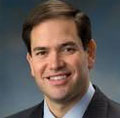
U.S. Senator Marco Rubio
Rubio took 72 percent in the August 30 vote, easily defeating businessman Carlos Beruff, who garnered just 18 percent. On the Democratic side, Murphy was the clear winner, taking 60 percent of the vote, compared to just 18 percent for his main challenger, U.S. Rep. Alan Grayson.
The bad news for Grayson continued, as his wife’s attempt to keep his 9th District U.S. House seat in the family sputtered in the Democratic primary.

U.S. Rep. Debbie Wasserman Schultz
Meanwhile, in South Florida’s 23rd District, Democratic U.S. Rep. Debbie Wasserman Schultz beat back a challenge from Tim Canova, turning aside an effort by angry Bernie Sanders supporters to force her from Congress over accusations that she, as chair of the Democratic National Committee, showed favoritism to Hillary Clinton in the presidential race.
Wasserman Schultz took 57 percent to 43 percent for Canova, who spent more than $3 million trying to unseat the veteran congresswoman.

U.S. Rep. Corrine Brown
However, another veteran Democrat was not as fortunate. U.S. Rep. Corrine Brown, who was indicted on corruption charges in July, was defeated in the 5th District primary by Al Lawson, a former state legislator from Tallahassee, in what was likely the last chapter in a 34-year-long political career.
Lawson won 48 percent to 40 percent for Brown.
A redraw of state’s congressional map, ordered by the Florida Supreme Court, substantially altered Brown’s district, forcing her to run in a swath of new territory outside of her Jacksonville base. Federal prosecutors have also accused Brown of conspiring with her chief of staff to convert a scholarship fund into a private slush fund used to pay for her political promotion and personal expenses. She has denied the charges.
Rubio initially decided to give up his Senate seat to pursue the Republican presidential nomination. But after his White House aspirations fizzled, he reversed course, prompting the departure of three of the four major candidates then in the race, all but Beruff.
Speaking to supporters in Kissimmee, the senator dismissed Murphy as an “old-fashioned liberal” handpicked for the Senate by Democratic leaders and a dilettante whose wealth family has given him “everything he’s every wanted.”
“If Patrick Murphy wants to be a U.S. Senator, he’s going to have to earn it by beating the son of a bartender and a maid who came to this country in search of a better life,” he said, employing details from his own biography that were a staple of his run for president.
But speaking to his supporters in Palm Beach County, Murphy criticized Rubio for his poor attendance in the Senate while he was running for president.
“Marco Rubio is the worst of Washington because he puts himself first every time,” Murphy said. “He gave up on his job. He gave up on Florida.”
Murphy also pounced on Rubio’s statement on CNN a day before the primary that he would not commit to serving his full Senate term, saying “no one can make that commitment because you don’t know what the future’s going hold in your life personally or politically.”
Murphy retorted: “Guess what, senator. I’ve got two words for you. I can.”
In his battle against Grayson, Murphy — who was a registered Republican until 2012, when he switched parties to run for Congress — had the backing of virtually all of the Democratic establishment, including the Democratic Senatorial Campaign Committee.
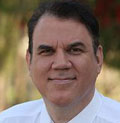
U.S. Rep. Alan Grayson
Party leaders were fearful that a victory by the outspoken Grayson — who regularly subjects reporters to profanity-laden tirades and once had to apologize after calling a female lobbyist “a K Street whore” — would spell disaster in November.
During the primary campaign, Grayson also faced domestic abuse allegations made by his ex-wife. He denied ever hitting her, but the story prompted two liberal groups — Democracy for America and the Progressive Change Campaign Committee — to reverse their endorsements.
In the end, Grayson not only lost to Murphy by more than 40 points but also barely edged out a lesser known candidate, political newcomer Pam Keith, for second place. Keith had snagged a surprise endorsement from one of Florida’s largest newspapers, The Miami Herald.
In addition to helping torpedo Brown in the 5th District, the new map made the 2nd District, which takes in the middle of the Florida Panhandle, more Republican, prompting Democratic U.S. Rep. Gwen Graham to retire.
After a nasty campaign with substantial spending by outside groups, Republicans chose Neal Dunn, a Panama City urologist, over Mary Thomas, a state government lawyer from Tallahassee. Dunn took 41 percent to 39 percent for Thomas, who was trying to become the first Indian-American woman ever elected to Congress.
After Grayson gave up his 9th District to run for the Senate, both his wife, Dena Grayson, and one of his top aides, Susannah Randolph, launched campaigns to succeed him. But State Senator Darren Soto beat them both in the Democratic primary, which is tantamount to election in the heavily Democratic Orlando-based district.
Grayson took 36 percent of the vote, compared to 18 percent each for Randolph and Dina Grayson.
In the 18th District, which Murphy gave up to run for the Senate, Democrats selected Randy Perkins, a multimillionaire businessman from Delray Beach, while Republicans went with Brian Mast, an Army veteran who lost both his legs while serving as a bomb disposal specialist in Afghanistan.
The 18th District, which takes in parts of Palm Beach County and the Treasure Coast, is likely to be a genuine toss-up in November.
The 26th District, which takes in the Florida Keys and southwest Miami-Dade County, will feature a rematch between Republican U.S. Rep. Carlos Curbelo and the man he beat in 2014, former Democratic U.S. Rep. Joe Garcia.
While Curbelo was unopposed in the GOP primary, Garcia eaked out an 800-vote win over Annette Taddeo in the Democratic primary.
 Chicken Fried Politics