
Home » Florida (Page 18)
Category Archives: Florida

Poll: Clinton opens up 8 point lead over Trump in Florida
New Quinnipiac University poll finds 61 percent of Florida voters view Trump unfavorably
♦By Rich Shumate, Chickenfriedpolitcs.com editor
 GAINESVILLE, Florida (CFP) — Buoyed by a nearly 20 point advantage among women, Hillary Clinton has opened up an 8 point lead over Donald Trump in the key battleground state of Florida, a new poll shows.
A Quinniapiac University poll of Florida voters, released June 21, put Clinton at 47 percent to 39 percent for Trump, well beyond the poll’s margin of error of plus or minus 3.1 percentage points.
 Compared to the same poll in May, Clinton was up 4 points and Trump was down 3 points, and what had been a statistical dead heat has turned into a solid Clinton lead.
Another question in the polls shows the uphill fight Trump may be facing in November in Florida: An outright majority of Florida voters, 52 percent, had a strongly unfavorable view of the GOP nominee and another 9 percent had a somewhat unfavorable view, for an unfavorability total of 61 percent.
Trump’s unfavorability also registered among his fellow Republicans in Florida, with 26 percent of them saying their view of him was strongly or somewhat unfavorable.
By contrast, 45 percent of voters have a strongly unfavorable view of Clinton and 8 percent viewed her somewhat unfavorably, for an unfavorability total of 53 percent. However, Clinton is viewed much more favorably by Democrats than Trump is among Republicans, with just 14 percent of them viewing her unfavorably.
Florida is a vital key to winning the White House in November. In the last 50 years, only one candidate has been elected president without carrying the Sunshine State–Bill Clinton in 1992.
The new poll found a significant gender gap that tilts in Clinton’s direction She leads Trump among women by 18 points; Trump led among men, but only by 4 points.
Clinton also enjoyed a lead of lead of nine points among self-described independents and was ahead by nearly 60 points among non-white voters. Trump had a 15-point lead among white voters.
Quinniapiac surveyed 975 Florida voters with a margin of error of plus or minus 3.1 percentage points.
Florida congressional candidate announces assault rifle giveaway a week after Orlando
GOP candidate Greg Evers says raffle is his way of protecting the Second Amendment
♦By Rich Shumate, Chickenfriedpolitics.com editor
PENSACOLA, Florida (CFP) — Barely a week after a gunman murdered 49 people with an assault rifle in an Orlando nightclub, a Florida congressional candidate says he will give away an AR-15 to a winner chosen randomly from people who like his campaign Facebook page.
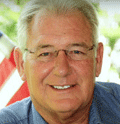
Florida State Senator Greg Evers
State Senator Greg Evers, a Republican running for the 1st District congressional seat, announced the raffle in a statement on his campaign website. The winner will be selected on the Fourth of July.
“With terrorism incidents on the rise, both at home and abroad, protecting our constitutional rights has never been more important,” Evers said in the statement. “With all that’s happening in the world today, I’ve never felt stronger about the importance of the Second Amendment in protecting our homeland than I do now.”
The post on his website features pictures of the assault rifle, made by a gun manufacturer in the district, Advanced Tactical Solutions of Santa Rosa Beach. According to Evers’s announcement, the right side of the gun will display the actual wording of the Second Amendment.
To be eligible for the prize, the winner must be at least 18, live in the district and pass a background check. People can also become eligible by sharing one of Evers’s Facebook posts or signing up at his website.
Evers is one of 11 Republicans running in the 1st District, which takes in the western half of the Florida Panhandle. The primary is Aug. 30.
The district is currently represented by Republican U.S. Rep. Jeff Miller, who is retiring.
U.S. Rep. David Jolly drops out of Senate race, will seek re-election against Charlie Crist
Jolly’s decision removes another obstacle from possible re-election run by Marco Rubio
♦By Rich Shumate, Chickenfriedpolitics.com editor
CLEARWATER, Florida (CFP) — Republican U.S. Rep. David Jolly is dropping his bid for Florida’s U.S. Senate seat and will instead run for re-election to his 13th District House seat, setting up a likely general election battle with former Florida Governor Charlie Crist.
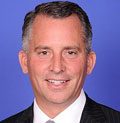
U.S. Rep. David Jolly
“I’ve got unfinished business,” Jolly said at a June 17 news conference at the St.Petersburg-Clearwater airport where he announced the switch. “Today, I’m asking my community simply for the opportunity to keep doing my job.”
Jolly, 43, was elected in a special election in 2014 and easily won a full term that fall to the seat, anchored in Pinellas County in the Tampa Bay area.
However, earlier this year, the Florida Supreme Court ordered that the state’s congressional map be redrawn, and the new map put a part of St. Petersburg with a large minority population into the 13th, turning what had been a swing district into one that favored Democrats.
Faced with the new map, Jolly decided to jump into the Senate race instead. But he failed to gain much traction in a crowded GOP field, a situation made much worse when Republican leaders in Washington began pressuring U.S. Senator Marco Rubio to seek re-election, which made it difficult for the other candidates to raise money.
Meanwhile, Republican leaders in Pinellas County, who struggled to find a strong candidate to challenge Crist, had urged Jolly to switch races and seek re-election.
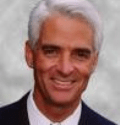
Former Florida Governor Charlie Crist
Crist, 59, was elected governor as a Republican in 2006, and, in 2010, decided to run for the Senate rather than seek re-election. However, when it became clear he would lose to Rubio in the primary, he left the GOP and became an independent to continue his Senate quest.
After losing to Rubio in the general election, Crist became a Democrat in 2012 and ran for governor in 2014, losing to Republican Governor Rick Scott. After that defeat, Crist announced he was leaving politics but changed his mind and launched a bid for Congress after the map was redrawn.
Jolly’s decision to switch races clears another obstacle for a possible re-election run by Rubio. Another Republican candidate in the Senate race, Lieutenant Governor Carlos López-Cantera has indicated that he, too, will drop out if Rubio decides to run.
Report: López-Cantera will step aside if Marco Rubio changes his mind about the Senate
Florida’s lieutenant governor tells Politico he has urged Rubio to reconsider his decision not to seek re-election
MIAMI (CFP) — Just days before qualifying is set to begin in Florida’s U.S. Senate primary, Lieutenant Governor Carlos López-Cantera has disclosed that if U.S. Senator Marco Rubio decides to run for re-election, he will end his own Senate campaign.
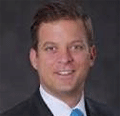
Lt. Gov. Carlos Lopez-Cantera
López-Cantera, who got into the Senate race at Rubio’s urging, tells Politico that when he met Rubio at the scene of the Orlando nightclub massacre, he urged Rubio to reconsider his decision not to seek re-election in 2016.
Rubio has been under increasing pressure from Republican Senate leaders to reverse course and run again. But his longtime personal and political friendship with López-Cantera has been seen as an obstacle to any Rubio candidacy.
Rubio gave up his seat to make an unsuccessful bid for the Republican presidential nomination and has insisted repeatedly that he will not be a Senate candidate. But Florida’s relatively late party primaries, at the end of August, have left him a window of time to change his mind.
Qualifying ends June 24, giving Rubio a little more than a week to make a final decision.
Rubio is seen as the strongest Republican candidate in the Senate race, which Democrats are trying to capture to wrest Senate control away from the GOP. López-Cantera and three Republican rivals have been battling for the nomination; the lieutenant governor is the only one of them who has won statewide.
There has also been speculation that another GOP Senate candidate, U.S. Rep. David Jolly of St. Petersburg, will also abandon the race and instead seek re-election to his 13th District House seat.
Jolly opted to take a pass on defending his House seat after a court-ordered redistricting added Democratic voters to what had been a swing district. However, the likely Democratic nominee for that seat is former Governor Charlie Crist, a Republican-turned-independent-turned-Democrat who lost statewide races in 2010 and 2014.
As the incumbent, Jolly would be in the best position to thwart the political resurrection of Crist, a man roundly despised in Republican circles.
The other Republicans in the Senate race include Carlos Beruff, a real estate developer from Manatee County, and U.S. Rep. Ron DeSantis, who represents a Jacksonville area House district.
On the Democratic side, U.S. Reps. Patrick Murphy of Jupiter and Alan Grayson of Orlando are battling for their party’s nomination.
Libertarians choose Johnson-Weld ticket in Orlando
Former Republican governors of New Mexico and Massachusetts will lead party into the fall
♦By Rich Shumate, Chickenfriedpolitics.com editor
ORLANDO (CFP) — Former New Mexico Governor Gary Johnson has won the Libertarian Party’s presidential nomination, as the party hopes to ride the deep unpopularity of the Republican and Democratic nominees to a breakthrough result in the fall.

Libertarian nominee Gary Johnson
“I will work as hard as I can to represent everybody in this room,” Johnson told convention delegates after they made their selection May 29 in Orlando. “I think that millions of people are going to be trying to understand what it means to be a Libertarian.”
The delegates also grudgingly went along with Johnson’s request to nominate former Massachusetts Governor William Weld as his running mate, after Johnson made two separate pleas to delegates who were skeptical of Weld’s Libertarian bona fides.
“I’m asking you to give me the tools needed to actually win,” Johnson. “If it’s Bill Weld, there’s actually an opportunity to take the White House.”
Weld’s nomination was only secured with some difficulty after three of the defeated presidential candidates took the microphone to endorse other candidates. Some delegates booed and shouted at Weld.
Weld, who joined the party just two weeks before the convention, told delegates “it’s been a learning experience.”
“I think every day I become a better Libertarian,” he said. “I pledge to you that I will stay with the Libertarian Party for life.”
After two ballots, Weld managed to win a bare majority, ahead of Larry Shape, a New York City businessman.
It also took Johnson two ballots to secure the nomination, with 55 percent of the vote. He narrowly missed winning an outright majority on the first ballot, with 49 percent of the vote.
Trailing behind Johnson were Austin Petersen, a magazine publisher and former Fox Business Channel producer, and John McAfee, founder of the anti-computer virus company that bears his name.
Johnson, 63, served as governor of New Mexico as a Republican from 1995 to 2003. He was the Libertarian Party’s presidential candidate in 2012, winning just 1 percent of the vote.
But given the historically low approval ratings of both Democrat Hillary Clinton and Republican Donald Trump, Johnson and the Libertarians are hoping to do much better this time around, particularly if Johnson can get into the presidential debates.
With Weld on on the ticket, “at a minimum, I think we’re in the presidential debates,” Johnson said.
In order to get into the debates, a candidate must be on the ballot in enough states to win an Electoral College majority and must be polling at least 15 percent in national polls.
The Libertarian Party expects to be on the ballot in all 50 states, meeting the first criterion. National polls that have included Johnson have put his support at about 10 percent, below the necessary threshold.
The Libertarian and Green parties have joined in a lawsuit to force the Commission on Presidential Debates to let their candidates into the fall debates.
 Chicken Fried Politics