But a Quinnipiac University poll finds a majority of Sunshine State voters think Clinton isn’t trustworthy
♦By Rich Shumate, Chickenfriedpolitics.com editor
GAINESVILLE, Fla. (CFP) — Former Florida Governor Jeb Bush and the state’s U.S. senator, Marco Rubio, are in a dead heat in the GOP presidential sweepstakes in their home state, and both men are far ahead of the rest of the field, a new poll finds.
Former Florida Governor Jeb Bush
The Quinniapiac University poll of Florida voters also found that while both Bush and Rubio narrowly trailed former Secretary of State Hillary Clinton in hypothetical general election match-ups, a majority of Florida voters say they think Clinton isn’t trustworthy.
In the Republican primary race, Bush was the choice of 20 percent of registered Republicans in the poll, with Rubio at 18 percent, which was within the poll’s margin of error of plus or minus 4.6 percent. No other candidate was in double digits.
When voters were asked to name both their first and second choices in the crowded GOP field, Rubio was either the first or second choice of 36 percent of respondents; Bush, 33 percent.
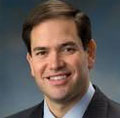
U.S. Senator Marco Rubio
Florida is likely to loom large in the 2016 Republican presidential contest. The state legislature moved the primary to March 15, which will make Florida first among the four largest states to hold a primary, and the Florida Republican Party decided to make it a winner-take-all affair, putting a treasure trove of 99 delegates up for grabs.
In Quinniapiac’s hypothetical general election match-ups, Clinton led Rubio 47 percent to 44 percent, just outside the poll’s margin of error of plus or minus 2.9 percent. Her lead over Bush was 46 percent to 42 percent.
When asked whether they had a favorable or unfavorable opinion of Clinton, respondents were nearly evenly split, with 47 percent saying they viewed her favorably and 45 percent unfavorably.
However, when they were asked if they found Clinton trustworthy, only 43 percent said yes, while 51 percent said no.
Bush was viewed favorably by 52 percent and unfavorably by 36 percent. Rubio was viewed favorably by 50 percent and unfavorably by 34 percent.
Florida has become a key bellweather state in presidential politics. The last person to win the White House without carrying the state was Bill Clinton in 1992, and in the last 16 presidential elections, the winner carried Florida 14 times.
The brother and son of former presidents says no one deserves White House “by right”
♦By Rich Shumate, Chickenfriedpolitics.com editor
MIAMI (CFP) — Arguing that the United States is “on a very bad course,” former Florida Governor Jeb Bush has announced his candidacy for the 2016 Republican presidential nomination, saying Democrats are trying “to hold on to power, to slog on with the same agenda under another name.”
Former Florida Governor Jeb Bush
“We will take command of our future once again in this country. We will lift our sights again, make opportunity common again, get events in the world moving our way again,” Bush said at a June 15 rally at Miami-Dade Community College.
“We will take Washington — the static capital of this dynamic country — out of the business of causing problems. We will get back on the side of free enterprise and free people.”
Bush, the son and brother of presidents, also tried to put a bit of distance between himself and his famous family name, saying “not a one of us deserves the job by right of resume, party, seniority, family or family narrative.”
“It’s nobody’s turn. It’s everybody’s test, and it’s wide open — exactly as a contest for president should be,” he said. “The outcome is entirely up to you, the voters.”
At the rally, the Bush campaign unveiled its logo, which features the word “Jeb” followed by an exclamation point — with no mention of his last name.
Bush also delivered part of his opening speech in Spanish, and his campaign website is in both English and Spanish — nods to Latino voters who in recent elections have trended Democratic.
Bush’s wife, Columba, whom he married in 1974, was born in Mexico, which he jokingly described as part of his “cross-border outreach.”
Bush, 62, served two terms as governor of the Sunshine State from 1999 to 2007. He was mentioned as a candidate for president in 2012 but opted not to run.
In his opening address, he touted his record as governor, noting that during his time in Tallahassee, Florida topped the nation in job creation and taxes were cut every year he was in office.
“A self-serving attitude can take hold in any capital, just as it once did in Tallahassee,” he said. “I was a governor who refused to accept that as the normal or right way of conducting the people’s business. I will not accept it as the standard in Washington. We don’t need another president who merely holds the top spot among the pampered elites of Washington.”
While not mentioning any of his Republican opponents by name, Bush took a strong swipe at Democrats, attacking the “phone-it-in foreign policy” of the “Obama-Clinton-Kerry team” and saying the opposition has “offered a progressive agenda that includes everything but progress.”
“They are responsible for the slowest economic recovery ever, the biggest debt increases ever, a massive tax increase on the middle class, the relentless buildup of the regulatory state and the swift, mindless downturn of a military that was generations in the making,” he said.
And in a remark that drew strong applause from Cuban-American Republicans in the audience, he criticized Obama for considering making a state visit to Communist Cuba.
“We don’t need a glorified tourist to go to Havana in support of a failed Cuba,” he said. “We need an American president to go to Havana in solidarity with a free Cuban people, and I am ready to be that president.”
Bush also steered clear of two issues that have caused him heartburn with the GOP’s Tea Party base — immigration reform and the Common Core educational standards, both of which he supports.
Bush is one of eight Southern Republicans who have launched, or are expected to launch, presidential bids in 2016.
Those already in the race include former governors Mike Huckabee and Rick Perry of Texas and U.S. Senators Ted Cruz of Texas, Marco Rubio of Florida, Rand Paul of Kentucky and Lindsey Graham of South Carolina. Gov. Bobby Jindal of Louisiana expected to announce his candidacy soon, now that his state’s legislature has adjourned for the year.
The Southern GOP field is divided equally between senators and governors. Two of the last three Republicans elected president — George W. Bush and Ronald Reagan — served as governor, while the last GOP senator elected to the presidency was Warren Harding in 1920.
On the Democratic side, former U.S. Senator Jim Webb of Virginia has already launched an exploratory committee for the 2016 Democratic nomination — a race that’s expected to be dominated by former Secretary of State Clinton, a former first lady of Arkansas who went on to be elected to the Senate from New York.
Rubio, trying to become America’s first Latino president, kicks off 2016 campaign in Miami
MIAMI (CFP) — Charging that “our very identity as an exceptional nation is at stake,” U.S. Senator Marco Rubio of Florida has kicked off his campaign for the 2016 Republican presidential nomination.
U.S. Senator Marco Rubio
During an announcement rally in Miami April 13, the senator — at 43 one of the youngest potential candidates in the White House chase — framed the race as “a generational choice about what kind of country we will be.”
“While our people and economy are pushing the boundaries of the 21st century, too many of our leaders and their ideas are stuck in the 20th century,” he said.
“They are busy looking backward, so they do not see how jobs and prosperity today depend on our ability to compete in a global economy. So our leaders put us at a disadvantage by taxing, borrowing and regulating like it’s 1999.”
Rubio also took a direct swipe at former Secretary of State Hillary Clinton — 24 years his senior — who announced Sunday that she would seek the Democratic presidential nomination.
“Just yesterday, a leader from yesterday began a campaign for president by promising to take us back to yesterday. But yesterday is over, and we are never going back.”
Rubio, the son of refugees from Cuba’s communist dictatorship, began his campaign symbolically at Miami’s iconic Freedom Tower, where Cuban immigrants to the United States were processed after arriving in the 1960s.
“Their story is part of the larger story of the American miracle — how, united by a common faith in their God given right to go as far as their talent and work would take them, a collection of immigrants and exiles, former slaves and refugees, became one people,” he said.
“For almost all of human history, power and wealth belonged only to a select few … But America is different. Here, we are the children and grandchildren of people who refused to accept this.”
If he wins the presidency, Rubio would be the first Latino, and the first Cuban-American, to be elected president. Another Cuban-American, U.S. Senator Ted Cruz of Texas, is also seeking the GOP nomination.
But in deciding to seek the presidency, Rubio will give up what was considered a relatively safe Senate seat, triggering a wide-open race in the Sunshine State in 2016 that will present a possible pickup opportunity for Democrats.
Rubio opted not to try to simultaneously seek the presidency and re-election to the Senate, as one of his GOP presidential rivals, U.S. Senator Rand Paul, is doing in Kentucky.
The Florida senator will also likely be battling a fellow Floridian and political mentor, former Florida Governor Jeb Bush, who is also expected to make a 2016 White House bid.
Rubio the former speaker of the Florida House, rode a wave of conservative and Tea Party support in 2010 to win a Senate seat, besting Florida’s sitting governor at the time, Charlie Crist. He quickly rose to national prominence and was mentioned as a vice presidential pick in 2012.
Rubio has also garnered headlines for his work on immigration reform, which has drawn the ire of the GOP’s small, but noisy, nativist wing. Opponents of immigration reform have also criticized Bush for much the same reason.
Rubio, Cruz, Paul and Bush are among nine Southerners — eight Republicans and one Democrat — considering a White House bid in 2016.
On the Democratic side, former U.S. Senator Jim Webb of Virginia has already launched an exploratory committee for the 2016 Democratic presidential nomination — a race that’s expected to be dominated by former Secretary of State Clinton, a former first lady of Arkansas who went on to be elected to the Senate from New York.
Republican voters in Wall Street Journal/NBC News poll had the least favorable view of U.S. Senator Lindsey Graham
WASHINGTON (CFP) — A new poll finds that among the eight Southerners considering a bid for the GOP presidential nomination in 2016, U.S. Senator Marco Rubio is viewed most favorably by Republican voters.
U.S. Senator Marco Rubio
Fifty-six percent of Republican voters surveyed by in a Wall Street Journal/NBC News poll said they could see themselves supporting Rubio, while just 26 percent could not, a favorability gap of 30 points. Fourteen percent were undecided.
Not only was that the best showing among the potential Southern contenders, but it was better than every other expected candidate in the field except Wisconsin Governor Scott Walker, who had a favorability gap of 36 percent.
At the other end of the spectrum, just 26 percent of Republican voters said they could see themselves supporting U.S. Senator Lindsey Graham of South Carolina, while 51 percent — an outright majority — could not, an unfavorability gap of 31 points. However, 29 percent were still undecided about Graham.
The poll showed Republican voters may have largely made up their minds about three of the possible candidates in the race — former Arkansas Governor Mike Huckabee, former Florida Governor Jeb Bush and U.S. Senator Rand Paul of Kentucky. The percentage of undecided for all three was under 12 percent.
But substantial percentages of the GOP voters have not made up their minds about Graham, Louisiana Governor Bobby Jindal and U.S. Senator Ted Cruz of Texas, all of whom had undecided readings above 20 percent.
The margin of error in the poll, released March 11, was plus or minus 6.48 percentage points.
Here is how the other potential Southern candidates fared:
Huckabee: 52 percent could support, 40 percent could not support, 8 percent undecided. Favorability gap of 12 points.
Bush: 49 percent could support, 42 percent could not support, 9 percent undecided. Favorability gap of 7 points.
Paul of Kentucky: 49 percent could support, 40 percent could not support, 11 percent undecided. Favorability gap of 9 points.
Former Texas Governor Rick Perry: 45 percent could support, 40 percent could not support, 15 percent undecided. Favorability gap of 5 points.
Cruz: 40 percent could support, 38 percent could not support, 22 percent undecided. Favorability gap of 2 points.
Jindal: 36 percent could support, 25 percent could not support, 39 percent undecided. Favorability gap of 11 points.
On the Democratic side, former U.S. Senator Jim Webb of Virginia has already launched an exploratory committee for the 2016 Democratic presidential nomination — a race that’s expected to be dominated by former Secretary of State Hillary Clinton, a former first lady of Arkansas.
The Republican-turned-independent-turned-Democrat announces his decision in a Facebook post
TAMPA (CFP) — Former Florida Governor Charlie Crist says he will not seek a U.S. Senate seat from the Sunshine State in 2016, ending media speculation that he might jump into the race.
Former Florida Governor Charlie Crist
“I will not be seeking office in 2016, but I will be working alongside you,” Crist said in a brief Facebook message posted March 16. “Too much is at stake for our beautiful Florida to be on the sidelines.”
The seat is currently held by Republican U.S. Senator Marco Rubio, who is expected to announce in April whether he will give it up to seek the Republican presidential nomination. Rubio’s departure would likely trigger a wide-open race in politically competitive Florida.
The decision not to run comes just four months after Crist, running as a Democrat, was narrowly defeated by incumbent Republican Governor Rick Scott.
Crist, 58, was elected governor in 2006 as a Republican. In 2010, he opted to seek a Senate seat, rather than run for re-election. After it was clear he would lose to Rubio in the primary, Crist bolted the GOP and ran unsuccessfully as an independent. He became a Democrat in 2012.


 GAINESVILLE, Fla. (CFP) — Former Florida Governor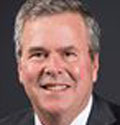
 WASHINGTON (CFP) — A new poll finds that among the eight Southerners considering a bid for the GOP presidential nomination in 2016,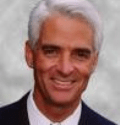
 Chicken Fried Politics