
Home » Georgia (Page 17)
Category Archives: Georgia

Analysis: Election results show Democrats are still a long way from being competitive in the South
Clinton performed worse in the South than Barack Obama in 2012
♦By Rich Shumate, Chickenfriedpolitics.com editor
 (CFP) — Prior to the November 8 election, Democrats were publicly hopeful that they might finally be turning back Republican hegemony in the South, to the degree that pro-Hillary Clinton ads were running not only in the battleground states of Florida and North Carolina but also in reliably Republican Georgia and Texas.
Election results show that thinking was not just wishful, it was magical.
In fact, Clinton did comparatively worse in the South than Barack Obama did four years ago (which, oddly, seems to undercut the notion that the South’s resistance to Obama was based on his race.) A look at regional and state-by-state figures in the presidential race shows just how grim election night was for Southerners with a D attached to their name.
Donald Trump carried 53.3 percent of the vote and 13 out of 14 Southern states. That performance was not as good as Mitt Romney’s in 2012, when he came in with 54.4 percent (although Romney only carried 12 states.) However, the performance gap between Trump and Clinton was actually larger than the gap between Romney and Obama because Clinton’s underperformance was even worse.
She took just 42.5 percent of the Southern vote; Obama won 44.3 percent. Some of that was due to a larger third-party vote which, at 4.2 percent, was about 3 points more than it was in 2012. However, the gap between the Republican and Democratic share of the vote went up everywhere except Texas and Georgia and the lone Southern state Clinton carried, Virginia.
A look at raw vote totals shows the degree to which Clinton hemorrhaged Obama supporters.
In Mississippi, Clinton’s raw vote total was nearly 101,000 less than Obama’s in 2012, a huge shift in a state where less than 1.2 million votes were cast. Given that African-Americans play an outsized role in the state’s Democratic base, Clinton’s numbers are a clear sign that black voters did not turn out for her as they did for Obama.
But if Mississippi was bad for Clinton, Appalachia was even worse — down 51,000 votes in Kentucky, 92,000 in Tennessee, and 52,000 votes in West Virginia, where Trump’s percentage of the vote soared 15 points above Romney’s number. Those three states together have 270 counties; she carried exactly five.
In Arkansas, where Clinton was first lady and her husband governor for 10 years, she lost 16,000 votes and managed just 33.6 percent of the vote, 3.3 points lower than Obama’s vote in 2012. At the same time, Trump’s vote went up 34,000 over Romney’s, a net difference of nearly 50,000 votes.
Even in Virginia, which Clinton won, her vote total was 11,000 less than what Obama put up in 2016. She won because Virginia Trump’s vote total came in less than Romney’s by about 59,000 votes.
Meanwhile, as Clinton’s vote was fading, Trump’s was surging, beating 2012 GOP totals in every state except Virginia and Mississippi.
In Florida, where a growing Latino population was supposed to lead Clinton to victory, Trump added 442,000 votes to Romney’s tally, while Clinton added just 245,000 to Obama’s. In North Carolina, he added 69,000; she lost 16,000 in a battleground state she visited repeatedly.
In total across the South, Trump added more than 1 million votes to Romney’s haul; Clinton managed to add 448,000 by offsetting her losses in 11 states with gains in Texas, Florida and Georgia.
This led to some remarkable net vote changes between the two parties — 128,000 in Alabama, 166,000 in Kentucky, 150,000 in Tennessee and 118,000 in West Virginia.
The only glimmer of light at the end of this dark tunnel for Democrats was their improved performance in both Georgia and Texas.
In the presidential race, Democrats closed the gap with Republicans from 8 to 5 points in Georgia and 16 points to 9 points in Texas. Clinton also carried two big suburban counties in Atlanta, Cobb and Gwinnett, that had not gone Democratic in 40 years, along with Fort Bend County in suburban Houston, normally a no-man’s-land for a Democrat.
So perhaps Democratic wistfulness for those two states may not have been entirely misplaced, although that’s cold comfort when Trump carried Florida and North Carolina on his way to the White House.
And if the presidential results were grim, the U.S. Senate races were just as bad. Republicans went eight-for-eight, with a race in Louisiana heading for a December 10 runoff in which Republican State Treasurer John Kennedy is favored to keep the seat in GOP hands.
Democrats didn’t even bother contesting Alabama, Oklahoma or South Carolina; they did recruit credible candidates in the rest of the races, such as Conner Eldridge in Arkansas, Jim Barksdale in Georgia and Jim Gray in Kentucky. But all lost by double-digit margins.
The Democrats’ best shots to pick up GOP-held seats were thought to be in Florida, where U.S. Rep. Patrick Murphy was challenging Marco Rubio, and in North Carolina, where Deborah Ross was challenging Richard Burr. Murphy lost by 8 points; Ross, by 7. Both actually underperformed Clinton in their states.
The only good news for Democrats came in races for governor in West Virginia, where Jim Justice kept the office in Democratic hands, and in North Carolina, where Democratic Attorney General Roy Cooper appears to have ousted Republican Governor Pat McCrory, although that race may be headed for a recount.
U.S. Senate: Republicans hold on to all 8 of their Southern seats
Rubio and Burr beat back challenges in Florida, North Carolina; Kennedy and Campbell will contest runoff in Louisiana
♦By Rich Shumate, Chickenfriedpolitics.com editor
(CFP) — Republicans held on to all eight of their Southern U.S. Senate seats, with Marco Rubio in Florida and Richard Burr in North Carolina turning back strong Democratic challengers.
Meanwhile, in Louisiana’s all-party “jungle” primary, State Treasurer John Kennedy and Democratic Public Service Commissioner Foster Campbell will advance to a December 10 runoff for the open seat being vacated by Republican U.S. Senator David Vitter.
Kennedy led with 25 percent, with Campbell at 18 percent, edging out Republican U.S. Rep. Charles Boustany at 15 percent.
Because Republicans already secured their 51-seat Senate majority, the Louisiana runoff will not affect the balance of power.
In addition to Rubio and Burr, Republican incumbents also won re-election in Alabama, Arkansas, Georgia, Kentucky, Oklahoma and South Carolina.
With the wins on November 8, Republicans will hold 23 of the 28 Southern Senate seats, with Louisiana still to be decided.
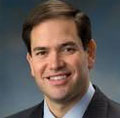
U.S. Senator Marco Rubio
In Florida, Rubio had initially decided to give up his Senate seat to pursue the Republican presidential nomination. But after losing the White House contest, he changed course and filed to run for a second term, improving the GOP ‘s prospects for keeping the seat.
Rubio took 52 percent, defeating Democratic U.S. Rep. Patrick Murphy, who took 44 percent.
Alluding to his withdrawal from the presidential race in March, he told election night supporters in Miami, “This is a lot better than the last time I did one of these.”
Rubio, who had been a critic of Trump before reluctantly endorsing him, did not mention his party’s victorious presidential standard-bearer in his speech, but he did make a plea for civility in politics.
“While we can disagree on issues, we cannot share a country where people hate each other because of their political affiliations,” Rubio said.

U.S. Senator Richard Burr
In North Carolina, Burr, seeking a third term, took 51 percent of the vote, defeating Deborah Ross, a former state legislator and Duke University law professor, who took 45 percent.
“I am truly humbled by the support I’ve received from people across this state,” Burr said at a victory celebration in Winston-Salem. “This is a victory for all of those who have believed in me.”
In a state notorious for exchanging Senate seats between parties, Burr becomes the first senator to win three consecutive terms since Jesse Helms in 1984.
Here are the other Southern Senate results:

Shelby
Alabama: Republican U.S. Senator Richard Shelby won a seventh term by defeating Democrat Ron Crumpton, a marijuana rights activist. by a margin of 64-36 percent. At the end of his new term, Shelby will be 88 and will have served in Congress for 44 years.

Boozman
Arkansas: Republican U.S. Senator John Boozman won a second term by taking 60-36 percent for Democrat Conner Eldridge, a former federal prosecutor from Fayetteville. Boozman suffered an aortic aneurysm in 2014 that kept him away from Washington for two months.

Isakson
Georgia: Republican U.S. Senator Johnny Isakson won a third term in the Senate by defeating Democrat Jim Barkdale, a wealthy Atlanta businessman, by a 55-41 percent margin. Isakson ran for re-election to a third term despite announcing in 2015 that he had been diagnosed with Parkinson’s disease.

Paul
Kentucky: Republican U.S. Senator Rand Paul defeated Lexington Mayor Jim Gray by a margin of 57-43 percent. Paul had pursued re-election simultaneously with a presidential campaign until he dropped out of the White House race in February.

Lankford
Oklahoma: Republican U.S. Senator James Lankford easily won his first full six-year term by defeating Democrat Mike Workman, a Tulsa political consultant, by a margin of 68-25 percent. In 2014, Lankford was elected to finish out the final two years of Tom Coburn’s term after he resigned.

Scott
South Carolina: Republican U.S. Senator Tim Scott, the only black Republican in the Senate, easily won a full six-year term by defeating Democrat Thomas Dixon, a Charleston pastor, by a margin of 61-36 percent. In 2014, Scott was elected to serve out the remaining two years of Jim DeMint’s term, after he resigned.
President: Trump rolls across the South, shuts out Clinton in Florida, North Carolina
Clinton takes just one Southern state, Virginia
♦By Rich Shumate, Chickenfriedpolitics.com editor
(CFP) — Republican Donald Trump blazed through the South on his way to the White House, defeating Hillary Clinton in the battleground states of Florida and North Carolina.
Trump won 13 of 14 Southern states, with a combined 167 electoral votes, a better performance than Mitt Romney had in 2012, when he took 12.
Trump’s haul of Southern electoral votes made up 58 percent of his national total.
Clinton’s only Southern victory came in Virginia, where she defeated Trump by a margin of 50-46 percent, thanks to a late vote surge from the Washington, D.C. suburbs.
Trump defeated Clinton by a margin of 49-48 percent in Florida and 51-47 percent in North Carolina.
Across the rest of the South, Trump rolled up double-digit margins, including winning by a whopping 43 points in West Virginia. 36 points in Oklahoma and 30 points in Kentucky.
Trump outperformed Romney’s totals in every Southern state except Georgia and Texas. In Georgia, the GOP result was down 3 points; in Texas, 6 points.
How much can Hillary Clinton dent the South’s Republican hegemony?
Trump must beat Clinton in Florida and North Carolina, and avoid any other Southern surprises, to win
♦By Rich Shumate, Chickenfriedpolitics.com editor
(CFP) — In 2012, Republican Mitt Romney blew across the South, carrying 12 of the 14 Southern states — 10 of them by double-digit margins — and losing another, Florida, by just a single point.
Heading into Tuesday’s election, Donald Trump’s quest for the White House may hinge on how well he can hang on to Romney’s Southern support, amid signs that Hillary Clinton is poised to do better in the region than Barack Obama did four years ago.
Pre-election polls show that both Florida, which Obama carried in 2012, and North Carolina, which he did not, are toss-ups between Clinton and Trump.
The news is better for Clinton in Virginia, where polls show her with a clear lead in a state Obama carried in both 2008 and 2012.
Together, those three states have 57 electoral votes, out of the 270 needed to win.
Florida and North Carolina are more important to Trump than to Clinton: She could lose both and still win in the Electoral College, but if he loses either of them, his route to victory is likely cut off.
A key metric in Florida will be how many Latino voters turn out and how much Clinton can benefit from Trump’s anti-immigration stance and incendiary comments about Latinos, particularly Mexicans.
About 15 percent of the Florida electorate is Latino, about 1.8 million voters, and about a third of those voters are Cuban-Americans, normally a reliably Republican group. But Trump’s support in that community — necessary for a Republican to win statewide — remains a question mark.
Much of the GOP Cuban-American political leadership in Miami has refused to endorse Trump, including U.S. Reps. Carlos Curbelo, Ileana Ros-Lehtinen and Mario Diaz-Balart. Lieutenant Governor Carlos López-Cantera has also kept his distance from Trump, although he did appear at an event in Miami with the GOP nominee back in October.
With Florida and North Carolina up for grabs, an equally intriguing question heading into election night is the degree to which Trump might be in trouble in other unexpected places in the South.
For instance, three media polls taken last week in Georgia showed that the race between Clinton and Trump in Georgia was a statistical tie. Georgia has not gone for a Democrat for president since 1992, when Clinton’s husband, Bill, won narrowly in a three-way race.
Priorities USA, a Clinton-allied Super PAC, had been airing ads in Georgia, although the Clinton campaign itself has not moved resources into the state.
Polls in mid-October also showed a closer-than-expected race in Texas, where Trump’s weakness among Latino voters seemed to be having an effect. However, more recent polling in Texas has shown Trump reestablishing a lead.
Because most Southern states are perceived to be solid Republican territory, there has been little public polling in most of them, save for Florida, North Carolina, Virginia, Georgia, and Texas.
However, some national polling has shown Trump’s support weaker across the South than what Romney managed to put up four years ago. So, in an election that has seen its share of surprises, there is no way until the votes are counted to know if there might be other Southern surprises lurking in the presidential race.
Republican U.S. Senate incumbents trying to fight off Democratic challengers
Florida and North Carolina are Senate battlegrounds; Louisiana holds all-party primary for Vitter’s seat
♦By Rich Shumate, Chickenfriedpolitics.com editor
(CFP) — Nine GOP-held Southern U.S. Senate seats are up for grabs in the November 8 election, with Republican incumbents heavily favored in six races.
The exceptions are Florida, where Republican U.S. Senator Marco Rubio is facing off against Democratic U.S. Rep. Patrick Murphy, and in North Carolina, where the GOP incumbent, U.S. Senator Richard Burr, is facing Deborah Ross, a former state legislator and Duke University law professor.
And in Louisiana, 24 candidates are running in an all-party “jungle” primary, with the top two vote-getters advancing to a December 10 runoff, which could potentially decide the balance of power in the Senate.
Pre-election polls have shown Republican State Treasurer John Kennedy in the lead, followed by Public Service Commissioner Foster Campbell, a Democrat; Republican U.S. Rep. Charles Boustany of Lafayette; and Democrat Caroline Fayard, a New Orleans lawyer.
If Kennedy and Boustany can both clear the runoff, the GOP would be guaranteed of keeping the seat, now held by U.S. Senator David Vitter. But if Campbell or Fayard can come through, the December 10 runoff will be the last word on Senate races this year — and, if the Senate is closely divided, decide which party controls the chamber.
In addition to Rubio and Burr, Republican incumbents are seeking re-election in Alabama, Arkansas, Georgia, Kentucky, Oklahoma and South Carolina.
All are heavily favored, although the race in Georgia between U.S. Senator Johnny Isakson and Democratic businessman Jim Barksdale is somewhat more competitive.
In Alabama, Richard Shelby faces Democrat Ron Crumpton, a marijuana rights activist; in Arkansas John Boozman is seeking a second term against Democrat Conner Eldridge, a former federal prosecutor from Fayetteville; and in Kentucky, Rand Paul is running against Lexington Mayor Jim Gray.
In Oklahoma, James Lankford faces Mike Workman, a Tulsa political consultant, and in South Carolina, Tim Scott, the only black Republican in the Senate, faces Democrat Thomas Dixon, a Charleston pastor.
 Chicken Fried Politics