
Home » Georgia (Page 5)
Category Archives: Georgia


25 new Southern U.S. House members, 2 senators sworn in Sunday
Freshmen group includes youngest member in nearly 60 years, wave of Republican women
♦By Rich Shumate, ChickenFriedPolitics.com editor
 WASHINGTON (CFP) — Members of the new 117th Congress will be sworn into office on Sunday, including 25 new Southern U.S. House members and two new Southern senators.
The Southern House freshmen include seven Republican women, part of a wave elected in November that more the doubled the number of GOP women in the chamber, and 25-year-old Madison Cawthorn of North Carolina, who is the youngest member of the House sworn in since 1965.
Also among the new Southern House members is former White House doctor Ronny Jackson, whom President Donald Trump tried unsuccessfully to elevate to Veterans Affairs secretary in 2018. He will represent now represent the Texas Panhandle.
Republican Stephanie Bice from Oklahoma City is making history as the first Iranian-American to serve in Congress. Her father emigrated from Iran in the 1970s.
Byron Donalds, the new member representing Southwest Florida, will be one of just two African American Republicans in the House and three in Congress overall.
Full list of new Southern House members at bottom of story
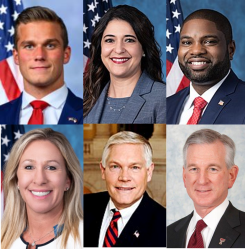
Clockwise from top left: Cawthorn, Bice, Donalds, Tuberville, Sessions, Greene
In the Senate, Tommy Tuberville, R-Alabama, and Bill Hagerty, R-Tennessee, will join a Southern contingent that now includes 25 Republicans and just three Democrats, after Tuberville defeated Doug Jones in November.
Lawmakers were sworn in during a rare Sunday session because the Constitution prescribes January 3 as the date for opening a new Congress.
Sunday’s House session is scheduled to include a moment of silence for Republican U.S. Rep.-elect Luke Letlow of Louisiana, who died from COVID-19 days before he was set to be sworn in.
While both the House and Senate were observing coronavirus precautions, including masks and social distancing, one new member from Georgia, Marjorie Taylor Greene, was spotted on the floor without a mask, prompting admonishment by House staff.
During orientation for new members, she had dismissed masks — which are required on the House floor — as “oppressive.”
Among the new members sworn in Sunday was one very familiar face — Republican Pete Sessions of Texas, who served 11 terms in the House before being defeated in 2018, then claiming a seat from a different district in November.
Sessions and Jackson are part of a group of seven new members from Texas, marking a turnover in nearly a fifth of the Lone Star State’s delegation amid a wave of retirements. All are Republicans.
Florida has five new members; Georgia, four; North Carolina, three; and Alabama, two. Oklahoma, South Carolina, Tennessee and Virginia each have one new member. Delegations from Arkansas, Kentucky, Mississippi and West Virginia were unchanged.
Eleven of the 25 new Southern members are women (seven Republicans and four Democrats), part of the largest group of women (121) ever sworn into a single Congress. The new Congress will also feature a record number of Republican women at 29, up from 13 in the last Congress.
The service of one Southern House member in the 117th Congress will be brief — Cedric Richmond, a New Orleans Democrat who will leave to become a senior aide to President-elect Joe Biden once he is sworn in on January 20.
Special elections will be held in Louisiana for Richmond and Letlow’s seats in March; neither are expected to change hands between parties.
The Constitution requires members of the House to be at least 25 years of age, a threshold Cawthorn met in August after winning the Republican primary in his Western North Carolina district. He will be the youngest House member since Jed Johnson Jr., a Democrat who represented Oklahoma for a single term between 1965 and 1967.
Sessions represented a Dallas-area seat during his first stint in the House, which he lost in 2018 to Collin Allred. Rather than try to reclaim it in 2020, he ran in a vacant seat in a district that includes Waco, where he grew up.
Of the 25 new Southern members, 21 were Republicans and just four were Democrats. Overall, Republicans hold 99 Southern seats and Democrats 52, with Letlow’s seat vacant.
Four Southern states — Arkansas, Oklahoma and West Virginia — have no Democrats in their House delegations, while five others — Alabama, Kentucky, Louisiana, Mississippi and South Carolina — have just one.
In only one Southern state do Democrats hold a majority of seats, Virginia, which is sending seven Democrats and only four Republicans to Washington.
Here is a list of new Southern House members, by state:
Alabama
Jerry Carl, R, 1st District (Mobile, South Alabama)
Barry Moore, R, 2nd District (Montgomery, southwest Alabama)
Florida
Kat Kammack, R, 3rd District (Gainesville, North-Central Florida)
Scott Franklin, R, 15 District (Lakeland, eastern Tampa suburbs)
Byron Donalds, R, 19th District (Fort Myers, Southwest Florida)
Carlos Giménez, R, 26th District (south Miami-Dade, Florida Keys)
Maria Elvira Salazar, R, 27th District (Miami-Dade)
Georgia
Nikema Williams, D, 5th District (Atlanta)
Carolyn Bourdeaux, D, 7th District (northeast Atlanta suburbs)
Andrew Clyde, R, 9th District (Gainesville, Northeast Georgia)
Marjorie Taylor Greene, R, 14th District (Rome, Northwest Georgia)
North Carolina
Deborah Ross, D, 2nd District (Raleigh)
Kathy Manning, D, 6th District (Greensboro)
Madison Cawthorn, R, 11th District (Western North Carolina)
Oklahoma
Stephanie Bice, R, 5th District (metro Oklahoma City)
South Carolina
Nancy Mace, R, 1st District (Charleston, Low Country)
Tennessee
Diana Harshbarger, R, 1st District (Tri-Cities, East Tennessee)
Texas
Pat Fallon, R, 4th District (Northeast Texas)
August Pfluger, R, 11th District (Midland, San Angelo, west-central Texas)
Ronny Jackson, R, 13th District (Amarillo, Wichita Falls, Panhandle)
Pete Sessions, R, 17th District (Waco, central-east Texas)
Troy Nehls, R, 22nd District (western Houston suburbs)
Tony Gonzales, R, 23rd District (West Texas)
Beth Van Duyne, R, 24th District (metro Dallas-Forth Worth)
Virginia
Bob Good, R, 5th District (Charlottesville, central Virginia)
We tweet @ChkFriPolitics Join us!

Most Southern Republican U.S. House members break with Trump on 2 key votes
Only 18 join Trump’s push for $2,000 coronavirus relief checks, while 51 vote to sustain veto of defense spending bill
♦By Rich Shumate, ChickenFriedPolitics.com editor
WASHINGTON (CNN) — Southern U.S. House Republicans were largely unswayed by President Donald Trump’s call for larger coronavirus relief checks in a key vote Monday, and most of them then voted to override the president’s veto of a defense spending bill that had passed earlier in the month with broad bipartisan support.
Trump had threatened to veto a coronavirus funding bill because it did not provide Americans with more generous relief checks, before signing it Sunday. But House Democrats brought a stand-alone bill to the floor to increase checks from $600 per person to $2,000, and 44 Republicans joined with almost all of the Democrats to pass it by a margin of 275 to 134 and send it to the Senate.
However, among the 99 Southern Republicans in the House, just 18 joined in the effort to make relief checks more robust — Reps. Robert Aderholt of Alabama; James Comer and Hal Rogers of Kentucky; Rick Crawford of Arkansas; Mario Diaz-Balart, Francis Rooney and John Rutherford of Florida; Michael Burgess, Kay Granger, Bill Flores, Will Hurd, Mike McCaul and Pete Olson of Texas; Clay Higgins of Louisiana; Tom Cole and Frank Lucas of Oklahoma; David McKinley of West Virginia; and Denver Riggleman of Virginia.
Hours later, the House, as expected, overrode Trump’s veto of the National Defense Authorization Bill, with 109 Republicans, including 51 Southern Republicans, voting in favor of the first successful veto override of his presidency.
Just 35 Southern Republicans voted to sustain the president’s veto including 12 Southern Republicans who had voted for the defense bill but switched sides on the override vote — Comer, Diaz-Balart, Burgess, McKinley, Rick Allen of Georgia, Scott DesJarlais of Tennessee, Kevin Hern of Oklahoma, Barry Loudermilk of Georgia, Carol Miller of West Virginia, Gary Palmer of Alabama, John Rose of Tennessee, and Bruce Westerman of Arkansas. Greg Steube of Florida, who did not vote when the bill came to the floor, also voted against the override.
Five other Southern Republicans who supported the bill’s passage opted not to oppose Trump on the veto override and did not vote — Reps. Andy Barr of Kentucky, Gus Bilirakis of Florida, Kenny Marchant of Texas, Markwayne Mullin of Oklahoma, and Phil Roe of Tennessee. Jody Hice of Georgia, who opposed the bill, also did not vote on the override.
Twenty-two Southern Republicans opposed both the original bill and the veto override, including House Minority Whip Steve Scalise of Louisiana and Trump’s most vocal defender in the House, Rep. Matt Gaetz of Florida.
All 50 Southern Democrats serving in the House voted for the $2,000 checks and the veto override.
Trump vetoed the defense spending bill because he objected to a provision requiring name changes for military bases named for Confederate officials, mostly in the South. He also wanted Congress to repeal an unrelated provision that protects digital media companies from liability for posting third-party content.
The veto put Republicans in the awkward position of choosing between loyalty to Trump and supporting a bill to fund military operations, including pay raises for the troops.
After the House override, Trump took to Twitter to denounce the action as “a disgraceful act of cowardice and total submission by weak people to Big Tech.”
The bill had passed December 8 by a veto-proof margin of 335 to 78, with the support from 140 Republicans. The veto override is expected to clear the Senate.
However, the boost in relief checks is expected to have a much more difficult time in the Senate, where members have expressed concerns about the $300 billion cost of nearly the tripling the amount of the payments.
We tweet @ChkFriPolitics Join us!
2020 Overtime: Runoffs in 2 Georgia U.S. Senate races will decide party control
Democrats face uphill battle in flipping both Georgia seats in January 5 vote
♦By Rich Shumate, ChickenFriedPolitics.com editor
 ATLANTA (CFP) — Attention, Georgians: Prepare to have your Thanksgiving interrupted by politics. And your Christmas. And your New Year’s.
Runoffs will be held January 5 for both of the Peach State’s U.S. Senate seats, with party control of the Senate hanging in the balance, which will nationalize these contests and draw an avalanche of money and advertising.
If Democrats win both runoffs, the party will control the White House and both the U.S. House and Senate starting next January 20. If Republicans win just one, Senate Majority Leader Mitch McConnell will remain large and in charge — and standing in their way.
The stakes were summarized by one of the Republicans defending a Georgia seat, Kelly Loeffler, on Twitter after networks projected Joe Biden as the winner of the presidential contest: She said she and Republican seatmate David Perdue “are the last line of defense against the radical left.”

Jon Ossoff and David Perdue
Perdue defeated his Democratic challenger, Jon Ossoff, on election night, but fell just below the 50% threshold he needed to win the seat outright and avoid a runoff. (Georgia is the only state in the country that requires candidates to win a majority in a general election.)
In a special election to fill out the remainder of Republican Johnny Isakson’s term, Loeffler, who was appointed to the seat last year, faces Democrat Raphael Warnock, the senior pastor of Atlanta’s historic Ebenezer Baptist Church making his political debut.
The runoffs take on additional importance now that Democrat Kamala Harris has been elected as vice president. Currently, the Senate Republican caucus has 50 members, the Democratic caucus, 48. If Democrats win both Georgia seats, the balance in the chamber will stand at 50-50; Harris, in her role as president of the Senate, will give Democrats control.
However, Democrats will have an uphill battle in both runoff races.
Perdue came in nearly 93,000 votes ahead of Ossoff in the November 3 vote, which the Democrat will have to find a way to make up in what is likely to be a much smaller electorate in January.

Raphael Warnock and Kelly Loeffler
In the special election, which had 20 candidates running in the first round, Warnock held a 140,000-vote lead over Loeffler. However, the six Republican candidates in the race drew nearly 415,000 more votes combined than the eight Democrats.
Over the last 30 years, Republicans have won six of the seven statewide general election runoffs, including two in 2018. Democrats lost runoffs for U.S. Senate in 1992 and 2008, contests where their candidates had finished in first place in the first round.
Meeting with a group of supporters Friday, Ossoff expressed confidence he could turn the vote around.
“We have all the momentum. We have all the energy. We’re on the right side of history,” he said. “We’re just getting started.”
But Perdue’s campaign manager, Ben Fry, expressed similar confidence, saying “If overtime is required when all of the votes have been counted, we’re ready, and we will win.”
He also took a dig at Ossoff, who lost a runoff for a U.S. House seat in 2017, noting that “[t]here’s only one candidate in this race who has ever lost a runoff, and it isn’t David Perdue.”
Speaking to her supporters on election night, Loeffler made it clear that she will cast the election as a battle between “conservative values” and the “radical left.”
“In January, I have one of the most radical opponents on the Democrat ticket in the whole country,” she said.
But Warnock, like Ossoff, is touting himself as a sign that Georgia politics have changed, an argument that could take on new resonance if Biden secures the state’s 16 electoral votes after an impending recount.
“Something special and transformational is happening right here in Georgia,” he said. “The people — everyday people, ordinary people — are rising up, and they are demanding change.”
We tweet @ChkFriPolitics Join us!
Decision 2020: Georgia’s presidential contest heading to a recount
Joe Biden pulls slightly ahead of Donald Trump in Peach State
♦By Rich Shumate, ChickenFriedPolitics.com editor
 ATLANTA (CNN) — With unofficial results within 7,300 votes, Georgia election officials said Friday they will recount the ballots in the state’s presidential contest between President Donald Trump and Democrat Joe Biden.
“Interest in our election obviously goes far beyond Georgia’s borders,” said Republican Secretary of State Brad Raffensburger. “The final tally in Georgia at this point has huge implications for the entire country.”
Trump built a significant lead as results of in-person voting came in on election night. But as mail-in ballots were counted in Democratic counties in metro Atlanta, Biden closed the gap and then surpassed the president.
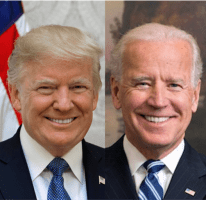
Trump, Biden neck-and-neck in Georgia results
Saturday, Biden’s lead stood at just 7,264 votes, out of nearly 5 million cast, a close enough margin to trigger an automatic recount.
If Biden prevails in the recount, he will be the first Democrat in 28 years to carry the Peach State and win its 16 electoral votes.
However, the result in Georgia will not affect the outcome of the presidential race, as Biden captured the White House when Pennsylvania was declared on Saturday.
While the Trump campaign has vowed to pursue legal challenges in other Democrat-controlled states that he appears to have lost, that could be more difficult in Georgia, where the governor and secretary of state are both Republicans. The state’s voting manager, Gabriel Sterling, said Friday that “we’re not seeing any widespread irregularities” in the vote count.
In addition to the presidential race, the late count of mail-in ballots also affected one of the two U.S. Senate races. Republican incumbent U.S. Senator David Perdue still leads over his Democratic rival, Jon Ossoff, but he has fallen below the majority he needs to win under state law.
That will set up a January 5 runoff between Perdue and Ossoff, which will take place at the same time as a special election runoff for the state’s other Senate seat between Democrat Ralphael Warnock and incumbent Republican U.S. Senator Kelly Loeffler.
If Biden wins the presidency and both Democrats win in Georgia, control of the Senate will shift from Republican to Democratic hands.
We tweet @ChkFriPolitics Join us!

Decision 2020: Has Georgia finally arrived at a political tipping point?
Democrats are in contention in presidential, U.S. Senate races, poised to pick up another U.S. House seat
♦By Rich Shumate, ChickenFriedPolitics.com editor
 ATLANTA (CFP) — When the smoke clears from the 2020 election, a whole new political day may have dawned in Georgia.
Democrats appear ready to capture another U.S. House seat, which would give them six out of 14 seats in the state delegation, nearly at parity with Republicans. They also have a shot at both U.S. Senate seats and an outside chance of capturing a majority in the Georgia House.
And, in perhaps the biggest surprise of all, Joe Biden could become the first Democrat to carry the Peach State in 28 years.
That’s a best case, rosy scenario for the Democrats, one which Republicans would no doubt dismiss as wishful thinking. But even if this optimistic scenario doesn’t all pan out, 2020 is likely to go down as the best year state Democrats have had since they suffered a collapse in 2002, losing the governorship and control of the legislature after a decade in which they had lost their grip on the state’s federal offices.
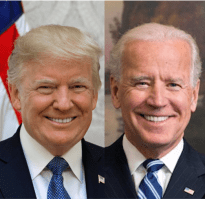
Trump, Biden neck-and-neck in Georgia polls
In 2016, Donald Trump carried Georgia by 5 points–enough to get the state’s 16 electoral votes but the weakest showing by a Republican since Bob Dole in 1996. The biggest shock in that race was Hillary Clinton carried both Cobb and Gwinnett counties, which had for decades been impenetrable Republican redoubts in the Atlanta suburbs.
These suburbs, which continued to swing toward the Democrats in the 2018 midterm elections, are key in the presidential race. Trump should get a sizable win in rural areas and small towns; Biden will easily carry the urban cores of the Atlanta and the state’s other cities; so the suburbs will be where this contest is won or lost.
Polls now show the race between Biden and Trump within the margin of error. The biggest sign the state is truly competitive: Both Trump and Biden are making October campaign stops in Georgia, which rarely gets a glimpse of presidential candidates outside of the primary season.
U.S. Senate
Because of the retirement of Republican Johnny Isakson at the end of last year, both of Georgia’s U.S. Senate seats are up this year. Republican David Perdue is seeking a second term, and Republican while Kelly Loeffler, a wealthy Atlanta businesswoman and political newcomer appointed to fill Isakson’s seat by Governor Brian Kemp, will try to keep it in an all-party special election.
Perdue is facing Democrat Jon Ossoff, who rose to national prominence in an expensive but ultimately unsuccessful U.S. House race shortly after Trump’s election. At the beginning of the race, Perdue wasn’t thought to be in much trouble, but Ossoff has closed the gap, with polls showing the race within the margin of error.
A major source of contention in the race has been the coronavirus epidemic, with Ossoff hitting Perdue for downplaying the severity of the disease during the early days of the pandemic and voting to dismantle Obamacare, which Ossoff says has provided a lifeline to virus victims.
Perdue has hit Ossoff over his fundraising from out-of-state sources, charging that Ossoff’s contributors support a “radical socialist agenda” that he would pursue as a senator.
Ossoff has raised nearly $33 million, much of it in small dollar online contributions from Democratic donors across the country. Perdue has raised about $21 million.
Because of a quirk in Georgia law, if neither Perdue or Ossoff break 50%, they will face each other in a January runoff, which could happen if a Libertarian candidate also in the race draws off enough support.
In the special election, 20 candidates are running, and polls show three are competing for spots in a January runoff: Loeffler; Republican U.S. Rep. Doug Collins from Gainesville, who has been trying to run at Loeffler from the right; and Democrat Raphael Warnock, the senior pastor at Atlanta’s Ebenezer Baptist Church, a pulpit once held by Martin Luther King Jr.
Warnock has surged to the front in the latest polls, consolidating Democratic support with an ad blitz. Loeffler and Collins are running neck-and-neck for the second spot, in a race that has divided state Republicans into two camps.
Collins, one of Trump’s most vocal defenders during last year’s impeachment fight, decided to challenge Loeffler after Kemp passed him over for the Senate appointment. But he has so far not gotten the president’s endorsement, and Loeffler has been battling him for supremacy on the right by firmly embracing Trump and taking conservative stands on social issues.
One key metric to look at on election night will be whether the Republicans in the race collectively attract more votes overall that the Democrats, which could be a sign of things to come in the runoff.
Warnock has raised the most money, at $22 million, but Loeffer has more money to spend, after tapping her considerable personal fortune for $23 million in loans. Collins trails at $6 million.
Depending on results in other states, control of the U.S. Senate could hinge on two runoff elections in Georgia in January — a circumstance that would attract massive amounts of money and national attention to the Peach State.
U.S. House
The focus in the U.S. House races with be the 6th District, in Atlanta’s near northwest suburbs, and the 7th District, in the near northeast suburbs.
Two years ago, Democrat Lucy McBath flipped the 6th District seat, defeating Republican Karen Handel, Handel is back for a rematch, but McBath — like other freshmen Democrats defending seats in districts Trump won in 2016 — has raised a mountain of money, nearly $8 million, to less than $3 million for Handel
Trump won this district by less than 2 points in 2020. Demographic changes, including more minority voters, are also contributing to its shift from red to purple, and most election handicappers are giving McBath the edge.
Handel will need a strong margin from East Cobb and North Fulton counties to offset McBath’s strength in more diverse areas such as Sandy Springs and Doraville.
In the 7th District, Democrat Carolyn Bourdeaux, who lost this race by just 400 voters in 2018, is back for another try, facing Republican Rich McCormick, a physican and retired Marine pilot. (The Republican incumbent, Rob Woodall, retired.) Bourdeaux also enjoys a fundraising advantage, $4.7 million to $2.4 million.
The largest population center in this district is Gwinnett County, where Democrats have been winning legislative seats and county offices in recent years. White voters are also now a minority here, which should help Bourdeaux.
If both McBath and Bourdeaux win, the Georgia delegation will be split 8R and 6D, closer than it has been since 1994.
State Legislature
In the battle for the state House, Democrats need to pick up 15 seats in the 180-member House to gain control, after picking up 11 seats in 2018. The party is targeting seats in the Atlanta suburbs, where Democrats have been making gains in recent years, although it is unclear if enough flippable seats remain to get to 15.
Democrats would need to pick up eight seats in the 56-member Senate to take control, which is considered much less likely.
 Chicken Fried Politics