Chicken Fried Politics

Home » Kentucky (Page 12)

Category Archives: Kentucky

Kentucky GOP switches from presidential primary to caucus to help Rand Paul

Decision means Paul will be able to pursue the White House and re-election to the Senate simultaneously

♦By Rich Shumate, Chickenfriedpolitics.com editor

kentucky mugFRANKFORT, Kentucky (CFP) — With U.S. Senator Rand Paul looking on, Kentucky’s Republican central committee voted to switch the presidential contest in the Bluegrass State from a May primary to a March caucus, clearing the way for Paul to run for the Senate and the White House at the same time.
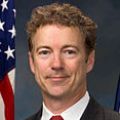
U.S. Senator Rand Paul

U.S. Senator Rand Paul

However, the central committee made the switch contingent on Paul contributing at least $250,000 to defray expenses associated with the caucus, something Paul has promised to do. The committee set a deadline of Sept. 18 for the payment to be made.

The vote, held by secret ballot, was 111-36, more than the two-thirds majority necessary to make the change. After the vote was announced, Paul’s supporters stood and cheered.

Paul release a statement saying “holding a caucus will ensure that Kentucky is relevant and participates early in the process.”

“I am also grateful for the Republican Party’s trust in me, allowing me to run for re-election to the U.S. Senate and seek the nomination for the presidency of the United States,” he said.

The change was necessary because Kentucky law does not allow the same candidate to appear on the ballot twice in the same election. If the Kentucky GOP held a primary, Paul would have faced a choice of whether to seek a second term in the Senate or opt out of a presidential primary contest he is likely to win. The caucus is also earlier in the presidential nominating calendar, which could boost his White House prospects.

Kentucky Democrats, who control the state House and the governorship, have blocked efforts by Paul’s allies to change the state law against political double-dipping. While the change fixes Paul’s problem for the primary, he could still face the same issue in November 2016 if he wins the GOP presidential nomination.

Paul maintains the law is unconstitutional because of a 1995 Supreme Court ruling that a state can’t impose its own restrictions in races for federal offices. He had hinted that he would a federal lawsuit if any attempt is made to keep him from seeking both offices at the same time.

The switch to a caucus was criticized by the Bluegrass State’s top elections official, Democratic Secretary of State Alison Lundergan Grimes, who issued a statement saying “it is unfortunate that today a few insiders were able to disenfranchise over 1.2 million Republican voters.”

“One candidate should not be able to buy an election. Democracy demands that all eligible Kentuckians be a part of the election process. That didn’t happen today and won’t happen with a caucus.

There is historical precedent for running for both the presidency or vice presidency and Congress at the same time, most recently in 2012 when U.S. Rep. Paul Ryan, the GOP’s vice presidential nominee, was re-elected to his House seat in Wisconsin.

Vice President Joe Biden also won Senate re-election in 2008 on the same day he was elected vice president, as did Lyndon Johnson in 1960.

The only other senator up for re-election in 2016 running for president, U.S. Senator Marco Rubio of Florida, is giving up his Senate seat.

Matt Bevin holds on to win Kentucky GOP governor’s primary

Failed U.S. Senate candidate defeats State Agriculture Commissioner James Comer by just 83 votes

♦By Rich Shumate, Chickenfriedpolitics.com editor

kentucky mugLOUISVILLE (CFP) — Just a year after being crushed by U.S. Senate Majority Leader Mitch McConnell in a GOP Senate primary, Louisville businessman and Tea Party favorite Matt Bevin has held on to a razor-thin 83-vote lead to win Kentucky’s GOP gubernatorial primary.

Kentucky gubernatorial candidate Matt Bevin

Kentucky gubernatorial candidate Matt Bevin

State Agriculture Commissioner James Comer, who narrowly trailed Bevin in the May 19 vote, had asked for a recanvas. But after the recanvas didn’t change the outcome, Comer conceded on May 29, opting not to ask for a recount.

Bevin will now face the Democratic nominee for governor, Attorney General Jack Conway, in November.

Bevin and Comer both took 33 percent of the vote to 27 percent for  former Louisville Councilman Hal Heiner and 7 percent former Supreme Court Justice Will Scott.

Kentucky abolished its primary runoff in 2008, which means Bevin comes out of the primary with just a third of the vote.

Near the end of the race, Comer’s campaign was rocked by abuse allegations from a former college girlfriend, which he denied. Heiner apologized after the blogger who publicized the allegations acknowledged that he had spoken about them with the husband of Heiner’s running mate for lieutenant governor.

The election result was a political comeback for Bevin, 48, who jumped into the governor’s race just hours before the filing deadline.

Bevin, 48, challenged McConnell in 2014 the backing of outside Republican groups critical of the senator’s leadership, including the Senate Conservatives Fund and FreedomWorks. But in the end, McConnell won easily with more than 60 percent of the vote and went on to win a sixth term in November.

Despite the bitterness of that race, McConnell stayed out of Bevin’s primary fight.

Although Kentucky has become a reliably Republican state at the federal level, the party has only won the governorship once in the last 44 years. The current governor, Democrat Steve Beshear, is term limited.

Kentucky and Mississippi are the only two states that have off-year elections for state constitutional offices in 2015.

U.S. Senator Rand Paul launches bid for 2016 GOP nomination

Kentucky senator and Tea Party favorite kicks off with anti-establishment pitch

♦By Rich Shumate, Chickenfriedpolitics.com editor

kentucky mugLOUISVILLE (CFP) — Vowing “to rescue a great country now adrift,” U.S. Senator Rand Paul of Kentucky kicked off his campaign for the 2016 GOP presidential nomination with a call for Republicans not to settle for a nominee who is a “Democrat light.”

U.S. Senator Rand Paul

U.S. Senator Rand Paul

“We cannot, we must not, dilute our message or give up on our principles,” Paul said at an April 7 kickoff rally at the Galt House Hotel in Louisville. “We need to go boldly forth under the banner of liberty that clutches the Constitution in one hand and the Bill of Rights in the other.”

The crowd at the rally hoisted signs with twin slogans capturing the outside, anti-establishment tenor of Paul’s campaign — “Defeat the Washington Machine” and “Unleash the American Dream.”

Paul, 52, an opthtamologist, was elected to the Senate in the Republican sweep of 2010 with support from Tea Party groups and the GOP’s libertarian wing. Playing to those libertarian voters, Paul said he would end government surveillance programs of phone and computer records that began during the Bush administration and were continued under President Obama.

“Warrantless searches of Americans’ phones and computer records are un-American and a threat to our civil liberties,” he said. “I say that your phone records are yours. I say the phone records of law-abiding citizens are none of their damn business.”

Paul also brought up his skepticism of U.S. intervention overseas — a position that has put him at sharp odds with the defense and foreign policy establishment within the Republican Party.

“I see an America strong enough to deter foreign aggression, yet wise enough to avoid unnecessary intervention,” he said. However, Paul also said American interests are under assault from “radical Islam.”

“Not only will I name the enemy, I will do whatever it takes to defend American from these haters of mankind.”

Paul also made a populist pitch for support on the issue of income inequality, saying “under the watch of both parties, the poor seem to get poorer and the right get richer.”

In addition to seeking the Republican presidential nomination, Paul is also simultaneously seeking re-election to his Senate seat in Kentucky.

Paul is now the second announced GOP presidential candidate, joining  U.S. Senator Ted Cruz of Texas, who announced his candidacy March 24. A third candidate, U.S. Senator Marco Rubio of Florida, is expected to announce next week.

The trio are among nine Southerners — eight Republicans and one Democrat — considering a White House bid in 2016.

Among the other potential Southern GOP candidates are former governors Jeb Bush of Florida, Mike Huckabee of Arkansas and Rick Perry of Texas; U.S. Senator Lindsey Graham of South Carolina; and Governor Bobby Jindal of Louisiana.

On the Democratic side, former U.S. Senator Jim Webb of Virginia has already launched an exploratory committee for the 2016 Democratic presidential nomination — a race that’s expected to be dominated by former Secretary of State Hillary Clinton, a former first lady of Arkansas.

View Paul’s announcement speech:

Poll: Among Southern White House contenders, Rubio viewed most favorably by GOP voters

Republican voters in Wall Street Journal/NBC News poll had the least favorable view of U.S. Senator Lindsey Graham

southern states smWASHINGTON (CFP) — A new poll finds that among the eight Southerners considering a bid for the GOP presidential nomination in 2016, U.S. Senator Marco Rubio is viewed most favorably by Republican voters.
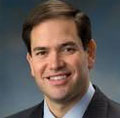
U.S. Senator Marco Rubio

U.S. Senator Marco Rubio

Fifty-six percent of Republican voters surveyed by in a Wall Street Journal/NBC News poll said they could see themselves supporting Rubio, while just 26 percent could not, a favorability gap of 30 points. Fourteen percent were undecided.

Not only was that the best showing among the potential Southern contenders, but it was better than every other expected candidate in the field except Wisconsin Governor Scott Walker, who had a favorability gap of 36 percent.

At the other end of the spectrum, just 26 percent of Republican voters said they could see themselves supporting U.S. Senator Lindsey Graham of South Carolina, while 51 percent — an outright majority — could not, an unfavorability gap of 31 points. However, 29 percent were still undecided about Graham.

The poll showed Republican voters may have largely made up their minds about three of the possible candidates in the race — former Arkansas Governor Mike Huckabee, former Florida Governor Jeb Bush and U.S. Senator Rand Paul of Kentucky. The percentage of undecided for all three was under 12 percent.

But substantial percentages of the GOP voters have not made up their minds about Graham, Louisiana Governor Bobby Jindal and U.S. Senator Ted Cruz of Texas, all of whom had undecided readings above 20 percent.

The margin of error in the poll, released March 11, was plus or minus 6.48 percentage points.

Here is how the other potential Southern candidates fared:

  • Huckabee: 52 percent could support, 40 percent could not support, 8 percent undecided. Favorability gap of 12 points.
  • Bush: 49 percent could support, 42 percent could not support, 9 percent undecided. Favorability gap of 7 points.
  • Paul of Kentucky: 49 percent could support, 40 percent could not support, 11 percent undecided. Favorability gap of 9 points.
  • Former Texas Governor Rick Perry: 45 percent could support, 40 percent could not support, 15 percent undecided. Favorability gap of 5 points.
  • Cruz: 40 percent could support, 38 percent could not support, 22 percent undecided. Favorability gap of 2 points.
  • Jindal: 36 percent could support, 25 percent could not support, 39 percent undecided. Favorability gap of 11 points.

On the Democratic side, former U.S. Senator Jim Webb of Virginia has already launched an exploratory committee for the 2016 Democratic presidential nomination — a race that’s expected to be dominated by former Secretary of State Hillary Clinton, a former first lady of Arkansas.

Kentucky GOP okays switch to 2016 caucus to help U.S. Senator Rand Paul

Decision to change presidential selection process clears way for Paul to seek both re-election and the White House

♦By Rich Shumate, Chickenfriedpolitics.com editor

kentucky mugBOWLING GREEN Kentucky (CFP) — Republican Party leaders in Kentucky have agreed to switch their presidential nominating contest in 2016 from a primary to a caucus, clearing a potential hurdle in U.S. Senator Rand Paul’s expected run for the GOP presidential nomination.

U.S. Senator Rand Paul

U.S. Senator Rand Paul

After a closed-door meeting March 7, the state party’s executive committee approved the change, which must still be approved by the full party central committee in August.

Paul appeared at the executive committee meeting in Bowling Green to meet with party leaders and lobby for the change. His campaign has agreed to raise money to cover the costs associated with holding a caucus.

However, the proposed change was blasted by the Bluegrass State’s top elections official, Democratic Secretary of State Alison Lundergan Grimes, who said the switch to a caucus would introduce “chaos” into the process by disenfranchising voters who would not be able to attend.

“I call on the Republican Party of Kentucky to provide details on how all their voters would be able to participate and how the party intends to uphold the integrity of the process,” she said.

Paul has already kicked off his Senate re-election campaign and is expected to make a decision on the presidential race this spring.

Grimes, who ran unsuccessfully against Senate Majority Leader Mitch McConnell in 2014, has been insisting that a state law prohibiting a candidate from appearing for two different offices on the same ballot precludes Paul from seeking re-election to the Senate while also running in the May 2016 presidential primary.

Kentucky Democrats, who control the state House and the governorship, have blocked efforts by Paul’s allies to change the state law against political double-dipping

The switch to a caucus, which would be held on a different day earlier in the year, would get around the problem, although if Paul were to win the GOP presidential nomination, he would face the same problem in the November 2016 general election.

Paul maintains the law is unconstitutional because of a 1995 Supreme Court ruling that a state can’t impose its own restrictions in races for federal offices. He has hinted that he may file a federal lawsuit if any attempt is made to keep him from seeking both offices.

A Bluegrass/Survey USA poll last September showed 66 percent of state voters and 54 percent of Republicans were opposed to changing the law.

There is historical precedent for running for both the presidency or vice presidency and Congress at the same time, most recently in 2012 when U.S. Rep. Paul Ryan, the GOP’s vice presidential nominee, was re-elected to his House seat in Wisconsin.

Vice President Joe Biden also won Senate re-election in 2008 on the same day he was elected vice president, as did Lyndon Johnson in 1960.

The only other senator up for re-election in 2016 considering a White House bid, U.S. Senator Marco Rubio of Florida, has said he will give up his Senate seat if he pursues the Republican presidential nomination.