
Home » Louisiana (Page 6)
Category Archives: Louisiana

With David Duke in the hall, turmoil erupts at Louisiana U.S. Senate debate
Protestors spar with police as Duke screams at the moderator, calls for Hillary Clinton to get the electric chair
 NEW ORLEANS (CFP) — David Duke’s appearance at a November 2 U.S. Senate debate in Louisiana descended into turmoil, with the white racist screaming at the moderator and calling for Hillary Clinton’s execution, while police used pepper spray on angry protestors trying to get into the hall.
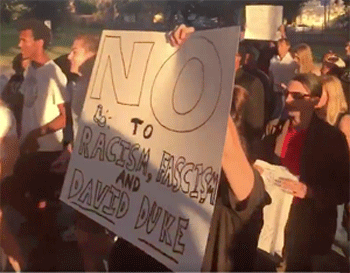
Protestors march against David Duke at Dillard University. (Courtesy: Twitter)
The sponsor of the debate, Raycom Media, which operates television states in four Louisiana cities, decided not to allow the public into the debate, leaving the six candidates on the stage talking to a television camera and a largely empty auditorium at Dillard University in New Orleans.
That didn’t sit well with protestors outside, who were angered by Duke’s presence at the historically black university and tried to force their way through a police cordon at the doorway. Six people were arrested, only one of which was a Dillard student, according to the university.
The specter of Duke was inescapable inside as well as outside the hall, with the moderator, John Snell, struggling mightily at times to prevent his presence from overwhelming the discussion.
Answering a question about Obamacare, Democrat Caroline Fayard pivoted to a direct attack on Duke.
“This snake has slithered out of the swamp, probably because the career politicians on this stage haven’t done their job effectively enough,” Fayard said. “But I’m here to tell … everybody who cares about the future of Louisiana that on November 8, the voters of Louisiana are going to join with me and cut the head off his hatred, once and for all.”
At another point, State Treasurer John Kennedy, a Republican who is leading the polls in the race, called Duke “a convicted liar,” a reference to his 2002 conviction for tax and mail fraud.
“He spent time in prison for lying to his supporters. He swindled them out of their money and took that money and used it for his gambling addiction,” Kennedy said.
Snell gave Duke 15 seconds to respond, and, when he tried to go over his allotted time, the fireworks began.
“You’re not a moderator. You’re a typical media hack,” Duke shouted, as Snell tried to go on to the next speaker. “You’re gonna silence me now? You’re going to silence me?”
Later in the debate, Snell asked Duke what he meant by repeated references to “CNN Jews” in his earlier complaints about the media’s coverage of Donald Trump’s Access Hollywood tape.
“There is a problem in America with a very strong, powerful, tribal group that dominates our media and dominates out international banking,” Duke said. “I’m not opposed to all Jews … I’m against Jews or anybody else that puts the interest of some other place, or another country, over our own country.”
He then pivoted to a criticism of American foreign policy in general — and Clinton’s role in it in particular.
“The lady should be getting the electric chair, being charged with treason,” he said.
Duke has been an outspoken supporter of Trump. During the debate, he said, “I will be Donald Trump’s most loyal advocate to make sure his nominees go to the Supreme Court.”
Duke was also the subject of a testy change between the two Democrats on the stage, Fayard and Public Service Commissioner Foster Campbell, over an ad her campaign has run insinuating that Campbell has been friendly with Duke on the campaign trail.
“There’s no context in which it is acceptable to have a conversation, whether public or private, with someone like David Duke,” said Fayard, who insisted her ad was accurate.
But Campbell said the insinuation that he has been cozy with Duke not was “not just a lie, it’s a damn lie.”
“I have nothing in common with David Duke other that that we’re probably breathing,” Campbell said.
After the debate, Dillard issued a statement saying police used pepper spray as a “last resort” after protestors tried to enter the building. However, peaceful protests outside the hall were not impeded.
“At no time did Dillard discourage protests; either by students or members of the community. We shared a dual responsibility of providing a safe space for those protesters and for the orderly management of the event,” the statement said.
Raycom contracted with Dillard to host the debate before it knew Duke would qualify for the event. The university decided to go ahead and honor the contract, despite criticism from students and alumni unhappy about the prospect of Duke appearing at Dillard.
Of the 24 candidates running for the Pelican State’s open U.S. Senate seat, six qualified for the debate based on their support in a poll commissioned by Raycom — Kennedy, Campbell, Fayard, Duke, and U.S. Reps. Charles Boustany of Layfayette and John Fleming of Minden.
In Louisiana, all candidates regardless of party run in a “jungle” primary on November 8, with the top two vote-getters advancing to a December 10 runoff.
Polls show Kennedy and Campbell leading the race, which was apparent in the debate, with Boustany and Fleming taking aim at Kennedy and Fayard primarily targeting Campbell.
Here is the video of the debate:
Racist David Duke qualifies for Louisiana U.S. Senate debate
Debate on November 2 will take place at historically black Dillard University
♦By Rich Shumate, Chickenfriedpolitics.com editor
NEW ORLEANS (CFP) — Racist David Duke will take the stage at an historically black university on November 2 to debate with five other Louisiana U.S. Senate candidates, after scoring high enough in a poll to qualify for the event.

State Treasurer John Kennedy
The poll, commissioned by debate Raycom Media, showed Republican State Treasurer John Kennedy and Democratic Public Service Commissioner Foster Campbell leading a crowded field of 24 candidates vying for the the open Senate seat in the Pelican State’s all-party “jungle” primary.
The top two vote-getters on November 8, regardless of party, will advance to a December 10 runoff.
Duke came in at 5.1 percent in the poll commissioned by Raycom, the sponsor of the debate at Dillard University in New Orleans, which was just above the 5 percent threshold set for candidates to qualify. Raycom confirmed to the Baton Rouge Advocate that, based on those poll results, it would invite Duke to the debate.
Raycom, based in Montgomery, Alabama, plans to air the debate on its television stations in Lake Charles, Baton Rouge, New Orleans and Shreveport.
Duke celebrated the news in a Tweet, in which he said, “I can’t wait to tell truth nobody else dares!”
Dillard, which rented space for the event to Raycom’s station in New Orleans, WVUE, said in a statement that the university “will work with WVUE to ensure that the event is secure and managed professionally, as it does with every event that occurs on our campus.”
The statement also said that WVUE is the “sole sponsor” of the event and that Dillard “does not endorse the candidacy of any of the candidates who will appear at this debate.”
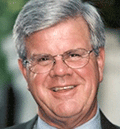
Public Service Commissioner Foster Campbell
The poll found Kennedy at 24 percent, followed by Campbell at 19 percent. Three candidates were in a statistical tie for third place: Democrat Caroline Fayard, a New Orleans lawyer (12 percent), and two sitting GOP U.S. House members, Charles Boustany of Layfayette (11 percent) and John Fleming of Minden (10 percent).
Among those not making the 5-percent cut were Joseph Cao, a Vietnamese-American Republican who represented the New Orleans area in Congress from 2009 to 2011, and Rob Maness, who made a spirited but unsuccessful Tea Party-backed bid for the Senate in 2014.
The seat is being vacated by Republican U.S. Senator David Vitter, who gave up his Senate seat to make an unsuccessful run for governor in 2015.
Open Louisiana U.S. Senate primary draws 24 candidates
Race will include two sitting members of Congress and white racist David Duke
♦By Rich Shumate, Chickenfriedpolitics.com editor
NEW ORLEANS (CFP) — A gaggle of 24 candidates have qualified for the primary for an open U.S. Senate seat in Louisiana, which could play a pivotal role in the battle for Senate control.
The list of those who qualified by the July 22 deadline included three current or former members of Congress, two state officeholders and white supremacist David Duke, who filed to run as a Republican.
In Louisiana, all candidates, regardless of party, run in a Nov. 8 primary, with the top two vote-getters advancing to a December runoff if no one clears 50 percent.
The Louisiana race, then, could become the last and deciding contest for control of the Senate.
In all, nine Republicans filed, along with seven Democrats, two Libertarians and six without a party affiliation.
With so many candidates in the race, the outcome is uncertain. But Democrats hoping to overcome the Pelican State’s Republican tendencies may benefit by having fewer big name candidates in the race to divide their vote.
On the Democratic side, Public Service Commissioner Foster Campbell and Caroline Fayard, a New Orleans lawyer, head the field.
Campbell made a losing bid for governor in 2007, while Fayard was the unsuccessful Democratic candidate in a special election for lieutenant governor in 2010.
The Republican side of the ballot is much more crowded. Two sitting U.S. House members–Charles Boustany of Layfayette and John Fleming of Minden–gave up their seats to pursue the open Senate seat.
Joining them are State Treasurer John Kennedy, a former Democrat who lost Senate races in 2004 and 2008; Joseph Cao, a Vietnamese-American who represented the New Orleans area in Congress from 2009 to 2011; and Rob Maness, who made a spirited but unsuccessful Tea Party-backed bid for the Senate in 2014.
In an announcement video on his website, Duke, making his third try for the Senate, said he was running to represent “European Americans.” He also claimed credit for introducing the phrase “America First” into national politics, which has become a mainstay of Donald Trump’s presidential campaign.
“I’m overjoyed to see Donald Trump, and most Americans, embrace most of the issues that I’ve championed for years,” he said.
The Louisiana seat opened up after U.S. Senator David Vitter retired to make an unsuccessful bid for governor in 2015.
Cruz wins in Maine, Kansas, but Trump scores in the South
Hillary Clinton carries Democratic primary in Louisiana
♦By Rich Shumate, Chickenfriedpolitics.com editor
 BATON ROUGE (CFP) — U.S. Senator Ted Cruz of Texas bolstered his argument that he should be considered the alternative to Donald Trump in the GOP presidential race by scoring clear victories in Kansas and Maine.
However, Trump held on in the two Southern contests held on March 5, narrowly beating Cruz in a primary in Louisiana and a caucus in Kentucky.
Meanwhile, on the Democratic side, Hillary Clinton, as expected, won going away in Louisiana, a state with a large African-American population. Democrats did not vote in Kentucky.
The biggest loser of the night was U.S. Senator Marco Rubio, who finished third in Kansas, Kentucky and Louisiana and scraped in dead last in Maine, where he was shut out of the delegate count.
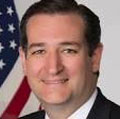
U.S. Senator Ted Cruz
Speaking to supporters in Boise, Idaho, Cruz hailed the results as “a very good day.”
“We’re seeing Republicans coming together. We’re seeing conservatives coming together,” he said. Cruz told reporters that the GOP field needs to continue to narrow in order to defeat Trump.
But Rubio, speaking at a rally in Jacksonville, Florida before the results began rolling in, showed no signs he was going anywhere, noting that he had successfully battled long odds to win a Senate seat in 2010.
“If you watch the press, they say he’s an underdog. He’s taking on an incredible task,” Rubio said, referring to himself. “Let me tell you something–America is country of underdogs.”
In Louisiana, Trump took 42 percent of the vote to 38 percent for Cruz. In Kentucky, Trump won 36 percent to Cruz’s 31 percent.
Among Democrats, Clinton won 71 percent to 24 percent for Bernie Sanders.
The next Southern stops in the presidential race are:
◾Tuesday, March 8: Mississippi (primary)
◾Tuesday, March 15: Florida (primary); North Carolina (primary)
◾Tuesday, May 19: West Virginia (primary)
Democrat John Bel Edwards wins Louisiana governorship
Edwards defeats GOP U.S. Senator David Vitter, who announces he won’t seek re-election
♦By Rich Shumate, Chickenfriedpolitics.com editor
NEW ORLEANS (CFP) — Democratic State Rep. John Bel Edwards will be the next governor of Louisiana after defeating Republican U.S. Senator David Vitter in a contentious runoff.
In his concession speech, Vitter announced that he will not seek re-election to the Senate next year, opening a seat Republicans will have to defend to keep their majority.

Louisiana Governor-elect John Bel Edwards
Edwards took 56 percent in the November 21 vote, to just 44 percent for Vitter, easily winning a race few people thought Edwards could win when he announced his long-shot candidacy in 2013.
“The people have chosen hope over scorn, over negativity and over the distrust of others,” Edwards said at his victory party in a New Orleans hotel.
“I did not create this breeze of hope that’s blowing across our beautiful and blessed state, but I did catch it. And I thank God I did.”
Edwards, 49, an attorney and former Army Ranger from Amite, was the minority leader in the Louisiana House, where he was a strong critic of Republican Governor Bobby Jindal, particularly over Jindal’s refusal to expand Medicaid.
However, Edwards ran a race tailored to culturally conservative Louisiana–opposing abortion and supporting gun rights–to become the first Democrat to win a statewide race in seven years.
He will be one of just three Democratic governors in the 14 Southern states. The others are in Virginia and West Virginia.

U.S. Senator David Vitter
Vitter, 54, started out the race for governor heavily favored. But he was dogged by two Republican challengers in the state’s all-party “jungle” primary and started the runoff far behind Edwards, who had the united support of Democrats.
So bitter was the primary that one of Vitter’s two Republican opponents, Lieutenant Governor Jay Dardenne, crossed party lines to endorse Edwards, angering the state’s GOP establishment. The other, Public Service Commissioner Scott Angelle, sat out the runoff rather than supporting Vitter.
The senator was burdened both by Jindal’s marked unpopularity and continued fallout over a 2007 scandal in which he was linked to a Washington prostitution ring.
In the closing days of the campaign, Vitter tried to make the possible resettlement of Syrian refugees in Louisiana an issue, but it was not enough to catch Edwards, despite the state’s strong GOP tendencies.
“I have lost one political campaign in my life–tonight–and, ironically, it’s the campaign and the political effort I am most proud of, particularly these last few weeks, fighting shoulder to shoulder with you,” Vitter said during his concession speech at a hotel in suburban New Orleans.
Vitter then announced to his supporters that he would not seek re-election next year, ending his 23-year political career that took him from the State House in Baton Rouge to the halls of Congress.
“I had decided when I decided to make this race … that I wanted to pursue new challenges outside the Senate, no matter what,” he said. “I’d reached my personal term limit.”
While Republicans would be favored to keep the seat, Vitter’s decision gives Democrats their best chance outside of Florida of flipping a Southern Senate seat in 2016.
 Chicken Fried Politics