
Home » South Carolina (Page 11)
Category Archives: South Carolina

Rubio, Cruz tie for second in South Carolina primary; Bush drops out
Former Florida governor exits race in which he was the early front-runner
♦By Rich Shumate, Chickenfriedpolitics.com editor
 COLUMBIA, South Carolina (CFP) — U.S. Senator Marco Rubio of Florida rode a wave of last-minute support to surge into a tie for second place with U.S. Senator Ted Cruz of Texas in the pivotal South Carolina primary.
Meanwhile, former Florida Governor Jeb Bush–who had been the front-runner early in the 2016 race–dropped out after finishing a distant fourth in the February 20 vote.
That leaves Rubio and Cruz as the only Southerners left in the race for the White House, which at one point had featured nine candidates from the region.
The two senators each took 22 percent in the Palmetto State, running 10 points behind the winner, Donald Trump. Rubio’s margin over Cruz was less than 1,100 votes. out of nearly 738,000 cast.
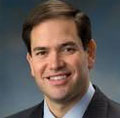
U.S. Senator Marco Rubio
But after finishing fifth in New Hampshire, catching Cruz was a significant coup for Rubio in his quest to become the mainstream alternative to Trump, particularly now that Bush is out of the race.
“After tonight, this has become a three-person race, and we will win the nomination,” Rubio told supporters at a rally in Columbia, where he was flanked by South Carolina Governor Nikki Haley. Her endorsement of Rubio in the closing days of the campaign is being credited with helping his strong finish.
But across town, Cruz, who won Iowa and came in third in New Hampshire, insisted that it was his campaign that had defied expectations.
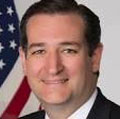
U.S. Senator Ted Cruz
“The screaming you hear now from across the Potomac is the Washington cartel in full terror that the conservative grassroots are rising up,” Cruz said.
However, while both senators were claiming a moral victory, Trump not only won statewide but in all six congressional districts, which means that under the rules of the South Carolina GOP, he will get all 50 of the delegates up for grabs.
An emotional Bush announced his departure to supporters in Columbia after winning less than 8 percent of the vote. He finished sixth in Iowa and fourth in New Hampshire.
“I’m proud of the campaign that we’ve run to unify our country and to advocate conservative solutions that would give more Americans the opportunity to rise up and reach their God-given potential,” he said. “But the people of Iowa and New Hampshire and South Carolina have spoken, and I really respect their decision.”
The son and brother of presidents, Bush started the race as the early front-runner, fortified by a super-PAC that had raised more than $100 million. But Trump’s entry into the race took the wind out of Bush’s political sails, and he never recovered.
Bush also had to deal with a challenge from Rubio, who had been a close political ally when they served together in Tallahassee.
After Bush’s withdrawal, Rubio offered an olive branch, expressing his “incredible affection and admiration” for a man he called “the greatest governor in the history of Florida.”
“Jeb Bush has many things to be proud of,” Rubio said.
Cruz, too, spoke warmly about Bush, saying he had brought “honor and dignity” to the race and that he was “a man who didn’t go to the gutter and engage in insults and attacks”–a not-too-veiled swipe at the front-running Trump.
Marco Rubio snags endorsement of South Carolina Governor Nikki Haley
Haley jumps on Rubio’s bandwagon days before the pivotal South Carolina primary
♦By Rich Shumate, Chickenfriedpolitics.com editor
CHAPIN, South Carolina (CFP) — South Carolina Governor Nikki Haley has endorsed U.S. Senator Marco Rubio of Florida in the race for the GOP presidential nomination, three days before the state’s pivotal primary.
The coveted endorsement is a coup for Rubio in his quest to become the establishment alternative to front-runner Donald Trump — and a blow to former Florida Governor Jeb Bush, who had also courted Haley.
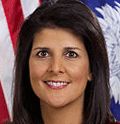
South Carolina Governor Nikki Haley
Speaking to a crowd of Rubio supporters in Chapin, in Haley’s home county, on February 17, the governor said that while there were “good people” in the GOP race, her job “was to find the person I thought could do it the best.”
“I wanted somebody with fight. I wanted somebody with passion. I wanted somebody that had conviction to do the right thing. But I wanted somebody humble enough that remembers that you work for all the people,” she said.
Haley, 44, is in her second term as the Palmetto State’s chief executive. She has been mentioned as a possible Republican vice presidential pick–speculation that is now likely to intensify should Rubio win the nomination.
Haley’s received national attention last year after a racist opened fire inside a church in Charleston, leaving nine people dead. In the wake of those murders, she persuaded the Republican-controlled state legislature to remove the Confederate battle emblem from the top of the statehouse in Columbia.
Haley is the daughter of Indian immigrants and, if selected as the VP pick, would be the first Indian-American on a national ticket.
The governor has had an increasingly contentious relationship with Trump since she took a thinly veiled shot at the GOP front-runner in January while giving the response to President Obama’s State of the Union Address.
Just hours after the Rubio endorsement, the crowd at a Trump rally in Sumter booed Haley.
U.S. Senator Lindsey Graham ends bid for GOP presidential nomination
Graham’s decision opens up political space for the February 20 South Carolina primary
♦By Rich Shumate, Chickenfriedpolitics.com
COLUMBIA, South Carolina (CFP) — Mired in single digits in the polls and relegated to the undercard in the Republican debates, U.S. Senator Lindsey Graham of South Carolina has ended his bid for the 2016 GOP presidential nomination.

U.S. Senator Lindsey Graham
But Graham, who made national security and the battle against ISIS the centerpiece of his White House run, said his campaign has changed the conversation within the Republican field on those issues, pushing the party toward a more hawkish stance.
“I got into this race to put forward a plan to win a war we cannot afford to lose and to turn back the tide of isolationism that was rising in our party,” he said in a YouTube video posted December 22 announcing his departure. “I believe we made enormous progress in this effort.”
Graham said most the Republican candidates have come around to his thinking on one issue in particular–the need to use American ground forces to defeat ISIS in Iraq and Syria.
Graham’s departure allows him to take his name off the ballot for the South Carolina primary, avoiding what could have been an embarrassing defeat in his home state.
South Carolina will hold its pivotal presidential primary on February 20, less than two weeks after the first-in-the-nation New Hampshire primary. The vote in the Palmetto State will be the first test of strength in the South.
After his withdrawal announcement, Graham told CNN that he has no plans to endorse any of the other candidates in the field. However, his departure could free up Graham supporters in South Carolina to sign on with other candidates.
During the campaign, Graham has been a strong critic of GOP front-runner Donald Trump, which could give him a strong incentive to back another candidate who could defeat the real-estate magnate.
Graham, 60, won his third term in the Senate in 2014. He is one of the Senate’s strongest hawks on military and national security issues, but he has also run afoul of some conservatives in his party for supporting immigration reform and crossing the aisle to make bi-partisan deals with Democrats.
He is the third Southern Republican presidential candidate to exit the race so far, after former Texas Governor Rick Perry and Louisiana Governor Bobby Jindal.
The remaining Southern GOP candidates are U.S. Senators Ted Cruz of Texas, Marco Rubio of Florida, Rand Paul of Kentucky and former governors Jeb Bush of Florida, Mike Huckabee of Arkansas and Jim Gilmore of Virginia.
U.S. Senator Lindsey Graham launches campaign for president
South Carolinian stresses national security and fighting Islamic extremism in kickoff speech
♦By Rich Shumate, Chickenfriedpolitics.com editor
U.S. Senator Lindsey Graham
CENTER, South Carolina (CFP) — Saying he wants America to have “security through strength,” U.S. Senator Lindsey Graham formally launched his campaign for the 2016 Republican presidential nomination by calling for stronger action against both Islamic extremism and Russian expansionism
“The next president must be an informed and decisive commander-in-chief, ready immediately to address these threats. We’ve learned over the past six years that speeches alone won’t make us safe. Superior power and resolve will,” he said.
“I am ready to be commander-in-chief on day one.”
Graham, 59, elected to his third term in the Senate last year, launched his campaign in Center, the small town in upstate South Carolina where he grew up living in back of a bar. He saluted people in his hometown who helped him climb from those humble origins to the Senate.
“I’m a man with many debts to my family, to you, to South Carolina and to the country,” Graham said. “I’m running for president to repay those debts, to fight as hard for you as you fought for me.”
Graham, a colonel in the U.S. Air Force Reserves and a member of the Senate Foreign Relations Committee, is considered something of a hawk on military and foreign policy. He has been particularly critical of one of his 2016 GOP opponents, U.S. Senator Rand Paul of Kentucky, who has taken a less interventionist line when it comes to international relations.
In his kickoff speech, Graham reflected those views, saying that he wants to “defeat the enemies trying to kill us, not just penalize them or criticize them or contain them but defeat them.”
“Simply put, radical Islam is running wild,” he said. “They have more safe havens, more money, more weapons and more capability to strike our homeland than any time since 9/11. They are large, rich and entrenched. As president, I will make them small, poor and on the run.”
During his years in the Senate, Graham has come under fire from conservative forces in his own party for his willingness to make deals with Democrats. When he ran for re-election in 2014, he faced a primary challenge from four Tea Party-backed foes, which he won handily.
In his opening speech, Graham promised his fellow Republicans to “be a champion for limited and effective government,” but he also told Democrats that “on the big things, we share a common fate. I’ll work with you to strengthen the country we both love.”
“You’re not my enemy. You’re my fellow countrymen,” he said.
Should Graham the White House in 2016, he would be the first unmarried man elected to the nation’s top office since Grover Cleveland in 1884.
Graham is one of eight Southern Republican who have launched or are expected to launch presidential campaigns in 2016.
In addition to Paul, those already in the race include former Arkansas Governor Mike Huckabee and U.S. Senators Ted Cruz of Texas and Marco Rubio of Florida. The others expected to get in include Gov. Bobby Jindal of Louisiana and former governors Jeb Bush of Florida and Rick Perry of Texas.
Watch Graham’s presidential announcement:
Poll: Among Southern White House contenders, Rubio viewed most favorably by GOP voters
Republican voters in Wall Street Journal/NBC News poll had the least favorable view of U.S. Senator Lindsey Graham
 WASHINGTON (CFP) — A new poll finds that among the eight Southerners considering a bid for the GOP presidential nomination in 2016, U.S. Senator Marco Rubio is viewed most favorably by Republican voters.
U.S. Senator Marco Rubio
Fifty-six percent of Republican voters surveyed by in a Wall Street Journal/NBC News poll said they could see themselves supporting Rubio, while just 26 percent could not, a favorability gap of 30 points. Fourteen percent were undecided.
Not only was that the best showing among the potential Southern contenders, but it was better than every other expected candidate in the field except Wisconsin Governor Scott Walker, who had a favorability gap of 36 percent.
At the other end of the spectrum, just 26 percent of Republican voters said they could see themselves supporting U.S. Senator Lindsey Graham of South Carolina, while 51 percent — an outright majority — could not, an unfavorability gap of 31 points. However, 29 percent were still undecided about Graham.
The poll showed Republican voters may have largely made up their minds about three of the possible candidates in the race — former Arkansas Governor Mike Huckabee, former Florida Governor Jeb Bush and U.S. Senator Rand Paul of Kentucky. The percentage of undecided for all three was under 12 percent.
But substantial percentages of the GOP voters have not made up their minds about Graham, Louisiana Governor Bobby Jindal and U.S. Senator Ted Cruz of Texas, all of whom had undecided readings above 20 percent.
The margin of error in the poll, released March 11, was plus or minus 6.48 percentage points.
Here is how the other potential Southern candidates fared:
- Huckabee: 52 percent could support, 40 percent could not support, 8 percent undecided. Favorability gap of 12 points.
- Bush: 49 percent could support, 42 percent could not support, 9 percent undecided. Favorability gap of 7 points.
- Paul of Kentucky: 49 percent could support, 40 percent could not support, 11 percent undecided. Favorability gap of 9 points.
- Former Texas Governor Rick Perry: 45 percent could support, 40 percent could not support, 15 percent undecided. Favorability gap of 5 points.
- Cruz: 40 percent could support, 38 percent could not support, 22 percent undecided. Favorability gap of 2 points.
- Jindal: 36 percent could support, 25 percent could not support, 39 percent undecided. Favorability gap of 11 points.
On the Democratic side, former U.S. Senator Jim Webb of Virginia has already launched an exploratory committee for the 2016 Democratic presidential nomination — a race that’s expected to be dominated by former Secretary of State Hillary Clinton, a former first lady of Arkansas.
 Chicken Fried Politics