
Home » Texas (Page 10)
Category Archives: Texas


Wendy Davis returns to Texas politics by running for U.S. House seat
Davis, who became a national figure after a 2013 filibuster against new abortion restrictions, is running against U.S. Rep. Chip Roy for an Austin-area seat
♦By Rich Shumate, ChickenFriedPolitics.com editor
 AUSTIN (CFP) — Former Texas Democratic State Senator Wendy Davis, whose 2014 run for governor started with high hopes but ended in a crushing 20-point defeat, will run for the 21st District U.S. House seat in 2020 against freshman Republican U.S. Rep. Chip Roy in the Austin suburbs.
She is the first high-profile Democrat to take on Roy, who finds himself on the Democratic Congressional Campaign Committee’s 2020 target list after winning the seat by less than 10,000 votes in 2018.

Wendy Davis
“I’ve learned I’m at my best when I’m fighting for people,” Davis said in a campaign video launching her campaign. “I’m running for Congress because people’s voices are still being silenced.”
Davis, 56, a Harvard-educated lawyer, shot to national fame in 2013 when, on the closing day of the Texas legislative session, she led a filibuster against a bill that would have imposed new restrictions on legal abortion, including a ban on elective abortions after 20 weeks.
While the filibuster succeeded in killing the bill, then-Gov. Rick Perry quickly called a special session, where the bill passed.
Davis, who wore pink sneakers during the filibuster, parlayed her notoriety into a race for governor the next year that galvanized Democratic activists around the country. She went on to lose to Republican Governor Greg Abbott by 20 points, carrying just 18 of the state’s 254 counties.
In the Texas Senate, she represented a Fort Worth district but later moved to the Austin area. The 21st District includes the southern suburbs of Austin, the northern suburbs of San Antonio and rural areas to the west.
Roy, 46, is a former federal prosecutor who before going to Congress worked for three of the most powerful figures in Texas GOP politics, Perry and U.S. Senators John Cornyn and Ted Cruz.
Roy responded to Davis’s announcement on Twitter, saying that while her “radical & extreme views will no doubt excite the likes of Nancy Pelosi & other DC liberals,” he would “continue fighting for the hardworking families of #Tx21 & the commonsense values that make Texas everything Washington is not.”
Before Roy’s election in 2018, the 21st District seat had been held for 30 years by Republican U.S. Rep. Lamar Smith, who repeatedly won re-election by comfortable margins. After Smith retired, Roy kept the seat in GOP hands but by less than 3 points.
The seat is one of six Republican-held seats in Texas that Democrats are targeting next year.
We tweet @ChkFriPolitics Join us!

Southern U.S. House Democrats in Trump districts post strong fundraising numbers for 2020 re-election bids
Democratic challengers in targeted GOP seats show more fundraising success so far than Republican challengers in targeted Democrat seats
♦By Rich Shumate, ChickenFriedPolitics.com editor
 WASHINGTON (CFP) — Five Southern U.S. House Democratic freshmen who represent districts carried by President Donald Trump in 2016 have posted strong fundraising numbers during the first half of 2019, stocking up their war chests ahead of expected stiff re-election challenges from Republicans in 2020, according to the latest campaign finance reports filed with the Federal Election Commission.

McBath

Cunningham
Topping the list was Joe Cunningham of South Carolina at $1.28 million, followed by Lucy McBath of Georgia at $1.15 million and Abigail Spanberger of Virginia at $1.12 million. Kendra Horn of Oklahoma raised $961,500, while in Virginia, Elaine Luria raised $865,400.
All five hold significant leads in fundraising over their Republican rivals, although McBath’s GOP challengers have, together, raised more money than she has. So far, Spanberger and Luria are getting a free ride against GOP challengers who have raised very little money, with 17 months to go before election day.
The new numbers also show that across the South, Democratic challengers in targeted GOP seats have had somewhat more fundraising success to date than Republican challengers in targeted Democrat seats, with no significant fundraising to this point from Republican challengers in five of the 10 seats Democrats flipped in 2018.

Hurd
However, the lone Southern Republican who represents a district Hillary Clinton carried in 2016 — Will Hurd in West Texas’s 23rd District — raised $1.23 million, more than twice as much as Democratic challenger Gina Ortiz Jones, whom he beat in 2018.
The race that has drawn the most money so far is the contest in Georgia’s 7th District, a GOP-held seat in Atlanta’s northeastern suburbs where Rob Woodall is retiring. Seven Republicans and five Democrats have together raised nearly $2.9 million, with Republican State Senator Renee Unterman and Democrat Carolyn Bourdeaux, who nearly unseated Woodall in 2018, leading the pack.
In 2018, five Democrats won Clinton districts that had been held by Republicans — Debbie Mucarsel-Powell and Donna Shalala in Florida; Colin Allred and Lizzie Pannill Fletcher in Texas; and Jennifer Wexton in Virginia. Powell, Allred and Fletcher have all raised more than $1 million for 2020; Wexton, $932,400; and Shalala, $691,500.
Shalala, Allred and Wexton have yet to draw challengers who have raised significant amounts of money. Mucarsel-Powell and Fletcher have, although both hold a significant fundraising advantage over their nearest Republican rival at this point in the campaign cycle.
The Democrats’ House campaign arm, the Democratic Congressional Campaign Committee, is targeting 11 Southern seats currently held by Republicans, and Democratic challengers have raised at least $300,000 in six of those districts, including four seats in Texas, where Democrats hope to build on gains made in 2018.
The Republicans’ House campaign arm, the National Republican Congressional Committee, is targeting 12 Southern seats currently held by Democrats, and Republican challengers have raised at least $300,000 in just three of those districts, held by Horn, McBath and Fletcher.
GOP challengers have topped the $200,000 mark in the race against Cunningham and in two other Democrat-held seats in Florida, now held by Mucarsel-Powell in South Florida and Charlie Crist in Pinellas County.
The most glaring absence for Republicans is in Virginia, where all three Democrats who flipped seats in 2018 — Spanberger, Luria and Wexton — are, to this point, getting a free ride.
Based on the latest fundraising numbers, here are the 2020 races to keep an eye on:
Texas: Democratic challengers have raised substantial money in four districts where Republican incumbents won narrow victories in 2018: Hurd in West Texas; Pete Olson in suburban Houston; Kenny Marchant in Dallas-Ft. Worth; and Michael McCaul, whose district runs from the suburbs of Austin to the suburbs of Houston. All four incumbents still hold a fundraising advantage, although Olson has only raised $230,000 more than Democrat Sri Kulkarni, whom he beat by just 5 points in 2018, and two Democrats running against McCaul have together raised nearly $670,000, compared to his $875,500. Given that Democrats are staying competitive financially, all four of these races will likely be close in 2020.
Georgia 6/Atlanta’s Northwest Suburbs: McBath shocked the political world in 2018 when she defeated Republican Karen Handel, a former statewide officeholder with a long political pedigree. Handel is trying a comeback in 2020, and the Republican race has already turned into a food fight between her and former State Senator Brandon Beech. But the surprise so far in fundraising has come from Republican Marjorie Greene, a Milton businesswoman making her first run for political office who has already raised $523,400, eclipsing both Handel and Beech. And while Republicans will need to spend money slugging it out in a primary, McBath has what appears to be an unobstructed path to the Democratic nomination.
Georgia 7/Atlanta’s Northeast Suburbs: After winning by a scant 420 votes in 2018, Woodall decided to retire. Bourdeaux, the woman who nearly toppled him, is running again and currently holds a large fundraising lead over her Democratic rivals at $654,200. On the Republican side, Unterman — best known in the legislature as the author of a controversial law outlawing abortions once a child’s heartbeat has been detected — has raised $677,500, followed by Lynne Hormich, a former Home Depot executive making her political debut, at $500,300. This race, which could feature two Republican women in a runoff, will closely watched by GOP leaders looking to add to the thin ranks of Republican women in Congress.
Oklahoma 5/Metro Oklahoma City: Horn may arguably be the nation’s most vulnerable Democrat, in ruby red Oklahoma. And while she has posted strong fundraising numbers so far, two Republican rivals have together raised more than $710,000 to her $961,500. One key to her ultimate survival is how much money her GOP rivals will spend in a primary; right now, businesswoman Terry Neese has outraised the other Republican in the race, State Senator Stephanie Bice, by a 3-to-1 margin. The less competitive the Republican primary is, the more Horn will need to worry — but she’ll need to worry quite a bit in any case.
South Carolina 1/Charleston and the Lowcountry: Cunningham, too, faces an uphill battle for re-election in a traditionally Republican district. But his fundraising has been strong — only two Southern incumbents in either party have raised more money — and he has been trying to carve out a moderate voting record. Three Republicans running against him have, together, raised just a little more than $540,000, less than half of his total. Cunningham is to this point running a textbook campaign for someone trying to survive tough political terrain.
Two Seats To Watch: In Florida’s 13th District, Republican Amanda Makki, a former congressional aide, raised $220,000 is less than a month in her quest to unseat Crist, a former Florida governor who at various times in his career has been a Republican, an independent and now a Democrat. In North Carolina’s 2nd District, in and around Raleigh, Democrat Scott Cooper, a Marine Corps veteran, has raised more than $300,000 in his challenge against Republican incumbent George Holding for a seat that could be the top pick-up prospect for Democrats in the Tar Heel State next year.
We tweet @ChkFriPolilitics Join us!

Texas U.S. Rep. Will Hurd is only Southern Republican to support condemning Trump
5 Southern Democrats from Trump districts voted to condemn his tweets about Democratic congresswomen
♦By Rich Shumate, ChickenFriedPolitics.com editor
 WASHINGTON (CFP) — After a day of high drama and contentious debate, the U.S. House approved a resolution condemning President Donald Trump for “racist” tweets directed at four left-wing congresswomen with only a single Southern Republican — U.S. Rep. Will Hurd of Texas — voting in favor.
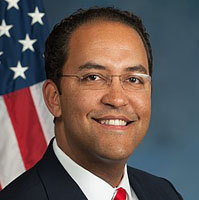
U.S. Rep. Will Hurd, R-Texas
Ninety-four other Southern House Republicans voted against the resolution, which was supported by all 50 Southern House Democrats in the July 16 vote, including five members who represent districts Trump carried in 2016.
Those five members are Lucy McBath from Georgia, Kendra Horn from Oklahoma, Joe Cunningham from South Carolina, and Abigail Spanberger and Elaine Luria from Virginia.
Five Republicans from Texas — Kay Granger, Louie Gohmert, Roger Williams, Kenny Marchant and Michael Burgess — did not vote on the resolution. They also did not participate in other roll call votes held the same day.
The floor fight over the resolution was led on the GOP side by U.S. Rep. Doug Collins of Georgia, who set off two hours of turmoil after objecting to House Speaker Nancy Pelosi calling Trump’s tweets “racist,” which he said violated House rules against offering personal criticism of the president.
After lengthy discussions between members and the chamber’s parliamentarians, the chair eventually ruled Pelosi’s comments out of order, but members, on a party-line vote, overturned that ruling.
Trump, who denied his criticism of the congresswomen was racist, had urged Republican members not to show “weakness” in supporting the resolution. In the end, only four Republicans broke ranks to support it.
The resolution said the House “strongly condemns” Trump’s “racist comments that have legitimized and increased fear and hatred of new Americans and people of color by saying that our fellow Americans who are immigrants, and those who may look to the President like immigrants, should ‘go back’ to other countries.”
Over the weekend, Trump tweeted that a group of Democratic congresswomen should “go back” to their home countries if they were dissatisfied with life in America.
While he did not single out anyone by name, the tweets appeared to be a reference to four female members from the party’s left wing who have been among his sharpest critics — Ilhan Omar of Minnesota, Alexandria Ocasio-Cortez of New York, Rashida Tlaib of Michigan and Ayanna Pressley of Massachusetts.
Of the four, only Omar, who came to the United States as a refugee from Somalia as a child, was not born in the United States. All four are U.S. citizens, which is a requirement to sit in Congress.
Critics attributed what they see as Trump’s racist intent to make-up of the group, dubbed The Squad. Omar and Pressley are black, Ocasio-Cortez is Latino, and Tlaib is of Palestinian descent.
Hurd represents a majority-Latino swing district in West Texas. He is the only Southern Republican in Congress who represents a district that Hillary Clinton carried in 2016 and is among the top targets for House Democrats next year.
In an interview with PBS, Hurd called the president’s tweets “racist and xenophobic” and “also inaccurate.”
“The four women he is referring to are actually citizens of the United States, three of the four were born here. It’s also a behavior that’s unbecoming of the leader of the free world,” Hurd said. “He should be talking about things that unite us, not divide us. And also, I think, politically, it doesn’t help.”
We tweet @ChkFriPolitics Join us!
Southern House Democrats in targeted seats vote to turn up pressure on Trump
House Judiciary Committee can now sue to force compliance with requests for documents, testimony
♦By Rich Shumate, ChickenFriedPolitics.com editor
WASHINGTON (CFP) — In the first major test of how Southern Democrats in vulnerable seats will navigate through ongoing House investigations of President Donald Trump, all of them stuck to the party line in supporting new powers that could escalate those inquiries.
By a vote of 229-191 on June 11, the House authorized the Judiciary Committee to go into federal court and demand that the Justice Department comply with requests for documents and witness testimony.
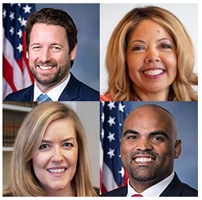
From top left clockwise: Cunningham, McBath, Allred, Weston
All 10 Southern House Democrats who flipped seats in 2018 and are at the top of the GOP hit list in 2020 agreed to give the committee the power to sue to force compliance, although none of them yet support moving toward impeaching the president.
That list includes Reps. Joe Cunningham of South Carolina; Lucy McBath of Georgia; Kendra Horn of Oklahoma; Elaine Luria, Jennifer Wexton and Abigail Spanberger of Virginia; Colin Allred and Lizzie Fletcher of Texas; and Debbie Mucarsel-Powell and Donna Shalala of Florida.
Not a single Southern Republican supported the resolution, including 11 GOP members who are on the Democrats’ target list for 2020.
The resolution is aimed squarely at Attorney General William Barr, who has refused to comply with some document requests, and former White House counsel Don McGahn, who has refused to testify at a committee hearing under instructions fro the White House.
The resolution ratchets up the pressure on the Trump administration, as an increasing number of House Democrats are calling for an impeachment inquiry.
While none of the Southern Democrats in competitive seats have so far come out in favor of an impeachment inquiry, 14 members in safe seats have done so.
That list includes Steve Cohen of Tennessee; Val Demings of Florida; Veronica Escobar, Sheila Jackson Lee, Joaquin Castro, Lloyd Doggett, Al Green, and Filemon Vela of Texas; Cedric Richmond of Louisiana; Alma Adams and G.K. Butterfield of North Carolina; Don Beyer of Virginia; Bennie Thompson of Mississippi; and John Yarmuth of Kentucky.
We tweet @ChkFriPolitics Join us!

Poll showing Biden with a lead over Trump in Texas is not what it seems
Media reports of Quinnipiac poll overstate possibility that Trump is in trouble in the Lone Star State
♦By Rich Shumate, ChickenFriedPolitics.com editor
 AUSTIN (CFP) — Media organizations have been trumpeting results of a new poll that purports to show President Donald Trump trailing former Vice President Joe Biden in Texas — a somewhat shocking result, given that a Democrat hasn’t carried the Lone Star State since 1976 and hasn’t been close since 1996.
But a closer look at the numbers of the Quinnipiac Poll show that, from a purely statistical perspective, those reports may be misleading.
The poll, released June 5, found Biden leading Trump by a margin of 48-44 percent among registered voters in Texas, with a margin of error of plus or minus 3.4 percent.
What that margin of error means is that Biden’s actual support among registered voters in Texas could be as high as 51.4 percent or as low as 44.6 percent; Trump’s actual support could be as high as 47.4 percent or as low as 40.6 percent.
Because those two intervals overlap, it is statistically possible that Trump is actually ahead, as the high end of his support is above the low end of Biden’s support. So although it is probable that Biden has a lead, because the range of his support is higher, the poll does not absolutely establish a lead for Biden.
In order to establish with statistical certainty that Biden is leading Trump, his lead would need to be at least 6.8 percent, or double the margin of error.
The poll’s results for hypothetical match-ups of Trump with other Democratic 2020 contenders are even more muddled because neither candidate has a lead larger than the margin of error, which means that no one can even be said to even probably be ahead.
The poll results do, however, indicate that at this early stage of the race, the battle for Texas is closer that what might be expected and Biden appears to be performing more strongly against Trump than other 2020 competitors, including two Texans, former U.S. Rep. Beto O’Rourke and former San Antonio Mayor Julián Castro.
In 2016, Trump carried Texas by more than 800,000 votes, a margin of 9 points.
The Quinnipiac poll did turn up one result well beyond the margin of error — 60 percent of Texas don’t want to see Trump impeached, while only 34 percent do.
 Chicken Fried Politics