
Home » Texas (Page 13)
Category Archives: Texas

Poll: U.S. Senator Ted Cruz has a lead over Democratic challenger Beto O’Rourke
New Quinnipiac survey finds Cruz up by 9 points, more than the margin of error
 AUSTIN (CFP) — On the eve of the first debate in the Texas U.S. Senate contest, a new poll of likely voters shows that Democratic hopes — and Republican fears — of a competitive race this November may be overblown.
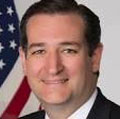
U.S. Senator Ted Cruz
A Quinnipiac University poll, released Sept. 18, found that Republican U.S. Senator Ted Cruz had a lead of 54 to 45 percent over his Democratic challenger, U.S. Rep. Beto O’Rourke , a statistically significant lead in a poll with a margin of error of plus or minus 4.1 percentage points.
An August poll by Quinnipiac had found Cruz’s lead within the margin of error and his support under 50 percent. However, that was a survey of registered voters, rather than likely voters; likely voter polls are designed to weed out respondents who are unlikely to vote.
The poll found that women and voters who classify themselves as independents were evenly divided between the two candidates. But men favored Cruz by 15 points, and he led by 34 points among white voters.
O’Rourke’s support is stronger among Latinos, where he leads Cruz by 9 points, and among African Americans, where he leads by 94 points.
The biggest hurdle for O’Rourke may be that Cruz is viewed favorably by most likely voters in Texas, with 53 percent approving of his job performance, according to the poll.
His approval numbers are better than those for President Donald Trump, who is viewed favorably and unfavorably by 49 percent.
Cruz and O’Rourke are scheduled to meet in their first debate on Friday, Sept. 20.
Cruz, 47, was elected to the Senate in 2012 on his first try for political office. In 2016, he made an unsuccessful run for the Republican presidential nomination, carrying 12 primaries and caucuses and finishing second in the delegate count behind Trump.
O’Rouke, 45, has represented metro El Paso in the House since 2013, after serving on the El Paso City Council. Although he is Irish and his given first name is Robert, he was nicknamed “Beto” — a Spanish nickname for Robert — from childhood.
His campaign has excited the Democratic base, drawing large crowds and media attention in a state that hasn’t seen a competitive Senate race in 30 years.
O’Rourke has also raised $23.6 million for the race, according to the latest Federal Elections Commission reports, slightly more than Cruz. The last time Cruz ran, in 2012, he outraised and outspent his Democratic opponent by a 2-to-1 margin, on his way to a 16-point victory.
Still, the odds against a Democrat in Texas are daunting. Republicans have won the last nine Senate races by an average margin of 19 percent.
Despite an often contentious relationship during the 2016 presidential race, Trump has announced that he would be “picking the biggest stadium in Texas we can find” for a rally for Cruz in October. No date has been announced.
The Texas race is one of six Southern states with open seats in 2018; the others are Virginia, West Virginia, Florida, Tennessee and Mississippi, where both seats are on the ballot.
Four of those races are shaping up to be potentially competitive — Florida and West Virginia, which are currently held by Democrats, and Texas and Tennessee, held by Republicans.
Democrats need to make a net gain of two seats to take control of the Senate.
New poll shows Texas U.S. Senate race shaping up as the most competitive in a generation
Quinnipiac poll finds Democrat Beto O’Rourke within striking distance of Republican incumbent Ted Cruz
♦By Rich Shumate, ChickenFriedPolitics.com editor
 AUSTIN (CFP) — The last time a Democrat was within striking distance in a U.S. Senate contest in Texas, Ronald Reagan was president, people rented movies from a store and tweeting was only for the birds.
Since the last Democratic victory in 1988, the party’s nominees have lost nine Senate races in a row, all by double digits. The average size of their loss? 19 points.

Ted Cruz

Beto O’Rourke
But a new poll shows Democratic U.S. Rep. Beto O’Rourke is closing in on Republican U.S. Senator Ted Cruz, cutting Cruz’s lead in half since May and raising the specter of seeing something this fall that hasn’t been seen deep in the heart of Texas for 30 years — a truly competitive Senate race.
A close race in Texas could also have national implications, as Republicans try to hang on to their slim one-vote majority in the Senate.
A Quinnipiac University poll released August 1 put Cruz at 49 percent and O’Rourke at 43 percent among registered voters in the Senate contest. With a sampling error of plus or minus 3.5 percent, that means that, statistically, Cruz’s lead is small enough to be the result of sampling error, rather than an actual lead.
But perhaps the most alarming bit of data in the poll for the Cruz campaign is that his 6-point lead now is down from an 11-point lead three months ago, and Cruz is now below 50 percent, a danger sign for an incumbent.
“O’Rourke has done a good job making the race competitive,” said Peter Brown, assistant director of Quinnipiac Poll in a statement. “He is clearly in contention. A Democratic victory in the Lone Star State would be a serious blow to GOP hopes of keeping their U.S. Senate majority.”
The poll of 1,118 registered voters found Cruz leading among men and white voters, while O’Rouke was leading among women and African-American voters. O’Rourke has a 12-point lead among Latino voters, and the two men are running even among voters who describe themselves as independent.
The poll found Texans generally have a good opinion of Cruz — 50 percent approve of his job performance and view him favorably, while 42 percent disapprove and view him unfavorably. However, he is polling far behind the Republican running in the other marquis statewide race, Governor Greg Abbott, who had a 13-point lead over his Democratic challenger, former Dallas County Sheriff Lupe Valdez.
By contrast, 43 percent of voters surveyed said the didn’t know enough about O’Rourke to offer an opinion of him, which means he remains something of an unknown quantity. And that could give the Cruz campaign an opening to try to define him negatively with voters over the rest of the campaign.
The poll also found that President Donald Trump’s approval rating in Texas was mixed, with 46 percent approving of his performance and 49 percent disapproving, which was within the margin of error.
The Quinnipiac poll surveyed registered voters rather than likely voters, making the results somewhat less indicative of what might happen on election day. However, two other polls taken in July that surveyed likely voters — by the Texas Lyceum and Gravis Marketing — also found Cruz’s lead in single digits.
Federal Election Commission reports also show that O’Rourke has been competitive with Cruz in fundraising. As of the end of June, he had raised $23.6 million to $23.4 million for Cruz and had $14 million in cash on hand, compared to $9.3 million for the incumbent.
The last time Cruz ran, in 2012, he outraised and outspent his Democratic opponent by a 2-to-1 margin, on his way to a 16-point victory.
O’Rouke, 45, has represented metro El Paso in the House since 2013, after serving on the El Paso City Council. Although he is Irish and his given first name is Robert, he was nicknamed “Beto” — a Spanish nickname for Robert — from childhood.
Cruz, 47, was elected to the Senate in 2012 on his first try for political office. In 2016, he made an unsuccessful run for the Republican presidential nomination, carrying 12 primaries and caucuses and finishing second in the delegate count behind Trump.
The Texas race is one of six Southern states with open seats in 2018; the others are Virginia, West Virginia, Florida, Tennessee and Mississippi, where both seats are on the ballot.
Four of those races are shaping up to be competitive — Florida and West Virginia, which are currently held by Democrats, and Texas and Tennessee, held by Republicans.
U.S. Supreme Court lets congressional maps stand in Texas, North Carolina
Rulings may leave current maps will be in place until after reapportionment in 2021
♦By Rich Shumate, ChickenFriedPolitics.com editor
 WASHINGTON (CFP) — Republican legislators in Texas and North Carolina have both dodged a bullet after the U.S. Supreme Court refused to invalidate congressional maps in both states that lower courts had struck down as illegally gerrymandered.
In the Texas case, the justices rejected a claim that state legislators impermissibly used race to draw electoral maps. In the North Carolina case, they vacated a lower court decision holding that the state’s map unconstitutionally diluted the voting strength of Democrats and ordered the case to be reconsidered.
The high court’s June 25 decisions mean that neither state is likely to face a court-ordered redraw in this election cycle. And while the North Carolina case could be reconsidered for the 2020 election, the ruling in the Texas case likely means that the current map will be used until after new maps are drawn in 2021, based on the results of the 2020 census.
In their decison in the Texas case, the justices ruled 5-to-4 that a lower court erred in finding back in 2017 that a congressional map and state House maps adopted in 2013 should be struck down because they were impermissibly drawn using racial considerations. The Supreme Court had put that ruling on hold while it considered the state’s appeal.
The two congressional districts involved in the lawsuit were the 27th District, which stretches along the Gulf Coast from Corpus Christi toward Houston, and the 35th District, which covers parts of Austin and San Antonio linked by a narrow strip of land.
The lower court’s objection to the 27th District was the GOP-controlled legislature reduced the Latino population from 70 percent to around 50 percent. The objection to the 35 District was that legislators used race to create a district that is more than 70 percent Latino and African American, reducing minority populations in surrounding districts.
The 27th District, currently vacant, has been held by Republicans since it was redrawn. U.S. Rep. Lloyd Doggett, a white Democrat from Austin, represents the 35th District.
In his majority opinion, Justice Samuel Alito said the evidence offered by the plaintiffs “is plainly insufficient to prove that the 2013 Legislature acted in bad faith and engaged in intentional discrimination.” The justices did uphold a ruling that a Texas House district in Fort Worth was an impermissible racial gerrymander.
But in her dissent, Justice Sonia Sotomayor said the court’s decision means minority voters in Texas “will continue to be underrepresented in the political process.”
“Those voters must return to the polls in 2018 and 2020 with the knowledge that their ability to exercise meaningfully their right to vote has been burdened by the manipulation of district lines specifically designed to target their communities and minimize their political will,” she wrote.
 In the North Carolina case, the justices vacated a 2018 ruling by a three-judge panel that the congressional map adopted by Republican legislators in 2016 was unconstitutional because it diluted the voting strength of Democrats — the first time that a federal court had ever struck down a congressional map on the grounds of political, rather than racial, gerrymandering.
The Supreme Court had also put that ruling on hold while it considered an appeal.
The Tar Heel State’s map had been redrawn in 2016 after a previous map had been struck down for improperly using racial considerations. GOP lawmakers freely admitted that they were drawing lines to maximize the number of Republican-friendly seats, which the lower court found was evidence of unconstitutional partisan taint.
The Supreme Court sent the case back to North Carolina to be reconsidered in light of a ruling earlier this year in case involving a partisan gerrymander in Wisconsin. In that case, the high court sidestepped the question of whether drawing maps that favor one party over another can be found unconstitutional, returning the case to a lower court on narrow jurisdictional grounds.
The court’s order did not indicate how, or if, justices were split on the merits of the case.
While North Carolina is divided fairly evenly in presidential races and has a Democratic governor, Republicans hold a commanding 10-to-3 margin in the U.S. House delegation.
Texas, which leans more Republican, has 24 Republicans and 11 Democrats in its delegation, with one seat vacant.
U.S. House Primary Wrap: Democrats pick female Marine fighter pilot for targeted seat in Kentucky
Voters in Georgia, Arkansas and Texas also pick party nominees for House seats that could help decide balance of power
♦By Rich Shumate, ChickenFriedPolitics.com editor
 LEXINGTON, Kentucky (CFP) — In a year in which women candidates have been making noise nationally, Amy McGrath has made her own statement in Kentucky’s Bluegrass country by winning the Democratic nomination for a U.S. House seat over a candidate recruited by party leaders in Washington.
Meanwhile, in other May 22 primaries in Georgia, Arkansas and Texas, Democrats narrowed the fields in races for seven GOP-held seats that are being targeted in November, while Texas Republicans picked nominees in four open seats that are expected to stay in Republican hands.
 In central Kentucky’s 6th District, which includes Lexington and Frankfort, McGrath took 48 percent of the vote to 40 percent for Lexington Mayor Jim Gray, who had been recruited for the race by the Democratic Congressional Campaign Committee. Kentucky does not have primary runoffs, so McGrath won the nomination with a plurality and will now face GOP U.S. Rep. Andy Barr in November.

Democratic U.S. House nominee Amy McGrath
Declaring victory with her supporters in Richmond, McGrath — a retired Marine Corps fighter pilot whose call sign was “Krusty” — said “what happened tonight is amazing.”
“Six months ago, political pundits and establishment insiders didn’t think we could pull this off,” she said. “What those insiders maybe still don’t know is how this happened. Well, I know how it happened. It’s because you all care about the future of our country.”
McGrath began her campaign in August 2017 with a video in which she told how, as a young girl growing up in Kentucky, she decided she wanted to be a fighter pilot but discovered that women were not allowed to serve in combat. She then wrote letters to members of Congress in which she asked why she was barred from serving, including a letter to Kentucky U.S. Senator Mitch McConnell, which she said was never answered.
After the ban was lifted, McGrath enrolled in the U.S. Naval Academy and served in Iraq and Afghanistan as a Marine Corps aviator before retiring at the rank of lieutenant colonel.
McGrath’s video went viral, triggering a wave of contributions to her long-shot campaign. She now raised almost $2 million in her quest to unseat Barr, who is seeking his fourth term.
Another positive sign for McGrath: More than 100,000 Democrats turned out to vote in the primary, compared to just 49,000 Republicans in a district President Donald Trump carried by 15 points in 2016. However, GOP turnout also lagged behind Democratic turnout in 2016, when Barr took 61 percent.
Meanwhile, in Kentucky’s 3rd District in metro Louisville, Republicans nominated Vickie Glisson, a Louisville attorney who headed the state health department, to face U.S. Rep. John Yarmuth, who has drawn the particular ire of Republicans nationally with his strong criticism of Trump, including introducing articles of impeachment.
 In Georgia, the House races receiving the most attention are in the 6th and 7th districts, where Republican incumbents are seen as possibly vulnerable in districts that President Donald Trump won by narrow margins in 2016.
In the 6th District, in Atlanta’s northern suburbs, where Republican U.S. Rep. Karen Handel won her seat in 2017 after a hard-fought and hugely expensive special election, Democrats have narrowed their field to Lucy McBath, a gun control activist from Cobb County, and Kevin Abel, a Sandy Springs businessman, who will compete in a July 24 runoff.
McBath’s son, Jordan Davis, was shot and killed in 2012 by a man at a gas station in Jacksonville, Florida, over a dispute over loud hip-hop music. His case became part of the nationwide campaign against deadly violence aimed at young African-American men. The shooter, Michael David Dunn, was later convicted of first-degree murder and sentenced to life without parole.
Handel’s chances of keeping the seat — in a district Trump only carried by just 1.5 points — improved when the man she defeated in the special election, Democrat Jon Ossoff, decided against a rematch.
In the 7th District, in northwest metro Atlanta, Democrats Carolyn Bordeaux and David Kim advanced to the runoff for the right to face Republican U.S. Rep. Rob Woodall in November.
Bordeaux, from Suwanee, is a professor at Georgia State University and former budget analyst for the Georgia Senate. Kim, from Duluth, is the son of Korean immigrants who owns a company that provides tutoring for students. If elected, he would become Georgia’s first Asian-American congressman, running in a district with a growing Asian population.
While Woodall took 60 percent of the vote in the 7th District in 2016, Trump only won by 6 points, putting the seat within the realm of possibility for Democrats.
 In Arkansas, the House race drawing the most attention is the 2nd District in metro Little Rock, where Democrats believe they might have a shot at ousting GOP U.S. Rep. French Hill if a national Democratic wave develops.
The Democratic nominee will be State Rep. Clarke Tucker of Little Rock, who won the primary without a runoff.
While Hill won re-election by 11 points in 2016, the 2nd District is the least Republican district in the state, anchored by Pulaski County, which Hillary Clinton carried in 2016. Trump won the district by less than 10 points.
In Texas, Democrats have picked nominees in four targeted U.S. House seats now in Republican hands that Democrats have hopes of flipping in the fall.
In the 7th District, in metro Houston, attorney Lizzie Pannill Fletcher defeated liberal activist Laura Moser for the right to take on Republican U.S. John Culberson, in a district Hillary Clinton carried in 2016. Fletcher had been backed by the DCCC against Moser, who was seen by Democratic leaders as too liberal for the district.
In the 21st District, which stretches from Austin to San Antonio and takes in part of the Texas Hill Country, Republican Chip Roy will face Democrat Joseph Kosper for the seat now held by retiring U.S. Rep. Lamar Smith, a district which Trump carried by 10 points.
Roy served as chief of staff for U.S. Senator Ted Cruz. Kosper is a former U.S. Army officer and technology entrepreneur.
In the 23rd District — the largest Texas district geographically, sprawling from the suburbs of San Antonio to near El Paso — Democrats picked Gina Ortiz Jones to take on incumbent Republican U.S. Rep. Will Hurd in November. Clinton also carried this majority-Latino swing district, which has changed hands four times in the last 12 years.
Jones is a former military intelligence officer who worked as a U.S. trade representative in the Obama administration. If elected, she would be the first open lesbian, Iraq War veteran and Filipino American to represent Texas in Washington.
In the 32nd District, in metro Dallas, former NFL player Colin Allred defeated businesswoman Lillian Salerno and will now face Republican U.S. Rep. Pete Sessions, who is trying to keep a traditionally Republican seat in a district that Clinton also carried. Allred, a civil rights attorney, played five seasons in the NFL for the Tennessee Titans before his career ended after a neck injury.
Also in Texas, the fields have been set in four other open GOP-held districts that Republicans will be favored to keep in November:
- In the 2nd District, a metro Houston seat given up by retiring U.S. Rep. Ted Poe, the Republican David Crenshaw, a retired Navy officer, will face Democrat Todd Litton, a lawyer and non-profit executive.
- In the 5th District, an East Texas seat now held by U.S. Rep. Jeb Hensarling, State Rep. Lance Gooden defeated Bunni Pounds, a political consultant, in the Republican runoff, despite endorsements of Pound by both Hensarling and Vice President Mike Pence. Gooden will face former Terrell City Councilman Dan Wood in November.
- In the 6th District, a seat in metro Fort Worth now held by U.S. Rep. Joe Barton, Republican Tarrant County Tax Assessor Ron Wright will face Democrat Jana Lynne Sanchez.
- In the 27th District, a South Texas seat that opened up after Republican U.S. Rep. Blake Farenthold resigned in April, Republican Michael Cloud will face Democrat Eric Holguin in November. Cloud is the chair of the Victoria County Republican Party. Holguin, from Corpus Christi, is a former congressional aide.
Barton decided not to seek re-election after after a nude selfie he had exchanged with a woman with whom he was having a consensual extramarital relationship wound up on social media.
Farenthold resigned after news reports that $84,000 in taxpayer dollars had been used to pay a settlement to a former female staffer who alleged that she suffered sexual harassment from Farenthold and another male staffer. The congressman denied the harassment allegations, while conceding that a lax management style in his Washington office created a “decidedly unprofessional” work environment.
A special election is being held in June to fill the remainder of Farenthold’s current term, with Cloud, Holguin and seven other candidates on the ballot.
State Primary Wrap: Stacey Abrams roars to Democratic governor’s nomination in Georgia; GOP faces runoff
Final fields for governor’s races also set in Arkansas and Texas; incumbent survives in Arkansas Supreme Court contest
♦By Rich Shumate, ChickenFriedPolitics.com editor
ATLANTA (CFP) — Democrat Stacey Abrams has made history in Georgia’s Democratic primary for governor, crushing her opponent to become the first African American woman ever nominated for governor by a major political party in a U.S. state.
Georgia Republicans are headed to a runoff between Lieutenant Governor Casey Cagle and Secretary of State Brian Kemp, after neither won a majority in the May 22 primary.
Meanwhile, in Arkansas, Republican Governor Asa Hutchinson was nominated for a second term and will be heavily favored over the Democratic winner, political newcomer Jared Henderson. And Texas Democrats picked former Dallas County Sheriff Lupe Valdez to face incumbent Republican Governor Greg Abbott in November, making her the first Latina and first openly lesbian candidate to be nominated by a major party for Texas governor.
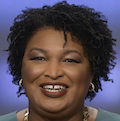
Georgia Democratic governor nominee Stacey Abrams
In Georgia, Abrams, the former minority leader of the Georgia House whose candidacy has drawn national attention, took 76 percent of the vote to 24 percent for former State Rep. Stacey Evans, winning all but six of the state’s 159 counties.
Speaking to jubilant supporters in Atlanta, Abrams vowed to create a “coalition that reaches across backgrounds, sharing our constant belief in our capacity to win.”
“We have to reach out to those who do not believe their voices matter, who’ve been disappointed again and again by promises made and never kept,” she said. “In the Book of Esther, there is a verse that reminds us that we were born for such a time as this.”
After seeing their party lose four governor’s elections in a row, Democrats who voted in the primary clearly bought into Abrams’s argument that the way to reclaim the governor’s mansion was to expand the electorate, rather than Evans’s argument that Democrats needed a nominee who could appeal to Republican-leaning voters by offering more moderate stands.
But while Abrams did win more votes in the primary than any candidate on either side of the ballot, overall, 54,000 more voters picked up Republican ballots, in a state that has no party registration.

Brian Kemp

Casey Cagle
In the Republican primary, Cagle, serving his third term as lieutenant governor, took 39 percent of the vote to 26 percent for Kemp, who has been secretary of state since 2011. Cagle beat Kemp in the large suburban Atlanta counties, where the bulk of Georgia Republicans live, and in all of the smaller cities except Athens, which Kemp once represented in the Georgia Senate.
However, Georgia has a long history of the second-place finisher in a primary coming from behind to win a runoff, most notably in 2010, when current Governor Nathan Deal defeated Karen Handel, who returned to political office last year by winning a seat in Congress.
The runoff in Georgia in July 24.
In another Georgia race of interest, former Democratic U.S. Rep. John Barrow, who lost his seat in 2014, won his party’s nomination for secretary of state without a runoff. Republicans will have a runoff between former Alpharetta Mayor David Belle Isle and State Rep. Brad Raffensperger of Johns Creek.
 In Arkansas, Hutchinson took 70 percent to 30 percent for Jan Morgan, a gun rights activist and television pundit who ran at the governor from the right, beating him in five rural counties. In November, he will face Henderson, a former NASA scientist who runs a Little Rock non-profit that advocates on education issues.
The most contentious battle in the Natural State was a non-partisan contest for a seat on the Arkansas Supreme Court, where incumbent Justice Courtney Hudson Goodson advanced to a runoff against David Sterling, who was appointed by Hutchinson as chief counsel for the Arkansas Department of Human Services. Goodson took 37 percent of the vote; Sterling, 34 percent.
A week before the election, Goodson filed a defamation lawsuit against the Judicial Crisis Network, a Washington-based conservative legal group, over ads it was running against her on Arkansas TV stations which alleged she accepted gifts for donors and sought a pay raise.
She also asked judges in three jurisdictions to enjoin stations from airing the ads, triggering protests from media organizations, although some of them voluntarily agreed to stop running the ads. JCN also spent more than $500,000 in 2016 to defeat Goodson in a race for chief justice.
Although the JCN’s ads targeted Sterling’s opponents, he has insisted that he has no connection to the group.
Goodson and Sterling will now face each other on the November general election ballot.
In Texas, in the Democratic race for governor, Valdez defeated Andrew White, a Houston businessman and the son of former Governor Mark White, by a margin of 53 percent to 47 percent. Abbott won the Republican nomination outright in the March primary.
Valdez, 70, was elected to four terms as sheriff of Dallas County, the state’s second largest with 2.5 million people. She resigned in 2017 when she launched her campaign for governor.
Valdez starts the race as a decided underdog against Abbott, who has raised more than $43 million for the campaign. Texas has not elected a Democratic governor since 1988.
 Chicken Fried Politics