
Home » Texas (Page 15)
Category Archives: Texas

Texas U.S. Rep. Joe Barton announces retirement from Congress amid flap over nude photos
Barton’s departure sets up competitive race for GOP-held seat in metro Dallas
♦By Rich Shumate, ChickenFriedPolitics.com editor
 DALLAS (CFP) — Republican U.S. Rep. Joe Barton, the dean of the Texas House delegation, has announced he will not seek re-election in 2018, a week after acknowledging that he exchanged a nude photograph of himself with a woman with whom he was having a consensual extramarital relationship — a photo which wound up on social media.
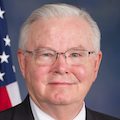
U.S. Rep. Joe Barton, R-Texas
Barton, 68, who has served in Congress since 1985, told the Dallas Morning News that “there are enough people who lost faith in me that it’s time to step aside.” He said that while he still thinks he could win re-election in the 6th District, “it would be a nasty campaign, a difficult campaign for my family.”
Barton also stressed to the News that unlike a number of other politicians recently ensnared in sex scandals, his conduct was entirely consensual: “I am not guilty of sexual harassment.”
The controversy now ending Barton’s career began when a nude photo purportedly of him began circulating on Twitter, and a woman who said she had a sexual relationship with him told the Washington Post that he had threatened to contact the U.S. Capitol Police if she disseminated the photo.
The woman told the Post that she did not send the photo out on Twitter, and it remains unclear who is responsible.
After the Post story, Barton issued a statement in which he admitting having consensual sexual relationships with other women while separated from his second wife, prior to their divorce in 2015.
“Those relationships have ended. I am sorry I did not use better judgment during those days. I am sorry that I let my constituents down,” he said in the statement. Barton has also said that police are investigating the circumstances surrounding the release of the photo.
Barton’s departure creates a sudden, unexpected opening that will likely draw a crowd of aspiring congressmen, particularly on the Republican side. The 6th District takes a swath of suburbs between Dallas and Ft. Worth, plus Ellis and Navarro counties to the South.
While the district leans Republican, the tilt is not overwhelmingly so — Barton carried it with 58 percent of the vote in 2016, and Donald Trump took just 54 percent. Five Democrats are already running for the seat.
Barton, who is currently the longest-serving member of the Texas delegation, becomes the seventh Texas U.S. House member to forego re-election in 2018, joining Republicans Ted Poe, Sam Johnson, Jeb Hensarling and Lamar Smith and Democrats Beto O’Rourke and Gene Green.
All except O’Rourke are leaving Congress; he is running for the U.S. Senate against incumbent Republican Ted Cruz.
Texas U.S. Rep. Jeb Hensarling won’t seek re-election in 2018
Hensarling’s retirement announcement comes just two weeks before filing begins for 2018 primaries
♦By Rich Shumate, ChickenFriedPolitics.com editor
DALLAS (CFP) — U.S. Rep. Jeb Hensarling, the Texas Republican who chairs the powerful House Financial Services Committee, has announced he won’t seek re-election in 2018, creating a third open House race in Texas less than two weeks before filing begins for the 2018 primaries.
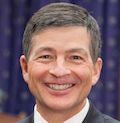
U.S. Rep. Jeb Hensarling, R-Texas
“Although service in Congress remains the greatest privilege of my life, I never intended to make it a lifetime commitment, and I have already stayed far longer than I had originally planned,” said Hensarling, who was first elected to Congress in 2002 to represent Texas’s 5th District. “Although I will not be running for reelection, there are 14 months left in my congressional term to continue the fight for individual liberty, free enterprise, and limited constitutional government — the causes for which I remain passionate.”
Because of GOP term limits for committee chairman, Hensarling would have lost his chairmanship in 2019 had he remained in Congress, even if Republicans held control of the chamber. He said that with the end of his chairmanship, “the time seems right for my departure.”
Hensarling’s 5th District takes in eastern Dallas County and stretches into rural areas to the east and south. Although the district has a majority-minority population, it is solidly Republican, having gone for President Trump with 63 percent of the vote in 2016; Hensarling carried 80 percent.
However, Hensarling’s retirement is likely to set off a mad scramble for his seat, thanks to Texas’s early primary schedule. Filing opens November 11 and closes December 11, and the primary will be held on March 6. The only candidate in the race at the time of Hensarling’s October 31 retirement was Democrat Dan Wood, an attorney and city councilman from Terrell.
Before being electing to Congress, Hensarling, 60, was an aide to former U.S. Senator Phil Gramm, and, like Gramm, cultivated an image as a fiscal hawk and opponent of increased government spending. In 2010, he was elected as chairman of the House Republican Conference, the fourth-ranking position in the House, a post he gave up to take the Financial Services chairmanship.
Hensarling is the third member of the Texas House delegation to forgo a re-election bid in 2016. Democratic U.S. Rep. Beto O’Rourke from El Paso is giving up his seat to challenge U.S. Senator Ted Cruz. GOP U.S. Rep. Sam Johnson from Dallas is retiring after 28 years in Congress.
While all three of these seats are unlikely to change hands, three Democrats are making a play for Johnson’s 3rd District seat, which Trump only carried with 55 percent of the vote.
5 Southern Republicans break ranks to oppose House Obamacare repeal
But 5 GOP lawmakers in other potential swing districts help pass new health care law
♦By Rich Shumate, Chickenfriedpolitics.com editor
 WASHINGTON (CFP) — Five Republican members of the U.S. House defied party leaders and President Donald Trump to oppose a bill to repeal Obamacare and replace it with a new blueprint for U.S. health care, but five other GOP lawmakers holding potentially vulnerable seats took a different tack and voted to go along with the American Health Care Act.
Two of the Southern GOP no votes on May 4 came from Will Hurd of Texas and Barbara Comstock of Virginia, who both represent districts that Hillary Clinton carried in 2016. A third lawmaker from a district Clinton carried, Ileana Ros-Lehtinen of Florida, also voted no but is retiring in 2018.

Hurd
Hurd, whose district stretches across a wide swath of West Texas, issued a statement after the vote saying the plan pushed by GOP leaders “does not address the concerns of many of my constituents, including adequate protections for those with pre-existing conditions and the challenges faced by rural healthcare providers.”

Comstock
Comstock, whose district is anchored in the Washington, D.C. suburbs, said in a statement that her “goals on healthcare reform are to provide patient-centered reforms that provide better access to high quality, affordable care and cover pre-existing conditions without lifetime limits. ”
“I did not support the AHCA today because (of) the many uncertainties in achieving those goals,” she said.
The other two Republicans who voted against the bill, Thomas Massie of Kentucky and Walter Jones of North Carolina, did so not out of any fear of Democratic competition but because they believe the repeal measure doesn’t go far enough.
“As recently as a year ago, Republicans argued that mandates were unconstitutional, bailouts were immoral and subsidies would bankrupt our country,” Massie said in a statement after the vote. “Today, however, the House voted for a healthcare bill that makes these objectionable measures permanent.”
Jones had earlier said the attempt by House Republican leaders to push an Obamacare bill repeal through the House on a rushed schedule was “shameful,” and he called for scrapping the bill in its entirety and starting over.
Of the 138 Southern Republicans in the House, 133 voted in favor of the AHCA. Five of those members represent districts where Democrats could conceivably use their votes for the new health care law to try to unseat them. In fact, if any one of them had voted no, the bill — which passed by just a single vote — would have failed, which will allow Democrats to make the argument that each of them bears responsibility for its passage.

Curbelo
This group of members who supported the bill includes two of the region’s most vulnerable House Republicans, Carlos Curbelo and Brian Mast, both from Florida. Curbelo represents a district in Miami-Dade and Monroe counties that Clinton carried; Mast’s district, which includes St. Lucie, Martin and northern Palm Beach counties, has changed parties in three of the last four election cycles.

Mast
In a statement, Mast said the GOP health care plan “returns control of health care from Washington back to you and restores access to quality, affordable options that are tailored to your individual needs.” He also pushed back against Democratic criticism that a provision in the new law allowing states to waive mandates for coverage of pre-existing conditions would imperil coverage for the sickest Americans.
“This bill mandates that people cannot be denied coverage because of pre-existing conditions and allocates almost $140 billion in additional funding that will subsidize coverage for people with pre-existing conditions to ensure they costs are low,” Mast said. “Those claiming otherwise are the same people who said ‘if you like your doctor, you can keep you doctor,” and they’re putting partisan politics ahead of the people in our community.”
Also voting yes were John Culberson of Texas, whose metro Houston House district was carried by Clinton; Mario Diaz-Balart, whose majority Latino district in metro Miami and southwest Florida went for Trump by less than 2 points; and Ted Budd of North Carolina, whose Greensboro-area district went for Trump by 9 points.
In a statement, Diaz-Balart conceded the AHCA was “far from perfect.” But he said the House needed to act because Obamacare “is collapsing,” leaving just one insurance provider in two of the three counties he represents.
“Knowing the people I represent could very well lose their coverage … is disturbing,” he said. “It would be irresponsible for Congress not to act in order to prevent this from happening.”
Budd also conceded in a statement that “the legislative process is a human process with all the flaws that entails. The results of that process are never perfect, and this bill isn’t either.”
“What I believe it will do is significantly reduce insurance premiums in our state, and help put the individual insurance marketplace on a more sound financial footing,” he said.
Also voting yes was Pete Sessions of Texas, whose metro Dallas district was also won by Clinton. However, Sessions, who has been in the House since 1997 and won re-election by more than 50 points in 2016, is not considered vulnerable to a Democratic challenge.
All 40 of the Democrats representing districts in the South voted against the AHCA.
U.S. Rep. Beto O’Rourke will take on Ted Cruz in Texas U.S. Senate race
Congressman from El Paso is first major Democrat to launch a bid to unseat Cruz
♦By Rich Shumate, Chickenfriedpolitics.com editor
EL PASO (CFP) — Democratic U.S. Rep. Beto O’Rourke is giving up his safe House seat in order to make a long-shot bid to unseat Republican U.S. Senator Ted Cruz in 2018
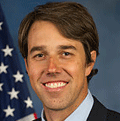
U.S. Rep. Beto O’Rourke, D-Texas
O’Rourke kicked off his campaign March 31 with a rally in his hometown of El Paso, which he represents in Congress, followed by a weekend of stops in major cities around the Lone Star State.
Without mentioning Cruz by name, O’Rourke accused him of putting political ambition above his job as a senator, saying that to meet the challenges of the future, Texans will need “a senator who’s working full time for Texas, a senator who’s not using this position of responsibility and power to serve his own interests, to run for president, to shut down the government.”

O’Rourke kicks off campaign in El Paso.
O’Rourke is also positioning himself as principled opponent to President Donald Trump, saying the new administration is “focused on the wrong things instead of the right things that (are) going to get us ahead,” such as a ban on refugees from Muslim counties, an immigration crackdown and construction of wall along the U.S.-Mexico border.
“We can decide that we’re going to take back this country, and we’re going to take back this state, and that we’re going to do that in 2018,” he said. “2018 starts right here, right now.”
O’Rourke, who had previously made a commitment to serve no more than four terms in the House, said that if elected, he would serve only two six-year terms in the Senate. He took a shot at the Washington political class, saying the American people need a Congress “that actually works, that’s not more preoccupied and focused on the re-election of its members than the business of this country.”
O’Rourke also gave part of his kickoff speech in Spanish, in which he is fluent. Texas has 4.8 million eligible Latino votes, making up about 28 percent of the states total eligible electorate, according to figures from the Pew Research Center.
O’Rourke, 44, was first elected to the House in 2012, representing the majority Latino 16th District, which takes in most of El Paso County and borders Mexico. He has strong political roots in El Paso, where his father, Pat, served as county judge.
Although the first name he uses, Beto, is a common Spanish nickname for his given name, Robert, O’Rourke is Irish, not Latino. He acquired the nickname in childhood.
O’Rourke will face an uphill battle against Cruz, given that no Democrat has won a statewide office in Texas since 1994 or a Senate race since 1988. His background and liberal policy positions may also prove to be a difficult sell.
O’Rourke played in a rock band in the early 1990s and was later arrested, but not convicted, on burglary and drunk driving charges. He is a supporter of LGBT rights and an opponent of what he calls the “failed war on drugs.” He supports comprehensive immigration reform and participated in a 2016 sit-in by House members in support of stronger restrictions on gun purchases.
O’Rourke may also have primary opposition from U.S. Rep. Joaquin Castro of San Antonio, who is also considering a run.
Cruz, who run unsuccessfully for the GOP presidential nomination in 2016, has so far not drawn any Republican primary opposition.
O’Rourke’s run will open up the 16th District seat in 2018. However, the seat in the strongly Democratic district is unlikely to change hands.
Former U.S. Rep. Steve Stockman blames “deep state” for his indictment on corruption charges
Former Texas congressman accused of diverting charitable donations for personal use
♦By Rich Shumate, Chickenfriedpolitics.com editor
HOUSTON (CFP) — Federal prosecutors are blaming former U.S. Rep. Steve Stockman and an aide for an ongoing scheme to bilk $1.25 million from charitable foundations and divert it for personal use. But Stockman, in the dock, is blaming the “deep state” for his legal woes.

Former U.S. Rep. Steve Stockman, R-Texas
Stockman, a Republican who served two stints in the House before losing a Senate primary in 2014, is facing charges of mail and wire fraud, money laundering, violating campaign finance laws, making false statements to the Federal Election Commission and filing a false tax return with the IRS. The indictment was unsealed March 28.
After his initial court appearance, Stockman proclaimed his innocence and said the “deep state” was trying to exact revenge for his longtime opposition to the IRS as a congressman, according to a report in the Houston Chronicle.
“This is part of a deep state that’s continuing to progress,” said Stockman, who was arrested at a Houston airport while trying to board a plane bound for the United Arab Emirates.
“Deep state” refers to a conspiracy theory that holds that unelected bureaucrats secretly run the U.S. government.
The indictment alleges that Stockman and an aide, Jason Posey, solicited donations from charitable foundations that they funneled to a web of non-profit groups they had set up, telling donors the funds would be used for “charitable and educational purposes.” Instead, the money was spent on personal expenses and to further Stockman’s political career, according to the indictment.
In all, $1.25 million in fraudulent donations were solicited between 2010 and 2014, according to the indictment.
Stockman, 60, was elected to Congress from a Houston-area district in 1994, on his third try. After two terms in the House, he left to make an unsuccessful bid for the Texas Railroad Commission in 1998.
He returned to Congress in 2013 but gave up his seat after a single term to make a primary run against Republican U.S. Senator John Cornyn.
In that campaign, Stockman tried to make the case that Cornyn, as a member of the Republican Senate leadership, had abandoned his conservative principles. But Cornyn crushed him by 40 points.
According to the indictment, some of the money diverted from the charitable groups was used to help Stockman’s Senate bid.
 Chicken Fried Politics