
Home » U.S. House Races (Page 32)
Category Archives: U.S. House Races

U.S. Rep. Daniel Webster’s bid for speaker crushed by Paul Ryan wave
Webster received only nine votes, eight from his fellow Southerners
♦By Rich Shumate, Chickenfriedpolitics.com editor
 WASHINGTON (CFP) — Florida U.S Rep. Daniel Webster’s longshot bid for House speaker has come up short — 227 votes short, to be exact.

U.S. Rep. Daniel Webster
Webster, a Winter Haven Republican, garnered just nine votes in the October 29 vote, which saw the rise of U.S. Rep. Paul Ryan of Wisconsin into the top leadership spot.
Ryan received support from 236 of the chamber’s 247 Republicans. House Minority Leader Nancy Pelosi, D-California, received support from 184 out of the 188 Democrats.
Webster, 66, launched his campaign for speaker September 28, after former House Speaker John Boehner stepped down amid a rebellion by conservatives in the GOP caucus.
Initially, members of the House Freedom Caucus–made up of the House’s most conservative members–endorsed Webster, a former speaker of the state House in Florida. However, after Ryan entered the race, that support began to melt away.
Of the 38 Freedom Caucus members, only six stuck with Webster on the final vote.
Among the nine House members who supported Webster, eight were Southerners: Dave Brat of Virginia; Curt Clawson, Bill Posey and Ted Yoho of Florida; Louie Gohmert and Randy Weber of Texas; Walter Jones of North Carolina; and Thomas Massie of Kentucky.
Charlie Crist launches run for Florida congressional seat
Crist’s latest race comes after two statewide losses and two party switches
♦By Rich Shumate, Chickenfriedpolitics.com editor
ST. PERTERSBURG, Florida (CFP) — After losing two statewide elections in four years and changing parties twice, former Florida Governor Charlie Crist will try to resurrect his political career with a run for Congress in 2016.
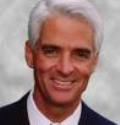
Former Florida Governor Charlie Crist
Crist announced October 20 that he will seek the Democratic nomination in Florida’s 13th U.S. House District.
“Public service is in my heart. I can’t help it. I guess that’s fairly obvious,” Crist said at his campaign kickoff. “But somebody has to step up, and somebody has to lead.”
His decision immediate drew fire from Republicans, who noted that Crist had said back in March that he would not run for office in 2016.
“What happens when the King of Flip-Flopping promises NOT to run for office in 2016… he runs for office in 2016,” said a statement on the Florida GOP’s website.
The 13th District seat opened up after the incumbent, Republican U.S. Rep. David Jolly, decided to run for the U.S. Senate. Jolly’s decision came as the Florida Supreme Court is poised to redraw the state’s House districts, which is likely to make the 13th District, centered in the St. Petersburg area, more Democratic.
Crist, 59, was elected as governor in 2006 as a Republican. In 2010, instead of running for re-election, he decided to run for the U.S. Senate, bolting the GOP to run as an independent when it became clear he was going to lose the primary to the eventual winner, U.S. Senator Marco Rubio.
After losing that race, Crist became a Democrat and made an unsuccessful run for governor in 2014, losing to Republican Governor Rick Scott.
Crist will face at least one Democratic primary challenger, Eric Lynn, a former Pentagon official. After Crist’s announcement, he issued a statement pointedly noting that, unlike Crist, he was a “life-long Democrat.”
“I’m looking forward to a spirited primary and a spirited debate on important Democratic issues,” Lynn said.
Republicans are also expected to put up a fight to keep the seat, with former St. Petersburg Mayor Rick Baker being mentioned as a possible GOP candidate.
U.S. Rep. Daniel Webster enters contest for House speaker
Florida Republican calls for decentralizing power, empowering backbenchers
♦By Rich Shumate, Chickenfriedpolitics.com editor
WASHINGTON (CFP) — U.S. Rep. Daniel Webster of Florida has announced he will run for House speaker to replace outgoing Speaker John Boehner on a platform of decentralizing the GOP leadership’s control of the House agenda by pushing down “the pyramid of power.”
U.S. Rep. Daniel Webster
“What I want to see is a principle-based, member-driven Congress,” Webster said in a September 28 appearance on Fox News where he announced his candidacy. “We don’t have that now. I’d like to have us have it.”
“We can show ourselves as leaders by opening up the process, by allowing lots of debate and lots of amendments and lost of opportunities for members,” he said.
Webster, 66, from Winter Haven in Central Florida, is serving his third term in the House. Prior to his service in Congress, Webster served 28 years in the Florida legislature and was state House speaker from 1996 to 1998.
Webster is running to replace Speaker John Boehner, who announced September 25 that he was stepping down amid conflict within the Republican House conference between Boehner’s allies and conservative backbench critics.
Earlier this year, Webster ran against Boehner in an unsuccessful attempt to bounce him from the speaker’s chair. Afterward, Boehner removed Webster from the powerful House Rules Committee.
Conservative critics of Boehner have complained about attempts to punish members who defied the House GOP leadership.
Webster will face one of those leaders, House Majority Leader Kevin McCarthy of California, in the race for speaker.
Florida Republicans discuss how new non-voting prisoners might sink U.S. Rep. Corinne Brown
Court-ordered redistricting has moved a number of state prisons into Brown’s district, decreasing the minority voting population
♦By Rich Shumate, Chickenfriedpolitics.com editor
JACKSONVILLE (CFP) — Florida Republicans are hoping that court-ordered congressional redistricting will pack enough non-voting prisoners in U.S. Rep. Corinne Brown’s district to imperil the 12-term Democratic lawmaker.

U.S. Rep. Corrine Brown
Attendees at a meeting of North Florida Republicans held in August discussed the implications of a new configuration for Brown’s district that includes a number of prisons, which will drop the African-American voting population in the district and improve GOP prospects.
A recording of the meeting was originally obtained by Politico Florida.
Prefacing her remarks by making sure there were no reporters in the room, State Rep. Janet Adkins, R-Fernadina Beach, called the redistricting “a perfect storm” for Brown.
Adressing a Republican official from a Baker County, which is being added to Brown’s district and has a large prison population, she said, “You can be the person who can help get rid of Corrine Brown.”
“We do not take into consideration where these people live. It would not be constitutional to take into consideration where they live.”
Adkins later issued an email apologizing if her remarks “offended anyone,” explaining that the conversation was her attempt to explain the ongoing controversy over reapportionment.
Adkins comments were not new. In fact, they echo complaints Brown herself has made about including 18 state prisons in the newly configured 5th District. She has filed suit in U.S. District Court to block the redistricting, which had been ordered by the Florida Supreme Court after it stuck down the current congressional map in July.
A circuit court judge in Tallahassee began a hearing September 24 to choose among seven competing maps. The state Supreme Court will make the final decision.
State lawmakers were unable to agree on a redrawn map during a special session in August. However, both the House and Senate versions of the map change Brown’s district from a north-south configuration to an east-west alignment stretching from central Jacksonville west through counties along the Georgia border to the Tallahassee area.
That change would add rural areas of North Florida, including four counties that are home to a number of state prisons. Adkins alluded to that fact in her remarks at the meeting, asking the other attendees, “What’s the primary industry in North Florida?” The answer was “prisons.”
Because prisoners count toward the population size of a district but cannot vote, including the prisons will reduce the overall size of the voting age population. And to the degree that prison populations are disproportionately made up of minorities, the minority population of the district will drop as a result.
Brown’s current district has a black voting age population of 50 percent. The new district’s black voting age population is 45 percent, including the new felons who cannot vote.
The state Supreme Court ruled in July that Brown’s north-south district—which snaked through northeast and central Florida from Jacksonville to Orlando to pick up black voters and was at one point the width of a highway—violated two anti-gerrymandering amendments Florida voters added to the state constitution in 2010. It also struck down seven other districts, leading to a wholesale redrawing of the congressional map.
The high court ruled that lawmakers in the GOP-controlled legislature impermissibly drew the lines to improve their party’s electoral prospects, something the anti-gerrymandering amendments forbid.
Listen to a recording of the Republican meeting:
Florida Supreme Court strikes down state’s congressional map
High court gives state legislature 100 days to draw new map to fix problems with eight districts
♦By Rich Shumate, Chickenfriedpolitics.com editor
 GAINESVILLE, Florida (CFP) — The Florida Supreme Court has struck down the state’s map of congressional districts, ruling that the Republican-controlled state legislature unconstitutionally gerrymandered the map to help the GOP’s electoral prospects.
In a 5-to-2 ruling issued July 9, the high court agreed with a lower court ruling last year that the 2011 redistricting process had been “tainted” by partisan gerrymandering, which was outlawed by Florida voters in a constitutional amendment passed in 2010.
The trial court had ordered changes in two districts, but the Supreme Court went further, ruling that eight of the state’s 27 districts were improperly drawn and giving legislators 100 days to come up with a new map that complies with the anti-gerrymandering amendment. The new map will be in place for the 2016 elections.

U.S. Rep. Corrine Brown
While the high court did not order the entire map to be redrawn, reworking the eight districts in question is likely to have an impact on many of the surrounding districts, particularly in northeast Florida, where justices ordered an oddly shaped, black plurality district represented by U.S. Rep. Corrine Brown to be completely reconfigured.
Responding to testimony in the trial court that showed Republican legislators and consultants had met behind closed doors to draw the congressional maps, the Supreme Court majority also encouraged the legislature “to conduct all meetings in which it makes decisions on the new map in public and to record any non-public meetings for preservation.”
There was no immediate word from legislative leaders as to when a special legislative session might be convened to redraw the congressional map.
The ruling was a victory for the League of Women Voters and Common Cause, which filed suit to overturn the maps. Pamela Goodman, the president of the league, called the decision a victory “against devious political scheming.”
“The Florida Supreme Court took the Florida Legislature to the woodshed,” she said in a statement. “Their egregious behavior using partisan political operatives in the redistricting process was appropriately reprimanded.”
The Republican-controlled legislature decided not to appeal the trial court’s ruling in 2014, which led to a special session of the legislature to make minor changes in the map. But the League of Women Voters appealed to the Supreme Court, arguing that those changes didn’t go far enough.
The eight districts found to be unconstitutional are equally split between Democrats and Republicans. But the changes ordered by the court are giving Democrats hopes of making inroads in Florida’s congressional delegation. Despite the state’s even political split, Republicans hold a 17-to-10 advantage among House members.
The two biggest changes ordered by the high court are in the 5th District, represented by Brown, D-Jacksonville, and the 13th District, held by U.S. Rep. David Jolly, R-St. Petersburg.
The Supreme Court ruled that Brown’s north-south district — which snakes through northeast and central Florida from Jacksonville to Orlando to pick up black voters and is at one point the width of a highway — should be redrawn in an east-west configuration from Jacksonville towards the Panhandle. The current black voting age population in the district is 48 percent.
While moving the district could create an opening for a minority candidate in the Orlando area, it might also present problems for U.S. Rep. Gwen Graham, D-Tallahassee, whose 2nd District includes areas along the Georgia border that would be shifted into the 5th District.
Brown, one of just three African-Americans in Florida’s congressional delegation, had joined with Republicans in the legislature in defending the map. She blasted the high court’s decision in a statement, saying it was “seriously flawed and entirely fails to take into consideration the rights of minority voters.”
While Brown did not indicate if she might file a federal lawsuit to stop the court-mandated redistricting, she did say that “as a people, African-Americans have fought too hard to get to where we are now, and we certainly are not taking any steps backwards.”

U.S. Rep. David Jolly
In the 13th District, which takes in most of Pinellas County, the Supreme Court held that the legislature’s decision to shift African-American voters in St. Petersburg into the neighboring 14th District, across the bay in Tampa, to make the 13th more Republican-friendly violated a requirement that districts be geographically compact wherever possible.
Shifting those voters back into the 13th District could make life more difficult for Jolly, who won the seat in a special election last year. But Jolly’s office issued a statement after the ruling saying he was not concerned about the prospect that his district might be redrawn.
“The courts and the legislature will determine next steps, and Congressman Jolly will remain focused solely on doing his job and serving all of Pinellas County,” the statement said. “If he continues to do the job he was elected to do, the politics will take care of itself.”
Here are the other districts that are affected by the Supreme Court’s ruling:
21st District and 22nd District – These two districts, in Palm Beach and Broward counties in South Florida, run parallel to each other, one along the Atlantic Coast and the other inland. The Supreme Court agreed with the plaintiffs that these two districts would be more geographically compact if they were made wider and stacked on top of each other, although the high court stopped short of ordering the legislature to adopt that configuration. The 21st District is represented by U.S. Rep. Ted Deutch, D-Boca Raton; the 22nd District by U.S. Rep. Lois Frankel, D-West Palm Beach.
25th District – The court’s objection to this district was that legislators split Hendry County, a rural county with a majority minority population, between the 25th District and the adjacent 20th District, instead of putting the county entirely in the 25th. The legislature argued that it split the county to comply with the Voting Rights Act, but the high court said legislators had not proven that putting the county in a single district would compromise the electoral prospects of minority voters. The district, which would become more Democratic if all of Hendry County is included, is represented by U.S. Rep. Mario Diaz-Balart, R-Miami.
26h District and 27th District – The court objected to the legislature’s decision to split the city of Homestead, south of Miami, between these two districts, which had the effect of creating two Republican-leaning districts, rather than one safe district for each party. The high court ordered the legislature to put all of Homestead in one district. District 26 is represented by U.S. Rep. Carlos Curbelo, R-Miami; District 27 by veteran U.S. Rep. Ileana Ros-Lehtinen, R-Miami. Whichever of them gets Homestead will have to deal with more Democratic voters, although Ros-Lehtinen said she had “no worries” about the prospect that her district lines might shift.
 Chicken Fried Politics