
Home » U.S. House Races (Page 35)
Category Archives: U.S. House Races

Analysis: 2014 is a year of missed opportunity for Southern Democrats
Democrats across the region making little headway in overcoming Republican hegemony
♦By Rich Shumate, Chickenfriedpolitics.com editor
This year, 10 GOP-held U.S. Senate seats are up for election across the South. Democrats mounted serious challenges to just two of them.
This year, seven Republican-held Southern governorships are on the ballot. Democrats mounted serious challenges in just two of those races as well.
Heading into this election, Republicans hold 108 of the 151 U.S. House seats in the South. Democrats put just six of them in play and could very well come away without gaining a single seat, while at least four of their own seats are in serious jeopardy.
With the exception of Georgia, where Democrats are making surprisingly strong runs for both U.S. Senator and governor, 2014 has been a year of miscues and might-have-beens for the party of Jackson.
For example, at the beginning of the year, South Carolina Governor Nikki Haley had shaky job approval numbers and looked like she might be vulnerable. Now, she’s poised to roll to re-election on Tuesday, which could put her in the national conversation in 2016.
Down in Florida, Republican Governor Rick Scott’s rocky tenure in Tallahassee gave Democrats a golden opportunity, which they may have squandered by giving their nomination to the deeply flawed Charlie Crist.
A year ago in Texas, State Senator Wendy Davis was the darling of liberals everywhere, poised to lead Lone Star Democrats to the promised land after 20 years in the wilderness. Her inept campaign for governor has left those hopes in tatters, although it could be argued that a candidate best known for a full-throttled defense of abortion wasn’t that viable in a place like Texas to begin with.
In Florida earlier this year, Democrats failed to wrest the 13th District U.S. House seat — which Barack Obama carried twice — from Republicans during a special election, which left them with no chance to win it in the fall.
Florida 13 is one of three Republican-held House seats in the South that Obama carried in 2012. The GOP is poised to carry all three on Tuesday.
Meanwhile, there are five Democrat-held Southern House seats that Mitt Romney carried in 2012. Republicans are making strong runs in all five.
So moribund is the Democratic Party in Alabama that it didn’t even field a candidate to run against Republican U.S. Senator Jeff Sessions. And in both Oklahoma and South Carolina, where both Senate seats are up this year, Democrats couldn’t muster a serious challenge in any of those four races.
Senate seats are likely to flip from Democratic to Republican hands in both West Virginia and Arkansas, with Democrat-held seats in both North Carolina and Louisiana in jeopardy. Senate Minority Leader Mitch McConnell appears to be beating back a Democratic challenge in Kentucky.
That leaves Georgia as the only bright spot for Democrats. Michelle Nunn has combined innate political talent with a strong campaign to make herself competitive in a state where Democrats haven’t won a Senate race since 1996.
However, if she can’t polish off David Perdue on Tuesday, the race will head to a January runoff — and runoffs can be nasty, brutish and unpredictable.
So here is the state of play, heading into Tuesday:
- Republicans hold 20 of the 28 Southern Senate seats. That number will almost certainly rise.
- Republicans hold 10 of 14 governorships. Given that the GOP will likely make a pick-up in Arkansas, the best Democrats can hope for is to go from four to five, if they take out incumbents in both Georgia and Florida — a tall order..
- The GOP holds 108 of the 151 House seats. Odds are the Republican margin will increase slightly.
All in all, Republican hegemony is alive and well across the Southland.
Wife of “Kissing Congressman” cuts testimonial campaign ad
Kelly McAllister says her husband, U.S. Rep. Vance McAllister, “owns up to his mistakes”
 MONROE, Louisiana (CFP) — The wife of embattled U.S. Rep. Vance McAllister is appearing in a new television as the Louisiana Republican battles to keep his seat after an embarrassing video surfaced last April showing him kissing a female staffer.

U.S. Rep. Vance McAllister
“A man’s character is based on how many times he gets back up and stands again,” Kelly McAllister says in the ad. “I’m blessed to have a husband who owns up to his mistakes, never gives up, always fighting for the good people of Louisiana.”
McAllister himself opens the video, saying that “life is filled with ups and downs.”
McAllister, 40, a Christian conservative and father of five, was elected to the 5th District seat in a special election last November in his first bid for political office. After the video surfaced, he announced he would not seek re-election, but he later changed his mind and filed to run again.
To go back to Washington, he will have to defeat five Republicans and a Democrat who have filed to run against him, including Monroe Mayor Jamie Mayo, the Democrat, and former Republican U.S. Rep. Clyde Holloway, a member of the Louisiana Public Service Commission.
The crowded field could help McAllister because of Louisiana’s unique jungle primary system. All seven candidates run in the same race in November, with the top two vote-getters facing each other in a runoff in December if nobody wins a majority.
Both Louisiana Governor Bobby Jindal and Roger Villere, chairman of the Louisiana Republican Party, called on McAllister to resign after the video surfaced, but he refused.
Click here to watch the commercial.
Florida judge upholds new U.S. House map, but it won’t be used until 2016
Leon County Circuit Judge Terry Lewis’s ruling clears the way for the state’s August 26 primary
♦By Rich Shumate, Chickenfriedpolitcs.com editor
 TALLAHASSEE, Florida (CFP) — Just days before Florida’s primary, a state judge has approved a redrawn map for the state’s 27 congressional districts but delayed its implementation until the 2016 elections.

Florida Circuit Judge Terry Lewis
The August 22 ruling by Leon County Circuit Judge Terry Lewis clears the way for the August 26 primary to proceed without the possibility of a special election later in the year under the redrawn map.
The ruling was a victory for the leadership of the GOP-controlled legislature, who maintained that imposing the new map now would have wreaked havoc on the state’s electoral process.
“Thankfully, the court listened to supervisors of elections and the Secretary of State and rejected plaintiffs’ plan, which would have thrown the 2014 elections into chaos and could have resulted in our state being without congressional representation for weeks or even months,” said State Senate President Don Gaetz in a statement.
However, the groups that sued to strike down the map, including the League of Women Voters, say they will appeal the ruling, contending that the changes made by the legislature during a special session earlier in the month didn’t go far enough to fix the unconstitutional gerrymandering that prompted Lewis to strike down the original map.
Lewis ruled that the new map “adequately addresses the constitutional deficiencies” he found in the original map drawn after the 2010 Census.
While conceding that alternatives offered by the plaintiffs might be less gerrymandered, Lewis said the legislature isn’t required “to produce a map that the plaintiffs, or I, or anyone else might prefer.”
“The legislature is only required to produce a map that meets the requirements of the constitution,” Lewis said. He also said the plaintiffs had failed to prove that using the new map this year was “legally and logistically doable.”
In July, Lewis ruled that two districts in northwestern and central Florida — the majority black 5th District and the Republican-leaning 10th District — violated two constitutional amendments Florida voters approved in 2010 designed to limit political gerrymandering.
Under the new rules, districts cannot be drawn to benefit any political party and must be geographically compact. However, the amendments left redistricting in the hands of legislators, rather than turning it over to an independent outside panel.
In the original map, the 5th District, held by Democratic U.S. Rep Corrine Brown, was a majority black district that meandered from Jacksonville over to Gainesville and then down to Orlando. At one point, it is the width of a highway. The 10th District, held by Republican U.S. Rep. Daniel Webster, was anchored in central Florida west of Orlando but had an appendage that wrapped around Orlando to take in GOP voters to the east in Seminole County.
Lewis ruled that the map draw packed black voters into the 5th District to make surrounding districts more Republican and that the appendage was added to the 10th District to help Webster, both of which were unconstitutional.
In the new map, the 5th District still runs from Jacksonville to Orlando, but some black voters in the Orlando area were shifted to adjacent districts and some more rural areas were added south of Jacksonville to make the district geographically wider. The new district is 48 percent black. The new map also removed the appendage from Webster’s district.
Because House districts must have equal population, the changes to those two districts required slight changes in five surrounding districts in central Florida.
The League of Women Voters proposed a different map that would have the 5th District running due west from Jacksonville past Tallahassee — a change that would have required a wholesale revision of the map statewide.
A Democratic alternative rejected by the legislature didn’t as far as the plaintiff’s map, but it would have made the 7th and 10th districts more evenly split between Republicans and Democrats.
Although Florida is evenly divided politically, Republicans enjoy a 17-10 advantage in the state’s congressional delegation, largely due to their control of the redistricting process. The new map is not expected to change the delegation’s partisan balance.
Florida Legislature approves changes to U.S. House map
New plan makes slight alterations to 10 districts and is unlikely to disturb delegation’s GOP tilt
♦By Rich Shumate, Chickenfriedpolitics.com editor
TALLAHASSEE, Florida (CFP) — On a largely party-line vote, the Republican-controlled Florida House and Senate have approved a bill redrawing the state’s U.S. House map, which a state judge ruled last month was unconstitutionally gerrymandered.
The new map makes only minor alterations to 10 of the state’s 27 districts that are unlikely to change the House delegation’s partisan balance. The groups that sued to strike down the map, including the League of Women Voters, are demanding more substantial changes that could trigger new districts statewide and are expected to ask the judge to reject the redrawn map.
The Senate approved the new map by a vote of 25-12 on August 11. The House gave its approval a short time later by a vote of 71-38. Lawmakers rejected a democratic alternative that would have made two GOP-held districts near Orlando more competitive.
Leon County Circuit Judge Terry Lewis ruled that two districts in northwestern and central Florida — the majority black 5th District and the Republican-leaning 10th District — violated two constitutional amendments Florida voters approved in 2010 designed to limit political gerrymandering.
Under the new rules, districts cannot be drawn to benefit any political party and must be geographically compact. However, the amendments left redistricting in the hands of legislators, rather than turning it over to an independent outside panel.
Lewis ruled that the map draw by legislators packed black voters into the oddly shaped 5th District to make surrounding districts more Republican and also added an appendage to the 10th District east of Orlando to add more Republican voters.
Lewis ordered legislators to draw a new map by August 15, although he has not said whether he will order the map to be used in this year’s congressional elections. That could throw the Sunshine State’s election process into chaos as absentee ballots have already been sent out for the August 26 primary.
While Republican leaders in the legislature decided to comply with Lewis’s order to redraw the map rather than appeal, they have said they will only support using the new map beginning in 2016 and want to continue this year’s elections under the old map.
Lewis has set a hearing for August 20 to hear arguments on implementing the new map.
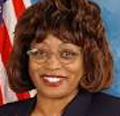
U.S. Rep. Corrine Brown
Under the original map, the 5th District, held by Democratic U.S. Rep Corrine Brown of Jacksonville, was a majority black district that meandered from Jacksonville over to Gainesville and then down to Orlando, taking in heavily black precincts to create a black majority At one point, it is the width of a highway.
In the new map, the 5th District still runs from Jacksonville to Orlando, but some black voters in the Orlando area are shifted to adjacent districts and some more rural areas are added south of Jacksonville to make the district geographically wider. The new district is 48 percent black.
Brown joined with Republicans in supporting the original map, which she said met the Voting Rights Act’s requirement to create majority minority districts wherever possible.
The new map also makes changes to the 10th District, held by U.S. Rep. Daniel Webster, and the adjacent 7th District, held by U.S. Rep. John Mica, that will make them less Republican. Because House districts must have equal population, the changes to those three districts required slight changes in seven surrounding districts in central Florida.
The League of Women Voters and the other plaintiffs are criticizing the new map, saying it doesn’t fix the geographic problems with the 5th District. They have proposed a different map that would have the 5th District running due west from Jacksonville past Tallahassee — a change that would require a wholesale revision of the map statewide.
The Democratic alternative rejected by the legislature doesn’t go as far as the plaintiff’s map, but it would have made the 7th and 10th districts more evenly split between Republicans and Democrats.
Although Florida is evenly divided politically, Republicans enjoy a 17-10 advantage in the state’s congressional delegation, largely due to their control of the redistricting process.
In his ruling striking down the map, Lewis was highly critical of the behind-the-scenes role Republican political consultants played in the redistricting process, which was supposed to be apolitical.
“They made a mockery of the legislature’s proclaimed transparent and open process of redistricting by doing all of this in the shadow of that process, utilizing the access it gave them to the decision makers, but going to great lengths to conceal from the public their plan and their participation in it,” Lewis said.
Tennessee primary: Lamar Alexander wins, Scott DesJarlais in cliffhanger
Alexander beats back Tea Party U.S. Senate challenger; DesJarlais battles to keep U.S. House seat amid messy personal scandal
♦By Rich Shumate, Chickenfriedpolitics.com editor
NASHVILLE (CFP) — U.S. Senator Lamar Alexander has taken a major step towards securing a third term by easily beating back a Tea Party-inspired GOP primary challenge from State Rep. Joe Carr.
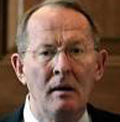
U.S. Senator Lamar Alexander
Alexander took 50 percent of the vote in the August 7 primary, where he faced Carr and five other challengers. Carr, who had the support of Tea Party and outside conservative groups that had targeted Alexander for defeat, took 41 percent.
Alexander was one of five sitting Southern Republican senators targeted in primaries this year. All five survived.
In a closely-fought Democratic primary, Gordon Ball, a former federal prosecutor, narrowly defeated Terry Adams, a Knoxville attorney, by less than 2,000 votes. Ball will face Alexander in November.
After a fractious primary in which half of the voters from his own party voted for someone else, Alexander, 74, sounded a note of conciliation in his victory speech at a Nashville pizza parlor, reaching out not only to his GOP opponents but also to Democrats and independents.
“After we make our speeches, we’re going to have to roll up our sleeves, get together, work with each other and get something done,” he said. “That’s the Tennessee way. That’s the American way.”
Meanwhile, in Tennessee’s 4th District, with some absentee and provisional ballots still to be counted, incumbent Republican U.S. Rep. Scott DesJarlais held a lead of just 35 votes over his primary challenger, State Senator Jim Tracy, amid a messy personal scandal that took a toll on DesJarlais’s popularity.
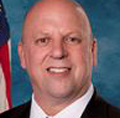
U.S. Rep. Scott DesJarlais
Given the district’s strong GOP tendencies, the GOP nominee will be favored for re-election in November over Democrat Lenda Sherrell, a retired accountant from Monteagle.
DesJarlais, 49, was facing voters for the first time since lurid details emerged from the case file of his bitter 2001 divorce from his first wife. In it, the congressman admitted having a string of extra-martial affairs and — perhaps even more damaging for an avowed right-to-life lawmaker — encouraging his then-wife to have two abortions.
DesJarlais (pronounced Dez-yar-lay), a medical doctor, also admitted having relationships with two female patients, which prompted the Tennessee State Board of Medical Examiners to reprimand him for unprofessional conduct and fine him $500.
Details about DesJarlais’s divorce became an issue in his contentious 2012 re-election campaign, which he won with just 56 percent of the vote. However, he successfully fought to prevent release of the full transcript of the case file until after the election.
 Chicken Fried Politics