
Home » U.S. Senate Races (Page 26)
Category Archives: U.S. Senate Races

Republican U.S. Senate incumbents trying to fight off Democratic challengers
Florida and North Carolina are Senate battlegrounds; Louisiana holds all-party primary for Vitter’s seat
♦By Rich Shumate, Chickenfriedpolitics.com editor
 (CFP) — Nine GOP-held Southern U.S. Senate seats are up for grabs in the November 8 election, with Republican incumbents heavily favored in six races.
The exceptions are Florida, where Republican U.S. Senator Marco Rubio is facing off against Democratic U.S. Rep. Patrick Murphy, and in North Carolina, where the GOP incumbent, U.S. Senator Richard Burr, is facing Deborah Ross, a former state legislator and Duke University law professor.
And in Louisiana, 24 candidates are running in an all-party “jungle” primary, with the top two vote-getters advancing to a December 10 runoff, which could potentially decide the balance of power in the Senate.
Pre-election polls have shown Republican State Treasurer John Kennedy in the lead, followed by Public Service Commissioner Foster Campbell, a Democrat; Republican U.S. Rep. Charles Boustany of Lafayette; and Democrat Caroline Fayard, a New Orleans lawyer.
If Kennedy and Boustany can both clear the runoff, the GOP would be guaranteed of keeping the seat, now held by U.S. Senator David Vitter. But if Campbell or Fayard can come through, the December 10 runoff will be the last word on Senate races this year — and, if the Senate is closely divided, decide which party controls the chamber.
In addition to Rubio and Burr, Republican incumbents are seeking re-election in Alabama, Arkansas, Georgia, Kentucky, Oklahoma and South Carolina.
All are heavily favored, although the race in Georgia between U.S. Senator Johnny Isakson and Democratic businessman Jim Barksdale is somewhat more competitive.
In Alabama, Richard Shelby faces Democrat Ron Crumpton, a marijuana rights activist; in Arkansas John Boozman is seeking a second term against Democrat Conner Eldridge, a former federal prosecutor from Fayetteville; and in Kentucky, Rand Paul is running against Lexington Mayor Jim Gray.
In Oklahoma, James Lankford faces Mike Workman, a Tulsa political consultant, and in South Carolina, Tim Scott, the only black Republican in the Senate, faces Democrat Thomas Dixon, a Charleston pastor.
Racist David Duke qualifies for Louisiana U.S. Senate debate
Debate on November 2 will take place at historically black Dillard University
♦By Rich Shumate, Chickenfriedpolitics.com editor
 NEW ORLEANS (CFP) — Racist David Duke will take the stage at an historically black university on November 2 to debate with five other Louisiana U.S. Senate candidates, after scoring high enough in a poll to qualify for the event.

State Treasurer John Kennedy
The poll, commissioned by debate Raycom Media, showed Republican State Treasurer John Kennedy and Democratic Public Service Commissioner Foster Campbell leading a crowded field of 24 candidates vying for the the open Senate seat in the Pelican State’s all-party “jungle” primary.
The top two vote-getters on November 8, regardless of party, will advance to a December 10 runoff.
Duke came in at 5.1 percent in the poll commissioned by Raycom, the sponsor of the debate at Dillard University in New Orleans, which was just above the 5 percent threshold set for candidates to qualify. Raycom confirmed to the Baton Rouge Advocate that, based on those poll results, it would invite Duke to the debate.
Raycom, based in Montgomery, Alabama, plans to air the debate on its television stations in Lake Charles, Baton Rouge, New Orleans and Shreveport.
Duke celebrated the news in a Tweet, in which he said, “I can’t wait to tell truth nobody else dares!”
Dillard, which rented space for the event to Raycom’s station in New Orleans, WVUE, said in a statement that the university “will work with WVUE to ensure that the event is secure and managed professionally, as it does with every event that occurs on our campus.”
The statement also said that WVUE is the “sole sponsor” of the event and that Dillard “does not endorse the candidacy of any of the candidates who will appear at this debate.”
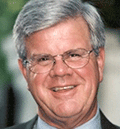
Public Service Commissioner Foster Campbell
The poll found Kennedy at 24 percent, followed by Campbell at 19 percent. Three candidates were in a statistical tie for third place: Democrat Caroline Fayard, a New Orleans lawyer (12 percent), and two sitting GOP U.S. House members, Charles Boustany of Layfayette (11 percent) and John Fleming of Minden (10 percent).
Among those not making the 5-percent cut were Joseph Cao, a Vietnamese-American Republican who represented the New Orleans area in Congress from 2009 to 2011, and Rob Maness, who made a spirited but unsuccessful Tea Party-backed bid for the Senate in 2014.
The seat is being vacated by Republican U.S. Senator David Vitter, who gave up his Senate seat to make an unsuccessful run for governor in 2015.
Rubio, Murphy to face off in Florida U.S. Senate race
Wasserman Schultz beats back Bernie-allied rival; Corrine Brown out
♦By Rich Shumate, Chickenfriedpolitics.com editor
 GAINESVILLE, Florida (CFP) — U.S. Senator Marco Rubio handily won renomination in Florida’s Republican primary and will face Democratic U.S. Rep. Patrick Murphy in a race that will help determine which party controls the Senate.
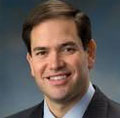
U.S. Senator Marco Rubio
Rubio took 72 percent in the August 30 vote, easily defeating businessman Carlos Beruff, who garnered just 18 percent. On the Democratic side, Murphy was the clear winner, taking 60 percent of the vote, compared to just 18 percent for his main challenger, U.S. Rep. Alan Grayson.
The bad news for Grayson continued, as his wife’s attempt to keep his 9th District U.S. House seat in the family sputtered in the Democratic primary.

U.S. Rep. Debbie Wasserman Schultz
Meanwhile, in South Florida’s 23rd District, Democratic U.S. Rep. Debbie Wasserman Schultz beat back a challenge from Tim Canova, turning aside an effort by angry Bernie Sanders supporters to force her from Congress over accusations that she, as chair of the Democratic National Committee, showed favoritism to Hillary Clinton in the presidential race.
Wasserman Schultz took 57 percent to 43 percent for Canova, who spent more than $3 million trying to unseat the veteran congresswoman.

U.S. Rep. Corrine Brown
However, another veteran Democrat was not as fortunate. U.S. Rep. Corrine Brown, who was indicted on corruption charges in July, was defeated in the 5th District primary by Al Lawson, a former state legislator from Tallahassee, in what was likely the last chapter in a 34-year-long political career.
Lawson won 48 percent to 40 percent for Brown.
A redraw of state’s congressional map, ordered by the Florida Supreme Court, substantially altered Brown’s district, forcing her to run in a swath of new territory outside of her Jacksonville base. Federal prosecutors have also accused Brown of conspiring with her chief of staff to convert a scholarship fund into a private slush fund used to pay for her political promotion and personal expenses. She has denied the charges.
Rubio initially decided to give up his Senate seat to pursue the Republican presidential nomination. But after his White House aspirations fizzled, he reversed course, prompting the departure of three of the four major candidates then in the race, all but Beruff.
Speaking to supporters in Kissimmee, the senator dismissed Murphy as an “old-fashioned liberal” handpicked for the Senate by Democratic leaders and a dilettante whose wealth family has given him “everything he’s every wanted.”
“If Patrick Murphy wants to be a U.S. Senator, he’s going to have to earn it by beating the son of a bartender and a maid who came to this country in search of a better life,” he said, employing details from his own biography that were a staple of his run for president.
But speaking to his supporters in Palm Beach County, Murphy criticized Rubio for his poor attendance in the Senate while he was running for president.
“Marco Rubio is the worst of Washington because he puts himself first every time,” Murphy said. “He gave up on his job. He gave up on Florida.”
Murphy also pounced on Rubio’s statement on CNN a day before the primary that he would not commit to serving his full Senate term, saying “no one can make that commitment because you don’t know what the future’s going hold in your life personally or politically.”
Murphy retorted: “Guess what, senator. I’ve got two words for you. I can.”
In his battle against Grayson, Murphy — who was a registered Republican until 2012, when he switched parties to run for Congress — had the backing of virtually all of the Democratic establishment, including the Democratic Senatorial Campaign Committee.
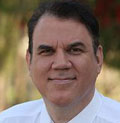
U.S. Rep. Alan Grayson
Party leaders were fearful that a victory by the outspoken Grayson — who regularly subjects reporters to profanity-laden tirades and once had to apologize after calling a female lobbyist “a K Street whore” — would spell disaster in November.
During the primary campaign, Grayson also faced domestic abuse allegations made by his ex-wife. He denied ever hitting her, but the story prompted two liberal groups — Democracy for America and the Progressive Change Campaign Committee — to reverse their endorsements.
In the end, Grayson not only lost to Murphy by more than 40 points but also barely edged out a lesser known candidate, political newcomer Pam Keith, for second place. Keith had snagged a surprise endorsement from one of Florida’s largest newspapers, The Miami Herald.
In addition to helping torpedo Brown in the 5th District, the new map made the 2nd District, which takes in the middle of the Florida Panhandle, more Republican, prompting Democratic U.S. Rep. Gwen Graham to retire.
After a nasty campaign with substantial spending by outside groups, Republicans chose Neal Dunn, a Panama City urologist, over Mary Thomas, a state government lawyer from Tallahassee. Dunn took 41 percent to 39 percent for Thomas, who was trying to become the first Indian-American woman ever elected to Congress.
After Grayson gave up his 9th District to run for the Senate, both his wife, Dena Grayson, and one of his top aides, Susannah Randolph, launched campaigns to succeed him. But State Senator Darren Soto beat them both in the Democratic primary, which is tantamount to election in the heavily Democratic Orlando-based district.
Grayson took 36 percent of the vote, compared to 18 percent each for Randolph and Dina Grayson.
In the 18th District, which Murphy gave up to run for the Senate, Democrats selected Randy Perkins, a multimillionaire businessman from Delray Beach, while Republicans went with Brian Mast, an Army veteran who lost both his legs while serving as a bomb disposal specialist in Afghanistan.
The 18th District, which takes in parts of Palm Beach County and the Treasure Coast, is likely to be a genuine toss-up in November.
The 26th District, which takes in the Florida Keys and southwest Miami-Dade County, will feature a rematch between Republican U.S. Rep. Carlos Curbelo and the man he beat in 2014, former Democratic U.S. Rep. Joe Garcia.
While Curbelo was unopposed in the GOP primary, Garcia eaked out an 800-vote win over Annette Taddeo in the Democratic primary.
Poll: Clinton up by 9 points in Florida; Rubio holds his own in Senate race
Trump hurt by huge gap with minorities, women
♦By Rich Shumate, Chickenfriedpolitics.com editor
GAINESVILLE, Florida (CFP) — Buoyed by a whopping 50-point margin among minority voters, Democrat Hillary Clinton has opened up a comfortable lead in the key swing state of Florida, a new poll finds.
But a Monmouth University survey released August 16 found that Clinton’s coattails were not reaching down to the U.S. Senate race, where Republican Marco Rubio held a small lead over both of his possible Democratic opponents.
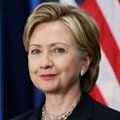
Democratic nominee Hillary Clinton
Clinton was the choice of 48 percent of likely voters in the poll, compared to 39 percent for Republican Donald Trump, 6 percent for Libertarian Gary Johnson and 1 percent for Green Party candidate Jill Stein.
Clinton’s lead of 9 points was well outside the poll’s margin of error of plus or minus 4.9 percentage points.
Florida, with its 29 electoral votes, is very nearly a must-win state for both Clinton and Trump. No candidate has won the White House without carrying the Sunshine State since 1992. No Republican has won without it since 1924.
Key demographic results within the polling data show that Clinton’s lead is largely the result of Trump’s weak support among minorities and women.
Trump was the choice of just 19 percent of black, Latino and Asian voters in the poll; Clinton ran 50 points ahead, at 69 percent.
Clinton also held a 30-point lead among women, a gap twice as large as Trump’s 15-point lead among men. The poll also showed Clinton with a 10-point lead among white women, a group Republican Mitt Romney carried by 17 points in a losing effort in 2012.
Trump’s lead among white voters in the poll was 14 points. By contrast, Romney carried white voters by 24 points in 2014.
Trump also continued to suffer from lingering dissent to his nomination within the GOP. Just 79 percent of Florida Republicans polled said they would support Trump, and he was losing 12 percent of the GOP vote to Clinton.
Clinton did much better among Florida Democrats, getting 94 percent support. Just 4 percent of Democrats in the poll said they would vote for Trump. Clinton also held a 17-point among voters who identify as independents.
U.S. Senator Marco Rubio
In the U.S. Senate race, the poll showed that Rubio–who changed his mind and opted to run for re-election after losing to Trump in the GOP primaries–is outperforming the top of his party’s ticket.
Rubio polled 48 percent to 43 percent for Democratic U.S. Rep. Patrick Murphy, who is running against U.S. Rep. Alan Grayson for his party’s Senate nomination. Rubio’s lead over Grayson was larger, 50 percent to 39 percent.
Grayson and Murphy will square off in an August 30 primary, in which Rubio will also face businessman Carlos Beruff.
Open Louisiana U.S. Senate primary draws 24 candidates
Race will include two sitting members of Congress and white racist David Duke
♦By Rich Shumate, Chickenfriedpolitics.com editor
NEW ORLEANS (CFP) — A gaggle of 24 candidates have qualified for the primary for an open U.S. Senate seat in Louisiana, which could play a pivotal role in the battle for Senate control.
The list of those who qualified by the July 22 deadline included three current or former members of Congress, two state officeholders and white supremacist David Duke, who filed to run as a Republican.
In Louisiana, all candidates, regardless of party, run in a Nov. 8 primary, with the top two vote-getters advancing to a December runoff if no one clears 50 percent.
The Louisiana race, then, could become the last and deciding contest for control of the Senate.
In all, nine Republicans filed, along with seven Democrats, two Libertarians and six without a party affiliation.
With so many candidates in the race, the outcome is uncertain. But Democrats hoping to overcome the Pelican State’s Republican tendencies may benefit by having fewer big name candidates in the race to divide their vote.
On the Democratic side, Public Service Commissioner Foster Campbell and Caroline Fayard, a New Orleans lawyer, head the field.
Campbell made a losing bid for governor in 2007, while Fayard was the unsuccessful Democratic candidate in a special election for lieutenant governor in 2010.
The Republican side of the ballot is much more crowded. Two sitting U.S. House members–Charles Boustany of Layfayette and John Fleming of Minden–gave up their seats to pursue the open Senate seat.
Joining them are State Treasurer John Kennedy, a former Democrat who lost Senate races in 2004 and 2008; Joseph Cao, a Vietnamese-American who represented the New Orleans area in Congress from 2009 to 2011; and Rob Maness, who made a spirited but unsuccessful Tea Party-backed bid for the Senate in 2014.
In an announcement video on his website, Duke, making his third try for the Senate, said he was running to represent “European Americans.” He also claimed credit for introducing the phrase “America First” into national politics, which has become a mainstay of Donald Trump’s presidential campaign.
“I’m overjoyed to see Donald Trump, and most Americans, embrace most of the issues that I’ve championed for years,” he said.
The Louisiana seat opened up after U.S. Senator David Vitter retired to make an unsuccessful bid for governor in 2015.
 Chicken Fried Politics