
Home » U.S. Senate Races (Page 28)
Category Archives: U.S. Senate Races

U.S. Senator Rand Paul gets well-heeled challenger in Kentucky
Lexington Mayor Jim Gray’s entry into race may increase pressure on Paul to drop presidential bid
♦By Rich Shumate, Chickenfriedpolitics.com editor
 FRANKFORT, Kentucky (CFP) — As he battles to keep his presidential hopes alive, U.S. Senator Rand Paul has drawn a high-profile, independently wealthy Democratic challenger in his Senate re-election challenge back home in Kentucky.

Lexington Mayor Jim Gray
Lexington Mayor Jim Gray, chairman of his family’s international construction company, announced January 26 that he would challenge Paul, a first-term Republican who is simultaneously seeking the GOP presidential nomination and re-election to the Senate.
“Washington offers dysfunction and gridlock, and Senator Paul confuses talking with getting results,” Gray said in a video announcing his campaign. “He offers ideas that will weaken our country at home and abroad, and he puts himself and his own ambitions above Kentucky.
In 2014, Gray, 62, was elected to his second term as mayor of Lexington, the commonwealth’s second-largest city. He is one of seven Democrats who filed to run against Paul and–given his political profile and ability to self-fund his campaign–is the prohibitive favorite to be Paul’s opponent in November.
However, Gray is also openly gay, a probable complication in a state where Rowan County Clerk Kim Davis became a cause celebre after she want to jail last year for refusing to issue marriage licenses to same-sex couples.
Democrats have not won a Senate race in Kentucky since 1992. But Paul’s decision to run for two offices at once has put the Bluegrass State on the Democrats’ radar.
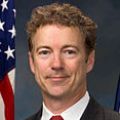
U.S. Senator Rand Paul
While the Kentucky GOP changed its presidential nominating contest to a caucus to facilitate Paul’s political double-dipping, he has been under increasing pressure from within his party to abandon his White House quest and focus on the Senate race–pressure that is likely to intensify now that he has a potentially formidable Democratic challenger.
The latest national polls in the Republican presidential contest show Paul mired in single digits.
Paul, 53, an eye surgeon from Bowling Green, won election to the Senate in 2010 with Tea Party support, besting a candidate backed by Kentucky’s Republican establishment. He is the son of former U.S. Rep. Ron Paul of Texas, who made three unsuccessful tries for the White House.
Kentucky GOP switches from presidential primary to caucus to help Rand Paul
Decision means Paul will be able to pursue the White House and re-election to the Senate simultaneously
♦By Rich Shumate, Chickenfriedpolitics.com editor
FRANKFORT, Kentucky (CFP) — With U.S. Senator Rand Paul looking on, Kentucky’s Republican central committee voted to switch the presidential contest in the Bluegrass State from a May primary to a March caucus, clearing the way for Paul to run for the Senate and the White House at the same time.
U.S. Senator Rand Paul
However, the central committee made the switch contingent on Paul contributing at least $250,000 to defray expenses associated with the caucus, something Paul has promised to do. The committee set a deadline of Sept. 18 for the payment to be made.
The vote, held by secret ballot, was 111-36, more than the two-thirds majority necessary to make the change. After the vote was announced, Paul’s supporters stood and cheered.
Paul release a statement saying “holding a caucus will ensure that Kentucky is relevant and participates early in the process.”
“I am also grateful for the Republican Party’s trust in me, allowing me to run for re-election to the U.S. Senate and seek the nomination for the presidency of the United States,” he said.
The change was necessary because Kentucky law does not allow the same candidate to appear on the ballot twice in the same election. If the Kentucky GOP held a primary, Paul would have faced a choice of whether to seek a second term in the Senate or opt out of a presidential primary contest he is likely to win. The caucus is also earlier in the presidential nominating calendar, which could boost his White House prospects.
Kentucky Democrats, who control the state House and the governorship, have blocked efforts by Paul’s allies to change the state law against political double-dipping. While the change fixes Paul’s problem for the primary, he could still face the same issue in November 2016 if he wins the GOP presidential nomination.
Paul maintains the law is unconstitutional because of a 1995 Supreme Court ruling that a state can’t impose its own restrictions in races for federal offices. He had hinted that he would a federal lawsuit if any attempt is made to keep him from seeking both offices at the same time.
The switch to a caucus was criticized by the Bluegrass State’s top elections official, Democratic Secretary of State Alison Lundergan Grimes, who issued a statement saying “it is unfortunate that today a few insiders were able to disenfranchise over 1.2 million Republican voters.”
“One candidate should not be able to buy an election. Democracy demands that all eligible Kentuckians be a part of the election process. That didn’t happen today and won’t happen with a caucus.
There is historical precedent for running for both the presidency or vice presidency and Congress at the same time, most recently in 2012 when U.S. Rep. Paul Ryan, the GOP’s vice presidential nominee, was re-elected to his House seat in Wisconsin.
Vice President Joe Biden also won Senate re-election in 2008 on the same day he was elected vice president, as did Lyndon Johnson in 1960.
The only other senator up for re-election in 2016 running for president, U.S. Senator Marco Rubio of Florida, is giving up his Senate seat.
GOP U.S. Rep. David Jolly, facing a newly drawn district, switches to U.S. Senate race
Decision comes after the Florida Supreme Court orders changes likely to make Jolly’s district more Democratic
♦By Rich Shumate, Chickenfriedpolitics.com editor
 ST. PETERSBURG, Florida (CFP) — In the wake of a Florida Supreme Court decision ordering changes in the state’s U.S. House map, Republican U.S. Rep. David Jolly has decided to jump into the open U.S. Senate seat in 2016, rather than face re-election in what will likely be a more Democratic district.
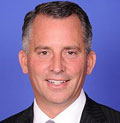
U.S. Rep. David Jolly
In a statement announcing his campaign July 20, Jolly, 42, who won his House seat in a special election in 2014, said he would run “on an unwavering platform that will reject the politics of division and class warfare that have defined the current administration.”
Lolly also called for creating “a new economy founded on the principle that individuals and families, not government bureaucrats, create success.”
Jolly’s entry into the Senate race adds to a crowded Republican field that already includes U.S. Rep. Ron DeSantis and Lieutenant Governor Carlos López-Cantera.
Jolly currently represents Florida’s 13th District seat in Pinellas County, in the Tampa Bay area. He succeeded the late GOP U.S. Rep. C.W. “Bill” Young, who held the seat for more than 42 years before his death in 2013.
Jolly’s win frustrated Democratic hopes of picking up one of only three Republican-held seats in the South that President Obama carried in 2012. He went on to re-election in the 2014 general election and was expected to run again in 2016.
But the Florida Supreme Court threw a monkey wrench into those plans July 9, ruling that the Republican-controlled state legislature unconstitutionally gerrymandered the map to help the GOP’s electoral prospects. The high court ordered the state legislature to redraw eight districts, including Jolly’s.
The Supreme Court objected to the legislature’s decision to shift African-American voters in St. Petersburg into the neighboring 14th District, across the bay in Tampa, to make the 13th more Republican-friendly, which justices said violated a requirement that districts be geographically compact wherever possible.
Shifting those voters back would have made Jolly’s swing district harder to retain.
The Supreme Court’s ruling might also force another U.S. House member into the Senate race on the Democratic side.
The court ruled that the 5th District — an oddly shaped district that snakes through northeast and central Florida from Jacksonville to Orlando to pick up black voters and is at one point the width of a highway — must be redrawn in an east-west configuration from Jacksonville towards the Panhandle.
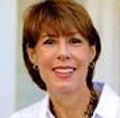
U.S. Rep. Gwen Graham
That change is likely to shift the Panhandle-based 2nd District , held by U.S. Rep. Gwen Graham, D-Tallahassee, to the south, which would make it more Republican and more difficult for her to carry. That prompted Democratic strategists to talk up a possible Graham Senate bid, although the congresswoman herself has remained non-committal.
Former Florida Governor Charlie Crist has announced he will seek the Democratic nomination for Jolly’s seat if the legislature, as expected, draws his St. Petersburg home into the district.
The Republican-turned-indepenent-turned-Democrat lost statewide races for the U.S. Senate in 2012 and for governor in 2014.
U.S. Rep. Alan Grayson off and running for Senate seat in Florida
Outspoken liberal firebrand’s campaign sets up a battle royale in the Democratic primary
♦By Rich Shumate, Chickenfriedpolitics.com editor
 ORLANDO (CFP) — U.S. Rep. Alan Grayson, the firebrand liberal notorious for caustic comments about Republicans, has announced his candidacy for the U.S. Senate in 2016, setting up what is likely to be a bruising Democratic primary battle in the Sunshine State.
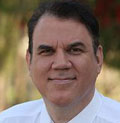
U.S. Rep. Alan Grayson
“I am unbought and unbossed,” Grayson, D-Orlando, said in a video announcing his Senate bid posted to his campaign website July 9. “I own nothing to anyone but the people.”
Grayson is running in defiance of Democratic party leaders, who are backing moderate U.S. Rep. Patrick Murphy, D-Jupiter and had hoped to avoid what is likely to be a divisive Democratic primary.
On the day of his announcement, Grayson provided a flavor of what’s to come in an interview with WKMG-TV in Orlando, in which he accused Murphy of being a closet Republican and said the Senate race “is going to live until the end of time.”
“People understand what I stand for. Patrick wants to cut Social Security, cut Medicare, and Patrick gave $2,300 to Mitt Romney’s campaign,” he said. “Patrick’s running in the wrong primary. He should be running as a Republican because that’s who he really is.”
To bring home the flavor of his political persona, Grayson is calling his campaign website SenatorWithGuts.com.
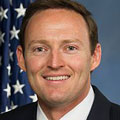
U.S. Rep. Patrick Murphy
For his part, Murphy greeted Grayson’s announcement by issuing a statement saying he was looking forward “to a clean, honest discussion of the issues in this primary.”
Grayson, 57, a Harvard-educated lawyer, burst onto the national scene after his election to Congress in 2008 with a floor speech in which he said the GOP’s health care plan was for the uninsured “to die quickly.” He has called Republicans “knuckle-dragging Neanderthals,” likened the Tea Party to the Ku Klux Klan and once compared former Vice President Dick Cheney to a vampire.
In 2009, he had to apologize after calling a female lobbyist “a K Street whore.” He is also known to subject reporters to profanity-laden tirades for stories he doesn’t like.
Grayson’s controversial profile cost him his House seat in 2010, a campaign in which he referred to his opponent, U.S. Rep. Daniel Webster, as “Taliban Dan” in a television ad. But Grayson returned to Congress in 2012, winning in a newly created Orlando-area district.
In addition to his hyperbolic comments, Grayson is also involved in a nasty divorce with his wife of 25 years, Lolita, whom he accused of bigamy and tried to have arrested for using a joint credit card to buy groceries. Lolita Grayson has charged that the congressman was unfaithful and abusive.
In his kickoff announcement, Grayson took an unabashed liberal line, calling for ending taxes on Social Security benefits, expanding Medicare to cover dental and vision care and ensuring that “every job should provide enough money to become part of the middle class.”
The Senate seat opened up when Republican U.S. Senator Marco Rubio decided to run for president. Democratic leaders are fearful that Grayson’s is too controversial and too liberal to win a statewide race in Florida — squandering an opportunity to pick up a seat that is vital to the party’s hopes of taking back the Senate.
The Democratic Senatorial Campaign Committee is backing Murphy, 32, who was a registered Republican until he switched parties to run for the House in 2012. He was re-elected in 2014 with nearly 60 percent of the vote in a competitive district.
On the Republican side, U.S. Rep. Ron DeSantis has jumped into the Senate race, and Lieutenant Governor Carlos López-Cantera is also expected to run.
Georgia U.S. Senator Johnny Isakson announces he has Parkinson’s disease
Despite the diagnosis, the Republican lawmaker plans to run again in 2016
♦By Rich Shumate, Chickenfriedpolitics.com editor
 ATLANTA (CFP) — U.S. Senator Johnny Isakson has publicly disclosed that he is suffering from Parkinson’s disease, but the Georgia Republican says he still plans to run for a third term in 2016.
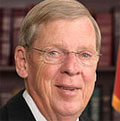
U.S. Senator Johnny Isakson
“My diagnosis has not impacted my ability to represent the state of Georgia in the U.S. Senate,” Isakson said in a June 10 statement. “I am busier and have more responsibility today than ever before in my political career, and I couldn’t be happier about that.”
“I am eager to take my record of results to the voters of Georgia as I run for re-election in 2016.”
Isakson, 70, who was first elected to the Senate in 2004, said he was diagnosed with Parkinson’s disease, a progressive and potentially debilitating neurological disorder, in 2013. He said he is still in the early stages of the disease “and my main symptoms are the stiffness in my left arm and a slowed, shuffling gait.”
Isakson’s office released a statement from his Georgia-based neurologist, Dr. Thomas Holmes, saying “I believe he is fully capable of continuing to perform his duties as a U.S. senator, and I believe he is fully capable of running for re-election and serving for another term.”
Prior to disclosure of his diagnosis, Isakson was considered a prohibitive favorite for re-election in 2016. Georgia trends strongly Republican in statewide races, and a May poll put Isakson’s approval rating at a whopping 71 percent among state GOP voters.
In his statement, Isakson said he “wrestled” with whether to disclose his illness publicly.
“In the end, I decided I should handle my personal health challenge with the same transparency that I have championed throughout my career,” he said.
Isakson came to the Senate after a long career in the Georgia legislature, where he rose to the position of House minority leader.
After failed campaigns for the Peach State’s governorship in 1990 and the U.S. Senate in 1996, he was elected to the U.S. House in 1999, replacing former House Speaker Newt Gingrich after Gingrich unexpectedly resigned. He rose to the Senate after Democrat Zell Miller decided to retire in 2004.
Isakson is chairman of two Senate committees, Ethics and Veterans Affairs.
 Chicken Fried Politics