
Home » Virginia (Page 15)
Category Archives: Virginia

State of the Races: U.S. House 2016
Only 11 seats are in play across the region; Democrats may make small gains
♦By Rich Shumate, Chickenfriedpolitics.com editor
 (CFP) — Heading toward the November election, just 11 of the South’s 154 U.S. House seats look to be at all in play, a measly 7 percent.
Indeed, in 10 states, no seats are likely to change parties, although results from Louisiana’s late November primary may add to the list. In three of the four states with seats in play–North Carolina, Florida and Virginia–the competitive races are largely the result of new court-ordered House maps, which have disturbed the political equilibrium.
Currently, Republicans hold 116 seats in the South, compared to just 38 for Democrats, or about 75 percent. That GOP dominance is unlikely to budge much.
Overall, Democrats appear poised to pick up at least two seats in Florida and one in Virginia, while Republicans are favored to pick up at least one seat in Florida. There are three seats–two in Florida and one in Texas–that are out-and-out toss-ups. Thus, a net gain of five seats for Democrats in the South would be a good night.
Here are the 11 races to watch:

Dunn
Florida 2: This seat, anchored in the Florida Panhandle around Tallahassee, is currently held by Democratic U.S. Rep. Gwen Graham. In redrawing the Sunshine State’s map, the Florida Supreme Court removed a chunk of black voters and part of Tallahassee from the district in order to redraw the adjacent 5th District, making what had been a swing seat substantially more Republican. Graham, the only Democrat to take away a Republican seat anywhere in the South in 2014, looked at her odds and decided not to run again, for good reason. Republicans nominated Panama City urologist Neal Dunn, who should have little problem here. RATING: GAIN GOP

Lawson
Florida 5: This seat, held by Democratic U.S. Rep. Corrine Brown, was the primary offender in the Supreme Court ruling that the House map was unconstitutional. Over Brown’s strenuous objections, the justices ordered an extreme makeover; the district now starts in Jacksonville and heads due west to Tallahassee, making it less black and more Republican. Brown, who has been indicted on federal corruption charges, was bounced in the primary by Al Lawson, a former state lawmaker from Tallahassee. The GOP had some hope of a takeaway with Brown in the race, but those hopes were likely dashed with her primary loss. RATING: PROBABLY DEM

Murphy

Mica
Florida 7: Republican U.S. Rep. John Mica is running again in this district in suburban Orlando. But he now has some of the Democratic voters who used to be in Brown’s 5th District, making this district much less safe that it was. He will face political newcomer Stephanie Murphy, a college professor and former national security professional, who was the only Democrat to file against Mica. RATING: PROBABLY GOP

Demings
Florida 10: This Orlando-area district, now held by Republican U.S. Rep. Daniel Webster, was made substantially more Democratic in the redraw–so much so that Webster opted to run for re-election in the adjacent 11th District, where U.S. Rep. Rich Nugent is retiring. Democrats nominated former Orlando Police Chief Val Demings, who should have little problem in November. RATING: GAIN DEM

Crist

Jolly
Florida 13: This swing district in the Tampa Bay area will feature a high voltage smackdown between Republican U.S. Rep. David Jolly and former Florida Governor Charlie Crist, the Republican-turned-independent-turned-Democrat who is trying to make a political comeback after losing the governor’s race in 2014. The redraw of Florida’s map added a portion of St. Petersburg with a large minority population to this district, making it more Democratic. Facing long odds, Jolly first opted to run for the U.S. Senate before deciding to try to keep his seat. With Jolly out, this would have been a Democratic pick-up. That’s still probable but much less certain with the incumbent back in the race. RATING: PROBABLY DEM

Perkins

Mast
Florida 18: This seat, which includes part of Palm Beach County and the Treasure Coast, is a classic swing district now held by Democratic U.S. Rep. Patrick Murphy, who gave it up to run for the U.S. Senate. Democrats selected Randy Perkins, a multimillionaire businessman from Delray Beach, while Republicans went with Brian Mast, an Army veteran who lost both his legs while serving as a bomb disposal specialist in Afghanistan. Both are political newcomers in what is likely to be a high-profile fight to the finish. RATING: TOSS-UP

Garcia

Curbelo
Florida 26: Like the 18th District, this seat, which includes southwest Miami-Dade County and the Florida Keys, has gone back and forth between the parties in recent cycles. The incumbent, Republican U.S. Rep. Carlos Curbelo, will face a rematch against the man he beat by less than 5,800 votes in 2014, former Democratic U.S. Rep. Joe Garcia. RATING: TOSS-UP

Gallego

Hurd
Texas 23: This massive district, which stretches across a vast expanse of West Texas from the San Antonio suburbs to near El Paso, has changed hands in the last three elections. The incumbent is U.S. Rep. Will Hurd, who is that rarest of creatures, a black Republican representing a majority Latino district. His Democratic challenger is the man Hurd beat in 2014, former U.S. Rep. Pete Gallego. Hurd’s winning margin last time was just 2,400 votes, indicating just how equally divided this district is. With a 55 percent Latino population and Donald Trump at the head of the GOP ticket, Hurd may be battling for his life. RATING: TOSS-UP

McEachin

Wade
Virginia 4: A new map drawn by a federal court added Richmond and Petersburg to this southeast Virginia district, making it substantially more Democratic. The incumbent, Republican U.S. Rep. Randy Forbes, left this seat to run in the redrawn 2nd District, leaving an open seat that’s ripe for a Democratic pick-up. Republican Henrico County Sheriff Mike Wade will face off against Democratic State Senator Donald McEachin, also of Henrico County. A win by McEachin in the redrawn district would add a second African-American congressman to the state’s delegation. RATING: GAIN DEM

Dittmar

Garrett
Virginia 5: Democrats have hopes of taking this seat, which is open because of the retirement of Republican U.S. Rep. Robert Hurt. But this district, which stretches through central Virginia from the North Carolina border to the Washington, D.C. suburbs, has a Republican lean. GOP State Senator Tom Garrett from Buckingham County is facing Democrat Jane Dittmar, the former chair of the Albermarle County Board of Supervisors. RATING: PROBABLY GOP

Comstock

Bennett
Virginia 10: This district, which starts in the western D.C. suburbs and stretches out to West Virginia, is held by Republican U.S. Rep. Barbara Comstock and is at the top of the Democrats’ wish list. Although Comstock won handily in 2014, this is a district full of suburban swing voters who Democrats are hoping will be turned off by a Trump-led GOP ticket. She faces Democrat LuAnn Bennett, a real estate developer who is the ex-wife of former U.S. Rep. Jim Moran. RATING: PROBABLY GOP
Report: Trump nomination opens up Southern possibilities for Clinton
Cook Political Report moves projections for four Southern states toward the Democrats
 WASHINGTON (CFP) — Now that Donald Trump has secured the Republican presidential nomination, the respected Cook Political Report is shifting its projections for four Southern states, with 73 electoral votes, toward Democrat Hillary Clinton.
The more pessimistic projections for Trump are due to his “historic unpopularity with wide swaths of the electorate,” according to the report.
The four Southern states where Clinton is projected to have increased opportunity are Florida, Georgia, North Carolina and Virginia. Those states are four of the five largest in the region, and all have large populations of suburban swing voters Clinton is expected to target.
Of the largest Southern states, only Texas remains solidly Republican, according to Cook. The remaining nine states in the South–Oklahoma, Arkansas, Louisiana, Alabama, Mississippi, Tennessee, South Carolina, Kentucky and West Virginia–are also still rated as solidly Republican.
After Trump became the presumptive nominee, the Cook report shifted its projections toward Clinton in 12 states. In only one state, Maine, did it project an increased opportunity for Trump.
Nationwide, states with a combined 309 electoral votes are projected as either solidly for or leaning toward Clinton, 40 more than she needs to win. By contrast, the states solidly behind or leaning toward Trump have just 190 electoral votes.
 Perhaps the most significant shift in Cook’s projections was for Florida, with 29 electoral votes, which went from a toss-up to leaning Democratic.
History shows how vital the Sunshine State is to any GOP presidential candidate: The last Republican to win the White House without carrying Florida was Calvin Coolidge way back in 1924. Five of the last six times a Democrat won, he carried Florida.
 The most surprising shift in the projections was for Georgia, with 16 electoral votes, which moved from solidly Republican to leaning Republican.
The last time a Democrat carried Georgia was in 1980, when native son Jimmy Carter was on the ballot. Republican Mitt Romney won it by eight points in 2012.
 The Cook report moved Virginia, with 13 electoral votes, from a toss-up to leaning toward Clinton. Although the Old Dominion became reliably Republican in presidential contests in the 1960s, Barack Obama won it in both 2008 and 2012 with a strong performance in the Washington, D.C. suburbs, something Clinton hopes to replicate.
 North Carolina, which had been leaning Republican, is also now a toss-up, according to Cook. The Tar Heel State has been a swing state in recent elections; Obama won it in 2008, but Romney took it back in 2012.
Obama’s victories show just how important keeping the South solidly Republican is for a GOP nominee. Winning just three Southern states in 2008, and just two in 2012, was enough for him to put the Electoral College out of reach for John McCain and Romney.
In 2000, George W. Bush took 168 electoral votes out of the South, more than 60 percent of what he needed to win. In 2012, Romney carried only 138, barely half of what he needed, forcing him to make up the differences in regions that were less Republican-friendly, which he failed to do.
An April Mason-Dixon poll of voters in Mississippi also illustrated the scope of Trump’s potential problems in the South. His lead over Clinton was within the margin of error, meaning that the race in the Magnolia State was a statistical dead heat.
If deep-red Mississippi were to be in play come November, the rest of the South would likely also be in play, which could mean a very long election night for Trump.
Trump, Clinton roll across the South on Super Tuesday
Trump carries five of seven Southern GOP primaries; Clinton takes six on Democratic side
SUPER TUESDAY SOUTHERN RESULTS
♦By Rich Shumate, Chickenfriedpolitics.com editor
 (CFP) — Donald Trump and Hillary Clinton rolled across the South on Super Tuesday, carrying 11 of the 14 primaries and the lion’s share of the delegates up for grabs.
The only outliers were Oklahoma, which both Trump and Clinton lost, and the Republican primary in Texas, which went for homestate U.S. Senator Ted Cruz
Trump and Clinton won Alabama, Arkansas, Georgia, Tennessee and Virginia in the March 1 vote. Clinton also won the Democratic primary in Texas
Super Tuesday was rough sledding for U.S. Senator Marco Rubio of Florida, who came in second place in Virginia and Georgia but could only manage a third-place finish in Alabama, Arkansas, Tennessee, Oklahoma and Texas.
In addition to winning Texas and Oklahoma, Cruz finished second to Trump in Alabama, Arkansas, Tennessee. He was third in Georgia and Virginia.
While Trump won most of the Super Tuesday primaries on the Republican side, he cleared 40 percent only one Southern state, Alabama, which he swept by 18 points.
Trump also notched double-digit wins in Georgia and Tennessee. His victories in Arkansas and Virginia were narrow, 2 and 3 percent, respectively.
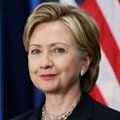
Former Secretary of State Hillary Clinton
Buoyed by her strong support among African-Americans, Clinton rolled up huge numbers across the South. With the exception of Oklahoma, which she lost by 10 points to U.S. Senator Bernie Sanders of Vermont, Clinton’s support ranged from 64 percent in Virginia to 78 percent in Alabama.
Her margin of victory ranged from 29 points in Virginia to a staggering 59 points in Alabama.
The next Southern stops in the presidential race are:
- Saturday, March 5: Kentucky (GOP caucus), Louisiana (primary)
- Tuesday, March 8: Mississippi (primary)
- Tuesday, March 15: Florida (primary); North Carolina (primary)
- Tuesday, May 19: West Virginia (primary)
Southern Super Tuesday Results
ALABAMA
Trump—43%
Cruz—21%
Rubio-19%
Carson–10%
Kasich–4%
Clinton–78%
Sanders–19%
ARKANSAS
Trump—33%
Cruz—31%
Rubio-25%
Carson–6%
Kasich–4%
Clinton–66%
Sanders–30%
GEORGIA
Trump—39%
Rubio–25%
Cruz–24%
Carson–6%
Kasich–6%
Clinton–71%
Sanders–28%
OKLAHOMA
Cruz—34%
Trump—28%
Rubio–26%
Carson–6%
Kasich–4%
Sanders–52%
Clinton–42%
TENNESSEE
Trump—39%
Cruz–25%
Rubio–21%
Carson–8%
Kasich–5%
Clinton–66%
Sanders–32%
TEXAS
Cruz–44%
Trump–27%
Rubio–18%
Carson–4%
Kasich–4%
Clinton–65%
Sanders–33%
VIRGINIA
Trump—35%
Rubio–32%
Cruz–17%
Kasich–9%
Carson–6%
Clinton–64%
Sanders–35%
Former U.S. Senator Jim Webb enters 2016 Democratic race with shot at Hillary Clinton
Webb, who left the Senate in 2012, says Americans “need to shake the hold” of political elites
♦By Rich Shumate, Chickenfriedpolitics.com editor
RICHMOND (CFP) — Saying the United States “needs a fresh approach to solving the problems that confront us and too often unnecessarily divide us,” former U.S. Senator Jim Webb of Virginia has announced that he will seek the 2016 Democratic presidential nomination.
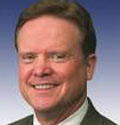
Former U.S. Senator Jim Webb
“I understand the odds, particularly in today’s political climate where fair debate is so often drowned out by huge sums of money,” Webb said in a message announcing his candidacy posted on his campaign website July 2. “Our fellow Americans need proven, experience leadership that can be trusted to move us forward.”
In his opening campaign salvo, Webb positioned himself as an outsider in the race, noting that “more than one candidate in this process intends to raise at least a billion dollars.”
“Highly paid political consultants are working to shape the ‘messaging’ of every major candidate,” he said. “We need to shake the hold of these shadow elites on our political process.”
Webb also took a direct swipe at the Democratic frontrunner, former Secretary of State Hillary Clinton, for her initial support of the 2003 invasion of Iraq, which Webb publicly opposed.
“Let me assure you, as president, I would not have urged an invasion of Iraq,” Webb said. “I warned in writing five months before that invasion that we do not belong as an occupying power in that part of the world and that this invasion would be a strategic blunder of historic proportions.”
When she ran for president in 2008, Clinton defended her vote authorizing the use of military force in Iraq — a vote which was used against her with great effect by Barack Obama. But in a 2014 book, she conceded that her vote was a mistake.
Webb also said he would have opposed military intervention in Libya in 2011 — which Obama authorized and Clinton supported as secretary of state — and that the subsequent terrorist attack on a U.S. diplomatic outpost in Benghazi on her watch “was inevitable.”
Webb, 69, is a U.S. Naval Academy graduate who served in Vietnam and was the secretary of the Navy during the Reagan administration. In 2006, he won a surprise victory to the Senate, narrowly ousting incumbent Republican George Allen in an election in which anti-war sentiment lifted Democratic fortunes.
In the Senate, Webb was considered a centrist who frequently bucked the party line, including an assertion that Obamacare would be a “disaster” for the Democratic Party. In 2012, facing the prospect of a contentious rematch with Allen, he decided not to run for re-election and left the Senate after a single term.
More recently, Webb sounded a cautionary note on the renewed drive to remove the Confederate battle emblem in the wake of the Charleston church shootings, saying in a Facebook post that “we all need to think through these issues with a care that recognizes the need for change but also respects the complicated history of the Civil War.”
“The Confederate Battle Flag has wrongly been used for racist and other purposes in recent decades. It should not be used in any way as a political symbol that divides us.”
Recent national polls have shown Webb’s support for the Democratic nomination in single digits, well behind Clinton and second-place U.S. Senator Bernie Sanders of Vermont.
In the message launching his campaign, Webb touted his sponsorship in the Senate of a GI Bill providing benefits to veterans of the Iraq and Afghanistan and his support for reform of the criminal justice system.
“It’s costing us billions of dollars. It’s wasting lives, often beginning at a very early age, creating career criminals rather than curing them. It’s not making our neighborhoods safer,” he said.
Like a number of other presidential contenders in both parties, Webb also sounded a note of economic populism.
“Let’s work to restore true economic fairness in this great country, starting with finding the right formula for growing our national economy while making our tax laws more balanced and increasing the negotiating leverage of our working people,” he said. “Our goal will be to increase the financial stability of the American workforce.”
Webb also said he would “work toward bringing the complex issue of immigration reform to a solution that respects the integrity of our legal traditions, while also recognizing the practical realities of a system that has been paralyzed by partisan debate.”
Webb is the only Southerner among the five candidates seeking the 2016 Democratic presidential nomination, although Clinton was a resident of Arkansas before moving to New York to run for the Senate in 2000.
Eight Southerners are seeking the Republican nomination: U.S. Senators Ted Cruz of Texas, Marco Rubio of Florida, Rand Paul of Kentucky and Lindsey Graham of South Carolina; former governors Jeb Bush of Florida, Mike Huckabee of Arkansas and Rick Perry of Texas; and Governor Bobby Jindal of Louisiana.
Southern Politics 2014: The Year In Review
2014 was a much better year for Republicans than for reality stars revamped as politicos
♦By Rich Shumate, Chickenfriedpolitics.com editor
A congressman man caught kissing. Reality stars trying to remake themselves as politicians. A snowstorm that threatened to torpedo a sitting governor. A top U.S. House leader unceremoniously unseated in a primary. And a flap over a fan during a heated debate.
Those were just some of the strange and unlikely events in Southern politics in 2014, a year that ended with Republicans roaring through the region like Sherman in reverse. Here are some of the memorable moments:
Loose Lips Sink More Than Ships — Republican U.S. Rep. Vance McAllister, a married Christian conservative from northeast Louisiana, was caught on videotape passionately kissing a female staffer who was, ahem, not his wife. He refused to resign but decided not to run for re-election. Then, he changed his mind and ran again, with his wife’s vocal support. But his constituents were less forgiving than the missus, and he finished a distant fourth in the primary.
Snowmageddon — When a January snowstorm paralyzed metro Atlanta, Republican Governor Nathan Deal took the heat for a sluggish state response and his initial attempt to shift the blame elsewhere. But Democratic hopes that this snowy debacle might bury Deal had melted by November, when he was comfortably re-elected.
Taking Aim At Obamacare — Alabama Republican U.S. House candidate Will Brooke posted a YouTube video, entitled “Let’s Do Some Damage,” in which he fired bullets into a copy of the Obamacare bill. The gambit gained him a bit of attention, though, alas, not enough to win the primary in his Birmingham-area district.
Strange Bedfellows — Bill Clinton and Rudy Giuliani both waded into the Florida governor’s race this year, cutting ads for Democrat Charlie Crist and Republican Rick Scott, respectively. However, their shoes were on the other feet in 2006, when Crist was a Republican (before becoming an independent and then a Democrat.) Back then, it was Crist who enjoyed Giuliani’s support, while Clinton backed his Democratic opponent.
Overheated Debate — Speaking of the Florida governor’s race, a televised debate between Crist and Scott came to an abrupt halt when Crist insisted on putting a small fan at his feet under the podium, in apparent violation of the debate rules. Scott first refused to take the stage until the fan was removed, but he eventually relented — after seven awkward minutes of scrambling by the debate moderators. In the end, Scott won a narrow victory.
Real Mean Politics — Three reality TV stars — American Idol Clay Aiken, former Louisiana Governor Edwin Edwards and former South Carolina Treasurer Thomas Ravenel — all vied for political office this year. But political reality proved harsh, as all three lost badly. However, Aiken is turning his unsuccessful U.S. House campaign in North Carolina into — wait for it — a new reality show.
Biggest Upset — In an outcome that shocked the political world, House Majority Leader Eric Cantor of Virginia lost his Richmond-area seat to Dave Brat, a little known college professor who ran at Cantor as a Tea Party insurgent. Weep not for Cantor, though. He bounced back with a job on Wall Street.
Worst Campaign — Texas State Senator Wendy Davis tried to parlay her filibuster against a bill restricting abortions in the Lone Star State into the governor’s mansion. But a series of gaffes — including questions about the veracity of her rags-to-riches story as a single trailer-park mom made good — sunk her chances, and she lost by a staggering 20 points.
Weirdest Campaign Appearance — Matt Bevin, who was challenging Senate Minority Leader Mitch McConnell in a GOP primary in Kentucky, appeared at a rally hosted by a group that supports legalizing cockfighting. While insisting he didn’t condone cockfighting, Bevin didn’t help himself when he told a radio reporter that the Founder Fathers were “very actively involved” in the blood sport. Perhaps not surprisingly, McConnell won rather handily.
Best Don Quixote Impression — Mississippi State Senator Chris McDaniel — peeved that he was defeated in a GOP U.S. Senate runoff by crossover votes from Democrats and independents — launched a three-month court fight to overturn the result. Alas, his windmill tilting came to naught, and U.S. Senator Thad Cochran kept the seat.
Best Houdini Impression — Republican U.S. Rep. Scott DesJarlais of Tennessee faced voters for the first time since lurid details emerged from his bitter 2001 divorce during which he admitted a string of extra-marital affairs and — perhaps even more damaging for an avowed right-to-life lawmaker — encouraging his first wife to have two abortions. However, GOP voters in his district proved surprisingly forgiving, handing DesJarlais a narrow primary victory. He went on to win re-election in November.
If You Can’t Override, Indict — Texas Governor Rick Perry was indicted on charges of abuse of power and coercion over his veto of a funding bill for an Austin prosecutor who refused his demand that she resign after being arrested for driving with a blood alcohol level nearly three times the legal limit. A defiant Perry vowed to fight the charges, noting that in America, “we settle our political differences at the ballot box,” rather than in criminal court.
Double Dipper — Kentucky U.S. Senator Rand Paul announced he would run for re-election in 2016, even as he is also considering a White House bid. One pesky little problem, though: Kentucky law doesn’t allow somebody to be on the ballot for two offices at once. Paul’s supporters are trying to find a way to work around that technicality.
Democrat Dam Breaks in Upper South — While the general election was grim for Democrats across the South, the news was especially depressing in Arkansas and West Virginia, which had been places where the party of Jackson was still competitive. In Arkansas, Republicans took all seven statewide constitutional offices and every congressional seat for the first time since Reconstruction. In West Virginia, the GOP took all three U.S. House seats and captured control of the state legislature for the first time since 1931.
“D” Is The New Scarlet Letter — Three sitting Southern Democratic U.S. senators — Mark Pryor of Arkansas, Kay Hagan of North Carolina and Mary Landrieu of Louisiana — all went down to defeat, paving the way for Republicans to take control of the Senate. Republicans also took away an open seat in West Virginia that they hadn’t won since 1942.
 Chicken Fried Politics