
Home » Virginia (Page 16)
Category Archives: Virginia

Former U.S. Senator Jim Webb opens presidential exploratory committee
Virginian is the first Democrat to make a move toward a nomination fight with Hillary Clinton
By Rich Shumate, Chickenfriedpolitics.com editor
 BURKE, Virginia (CFP) — Former U.S. Senator Jim Webb has launched an exploratory committee for the 2016 Democratic presidential nomination — a race that’s expected to be dominated by former Secretary of State Hillary Clinton.
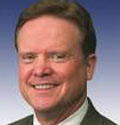
Former U.S. Senator Jim Webb
“We desperately need to fix our country and to reinforce the values that have sustained us, many of which have fallen by the wayside in the nasty debates of the last several years,” Webb said in an open letter published on his committee’s website.
“I look forward to listening and talking with more people in the coming months as I decide whether or not to run.”
Webb is the first Southerner in either party to make a move toward a presidential bid. However, at least six Southern Republicans are considering running, including U.S. Senators Rand Paul of Kentucky, Ted Cruz of Texas and Marco Rubio of Florida; Governors Bobby Jindal of Louisiana and Rick Perry of Texas; and former Florida Governor Jeb Bush.
Webb, 68, served as a Marine combat officer in Vietnam and was navy secretary during the Reagan administration. In 2006, he ran for the U.S. Senate and rode that year’s Democratic wave to a victory incumbent GOP U.S. Senator George Allen, which gave Democrats control over the upper chamber.
However, he opted not to seek re-election in 2012 after serving a single term.
While Webb was considered a Democratic moderate in the Senate, his exploratory committee announcement hinted that he may be planning to run against Clinton as an economic populist, noting that “the disparities between those at the very top and the rest of our society have only grown larger since the economic crash of late 2008 and early 2009.”
Webb also acknowledged that he faces “what many commentators see as nearly impossible odds” in securing the Democratic nomination.
“We are starting with very little funding and no full-time staff, but I’ve been here before,” he said. “In February 2006, I announced for the Senate only nine months before the election against an entrenched incumbent. We had no money and no staff. We were more than 30 points behind in the polls.”
Conservative Southern U.S. House members go down
Republicans make a net gain of four seats across the region
♦By Rich Shumate, Chickenfriedpolitics.com editor
 ELECTION CENTRAL (CFP) — Four embattled Democratic incumbents who represent conservative U.S. House districts lost their seats in the November 4 midterm election, while the GOP lost a seat in the Florida Panhandle.
The four Democrats — Nick Rahall in West Virginia, John Barrow in Georgia, Joe Garcia in Florida and Pete Gallego in Texas — all represented districts that Mitt Romney carried in 2012. The GOP also took an open Democrat-held seat in North Carolina where Romney also won.
With those wins, the GOP will hold a 112-39 advantage in Southern U.S. House seats come January.

U.S. House nominee Gwen Graham
The Democrats’ only good news came in Florida’s Tallahassee-centered 2nd District, where Gwen Graham, the daughter of former U.S. Senator Bob Graham, narrowly defeated Republican U.S. Rep. Steve Southerland by a margin of 50 percent to 49 percent.
Democrats had also targeted five open seats in Arkansas, Virginia and West Virginia. Republicans held all five.
Barrow, who represents Georgia’s 12th District, had survived four previous attempts by Republicans to push him from Congress, which included having his district gerrymandered twice by the state legislature. But the fifth time proved the charm as he lost to Republican Rick Allen by a margin of 55 percent to 45 percent.
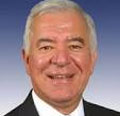
U.S. Rep. Nick Rahall
Despite 19 terms representing West Virginia in Congress, Rahall could not overcome President Obama’s marked unpopularity in the Mountaineer State, losing to State Senator Evan Jenkins in the 3rd District, by a margin of 55 percent to 45 percent. .
In Florida’s 26th District, Garcia lost to Republican Carlos Curbelo by a margin of 52 percent to 48 percent. This Latino-majority district, which stretches from southwest Miami-Dade County to Key West, has now switched hands in the three straight elections.
The GOP also won in Texas’s 23rd District, a vast district that sprawls across more than 500 miles of southwest Texas, from the suburbs of San Antonio to the suburbs of El Paso.
Will Hurd, a former CIA agent who, uniquely, was a black candidate running in a majority Latino district, defeated Gallego by a margin of 50 percent to 48 percent. This closely divided district has now switched hands three times since 2006.
Republicans also picked up a seat in North Carolina’s 7th District, which opened up when Democratic U.S. Rep. Mike McIntyre decided to retire. Former State Senator David Rouzer easily defeated New Hanover County Commissioner Jonathan Barfield.
Ten things to watch for in Tuesday’s election
U.S. Senate, U.S. House and governorships are on the ballot all across the South
By Rich Shumate, Chickenfriedpolitics.com editor
(CFP) — As voters go to the polls on Tuesday, here are 10 things to watch for in races across the South:
Will There Be A Peach State Runoff? — Georgia has a unique election law providing for a general election runoff if neither candidate gets an outright majority — a distinct possibility in a close race with a third-party candidate. Polls show that both the U.S. Senate race between Republican David Perdue and Democrat Michelle Nunn and the governor’s race between incumbent GOP Governor Nathan Deal and Democratic State Senator Jason Carter could be razor close. If that happens, a runoff in the governor’s race would be December 9, but the Senate race would not be settled until January 6.

U.S. Senator Mary Landrieu
Is Battle For Senate Control Headed To The Bayou? — Regardless what happens in Georgia, the in Louisiana between incumbent Democratic U.S. Senator Mary Landrieu and her GOP opponent, U.S. Rep. Bill Cassidy, is certain to head to a runoff. If Republicans need the Louisiana seat to gain control of the Senate, the Pelican State could become the focus of the American political world until the December 6 runoff.
How Much Of A Drag Is Obama? — The president’s approval ratings are anemic across the South, and none of the major Democratic candidates have brought him into the region to campaign. Linking each and every Democrat to Obama (and Obamacare) has been part and parcel of just about every Republican campaign. Tuesday will determine whether Obama’s unpopularity was a millstone that drowned Democratic prospects.
Will Florida Voters Resurrect Crist? — Charlie Crist’s political career looked to be all but over after a disastrous run for the U.S. Senate four years ago. But now he’s back — this time as a Democrat — and, if the polls are to be believed, within striking distance of the governor’s mansion once again. If Crist pulls it off, it will be a remarkable feat of political redemption.

Texas Attorney General Greg Abbott
How Big Will Abbott Win? — There’s no question that Republican Greg Abbott will win the governor’s race in Texas over Democratic State Senator Wendy Davis, who ran a remarkably inept campaign. The only question is how badly Davis goes down. Democrats talked a good game earlier this year about turning Texas blue. Tuesday’s results could show how distant that dream really is.
Fallin And Haley On National Stage? — Both Oklahoma Governor Mary Fallin and South Carolina Governor Nikki Haley are cruising to easy re-election wins, which could catapult them into the national conversation for 2016. Historically, being a governor has been the best way to become president, and perhaps one reason we haven’t had a female president is that no female governor has ever sought the White House. Tuesday’s results could start those kinds of conversations in Columbia and Oklahoma City.
Are Nunn And Graham Their Father’s Political Daughters? — Both Nunn, running for the U.S. Senate in Georgia, and Gwen Graham, who is seeking a U.S. House seat in Florida, are scions of prominent Democratic political families making their political debuts. Both have run strong campaigns in areas that lean Republican. So Tuesday could be a night of political deja vu.
How Many Southern Senate Seats Can Democrats Keep? — Right now, the Democrats have only eight out of 28 seats. They seem certain to lose one of those, in West Virginia, and three others — Arkansas, Louisiana and North Carolina — are in jeopardy. So the party of Jackson that once strode strong across the South could be reduced to having less than 15 percent of region’s Senate seats.
Has Georgia Turned Purple? — If Democrats pull off wins in the U.S. Senate and governor’s races in Georgia, they will no doubt crow about changing political winds in the Peach State. Tuesday’s results will show if Georgia, like Virginia before it, is becoming less reliably Republican, which would no doubt encourage Democrats to try to put the state into play in 2016.
Can Rahall Survive in West Virginia? — When Democratic U.S. Rep. Nick Rahall was first elected to Congress, bellbottoms were still the rage. But after 38 years in Washington, he is fighting for his political life in a state where opposition to the Obama administration’s environmental policies is dragging down the Democratic brand. If Rahall goes, the state’s entire House delegation will be in GOP hands, a sea change in a state that a generation ago leaned Democratic.
U.S. House Majority Leader Eric Cantor goes down in primary shocker
House’s No. 2 Republican ousted by his own voters in Virginia’s 7th District
♦By Rich Shumate, Chickenfriedpolitics.com editor
RICHMOND (CFP) — In one of 2014’s biggest election shockers, U.S. House Majority Leader Eric Cantor has lost a Republican primary to a challenger who derided him as a Washington insider.

GOP House nominee Dave Brat
Despite being outspent 25-to-1, Dave Brat of Henrico, an economics professor at Randolph-Macon College, took 56 percent of the June 10 vote in Virginia’s 7th District, compared to 44 percent for Cantor.
Cantor, widely seen as the heir apparent to House Speaker John Boehner, is now out of Congress, leaving an unexpected vacancy in the House leadership.
Brat began the race saying he wanted to be Cantor’s “term limit.” He also said the majority leader “has spent his time climbing the power ladder, making backroom deals and undermining conservative legislation.”

House Majority Leader Eric Cantor
Brat also criticized Cantor for supporting legislation that would have allowed some children of illegal immigrants to remain in the country. Cantor shot back, saying he was opposed to granting “amnesty” to illegal immigrants and touting his opposition to an immigration reform bill now stalled in the House.
Federal Election Commission reports also show Cantor raised and spent more than $5 million on the primary — 25 times what Brat managed to raise.
The 7th District takes in suburban Richmond and some rural areas to the north. The district is heavily Republican, making Brat the prohibitive favorite in November.
Ed Gillespie’s main GOP rival drops out of Virginia U.S. Senate race
Democratic U.S. Senator Mark Warner is endorsed by his Republican predecessor, John Warner
♦By Rich Shumate, Chickenfriedpolitics.com
RICHMOND (CFP) — High-powered Republican political operative Ed Gillespie is one step closer to his party’s U.S. Senate nomination in Virginia after one of his two GOP rivals dropped out of the race.

U.S. Senator Mark Warner
Meanwhile, the Democratic incumbent , U.S. Senator Mark Warner, got a high-profile Republican endorsement from a one-time political rival, former U.S. Senator John Warner.
John Warner said Mark Warner (no relation) “crosses the aisle and makes things work,”
“We come from the old school,” John Warner said in a statement. “The Senate works best when there’s collaborative effort between the two parties.”
Mark Warner unsuccessfully challenged John Warner for his Senate seat in 1996 and replaced him when he retired in 2008.
Over on the Republican side, just two weeks after Gillespie’s entry into the race, Howie Lind, a former military officer from McClean, called it quits, saying his fundraising had dried up.
“The financial resources to continue this campaign for a statewide office are not available since Ed Gillespie has joined the race,” Lind said in a statement. “Statewide campaigns are very expensive, and financial backing corresponds directly to political strength and the ability to win on election day.”
Lind, who entered the Senate race last June, had raised more than $300,000 — a respectable amount for someone who has never held political office but just a fraction of the more than $7 million that Mark Warner has raised.
With Lind out of the race, Gillespie’s only GOP opponent is Shak Hill, a former military officer from Centreville, who, like Lind, is running as an outsider and seeking Tea Party support.

Virginia Senate hopeful Ed Gillespie
Though he, too, has never held elected office, Gillespie, 52, is a consummate Washington insider. He was a communications strategist for President George W. Bush’s winning campaign in 2000 and went on to serve as head of the Republican National Committee and a White House counselor.
In April 2012, after Mitt Romney was finally able to claim the Republican presidential nomination, he signed on as a senior adviser to the Romney campaign.
Gillespie also has a long association with Karl Rove, the Bush political consigliere who has frequently drawn the ire of the party’s Tea Party wing. He held Rove create Crossroads GPS, the super-PAC that has backed establishment candidates facing Tea Party insurgencies.
Gillespie’s entry into the Senate race sets up a class establishment-versus-Tea Party struggle within Republican ranks in the Old Dominion.
Unlike in most states, Republicans in Virginia select their nominees with a party convention, rather than a primary. That could level the playing field for an outsider candidate who can develop a strong cadre of supporters to turn out at the convention, which will be held in June in Roanoke.
Both The Rothenberg Political Report and Cook Political Report classify Warner’s seat as safely in Democratic hands. Obama carried Virginia twice, and Democrats swept all three of the state’s top offices in the 2013 elections for the first time since 1969,
 Chicken Fried Politics