
Latest Posts
Latest Coverage
-
Symbolic solution in search of an actual problem
Support of 9 Southern Republicans for Respect for Marriage Act shows why Supreme Court isn’t about to ban same-sex marriage ♦By Rich Shumate, ChickenFriedPolitics.com editor…
-

West Virginia stubborn, or playing hard to get
U.S. Senator Joe Manchin pisses off his party yet again … to what end? ♦By Rich Shumate, ChickenFriedPolitics.com editor Also in this report: Atlanta DA…
-
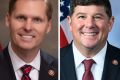
2 Mississippi Republican U.S. House members forced into runoffs after weak primary showings
Michael Guest narrowly trails challenger in 3rd District; Steven Palazzo clears just 32% in 4th District ♦By Rich Shumate, ChickenFriedPolitics.com editor JACKSON, Mississippi (CFP) –…
-
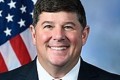
Mississippi Republican U.S. Rep. Steven Palazzo facing Tuesday primary fight amid ethics investigation
6 opponents hitting “No-Show Palazzo” over inattention to district, ethics problems ♦By Rich Shumate, ChickenFriedPolitics.com editor GULFPORT (CFP) — Mississippi U.S. Rep. Steven Palazzo —…
-

Primary Wrap: Kemp, Raffensperger survive Trump’s ire; Brooks makes Alabama U.S. Senate runoff
Texas Democratic U.S. Rep. Henry Cuellar survives challenge from the left; George P. Bush gets blown out by Attorney General Ken Paxton ♦By Rich Shumate,…
-
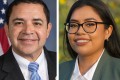
U.S. House’s last pro-life Democrat, Texas’s Henry Cuellar, fighting to keep seat in Tuesday primary runoff
Challenger Jessica Cisneros wanted House Democratic leaders to rescind Cuellar endorsement; they refused ♦By Rich Shumate, ChickenFriedPolitics.com editor LAREDO, Texas (CFP) — Amid the newly…
How much can Hillary Clinton dent the South’s Republican hegemony?
Trump must beat Clinton in Florida and North Carolina, and avoid any other Southern surprises, to win
♦By Rich Shumate, Chickenfriedpolitics.com editor
 (CFP) — In 2012, Republican Mitt Romney blew across the South, carrying 12 of the 14 Southern states — 10 of them by double-digit margins — and losing another, Florida, by just a single point.
Heading into Tuesday’s election, Donald Trump’s quest for the White House may hinge on how well he can hang on to Romney’s Southern support, amid signs that Hillary Clinton is poised to do better in the region than Barack Obama did four years ago.
Pre-election polls show that both Florida, which Obama carried in 2012, and North Carolina, which he did not, are toss-ups between Clinton and Trump.
The news is better for Clinton in Virginia, where polls show her with a clear lead in a state Obama carried in both 2008 and 2012.
Together, those three states have 57 electoral votes, out of the 270 needed to win.
Florida and North Carolina are more important to Trump than to Clinton: She could lose both and still win in the Electoral College, but if he loses either of them, his route to victory is likely cut off.
A key metric in Florida will be how many Latino voters turn out and how much Clinton can benefit from Trump’s anti-immigration stance and incendiary comments about Latinos, particularly Mexicans.
About 15 percent of the Florida electorate is Latino, about 1.8 million voters, and about a third of those voters are Cuban-Americans, normally a reliably Republican group. But Trump’s support in that community — necessary for a Republican to win statewide — remains a question mark.
Much of the GOP Cuban-American political leadership in Miami has refused to endorse Trump, including U.S. Reps. Carlos Curbelo, Ileana Ros-Lehtinen and Mario Diaz-Balart. Lieutenant Governor Carlos López-Cantera has also kept his distance from Trump, although he did appear at an event in Miami with the GOP nominee back in October.
With Florida and North Carolina up for grabs, an equally intriguing question heading into election night is the degree to which Trump might be in trouble in other unexpected places in the South.
For instance, three media polls taken last week in Georgia showed that the race between Clinton and Trump in Georgia was a statistical tie. Georgia has not gone for a Democrat for president since 1992, when Clinton’s husband, Bill, won narrowly in a three-way race.
Priorities USA, a Clinton-allied Super PAC, had been airing ads in Georgia, although the Clinton campaign itself has not moved resources into the state.
Polls in mid-October also showed a closer-than-expected race in Texas, where Trump’s weakness among Latino voters seemed to be having an effect. However, more recent polling in Texas has shown Trump reestablishing a lead.
Because most Southern states are perceived to be solid Republican territory, there has been little public polling in most of them, save for Florida, North Carolina, Virginia, Georgia, and Texas.
However, some national polling has shown Trump’s support weaker across the South than what Romney managed to put up four years ago. So, in an election that has seen its share of surprises, there is no way until the votes are counted to know if there might be other Southern surprises lurking in the presidential race.
Republican U.S. Senate incumbents trying to fight off Democratic challengers
Florida and North Carolina are Senate battlegrounds; Louisiana holds all-party primary for Vitter’s seat
♦By Rich Shumate, Chickenfriedpolitics.com editor
(CFP) — Nine GOP-held Southern U.S. Senate seats are up for grabs in the November 8 election, with Republican incumbents heavily favored in six races.
The exceptions are Florida, where Republican U.S. Senator Marco Rubio is facing off against Democratic U.S. Rep. Patrick Murphy, and in North Carolina, where the GOP incumbent, U.S. Senator Richard Burr, is facing Deborah Ross, a former state legislator and Duke University law professor.
And in Louisiana, 24 candidates are running in an all-party “jungle” primary, with the top two vote-getters advancing to a December 10 runoff, which could potentially decide the balance of power in the Senate.
Pre-election polls have shown Republican State Treasurer John Kennedy in the lead, followed by Public Service Commissioner Foster Campbell, a Democrat; Republican U.S. Rep. Charles Boustany of Lafayette; and Democrat Caroline Fayard, a New Orleans lawyer.
If Kennedy and Boustany can both clear the runoff, the GOP would be guaranteed of keeping the seat, now held by U.S. Senator David Vitter. But if Campbell or Fayard can come through, the December 10 runoff will be the last word on Senate races this year — and, if the Senate is closely divided, decide which party controls the chamber.
In addition to Rubio and Burr, Republican incumbents are seeking re-election in Alabama, Arkansas, Georgia, Kentucky, Oklahoma and South Carolina.
All are heavily favored, although the race in Georgia between U.S. Senator Johnny Isakson and Democratic businessman Jim Barksdale is somewhat more competitive.
In Alabama, Richard Shelby faces Democrat Ron Crumpton, a marijuana rights activist; in Arkansas John Boozman is seeking a second term against Democrat Conner Eldridge, a former federal prosecutor from Fayetteville; and in Kentucky, Rand Paul is running against Lexington Mayor Jim Gray.
In Oklahoma, James Lankford faces Mike Workman, a Tulsa political consultant, and in South Carolina, Tim Scott, the only black Republican in the Senate, faces Democrat Thomas Dixon, a Charleston pastor.
Fewer than a dozen U.S. House seats in play in the South this election
Democrats looking for pickups in Florida, Texas and Virginia
♦By Rich Shumate, Chickenfriedpolitics.com editor
(CFP) — Heading into the November 8 election, fewer than a dozen U.S. House seats across the South are in play, and most of those are the result of court-ordered redraws of congressional maps in Florida and Virginia.
If the night goes well, Democrats could pick up a net total of seven GOP-held seats — three each in Florida and Virginia and one in Texas. But if Republican incumbents manage to pull out close races, the shift could be just one seat, the 4th District in Virginia that seems certain to change hands because of the new map.
Either way, the Republican advantage over Democrats in U.S. House seats, now 116 to 38, should not budge much.
In Florida, the redraw of the map (click here to see map) should allow Republicans to pick up the 2nd District, based in the Panhandle and now held by U.S. Rep. Gwen Graham, who opted not to run after the district became substantially more Republican.
But Democrats are almost certain to counter that GOP gain by taking the Orlando-based 10th District, which under the new map is more Democratic.
Republican fortunes in Florida will come down to three incumbents facing tough fights for re-election — John Mica in the 7th District, which includes parts of Orlando and its northern suburbs; David Jolly in the 13th District in and around St. Petersburg; and Carlos Curbelo, in the 26th District, which includes part of Miami-Dade County and the Florida Keys.
Democrats are defending a seat in the 18th District, along the Treasure Coast, which U.S. Rep. Patrick Murphy gave up to run for the U.S. Senate.
In Virginia, the new map affected two Republican-held districts, the 4th and the 5th. The 4th is expected to go Democratic, but Republicans are hoping to keep the 5th.
In addition to those seats, Republican U.S. Rep. Barbara Comstock , whose 10th District seat meanders from the Washington, D.C. suburbs toward West Virginia, has become a top Democratic target.
In Texas, Republican U.S. Rep. Will Hurd is also in a tough fight in the 23rd District, which includes a vast expanse of West Texas from the San Antonio suburbs to near El Paso. In a district with a 55 percent Latino population, Hurd is facing significant headwinds with Donald Trump at the top of his party’s ticket.
Here is a rundown of the key U.S. House races around the South:

Dunn
Florida 2: With Graham stepping aside, Panama City urologist Neal Dunn should pick up this seat for Republicans over Democrat Walt Dartland, a lawyer and consumer advocate from Tallahassee.

Lawson
Florida 5: This seat opened up after the incumbent, Democratic U.S. Rep. Corrine Brown, was defeated in the primary by Al Lawson, a former state lawmaker from Tallahassee. This district was radically redrawn and now starts in Jacksonville and heads due west to Tallahassee, making it less black and more Republican. Still, Lawson is a heavy favorite over Republican Glo Smith.

Murphy

Mica
Florida 7: Mica is running again in this district in suburban Orlando. But he now has some of the Democratic voters who used to be in Brown’s 5th District, making this district much less safe that it was. He faces political newcomer Stephanie Murphy, a college professor and former national security professional who has benefited from more than $3 million in outside funding poured into the race by Democrat-aligned groups.

Demings
Florida 10: This Orlando-area district, now held by Republican U.S. Rep. Daniel Webster, was made substantially more Democratic in the redraw–so much so that Webster opted to run for re-election in the adjacent 11th District, where U.S. Rep. Rich Nugent is retiring. Democrats nominated former Orlando Police Chief Val Demings, who should carry this seat over Republican Thuy Lowe.

Crist

Jolly
Florida 13: This swing district in the Tampa Bay area features a high voltage smackdown between David Jolly and former Florida Governor Charlie Crist, the Republican-turned-independent-turned-Democrat who is trying to make a political comeback after losing the governor’s race in 2014. The redraw of Florida’s map added a portion of St. Petersburg with a large minority population to this district, making it more Democratic. Facing long odds, Jolly first opted to run for the U.S. Senate before deciding to try to keep his seat.

Perkins

Mast
Florida 18: This seat, which includes part of Palm Beach County and the Treasure Coast, is a classic swing district. With Murphy out, Democrats selected Randy Perkins, a multimillionaire businessman from Delray Beach, while Republicans went with Brian Mast, an Army veteran who lost both his legs while serving as a bomb disposal specialist in Afghanistan. Both are political newcomers.

Garcia

Curbelo
Florida 26: Like the 18th District, this seat, which includes southwest Miami-Dade County and the Florida Keys, has gone back and forth between the parties in recent cycles. The incumbent, Curbelo, faces a rematch against the man he beat by less than 5,800 votes in 2014, former Democratic U.S. Rep. Joe Garcia.

Gallego

Hurd
Texas 23: This massive district, which stretches across a vast expanse of West Texas from the San Antonio suburbs to near El Paso, has changed hands in the last three elections. The incumbent, Hurd, is that rarest of creatures, a black Republican representing a majority Latino district. His Democratic challenger is the man Hurd beat in 2014, former U.S. Rep. Pete Gallego. Hurd’s winning margin last time was just 2,400 votes, indicating just how equally divided this district is.

McEachin

Wade
Virginia 4: A new map drawn by a federal court added Richmond and Petersburg to this southeast Virginia district, making it substantially more Democratic. The incumbent, Republican U.S. Rep. Randy Forbes, left this seat to run unsuccessfully in the redrawn 2nd District, leaving an open seat that’s ripe for a Democratic pick-up. Republican Henrico County Sheriff Mike Wade will face off against Democratic State Senator Donald McEachin, also of Henrico County. A win by McEachin would add a second African-American congressman to the state’s delegation.

Dittmar

Garrett
Virginia 5: Democrats have hopes of taking this seat, which is open because of the retirement of Republican U.S. Rep. Robert Hurt. But this district, which stretches through central Virginia from the North Carolina border to the Washington, D.C. suburbs, has a Republican lean. GOP State Senator Tom Garrett from Buckingham County is facing Democrat Jane Dittmar, the former chair of the Albermarle County Board of Supervisors.

Comstock

Bennett
Virginia 10: This district starts in the western D.C. suburbs and stretches out to West Virginia. Although Comstock won handily in 2014, this is a district full of suburban swing voters who Democrats are hoping will be turned off by a Trump-led GOP ticket. She faces Democrat LuAnn Bennett, a real estate developer who is the ex-wife of former U.S. Rep. Jim Moran.
Voters in North Carolina, West Virginia to pick governors
GOP’s McCrory tries to stay alive in North Carolina; Justice, Cole battle for open seat in West Virginia
♦By Rich Shumate, Chickenfriedpolitics.com editor
(CFP) — Voters in North Carolina and West Virginia are picking governors in the November 8 election, with polls showing tight races in both states.
In North Carolina, incumbent Republican Gov. Pat McCrory is running for a second term against Democratic Attorney General Roy Cooper in what has become the nation’s most watched — and most expensive — gubernatorial battle.

Coooper

McCrory
McCrory rode a GOP wave into office in 2012, but the Republican-controlled legislature’s passage of a controversial voter ID law and measures favored by religious conservatives have made the governor a lightning rod.
The issue that has dominated the race is McCrory’s decision to sign a law requiring transgendered students to use bathrooms that match their gender of birth, rather than their gender of identity.
McCrory has continued to defend the law, even after a number of businesses scuttled expansion plans and the NCAA, NBA and ACC pulled events from the state.
Cooper not only opposed the measure, but he also refused to defend it in court when students and the federal government took legal action to overturn it.

Justice

Cole
In West Virginia, Democrats who have seen their once dominant hold on state politics slip away are hoping to revive their fortunes with Jim Justice, a billionaire coal mine owner best known for his efforts to revive the state’s famed Greenbrier Resort.
He faces Republican State Senate President Bill Cole, who an auto dealer from Bluefield who became leader of the chamber in 2015 after the GOP captured a Senate majority for the first time in 83 years.
This seat is open because Democratic Governor Earl Ray Tomblin is term-limited. A Republican has not been elected governor in the Mountaineer State since 1996.
With David Duke in the hall, turmoil erupts at Louisiana U.S. Senate debate
Protestors spar with police as Duke screams at the moderator, calls for Hillary Clinton to get the electric chair
 NEW ORLEANS (CFP) — David Duke’s appearance at a November 2 U.S. Senate debate in Louisiana descended into turmoil, with the white racist screaming at the moderator and calling for Hillary Clinton’s execution, while police used pepper spray on angry protestors trying to get into the hall.
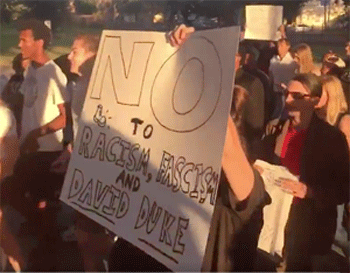
Protestors march against David Duke at Dillard University. (Courtesy: Twitter)
The sponsor of the debate, Raycom Media, which operates television states in four Louisiana cities, decided not to allow the public into the debate, leaving the six candidates on the stage talking to a television camera and a largely empty auditorium at Dillard University in New Orleans.
That didn’t sit well with protestors outside, who were angered by Duke’s presence at the historically black university and tried to force their way through a police cordon at the doorway. Six people were arrested, only one of which was a Dillard student, according to the university.
The specter of Duke was inescapable inside as well as outside the hall, with the moderator, John Snell, struggling mightily at times to prevent his presence from overwhelming the discussion.
Answering a question about Obamacare, Democrat Caroline Fayard pivoted to a direct attack on Duke.
“This snake has slithered out of the swamp, probably because the career politicians on this stage haven’t done their job effectively enough,” Fayard said. “But I’m here to tell … everybody who cares about the future of Louisiana that on November 8, the voters of Louisiana are going to join with me and cut the head off his hatred, once and for all.”
At another point, State Treasurer John Kennedy, a Republican who is leading the polls in the race, called Duke “a convicted liar,” a reference to his 2002 conviction for tax and mail fraud.
“He spent time in prison for lying to his supporters. He swindled them out of their money and took that money and used it for his gambling addiction,” Kennedy said.
Snell gave Duke 15 seconds to respond, and, when he tried to go over his allotted time, the fireworks began.
“You’re not a moderator. You’re a typical media hack,” Duke shouted, as Snell tried to go on to the next speaker. “You’re gonna silence me now? You’re going to silence me?”
Later in the debate, Snell asked Duke what he meant by repeated references to “CNN Jews” in his earlier complaints about the media’s coverage of Donald Trump’s Access Hollywood tape.
“There is a problem in America with a very strong, powerful, tribal group that dominates our media and dominates out international banking,” Duke said. “I’m not opposed to all Jews … I’m against Jews or anybody else that puts the interest of some other place, or another country, over our own country.”
He then pivoted to a criticism of American foreign policy in general — and Clinton’s role in it in particular.
“The lady should be getting the electric chair, being charged with treason,” he said.
Duke has been an outspoken supporter of Trump. During the debate, he said, “I will be Donald Trump’s most loyal advocate to make sure his nominees go to the Supreme Court.”
Duke was also the subject of a testy change between the two Democrats on the stage, Fayard and Public Service Commissioner Foster Campbell, over an ad her campaign has run insinuating that Campbell has been friendly with Duke on the campaign trail.
“There’s no context in which it is acceptable to have a conversation, whether public or private, with someone like David Duke,” said Fayard, who insisted her ad was accurate.
But Campbell said the insinuation that he has been cozy with Duke not was “not just a lie, it’s a damn lie.”
“I have nothing in common with David Duke other that that we’re probably breathing,” Campbell said.
After the debate, Dillard issued a statement saying police used pepper spray as a “last resort” after protestors tried to enter the building. However, peaceful protests outside the hall were not impeded.
“At no time did Dillard discourage protests; either by students or members of the community. We shared a dual responsibility of providing a safe space for those protesters and for the orderly management of the event,” the statement said.
Raycom contracted with Dillard to host the debate before it knew Duke would qualify for the event. The university decided to go ahead and honor the contract, despite criticism from students and alumni unhappy about the prospect of Duke appearing at Dillard.
Of the 24 candidates running for the Pelican State’s open U.S. Senate seat, six qualified for the debate based on their support in a poll commissioned by Raycom — Kennedy, Campbell, Fayard, Duke, and U.S. Reps. Charles Boustany of Layfayette and John Fleming of Minden.
In Louisiana, all candidates regardless of party run in a “jungle” primary on November 8, with the top two vote-getters advancing to a December 10 runoff.
Polls show Kennedy and Campbell leading the race, which was apparent in the debate, with Boustany and Fleming taking aim at Kennedy and Fayard primarily targeting Campbell.
Here is the video of the debate:


