
Latest Posts
Latest Coverage
-
Symbolic solution in search of an actual problem
Support of 9 Southern Republicans for Respect for Marriage Act shows why Supreme Court isn’t about to ban same-sex marriage ♦By Rich Shumate, ChickenFriedPolitics.com editor…
-

West Virginia stubborn, or playing hard to get
U.S. Senator Joe Manchin pisses off his party yet again … to what end? ♦By Rich Shumate, ChickenFriedPolitics.com editor Also in this report: Atlanta DA…
-
2 Mississippi Republican U.S. House members forced into runoffs after weak primary showings
Michael Guest narrowly trails challenger in 3rd District; Steven Palazzo clears just 32% in 4th District ♦By Rich Shumate, ChickenFriedPolitics.com editor JACKSON, Mississippi (CFP) –…
-
Mississippi Republican U.S. Rep. Steven Palazzo facing Tuesday primary fight amid ethics investigation
6 opponents hitting “No-Show Palazzo” over inattention to district, ethics problems ♦By Rich Shumate, ChickenFriedPolitics.com editor GULFPORT (CFP) — Mississippi U.S. Rep. Steven Palazzo —…
-

Primary Wrap: Kemp, Raffensperger survive Trump’s ire; Brooks makes Alabama U.S. Senate runoff
Texas Democratic U.S. Rep. Henry Cuellar survives challenge from the left; George P. Bush gets blown out by Attorney General Ken Paxton ♦By Rich Shumate,…
-

U.S. House’s last pro-life Democrat, Texas’s Henry Cuellar, fighting to keep seat in Tuesday primary runoff
Challenger Jessica Cisneros wanted House Democratic leaders to rescind Cuellar endorsement; they refused ♦By Rich Shumate, ChickenFriedPolitics.com editor LAREDO, Texas (CFP) — Amid the newly…
Poll: Trump, Clinton running even in normally deep red Mississippi
Results of a new Mason-Dixon poll expose Trump’s general election vulnerabilities
 JACKSON, Mississippi (CFP) — A new poll shows that if Republicans pick Donald Trump as their nominee, Mississippi could be in play in the general election for the first time in 36 years–a stark illustration of the uphill battle he may face across the country come November.

Candidate Donald Trump
The Mason-Dixon poll of Mississippi voters showed Trump leading the likely Democratic nominee, Hillary Clinton, by just 3 points, 46 percent to 43 percent, with 11 percent undecided. That is within the poll’s margin of error of plus or minus 4 percent, which means that, statistically speaking, Trump and Clinton are in a tie.
By contrast, Trump’s rivals for the GOP nomination, U.S. Senator Ted Cruz of Texas and Ohio Governor John Kasich, both beat Clinton by double-digit margins.
The last time Mississippi was in play in a general election was in 1980, when Ronald Reagan defeated Jimmy Carter by less than 2 points. The last Democrat to carry Mississippi was Carter in 1976.
How rare is it for a Democratic nominee to carry Mississippi? In the last 60 years, it has happened exactly twice, in 1956 and 1976. And in the last four elections, the Republican candidate has won by an average of 15 points.
The poll results are likely to add fuel to arguments by Cruz and Kasich that Trump would be a general election disaster for the GOP. Cruz leads Clinton in a general election match-up 51 percent to 40 percent; Kasich does even better, 52 percent to 37 percent.
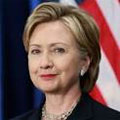
Former Secretary of State Hillary Clinton
Clinton holds an astounding 90-point lead among African-American voters, who make up a third of the Mississippi electorate. A mere 3 percent of black voters said they support Trump.
Clinton also has an 8-point lead among women and is taking a 15 percent share of Republican women.
And while Trump pulls only 8 percent of Democrats, the poll showed Clinton winning 11 percent of Republicans. Self-identified independents broke for Trump 49 percent to 37 percent.
The poll also showed that while both Clinton and Trump have high negatives among voters in the Magnolia State, Trump was viewed slightly more unfavorably. The difference between his favorable and unfavorable ratings was 11 points; hers was 8.
The poll of 625 registered Mississippi voters was conducted March 28-30. The margin of error was plus or minus 4 percentage votes, which means there is a 95 percent probability that the actual result if all voters were surveyed would fall within a range 4 points above and below the reported figure.
Sex, lies and audiotape: Governor’s scandal roils Alabama
Governor Robert Bentley apologizes after recording surfaces of an “inappropriate” conversation with a top aide
♦By Rich Shumate, Chickenfriedpolitics.com editor
 MONTGOMERY, Alabama (CFP) — Alabama Governor Robert Bentley is denying explosive allegations from the state’s former top cop that he is having an affair with a female aide who exerts svengali-like influence over the governor.

Alabama Governor Robert Bentley
However, Bentley has apologized to the people of Alabama for making “inappropriate” comments to the aide, Rebekah Mason. The apology came after an audio recording surfaced in which the governor expresses “love” to an unidentified party in a telephone conversation and talks about how much he enjoys touching her breasts.
Just who made that recording isn’t clear, but an unidentified member of Bentley’s own family provided it to officials at the Alabama Law Enforcement Agency in August 2014, according to Spencer Collier, the former head of ALEA who was fired by Bentley on March 22.
Collier also claims that he was removed by the governor because he refused to mislead the state attorney general’s office about an investigation related to a political ally, a charge Bentley denies.
In the wake of the salacious revelations, the Democratic leader of the state legislature has called on Bentley to resign, and one of governor’s fellow Republicans, State Auditor Jim Ziegler, has filed an ethics complaint alleging that Bentley used state resources to carry on an affair with Mason.
Collier went public with the affair allegations a day after learning on social media that he had been fired. He told reporters that he first confronted the governor about his relationship with Mason in August 2014, after a member of the governor’s security detail accidentally saw an inappropriate text message from Mason on Bentley’s cell phone.
Several days later, Collier said his agency received audio of the governor “participating in an inappropriate sexual conversation,” which was provided by a member of Bentley’s family that he didn’t identify.
Collier said he informed the governor that he would be committing a crime if he used state resources or campaign funds to facilitate the affair. The governor told Collier he would break off the affair but never did, Collier said.
“Less than a month ago, the governor told me that he was still madly in love with Rebekah Mason,” Collier said.
He said Mason exhibited so much influence over Bentley that she was “the de facto governor.” Collier said he had received complaints about Mason from other law enforcement officials, as well as members of Bentley’s cabinet and members of his family.
“(He) is not the same man that I knew and served in the legislature with and considered one of the best friends I ever had, and for that I am saddened,” said Collier, who said he had been a friend and political ally of Bentley for 15 years.
Collier also denied the allegations of mismanagement in his agency that led to his ouster: “I have not mismanaged a dime.”
A short time after Collier spoke, Bentley called his own news conference to flatly deny he was having an affair with Mason, while admitting he had “inappropriate” conversations with her that he described as a “mistake.”
“I am truly sorry, and I accept full responsibility,” he said. “I want everyone to know, though, that I have never had a physical affair with Mrs. Mason.”
“I can assure the people of Alabama that as their governor, I have never done anything illegal,” he said. “At no time have I ever used the resources of my office to facilitate a relationship of any type.”
But when asked if his inappropriate conduct with Mason played a role in his 2015 divorce from his wife of 50 years, Dianne, the 73-year-old governor declined to comment. Asked if he loved Mason, he said, “I love many members of my staff.”
Bentley, a dermatologist, was elected to his second term in 2014. Shortly after his first inauguration in 2011, he made national headlines by telling a church audience that “anybody here today who has not accepted Jesus Christ as their savior, I’m telling you, you’re not my brother and you’re not my sister.” He later apologized.
Bentley, who is term limited in 2018, said he will not resign over Collier’s allegations. And although he apologized for the conversation captured on audio, the governor said he had not listened to it, although he had known of its existence for nearly two years.
On the audio, a voice that appears to be Bentley’s can be be heard in a telephone conversation with an unknown party, in which he talks about putting his arms around the other party and putting his hands on her breasts.
“I love you. I love to talk to you,” Bentley says.
Later on the tape, he says, “Baby, let me tell you what we’re gonna to have to do tonight–start locking the door. If we’re going to do what we did the other day, we’re gonna have to start locking the door.”
One question raised by the audio is where it was recorded. Zeigler’s complaint alleges that a reference in the audio about needing to move a secretary’s desk indicates sexual activity was taking place on state property.

Rebekah Mason
After Bentley denied an affair, Mason fired off her own statement in which she accused Collier of sexism for his insinuation that she exerts undue influence over Bentley.
“He only said what he said about my professional abilities because I am a woman. His comments were clear, demonstrated gender bias,” Mason said.
“Unfortunately, there are still some people who are set on hindering the ability of women to work in the political arena. I am proud of what I have accomplished in the political arena. And I’m grateful for the opportunity God has given me to serve our state.”
Mason’s husband, Jon, who also works for the Bentley administration, took to Facebook to defend his “amazing” wife.
“I wanted to share that I long ago resolved the personal issue playing out now for everyone this week,” he said. “Please continue to support families, the governor and our state with prayers as we all move forward.”
Jon Mason did not elaborate on the nature of the personal issue. But he said his wife “is not a fictional character from a TV show or caricature created by assumptions and imagination.”
While Mason is, by Bentley’s own description, one of his top aides, she is not a state employee. Instead, her salary is being paid by the Alabama Council for Excellent Government, a 501 (c)(4) group with ties to Bentley.
Zeigler’s complaint alleges accepting money from an outside group would make Mason a lobbyist, but she has failed to register as such.
“Either Mrs. Mason is a lobbyist, or she is a government official,” Zeigler said.”If she is (a) lobbyist, she has violated the law by failing to register and file reports. If she is a government official, she has violated the law by improperly receiving private funds.”
House Minority Leader Craig Ford, D-Gadsden, called on Bentley to step down, saying “it is time for the circus to stop.”
“Public service is about doing what is best for the people of Alabama, and it is clear these countless distractions–whether criminal or ethical–are affecting our legislature and now our governor,” Ford said in a statement.
In his news conference, Collier said his relationship with Bentley began to deteriorate earlier this year when, over the governor’s objections, he complied with a request from Attorney General Luther Strange for an affidavit saying that his agency had cleared a deputy attorney general of allegations of leaking grand jury testimony to a witness.
That deputy, Matt Hart, was the lead investigator in a corruption case that eventually led to a 23-count indictment against Alabama House Speaker Mike Hubbard, an ally of Bentley.
Hubbard has denied the charges, characterizing the investigation as a political attack on him by Strange. Hubbard’s attorneys have raised prosecutorial misconduct as part of their defense.
Collier said Bentley wanted him to say that his agency was continuing with the investigation of Hart’s conduct, when it, in fact, wasn’t. Both the governor and Mason were angered when he wouldn’t go along, Collier said.
“To say she was furious would be an understatement,” Collier said.
“This is not the way government should work. This is not the way law enforcement should work. Elected officials should not be able to yield this much power over a law enforcement investigation. The people of this state deserve better.”
Bentley denied Collier’s accusation, saying, “I have never asked any member of my staff or any cabinet member to lie.”
Jeb Bush joins Ted Cruz bandwagon after decisive win in Utah
In his endorsement of Cruz, Bush decries Donald Trump’s “divisiveness and vulgarity”
♦By Rich Shumate, Chickenfriedpolitics.com editor
 HOUSTON (CFP) — A day after capturing his first outright majority in any state primary, U.S. Senator Ted Cruz of Texas captured the endorsement of the man who began the GOP presidential race as the presumed front-runner, former Florida Governor Jeb Bush.
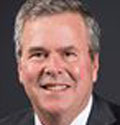
Former Florida Governor Jeb Bush
Bush’s endorsement came in a statement released by the Cruz campaign March 23 in which he called the Texas senator “a consistent, principled conservative who has demonstrated the ability to appeal to voters and win primary contests.”
“Washington is broken, and the only way Republicans can hope to win back the White House and put our nation on a better path is to support a nominee who can articulate how conservative policies will help people rise up and reach their full potential,” he said.
In endorsing Cruz, Bush also took a swipe at the front-runner in the Republican race, Donald Trump.
“For the sake of our party and country, we must move to overcome the divisiveness and vulgarity Donald Trump has brought into the political arena, or we will certainly lose our chance to defeat the Democratic nominee and reverse President Obama’s failed policies,” Bush said.
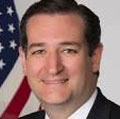
U.S. Senator Ted Cruz
The nod from Bush came a day after Cruz won 69 percent in the Utah primary–his best showing of the entire primary campaign and the first state in which he took an outright majority of the vote. The result gave Cruz all of the Beehive State’s 40 delegates. Trump trailed badly at just 14 percent.
However, in neighboring Arizona, Trump carried 47 percent to Cruz’s 25 percent, taking all 58 delegates in the winner-take-all state.
To date, Trump has 739 delegates, about 60 percent of the 1,237 he needs to get the nomination. Cruz trails with 465 delegates. There are 17 states left that have not held primaries or caucuses, including one Southern state, West Virginia, which votes in May.
Analysis: Trump, Clinton’s Southern primary wins expose weaknesses for the fall
Trump needs to run the table in the South. Can Clinton stop him?
♦By Rich Shumate, Chickenfriedpolitics.com editor
 (CFP) — The primary and caucus season across the South has largely come and gone (Republicans have voted everywhere except West Virginia; Democrats, Kentucky and West Virginia), leaving behind some clear trends and evidence about how things might play out in the fall.
 First the trends: Donald Trump and Hillary Clinton cut through the region like Sherman on steroids. She won every state save Oklahoma, most by whopping margins; he took everything except Texas and Oklahoma, which he lost to U.S. Senator Ted Cruz.
Given that Clinton runs best among African-American voters, and Trump’s strongest support is among white working-class voters, this was no surprise. Both of those demographic groups dominate the Democratic and Republican vote, respectively, across the South.
The irony for Clinton, however, is that she is running extraordinarily well in a region where, as conventional wisdom would have it, she doesn’t have a prayer of winning in the fall. And the weak appeal she has exhibited among white voters turned up in Oklahoma, one of the South’s whiter states, where U.S. Senator Bernie Sanders beat her.
That bears repeating: An avowed socialist beat Clinton in Oklahoma.
Meanwhile, the thrice-married, frequently profane rich guy from Long Island rolled from Paragould to Pascagoula to Pensacola, with gobs of religious conservatives apparently willing to overlook his colorful biography in order to make America great again. More impressively, he beat Cruz in a region where the Texan should have done much better.
However, the primary results showed that there could be challenges ahead for Trump in his quest to keep the solid Republican South solid in the fall should he be the nominee.
And a Southern sweep is vital to his hopes of winning the White House. The last four times the Republican candidate carried the region, he won; the last four times he didn’t, he lost. (Bill Clinton carried four Southern states; Obama, three.)
For all of his victories, Trump did not crack 50 percent anywhere in the South, although he came close in Mississippi. That means that even in a region where his brand of populism seems to have struck a chord, more Republicans were opposed to voting for him than voted for him. In six states, he didn’t even crack 40 percent.
And it is also instructive to look at some of the places where Trump didn’t win.
He lost Atlanta and two of its suburban counties; Richmond and its suburbs; Little Rock; Oklahoma City; Columbia and Charleston, S.C.; Miami-Dade County (although that was to hometown U.S. Senator Marco Rubio); and the Raleigh-Durham-Chapel Hill area. In Tennessee, he barely carried Nashville and Memphis, winning only about 30 percent of the vote. He lost all of the major cities in Texas to Cruz, who, admittedly, had the home court advantage.
These results show that Trump’s political act may not be wearing as well with urban and suburban Southern Republicans as it is in small towns and rural areas. That probably won’t matter in the fall in places such as Mississippi, Alabama, Louisiana and South Carolina. But if he can’t win those reluctant-for-Trump voters over to his side by November, it could matter in other places.
We already know that Virginia, North Carolina and Florida will be battleground states because Obama carried all three. And he did so running against Republicans that had, more or less, the united backing of their party. Trump doesn’t have that now, and it’s unclear if he will.
And then there’s Georgia, which has a large and politically active African-American population that will crawl across broken glass to vote for Clinton. If Trump continues to show weakness in Atlanta and its suburbs, the Peach State could also be in play.
Tennessee and Arkansas are probably longer shots, primarily because Clinton will have fewer African-American voters on which she can rely. However, there is still a residual strain of affection for Clinton in some quarters in Arkansas, where she spent 10 years as first lady.
Of course, Clinton’s weakness among white voters shows why she may be the Democrat least equipped to carry anything south of the Mason-Dixon line. After all, if even white Democrats aren’t voting for her, how is she going to fare when white people who aren’t Democrats are voting against her? That hurdle could be too high to jump, even with extraordinary support among black voters.
Remember, though, that Clinton doesn’t have to win everything in the South; just two or three states could make Trump’s ascension to the White House darn near impossible. He either needs to run the table or find states elsewhere to make up the difference.
Can he do it? Well, Trump has proven that he has a knack for defying the odds, so a wise pundit doesn’t bet against him. But the primary results show it may prove a more difficult feat than the Donald expects.
Marco Rubio exits presidential race after losing Florida
Donald Trump and Hillary Clinton win primaries in Florida and North Carolina
♦By Rich Shumate, Chickenfriedpolitics.com editor
 MIAMI (CFP) — U.S. Senator Marco Rubio has of Florida ended his presidential campaign after losing the Sunshine State to Donald Trump in the Republican primary.
Trump also carried North Carolina. On the Democratic side, Hillary Clinton also easily won both Florida and North Carolina.
The only Southerner now left in the race, U.S. Senator Ted Cruz of Texas, failed to win any of the five March 15 contests. However, his losses to Trump were narrow in North Carolina and Illinois, and Missouri was a virtual tie, with Trump prevailing by less than 1,800 votes.
“After tonight, America now has a clear choice going forward,” Cruz told supporters in Houston. “Only two campaigns have a plausible path to the nomination, ours and Donald Trump’s. Nobody else has any mathematical possibility whatsoever.”
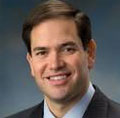
U.S. Senator Marco Rubio
Rubio, who won only two primary contests in Minnesota and Puerto Rico, had been banking on a win in his home state. But Trump carried 46 percent to Rubio’s 27 percent, with Cruz at 17 percent and Ohio Governor John Kasich at 7 percent.
Speaking to supporters in Miami after the television networks called the race for Trump, Rubio said “it is clear that while we are on the right side, this year we will not be on the winning side.”
“The fact that I’ve even come this far is evidence of how special America is,” he said.
A short time later, Cruz saluted Rubio’s campaign effort and made a direct pitch for his voters.
“To those who supported Marco, who worked so hard, we welcome you with open arms,” Cruz said.
In North Carolina, Trump took 40 percent to 37 percent for Cruz, 13 percent for Kasich and 8 percent for Rubio.
In the Democratic primary in Florida, Clinton rolled up 65 percent, to 33 percent for U.S. Senator Bernie Sanders of Vermont. The race in North Carolina was closer, with Clinton at 55 percent and Sanders at 41 percent.
With those wins, Clinton has now taken 13 of the 14 Southern states, with only West Virginia left. Trump has taken 11, losing only Texas and Oklahoma to Cruz.
Voters in West Virginia go to the polls May 10.

 Chicken Fried Politics