
Latest Posts
Latest Coverage
-
Symbolic solution in search of an actual problem
Support of 9 Southern Republicans for Respect for Marriage Act shows why Supreme Court isn’t about to ban same-sex marriage ♦By Rich Shumate, ChickenFriedPolitics.com editor…
-

West Virginia stubborn, or playing hard to get
U.S. Senator Joe Manchin pisses off his party yet again … to what end? ♦By Rich Shumate, ChickenFriedPolitics.com editor Also in this report: Atlanta DA…
-

2 Mississippi Republican U.S. House members forced into runoffs after weak primary showings
Michael Guest narrowly trails challenger in 3rd District; Steven Palazzo clears just 32% in 4th District ♦By Rich Shumate, ChickenFriedPolitics.com editor JACKSON, Mississippi (CFP) –…
-
Mississippi Republican U.S. Rep. Steven Palazzo facing Tuesday primary fight amid ethics investigation
6 opponents hitting “No-Show Palazzo” over inattention to district, ethics problems ♦By Rich Shumate, ChickenFriedPolitics.com editor GULFPORT (CFP) — Mississippi U.S. Rep. Steven Palazzo —…
-

Primary Wrap: Kemp, Raffensperger survive Trump’s ire; Brooks makes Alabama U.S. Senate runoff
Texas Democratic U.S. Rep. Henry Cuellar survives challenge from the left; George P. Bush gets blown out by Attorney General Ken Paxton ♦By Rich Shumate,…
-

U.S. House’s last pro-life Democrat, Texas’s Henry Cuellar, fighting to keep seat in Tuesday primary runoff
Challenger Jessica Cisneros wanted House Democratic leaders to rescind Cuellar endorsement; they refused ♦By Rich Shumate, ChickenFriedPolitics.com editor LAREDO, Texas (CFP) — Amid the newly…
Florida Agriculture Commissioner Nikki Fried launches run for governor
Broward County Democrat is party’s only statewide officeholder
♦By Rich Shumate, ChickenFriedPolitics.com editor
 TALLAHASSEE (CFP) — Florida Agriculture Commissioner Nikki Fried has launched a run for the Democratic nomination for Florida governor, calling on her fellow Floridians to help her “break the system” and end what she calls two decades of Republican corruption of state government.
“I’m here to break the rigged system in Florida. It’s corrupt. It’s anti-democratic, and it’s time for something new,” Fried said in a campaign launch video posted on Twitter. “I’m unafraid. I’m tested. I’m ready.”
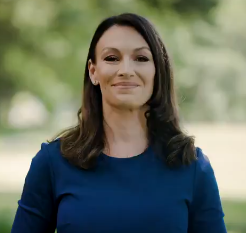
Florida Agriculture Commissioner Nikki Fried
Fried, 43, is the only Democrat holding statewide office in the Sunshine State. A former public defender and lobbyist for the marijuana industry, she won a narrow, surprise victory for agriculture commissioner in 2018 as a urban Democrat, a position usually associated with rural and farming interests.
Since taking office, she had become a fierce critic of Republican Governor Ron DeSantis, most recently for his support for a law that imposes new restrictions on voting and a measure that bars transgender athletes from competing in girls’ and women’s sports.
But before she can get to DeSantis, Fried will have to win a competitive Democratic primary that includes U.S. Rep. Charlie Crist from St. Petersburg, who served as governor from 2007 to 2011 as a Republican, and possibly State Senator Annette Taddeo, a Hispanic lawmaker from Miami-Dade who will compete with Fried in vote-rich South Florida.
Democrats haven’t won Florida’s governorship since 1994.
We tweet @ChkFriPolitics Join us!
Louisiana US. Sen. Bill Cassidy is only Southern Republican to support Jan. 6 commission
All 5 Southern Democrats vote for bipartisan independent panel to take deep dive into Capitol assault by pro-Trump mob
♦By Rich Shumate, ChickenFriedPolitics.com editor
 WASHINGTON (CNN) — U.S. Senator Bill Cassidy of Louisiana stood alone among his Southern Republican colleagues Friday in supporting formation of an independent bipartisan commission to investigate the January 6th attack on the U.S. Capitol.

U.S. Senator Bill Cassidy, R-Louisiana
The bill setting up the commission died after supporters fell six votes short of the 60 votes needed to break a Republican filibuster led by Senate Minority Leader Mitch McConnell of Kentucky, who said the panel would add an “extraneous layer” of investigation into events at the U.S. Capitol, which was stormed by a pro-Trump mob trying to block certification of President Joe Biden’s Electoral College win.
All five Southern Senate Democrats — Tim Kaine and Mark Warner of Virginia, Joe Manchin of West Virginia, and Jon Ossoff and Raphael Warnock of Georgia — voted in favor of the independent probe.
Eighteen Southern Republicans voted no, while four did not vote, including U.S. Senator Richard Burr of North Carolina, who, along with Cassidy, voted to convict Donald Trump in an impeachment trial for his actions that day.
The three other Southern Republicans who did not vote on the commission bill were Marsha Blackburn of Tennessee, Jim Inhofe of Oklahoma, and Richard Shelby of Alabama. All three had previously indicated that they were opposed to the commission.
In a statement defending his decision not to support the commission, Burr said several investigations are already underway “being led by the committees with jurisdiction, and I believe, as I always have, this is the appropriate course. I don’t believe establishing a new commission is necessary or wise.”
But Cassidy warned his colleagues that if the independent commission wasn’t approved, Democrats in the House would push ahead with an investigation by a select committee “the nature of which will be entirely dictated by Democrats and would stretch on for years.”
The proposed investigative commission — modeled after the panel that investigated the 9/11 terrorist attacks in 2001 — would have had 10 members, half appointed by each party. Subpoenas could only have been issued if agreed to on both sides, and the investigation would have wrapped up by the end of 2021, nine months before the 2022 midterm election.
When the measure passed the House, 35 Republicans had voted for it. But when it got over to the Senate, McConnell began urging GOP members to oppose it as unnecessary and potentially politically detrimental.
Trump also came out firmly against the idea, calling it a “Democrat trap” and castigating House Republicans who supported it.
Manchin, the leading centrist voice among Senate Democrats, had been particularly forceful in lobbying his Republican colleagues to support the investigation, saying there was “no excuse for Republicans not to vote for this unless they don’t want to know the truth.”
But Manchin also refused to budge on his long-standing opposition to eliminating the filibuster, the procedure that allowed Republicans to block the commission even though 54 senators were in favor of it.
The Republicans who voted against formation of the commission were:
- Tommy Tuberville of Alabama
- John Boozman and Tom Cotton of Arkansas
- Marco Rubio and Rick Scott of Florida
- McConnell and Rand Paul of Kentucky
- Cindy Hyde-Smith and Roger Wicker of Mississippi
- Thom Tillis of North Carolina
- James Lankford of Oklahoma
- Lindsey Graham and Tim Scott of South Carolina
- John Cornyn and Ted Cruz of Texas
- Shelley Moore Capito of West Virginia
We tweet @ChkFriPolitics Join us!

Taking Virginia back: State GOP hopes to ride liberal backlash back into power
Reclaiming control in Richmond in November could serve as template for Republicans nationally in 2022
♦By Rich Shumate, ChickenFriedPolitics.com editor
 RICHMOND (CFP) — After Democrats took over the entirety of Virginia state government in 2020, they got to work.
Photo ID requirement to vote — gone. Ultrasounds and waiting periods for abortions — gone. Death penalty — abolished.
New background checks are now required for gun purchases. LGBTQ people are protected from discrimination in employment and housing, and conversion therapy was outlawed. Undocumented students can get in-state tuition.
Marijuana was first decriminalized and then legalized for recreational use. Utility companies were told to retire their fossil fuel plants by 2045. Cities and counties got the green light to remove Confederate monuments.
Democrats even reached back into the 1970s to dust off the Equal Rights Amendment and ratify it.
What Democrats tout as progressive, long-overdue change, Republicans bash as a misguided, ill-advised liberal toot. In November, Virginia voters will be asked to render their verdict, with Republicans banking on a backlash among Virginia’s more conservative-minded voters to lead them back into power.
As the party’s nominee for governor, Glenn Youngkin, put it in a Tweet after his victory at the recent state convention, “It’s time to get our Commonwealth back and put Virginia on the right track to make her the best place in America to live, work, and raise a family.“
If Republicans are successful in their quest to take Virginia back, it could serve as a template for Democrats nationally who are banking on a similar backlash against the Biden administration to break the Democrats’ lock on power on Washington — although Biden is, at least so far, not going nearly as far as his compatriots in Richmond.
What has happened during the last two years in Virginia is an illustration of a split that has also been seen nationally — Democrats from urban and suburban districts whose political interests have radically diverged from their more conservative neighbors in rural areas and small towns.
Once Democrats regained control of the legislature after 25 years out of power, the pent-up demand for liberal innovation could be indulged, to the significant chagrin of conservative Virginians who are angry because they increasingly don’t recognize their state, or at least its government.
Republicans, once dominant in Virginia, have seen their fortunes fade. The last Republican presidential candidate to carry the state was George W. Bush, and they haven’t won a statewide race since 2009. Democrats hold a 55-45 majority in the House of Delegates and a 21-18 margin in the Senate, which isn’t up for election in November. (Conservative firebrand State Senator Amanda Chase, elected as a Republican, sits as an independent after a dispute with her party leadership.)
Most of the attention in November will be the battle for control of the House — which, because of COVID-related census delays, will be fought using districts drawn by Republican legislators in 2011 — and the governor’s race between Northam and his likely Democratic opponent, Terry McAuliffe, who served as governor from 2014 to 2018 and holds a wide lead in polls for the June Democratic primary.
McAuliffe, 64, a Clinton confidante and prolific Democratic fundraiser, was forced from office by a rule unique to Virginia that doesn’t allow governors to run for a second term. If his comeback is successful, it will mark only the second time that a former governor has reclaimed the office (the other was Democrat Mills Godwin elected in 1965 and 1973).
Youngkin, 54, is a political newcomer who lives in the Washington D.C. suburbs and is running as a Christian conservative allied with Texas U.S. Senator Ted Cruz. He made a fortune running a private equity company, allowing him to loan his campaign $5 million during the nomination campaign.
The governor’s race in Virginia is one of just two contests in the off-year election (the other is in New Jersey), making it a key early test for Democrats’ new tenure in Washington.
Four years ago, Democrats took both of those governorships, an early warning sign of the blue wave that would sweep Republicans aside in 2018.
Donald Trump remains a looming presence over this race. Youngkin spent much of the nominating contest dodging questions about whether he thought Joe Biden really won in 2020; after securing the GOP nod, he finally conceded Biden’s election was legitimate.
Democrats will try to tie Youngkin and other Republicans firmly to Trump; they will have to navigate those waters in a way that keeps Trump happy without unduly harming their prospects in the vote-rich suburbs.
The race for control of the House of Delegates will likely be decided in the Washington D.C. suburbs, where Democrats flipped a slew of seats in 2017 and 2019 amid a suburban backlash against Trump. Republicans need a net gain of just six seats to reclaim control.
One of the changes pushed through the legislature by Democrats was to shift redrawing of political maps from legislators to an appointed independent commission. But because 2020 census results have been delayed by the pandemic, the existing maps will be used.
That means House battles will be fought using maps originally drawn by Republicans in 2011, although Democrats already won a majority with those maps in 2019.
The Republican challenge will be to persuade suburban voters who gave Democrats the keys to the castle two years ago that they have gone too far — that what has been coming out of Richmond isn’t what they voted for.
For the other two statewide offices on the ballot in November, Republicans selected former Delegate Winsome Sears for lieutenant governor and Delegate Jason Miyares from Virginia Beach for attorney general
Sears, 57, who served a single term in the legislature nearly 20 years ago and hasn’t held office since, was the biggest surprise to come out of the Republican convention, dispatching five rivals. A Jamaican immigrant and former Marine from Winchester, she served as national chair of Black Americans to Re-Elect President Trump in 2020, and her campaign posters and Twitter feed showed her carrying an assault rifle.
Should she prevail in November, Sears would preside of the Democratic-controlled Senate, giving Republicans at least some leverage in the upper chamber.
Eight Democrats are competing in the primary for lieutenant governor, with no clear front-runner.
The attorney general race is the only statewide contest where the incumbent is running, Democrat Mark Herring, who is seeking a third term. However, he is facing a stiff primary challenge from Delegate Jay Jones.
The survivor will face Miyares, 45, the first Cuban-American to serve in Virginia’s legislature.
The post of attorney general would be a perch which a Republican could try to use to thwart Democrats in the legislature by filing legal challenges. Republican attorneys general have also been leading the charge against Biden administration policies in Washington.
All of the statewide races, and the battle for control of the House, will get out-sized national attention, given the small number of contests this year and the bragging rights that will go to the victors.
As for 2022, November will set up this question: “As Virginia goes, so goes the nation?”
We tweet @ChkFriPolitics Join us!
Bold move or fool’s errand? Val Demings will take on Marco Rubio
Decision by Orlando congresswomen to get into U.S. Senate race gives Democrats a high-profile candidate to try to unseat Miami Republican
♦By Rich Shumate, ChickenFriedPolitics.com editor
ORLANDO (CFP) — Florida Democratic U.S. Rep. Val Demings burst onto the national political scene in early 2020 when she was picked as a House impeachment manager to make the case against Donald Trump — so much so that she soon found herself on Joe Biden’s vice presidential short list and was chattered about as a possible Cabinet secretary.
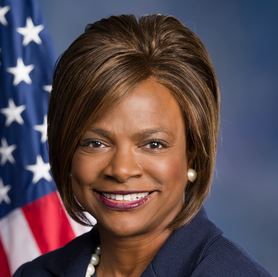
U.S. Rep. Val Demings, D-Florida
Now, Demings had decided to give up her safe House seat in Orlando after just three terms to run against Republican U.S. Senator Marco Rubio next year, as Democrats fight to hang on to their slim Senate majority.
Demings has not yet officially announced, but sources close to her have leaked her decision to run to media outlets, possibly in a move to discourage another metro Orlando Democratic congresswoman, Stephanie Murphy, from getting into the Senate race and forcing a primary.
And while her run will no doubt excite the Democratic base, she faces a daunting uphill climb in trying to unseat Rubio.
First, Florida — once considered the swingiest of swing states — has moved more into the Republican column. Donald Trump won by a bigger margin in 2020 than he did in 2016. Just one Democrat has won a Senate election in the past 20 years (Bill Nelson), and Republicans control all of the levers of power in Tallahassee.
Indeed, Demings looked at running against Republican Governor Ron DeSantis next year and decided to pass, a testament to the lock that the GOP has on state offices. (A Democrat hasn’t been elected governor since 1994).
Also, the Florida Democratic Party has been in significant disarray after a string of disappointing election cycles. The party was so broke that health insurance lapsed for its employees earlier this year. While the new party chairman, Manny Diaz, the former mayor of Miami, has started to right the ship, Republicans have a huge organizational advantage.
An even bigger challenge for Demings will be trying to unseat a senator who has managed to navigate the Trump currents in his party and can rely on deep roots in Miami-Dade’s powerful Cuban-American community.
Rubio — who famously made fun of Trump’s hands when he ran against him for president in 2016 — has managed to remain enough of a Trump loyalist not to get on his bad side, while not being as relentlessly pro-Trump as other leaders in his party.
Indeed, Trump — who delighted in denigrating Rubio as “Little Marco” in 2016 — endorsed his re-election in April, and Rubio appears unlikely to face a significant primary challenge from the Trump wing of the party.
Rubio, as a Cuban-American, will also have a strong base among Cuban voters in Miami-Dade County, which could demographically preclude a Democratic win.
To win statewide in Florida, a Democrat has to roll up huge margins in the Democratic areas of Tampa, Orlando and Broward and Palm Beach counties and keep enough of a lead in Miami-Dade to overcome the heavy Republican vote across the rest of the state.
Rubio on the ballot will make that task harder. Indeed, the 2020 election provided a painful lesson for Democrats when a collapse in the Democratic vote among Hispanic voters in Miami-Dade doomed Joe Biden and swept away Democratic U.S. House members Donna Shalala and Debbie Mucarsel-Powell.
Demings will perhaps be able to mitigate that problem with counter-turnout in fast-growing Orlando, where she served as police chief and her husband, Jerry, a former sheriff, is mayor of Orange County. With her national profile, she will also be able to raise piles of money, as she tries to make history as the first African American ever elected to the Senate from the Sunshine State.
Although U.S. House maps will be redrawn before 2022, Demings’s majority-minority district anchored in Orlando would probably have remained safe for her. So the decision to run for the Senate will short-circuit what could be a substantial, long-term career in the lower House.
High risk, high reward. So is she making a bold move or embarking on a fool’s errand? The next year will tell the tale.
We tweet @ChkFriPolitics Join us!

Glenn Youngkin wins Virginia GOP’s nomination for governor
Political newcomer bests 6 rivals to set up likely fall race against Democrat Terry McAuliffe
♦By Rich Shumate, ChickenFriedPolitics.com editor
RICHMOND (CFP) — Glenn Youngkin, a wealthy outsider making his first run for political office, has won the Republican nomination for Virginia governor, setting up what will likely be a high-spending and highly contested fall match-up with Democratic former governor Terry McAuliffe.

Glenn Youngkin
Youngkin secured a majority to clinch the nomination after six rounds of counting; the Republican Party of Virginia opted to use ranked-choice voting by more than 30,000 delegates who cast ballots during a statewide drive-thru convention Saturday.
Younkin won 55% of the weighted delegate vote to defeat his last remaining rival, Pete Snyder, a venture capitalist who was the GOP nominee for lieutenant governor in 2013.
“I am prepared to lead, excited to serve and profoundly humbled by the trust the people have placed in me,” Youngkin said on Twitter after Snyder conceded late Monday. “Virginians have made it clear that they are ready for a political outsider with proven business experience to bring real change in Richmond.”
State Senator Amanda Chase from Chesterfield County — who describes herself as “Trump in heels” and has been threatening to bolt the party to run as an independent — was eliminated in the round prior to Snyder. She has so far not publicly reacted or gave an indication of her future plans, although Trump endorsed Youngkin after results were announced.
In the race for lieutenant governor, former State Delegate Winsome Sears — the 2020 national chair of Black Americans to Re-Elect President Trump whose campaign posters and Twitter feed show her carrying an assault rifle — defeated five other candidates to win the party’s nod.
State Delegate Jason Miyares from Virginia Beach beat out three other candidates in the race to be the party’s nominee for attorney general. However, the second-place finisher in that contest, Chuck Smith, has requested a recount.
Youngkin, 54, who lives in Great Falls in the Washington, D.C. suburbs, was formerly the CEO of the Carlyle Group, a private equity firm. He loaned his campaign more than $5 million, which gave him a financial advantage over his intra-party rivals with more political experience.
Democrats will choose their nominees for all three offices in a June 8 primary. McAuliffe, who is trying to reclaim the post he held from 2014 to 2018, holds a commanding lead in Democratic polling.
Republicans have not won an election to statewide office since 2009, as the Old Dominion has moved more clearly into the Democratic column.
But Republican activists have been energized by the Democratic takeover of the legislature in 2020, which has ushered in a flurry of social legislation, including LGBTQ rights measures, gun control and marijuana legalization.
The Republican convention count — conducted by hand after some candidates objected to using computer software programs over fraud concerns — began Sunday afternoon at a hotel in downtown Richmond and was live-streamed.
The party used ranked-choice voting, which meant that if no one got a majority after the initial count, lower-finishing candidates were eliminated one-by-one and their votes reassigned to the delegate’s second choice.
Also, delegate votes didn’t count equally but were weighted based on where each delegate lives, with each county and independent city in Virginia given a number of delegates based on Republican performance in past elections.
Incumbent Governor Ralph Northam is barred by state law from seeking re-election; Lieutenant Governor Justin Fairfax is running for governor; and Attorney General Mark Herring is seeking re-election.

 Chicken Fried Politics