
Latest Posts
Latest Coverage
-
Symbolic solution in search of an actual problem
Support of 9 Southern Republicans for Respect for Marriage Act shows why Supreme Court isn’t about to ban same-sex marriage ♦By Rich Shumate, ChickenFriedPolitics.com editor…
-

West Virginia stubborn, or playing hard to get
U.S. Senator Joe Manchin pisses off his party yet again … to what end? ♦By Rich Shumate, ChickenFriedPolitics.com editor Also in this report: Atlanta DA…
-

2 Mississippi Republican U.S. House members forced into runoffs after weak primary showings
Michael Guest narrowly trails challenger in 3rd District; Steven Palazzo clears just 32% in 4th District ♦By Rich Shumate, ChickenFriedPolitics.com editor JACKSON, Mississippi (CFP) –…
-

Mississippi Republican U.S. Rep. Steven Palazzo facing Tuesday primary fight amid ethics investigation
6 opponents hitting “No-Show Palazzo” over inattention to district, ethics problems ♦By Rich Shumate, ChickenFriedPolitics.com editor GULFPORT (CFP) — Mississippi U.S. Rep. Steven Palazzo —…
-

Primary Wrap: Kemp, Raffensperger survive Trump’s ire; Brooks makes Alabama U.S. Senate runoff
Texas Democratic U.S. Rep. Henry Cuellar survives challenge from the left; George P. Bush gets blown out by Attorney General Ken Paxton ♦By Rich Shumate,…
-

U.S. House’s last pro-life Democrat, Texas’s Henry Cuellar, fighting to keep seat in Tuesday primary runoff
Challenger Jessica Cisneros wanted House Democratic leaders to rescind Cuellar endorsement; they refused ♦By Rich Shumate, ChickenFriedPolitics.com editor LAREDO, Texas (CFP) — Amid the newly…
U.S. Senator Rand Paul seeking re-election in Kentucky
Paul’s decision to run for the Senate again comes as he also considers a White House bid
♦By Rich Shumate, Chickenfriedpolitics.com editor
 BOWLING GREEN, Kentucky (CFP) — U.S. Senator Rand Paul of Kentucky has announced that he will seek a second term in the Senate in 2016, even as he considers a run for the GOP presidential nomination.

U.S. Senator Rand Paul
“I ran for office because, like many Kentuckians, I was alarmed at the problems facing our country,” Paul said in a December 2 statement announcing his re-election bid. “I stand with Kentucky in this fight, and I hope to continue together in the task of repairing and revitalizing our great nation.”
Paul, 51, kicked off his campaign with endorsements from Kentucky’s entire Republican congressional delegation and legislative leaders in Frankfort — a stark change from 2010, when his upstart Senate bid was opposed by most of the commonwealth’s GOP establishment.
Among those endorsing Paul was Kentucky’s other U.S. Senator, Mitch McConnell, soon to be the majority leader.
In 2010, McConnell backed Paul’s primary rival. But the two made peace after Paul won, and Paul backed McConnell in his primary fight earlier this year.
Kentucky law does not allow Paul’s name to appear on the ballot for both Senate and president in the May 17, 2016 primary. However, Kentucky Republicans could get around that problem by shifting to a presidential caucus on a different date.
Paul has said he thinks the state law prohibiting him from seeking both offices is unconstitutional. Democrats, who control both the state House and the governorship, have so far blocked Republican efforts to change the law.
Former U.S. Senator Jim Webb opens presidential exploratory committee
Virginian is the first Democrat to make a move toward a nomination fight with Hillary Clinton
By Rich Shumate, Chickenfriedpolitics.com editor
 BURKE, Virginia (CFP) — Former U.S. Senator Jim Webb has launched an exploratory committee for the 2016 Democratic presidential nomination — a race that’s expected to be dominated by former Secretary of State Hillary Clinton.

Former U.S. Senator Jim Webb
“We desperately need to fix our country and to reinforce the values that have sustained us, many of which have fallen by the wayside in the nasty debates of the last several years,” Webb said in an open letter published on his committee’s website.
“I look forward to listening and talking with more people in the coming months as I decide whether or not to run.”
Webb is the first Southerner in either party to make a move toward a presidential bid. However, at least six Southern Republicans are considering running, including U.S. Senators Rand Paul of Kentucky, Ted Cruz of Texas and Marco Rubio of Florida; Governors Bobby Jindal of Louisiana and Rick Perry of Texas; and former Florida Governor Jeb Bush.
Webb, 68, served as a Marine combat officer in Vietnam and was navy secretary during the Reagan administration. In 2006, he ran for the U.S. Senate and rode that year’s Democratic wave to a victory incumbent GOP U.S. Senator George Allen, which gave Democrats control over the upper chamber.
However, he opted not to seek re-election in 2012 after serving a single term.
While Webb was considered a Democratic moderate in the Senate, his exploratory committee announcement hinted that he may be planning to run against Clinton as an economic populist, noting that “the disparities between those at the very top and the rest of our society have only grown larger since the economic crash of late 2008 and early 2009.”
Webb also acknowledged that he faces “what many commentators see as nearly impossible odds” in securing the Democratic nomination.
“We are starting with very little funding and no full-time staff, but I’ve been here before,” he said. “In February 2006, I announced for the Senate only nine months before the election against an entrenched incumbent. We had no money and no staff. We were more than 30 points behind in the polls.”
Louisiana Governor Bobby Jindal to decide on White House bid in first half of 2015
Jindal would be the first Indian-American to pursue the presidency
♦By Rich Shumate, Chickenfriedpolitics.com editor
 BATON ROUGE (CFP) — Louisiana Governor Bobby Jindal is “praying” about whether to seek the Republican presidential nomination in 2016 and will make a final decision in the first half of next year.
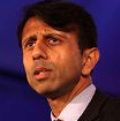
Louisiana Governor Bobby Jindal
“I haven’t made that decision,” Jindal said in a interview with NBC’s Meet The Press on November 16. “If I were to run for president, it’s because I believe in our country. The American dream is at jeopardy.”
“This president has defined the American dream as more dependence on the government. We need to restore the American dream, so it’s more about opportunity and growth and not redistribution.”
Jindal, 43, is in his second term as governor. Prior to being elected, he served in the U.S. House and was an assistant secretary in the U.S. Department of Health and Human Services during the administration of George W. Bush.
If he runs for the White House, Jindal would be the first Indian-American to pursue the office. No Louisianan has won the presidency since Zachary Taylor in 1848.
Jindal is one of a slew of potential Southern Republican presidential candidates in 2016, a list that includes U.S. Senators Rand Paul of Texas, Marco Rubio of Florida and Ted Cruz of Texas; Texas Governor Rick Perry; and former Governor Jeb Bush of Florida.
Analysis: Midterms a show of woe for Southern Democrats
GOP has a particularly strong showing in the upper South, where Democrats have recently been competitive
♦By Rich Shumate, Chickenfriedpolitics.com editor
(CFP) — One look at a color-coded map of midterm election results in any Southern state tells the story – there’s a tsunami of red and a shrinking pool of blue.
Take Texas, for example, with its 254 counties. Republican U.S. Senator John Cornyn carried 236 of them; the Republican candidate for governor, Attorney General Greg Abbott, carried 235. The only blue is found in Dallas, El Paso, Austin and along the Mexican border.
But that’s still more blue than in Oklahoma, where both Republican U.S. Senate candidates swept all 77 counties, and in West Virginia, where GOP Senate candidate Shelley Moore Capito swept all 55, despite the fact that Democrats have a 350,000-person lead in voter registration.
A deeper look at the numbers from the midterm elections shows just how far Democrats have fallen from the halcyon days when they had an iron grip on the solid South. They’re not just losing; lately, they’re not even competitive.
And perhaps even more troubling for Democrats is the fact that the dam seems to have burst in states in the upper South, where the party had been holding its own at the state level.
This year, 13 of 14 Southern states — all but Florida — had a U.S. Senate election, and two states — Oklahoma and South Carolina — had two. Setting aside Louisiana, which is headed to a runoff, and Alabama, which Democrats didn’t even bother to contest, GOP candidates won by an average of nearly 21 points.
Democrats couldn’t crack 30 percent in either Oklahoma race. They failed to crack 40 percent in six others. In fact, Republicans won by double digits in 10 races. Only Virginia, Georgia and North Carolina were close, with the GOP taking the latter two.
Things were just about as bad in races for governor, where the GOP margin of victory was about 18 percent. Republicans won by double digits in six of the eight governor’s races. Only Florida and Georgia were even remotely close.
The news was particularly bad for Democrats in three upper South states that were politically competitive a decade ago – West Virginia, Arkansas and Tennessee.
In West Virginia, Democrats not only lost the U.S. Senate race, but they lost all three U.S. House seats, and Republicans took control of both houses of the state legislature for the first time since 1931.
With Democratic U.S. Senator Mark Pryor’s loss, Arkansas will have an all-Republican congressional delegation for the first time since Reconstruction. Heading into the election, Democrats held five out of the seven statewide constitutional officers. In the midterm, they lost all seven.
Tennessee used to be split between Republicans in the east and Democrats in the west. Now, the GOP is winning everywhere, holding seven of the state’s nine U.S. House seats. Both Alexander and Governor Bill Haslam, re-elected with 71 percent of the vote, carried Shelby County, which includes the Democratic bastion of Memphis.
Increasingly, Democrats seem to be doing better in the deep South, where they can rely on the support of black voters, than in the upper South, where black populations are smaller.
For example, Republican U.S. Senator Lindsey Graham of South Carolina, despite being a long-time incumbent in a very red state, won by a smaller margin than did Republican Tom Cotton, who beat Pryor like a rug in Arkansas.
Some might attribute Graham’s narrower margin to his Tea Party problems. But Alexander — who faced a similar Tea Party dynamic — managed to win by 30 points in Tennessee.
What is clear from the midterms is that despite recent gains at the presidential level in states such as North Carolina and Virginia, Democrats are becoming less competitive across the region, and the South is becoming more monolithically red.
Indeed, the midterm results support the argument that in most of the South, the two-party system is becoming a relic of the past.
Republicans make gains in statehouses across the South
GOP takes control in West Virginia for the first time in 80 years, makes strong gains in Arkansas, Florida
♦By Rich Shumate, Chickenfriedpolitics.com editor
ELECTION CENTRAL (CFP) — Republicans made gains in statehouses across the South in the November 4 midterm election, taking complete control in West Virginia and padding their numbers in Arkansas and Florida.
U.S. Senator Rand Paul
However, Democrats managed to keep their majority in the Kentucky House, which could doom plans by Republican U.S Senator Rand Paul to run for both the White House and his Senate seat in 2016.
Of the 21 legislative chambers up for election, the GOP picked up seats in 15, while five others saw no change. The only place Democrats made a gain was in North Carolina, where they added a net of three seats in the House. However, Democrats also lost three seats in the Senate.
The biggest shift came in West Virginia, where despite having a 350,000-person advantage over Republicans in voter registration, Democrats hemorrhaged seats.
In the House, the GOP gained a net 17 seats and now has a 64-36 advantage. In the Senate, Republicans gained seven seats to create a tie, then took control when a Democrat switched parties after the election.
Republicans have not controlled the Mountaineer State’s legislature since 1931.
In Arkansas, where the GOP had a slender one-vote majority in the House, Republicans gained a net of seven seats. They also added three Senate seats, giving them a two-thirds majority for the first time.
In Florida, where Governor Rick Scott narrowly won re-election, Republicans down the ballot did better, gaining a net of eight seats to capture an 82-37 majority over Democrats.
The GOP also picked up six House seats in Alabama, and in the Oklahoma Senate, Democrats lost four seats, leaving them with just eight senators in the 48-member chamber.
Republicans also made small gains in Texas, Tennessee and Georgia.
Kentucky law currently prohibits Paul from running for re-election to the Senate while also pursuing the Republican presidential nomination in 2016. With Democrats in charge of the House for the next two years, that law is not likely to be changed.
Paul has said he thinks that Kentucky law is unconstitutional.


