
Latest Posts
Latest Coverage
-
Symbolic solution in search of an actual problem
Support of 9 Southern Republicans for Respect for Marriage Act shows why Supreme Court isn’t about to ban same-sex marriage ♦By Rich Shumate, ChickenFriedPolitics.com editor…
-

West Virginia stubborn, or playing hard to get
U.S. Senator Joe Manchin pisses off his party yet again … to what end? ♦By Rich Shumate, ChickenFriedPolitics.com editor Also in this report: Atlanta DA…
-
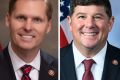
2 Mississippi Republican U.S. House members forced into runoffs after weak primary showings
Michael Guest narrowly trails challenger in 3rd District; Steven Palazzo clears just 32% in 4th District ♦By Rich Shumate, ChickenFriedPolitics.com editor JACKSON, Mississippi (CFP) –…
-
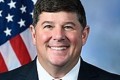
Mississippi Republican U.S. Rep. Steven Palazzo facing Tuesday primary fight amid ethics investigation
6 opponents hitting “No-Show Palazzo” over inattention to district, ethics problems ♦By Rich Shumate, ChickenFriedPolitics.com editor GULFPORT (CFP) — Mississippi U.S. Rep. Steven Palazzo —…
-

Primary Wrap: Kemp, Raffensperger survive Trump’s ire; Brooks makes Alabama U.S. Senate runoff
Texas Democratic U.S. Rep. Henry Cuellar survives challenge from the left; George P. Bush gets blown out by Attorney General Ken Paxton ♦By Rich Shumate,…
-

U.S. House’s last pro-life Democrat, Texas’s Henry Cuellar, fighting to keep seat in Tuesday primary runoff
Challenger Jessica Cisneros wanted House Democratic leaders to rescind Cuellar endorsement; they refused ♦By Rich Shumate, ChickenFriedPolitics.com editor LAREDO, Texas (CFP) — Amid the newly…
Senate Minority Leader Mitch McConnell turns back Tea Party primary challenge
In Georgia, David Perdue and Jack Kingston advance to July 22 Republican primary runoff
♦By Rich Shumate, Chickenfriedpolitics.com editor
 LOUISVILLE (CFP) — Senate Minority Leader Mitch McConnell easily turned back a Tea Party-inspired challenge Tuesday to win the GOP nomination for a sixth term representing Kentucky.
Meanwhile, in Georgia, St. Simons businessman David Perdue and U.S. Rep. Jack Kingston of Savannah won spots in a July 22 runoff for the Republican nomination for the Peach State’s open U.S. Senate seat.

Senate Minority Leader Mitch McConnell
McConnell took 60 percent of the May 20 vote, compared to 36 percent for Louisville businessman Matt Bevin, who had the backing of outside Republican groups critical of McConnell’s leadership, including the Senate Conservatives Fund and FreedomWorks.
However, the commonwealth’s other senator, Rand Paul, bucked his Tea Party supporters to back McConnell.
McConnell will now face Democratic Secretary of State Alison Lundergan Grimes in November.

U.S. Senate hopeful David Perdue
In Georgia, Perdue and Kingston sat atop a seven-candidate field, with Perdue at 31 percent and Kingston at 26. Former Secretary of State Karen Handel of Roswel came in third at 22 percent.
Two other sitting U.S. House members, Phil Gingrey and Paul Broun, trailed the three front-runners. Some establishment figures in the GOP had expressed concern that a victory by either Gingery or Broun would turn the Georgia seat into a Democratic target in November.
Michelle Nunn, the daughter of former U.S. Senator Sam Nunn, easily won the Democratic Senate nomination for the seat current held by U.S. Senator Saxby Chambliss.
Meanwhile, in Arkansas, Democratic U.S. Senator Mark Pryor and Republican U.S. Rep. Tom Cotton both won their Senate primaries and will face off in November.
Asa Hutchinson and Mike Ross advance to Arkansas governor’s race
U.S. Rep. Tim Griffin wins Republican primary for lieutenant governor
♦By Rich Shumate, Chickenfriedpolitics.com
LITTLE ROCK (CFP) — Two former members of the U.S. House — Republican Asa Hutchinson and Democrat Mike Ross — will meet in November in the governor’s race in Arkansas.
Hutchinson, 63, easily won the GOP nomination on May 20, carrying 72 percent of the vote against Little Rock businessman Curtis Coleman. Ross, 52, won a lopsided victory in the Democratic primary over Lynette Bryant, a Little Rock physician, with 85 percent.
Hutchinson served two terms in Congress, representing northwest Arkansas, before being appointed in 2001 as head of the Drug Enforcement Administration. He has lost three previous races for statewide office, including an unsuccessful bid for governor in 2006.
After the school shooting in Newtown, Connecticut, last year, Hutchinson signed on as the point man for National Rifle Association’s effort to combat school violence without imposing any new restrictions on firearms.
Ross served 12 years in Congress, representing southern and western Arkansas, before retiring in 2012. In the House, he was a member of the conservative Blue Dog Coalition and was one of the few Democrats to vote against Obamacare when it came to the floor of the House.
Former U.S. Rep. Mike Ross
Ross had initially said he would not run for governor, but he jumped into the race when the Democratic front-runner, Attorney General Dustin McDaniel, withdrew after admitting to an extra-marital affair with a woman who was later charged with manslaughter.
In the primary races for lieutenant governor, U.S. Rep. Tim Griffin of Little Rock won the Republican nomination over two challengers. He will face Democrat John Burkhalter, a former member of the state highway commission from Little Rock, in November.
Alex Mooney tops crowded field to win GOP U.S. House primary in West Virgina
Republican primary race in state’s 2nd District featured Tea Party-versus-establishment battle
♦By Rich Shumate, Chickenfriedpolitics.com editor
 CHARLESTON, West Virginia (CFP) — Just a year after moving across the Potomac River from Maryland into West Virginia, Republican Alex Mooney has won his party’s nomination for his new state’s open 2nd District U.S. House seat.
GOP House candidate Alex Mooney
In a seven-way race, Mooney captured 36 percent of the vote, defeating Ken Reed, a pharmacy owner from Berkeley Springs, who came in second at 22 percent, and Charlotte Lane, a Charleston lawyer and international trade commissioner under President George W. Bush, who took 18 percent of the vote.
West Virginia does not have primary runoffs.
The battle for the GOP nod in the 2nd District turned into a closely watched tussle between outside conservative activists and Tea Party groups, who backed Mooney, and business and party leaders who lined up behind Lane. Reed poured more than $500,000 of his own money into the race.
Lane had the backing of the powerful West Virginia Coal Association. Mooney was endorsed by the Senate Conservatives Fund, the Tea Party Express and former Arkansas Governor Mike Huckabee. Despite her establishment credentials, Mooney eclipsed Lane in fundraising by $150,000, according to filings with the Federal Election Commission.
Both Lane and Reed had accused Mooney, who served in the Maryland Senate from 1999 to 2010, of being a carpetbagger who parachuted into West Virginia to seek political office.
He had formed an exploratory committee for a U.S. House race in Maryland in 2012 but eventually decided not to run, and he moved to West Virginia in 2013. His Maryland Senate district was adjacent to the Mountaineer State.
Nick Casey, the former chairman of the West Virginia Democratic Party, easily won his party’s nomination for the 2nd District seat and will face Mooney in November.
The 2nd District meanders across 17 counties from Charleston, the state capital, to the Eastern Panhandle sandwiched between Maryland and Virginia. The seat is currently held by Republican U.S. Rep. Shelley Moore Capito, who is giving it up to run for the U.S. Senate.
Capito easily won her Senate primary and will face Democratic Secretary of State Natalie Tennant in the fall.
Even though Capito has held the seat since 2001 and Mitt Romney captured 60 percent of its presidential votes in 2012, Democrats see the seat as a potential pickup target. Casey has raised more than $890,000 in a district with modest media advertising costs, according to FEC reports.
Capito did not endorse any of the candidates in the Republican primary.
Clay Aiken’s opponent in North Carolina U.S. House primary dies in fall
Keith Crisco dies as absentee ballots were still being counted in razor-close contest with Aiken
♦By Rich Shumate, Chickenfriedpolitics.com editor
 RALEIGH (CFP) — American Idol runner-up Clay Aiken’s opponent in the Democratic primary for North Carolina’s 2nd District U.S. House seat, Keith Crisco, died May 12 after a fall at his home in Asheboro, his family confirmed in a statement.
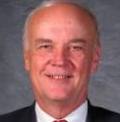
U.S. House candidate Keith Crisco
Crisco’s death came as provisional and absentee ballots were still being counted from the May 6 primary, with Aiken leading by just 369 votes. Crisco, 71, a businessman and former state commerce secretary, had not conceded the race.
Aiken, saying he was “stunned and deeply saddened” by Crisco’s death, announced that he was suspending all campaign activities.
“He was a gentleman, a good and honorable man and an extraordinary public servant. I was honored to know him,” Aiken said in a statement.
Crisco’s death will mean that Aiken will be his party’s nominee for the seat now held by Republican U.S. Rep. Renee Ellmers, who beat back a Tea Party primary challenge from Frank Roche, a Raleigh radio talk show host.
Ellmers also released a statement of condolence, saying Crisco’s “kindness and dedication to his principles were models we should all strive toward, and he will be dearly missed.”
The 2nd District includes parts of Raleigh and suburban areas to the west, southeast and northeast..

Democratic U.S. House candidate Clay Aiken
Aiken, 35, a Raleigh native, was a special education teacher when he rocketed to fame in 2003 by coming in second on the Fox network’s popular singing competition. He is making his first bid for political office. If elected in November, he will be the first openly gay congressman from North Carolina.
American Idol Clay Aiken holds tiny lead in North Carolina U.S. House primary
If his lead holds, Aiken will face Republican U.S. Rep. Renee Ellmers for 5th District seat in November
♦By Rich Shumate, Chickenfriedpolitics.com editor
RALEIGH (CFP) — American Idol runner-up Clay Aiken is holding a razor-thin lead in the Democratic primary for North Carolina’s 2nd District U.S. House seat, just enough to avoid a runoff.
Democratic U.S. House candidate Clay Aiken
With provisional and absentee ballots still to be counted, Aiken had 11,634 votes, compared to 11,265 votes for Keith Crisco, the former state commerce secretary, and 5,593 votes for Toni Morris, a professional counselor who sought the 2nd District seat in 2012, according to tallies from the State Board of Elections.
In order to avoid a primary runoff in North Carolina, a candidate has to win more than 40 percent of the vote. The current vote totals show Aiken clearing that hurdle by just 237 votes.
State law also calls for an automatic recount if the margin of victory turns out to be 1 percent or less. It currently stands at 1.3 percent.
Despite the narrow margin, Aiken told supporters at a victory rally in Raleigh that “we are feeling incredibly comfortable tonight.”
“People are ready to see a change in Washington, and we’re going to bring it to them,” he said.
Aiken, 35, a Raleigh native, was a special education teacher when he rocketed to fame in 2003 by coming in second on the Fox network’s popular singing competition. He is making his first bid for political office. If elected in November, he will be the first openly gay congressman from North Carolina.
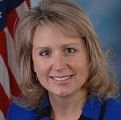
U.S. Rep. Renee Ellmers
If his lead holds, Aiken will face incumbent Republican U.S. Rep. Renee Ellmers in November. Ellmers beat back a Tea Party primary challenge from Frank Roche, a Raleigh radio talk show host, with 58 percent of the vote.
Roche had criticized Ellmers for her support of an immigration reform bill that would provide a pathway to citizenship for undocumented immigrants. Ellmers is one of the few House Republicans who supports the measure, and Roche’s challenge was seen as a test of how strongly that issue resonates within the GOP electorate.
The 2nd District includes parts of Raleigh and suburban areas to the west, southeast and northeast.
Click here to watch video of Clay Aiken’s victory speech.


