
Latest Posts
Latest Coverage
-
Symbolic solution in search of an actual problem
Support of 9 Southern Republicans for Respect for Marriage Act shows why Supreme Court isn’t about to ban same-sex marriage ♦By Rich Shumate, ChickenFriedPolitics.com editor…
-

West Virginia stubborn, or playing hard to get
U.S. Senator Joe Manchin pisses off his party yet again … to what end? ♦By Rich Shumate, ChickenFriedPolitics.com editor Also in this report: Atlanta DA…
-

2 Mississippi Republican U.S. House members forced into runoffs after weak primary showings
Michael Guest narrowly trails challenger in 3rd District; Steven Palazzo clears just 32% in 4th District ♦By Rich Shumate, ChickenFriedPolitics.com editor JACKSON, Mississippi (CFP) –…
-
Mississippi Republican U.S. Rep. Steven Palazzo facing Tuesday primary fight amid ethics investigation
6 opponents hitting “No-Show Palazzo” over inattention to district, ethics problems ♦By Rich Shumate, ChickenFriedPolitics.com editor GULFPORT (CFP) — Mississippi U.S. Rep. Steven Palazzo —…
-

Primary Wrap: Kemp, Raffensperger survive Trump’s ire; Brooks makes Alabama U.S. Senate runoff
Texas Democratic U.S. Rep. Henry Cuellar survives challenge from the left; George P. Bush gets blown out by Attorney General Ken Paxton ♦By Rich Shumate,…
-

U.S. House’s last pro-life Democrat, Texas’s Henry Cuellar, fighting to keep seat in Tuesday primary runoff
Challenger Jessica Cisneros wanted House Democratic leaders to rescind Cuellar endorsement; they refused ♦By Rich Shumate, ChickenFriedPolitics.com editor LAREDO, Texas (CFP) — Amid the newly…
Field set for bellweather U.S. House race in Florida
Republican David Jolly wins primary and will face Democrat Alex Sink in March 11 special election in the 13th District
♦By Rich Shumate, Chickenfriedpolitics.com editor
 ST. PETERSBURG, Florida (CFP) — Republican lobbyist David Jolly has defeated two other GOP rivals to claim his party’s nomination for the open 13th District U.S. House seat in Florida, which Democrats have high hopes of capturing in a March 11 special election.

GOP nominee David Jolly
Jolly, 41, won 45 percent of the vote in the January 14 primary, beating out Florida State Rep. Kathleen Peters and retired Marine Corps General Mark Bircher. He will now face Democrat Alex Sink in the special election to replace the late U.S. Rep. C.W. “Bill” Young, who died in October.
The district, which takes in most of Pinellas County, including St. Petersburg and Clearwater, is one of just three House seats in the South that President Barack Obama carried in 2012.
Democrats have high hopes that Sink, the party’s nominee for governor in 2010, will be able to flip the seat, which Young, an institution in Tampa Bay-area politics, had held since 1970.
Jolly is a former aide to Young, who left Capitol Hill to become a lobbyist. Peters made his lobbying an issue during the campaign, painting him as a Washington insider.
The race also divided Young’s family. His widow, Beverly, supported Jolly, but his son, Bill Young II, backed Peters.
Bircher had the support of Allen West, a Tea Party favorite and former congressman from Palm Beach County.
Peters came in second, with 31 percent; Bircher, third, with 24 percent.

Democratic nominee Alex Sink
Sink, 65, a former bank executive, was elected as Florida’s chief financial officer in 2006. In 2010, she ran for governor, narrowly losing to Republican Rick Scott.
Earlier this year, Sink decided against a rematch with Scott but decided to for the 13th District seat after Young’s death, even though at the time she lived outside the district in neighboring Hillsborough County.
Despite parachuting into the district, Sink avoided a primary fight after St. Petersburg attorney Jessica Ehrlich dropped out of the race and other Pinellas Democrats opted not to run.
Given Obama’s victory in the district, and the fact that Sink carried Pinellas County in her race for governor, Democrats are hoping to make a pickup.
The outcome in such a closely divided bellweather district may be an early indication of how much problems with the rollout of Obamacare have hurt Democrats ahead of the 2014 elections.
North Carolina governor decides to leave House seat vacant for nearly a year
Governor Pat McCrory says holding a special election for vacant 12th District seat would be too costly and inefficient
♦By Rich Shumate, Chickenfriedpolitics.com editor
 RALEIGH (CFP) — Democratic leaders and the NAACP in North Carolina are crying foul after Republican Governor Pat McCrory announced that no separate election will be held to fill the 12th District seat of former U.S. Rep. Mel Watt, who resigned January 13.

N.C. Governor Pat McCrory
Instead of separate election, voters in the majority-minority district will pick Watt’s replacement at the same time they decide on their next congressman during the normal 2014 election cycle.
As a result, the strongly Democratic district will have no representation until at least November, leaving the seat vacant for more than 300 days.
State NAACP President William Barber blasted McCrory’s decision, calling it “undemocratic political bullying.”
“Taxation without representation is a form of tyranny,” Barber said in a statement. “Surely there can be a fair formula worked out to ensure that all the people of the 12th District will have their voice heard in this historic session of Congress.”
Two Democratic members of the state’s House delegation, U.S. Reps. David Price and G.K. Butterfield, also called on McCrory to reconsider, saying the decision not to call a special election is “unprecedented in recent congressional history.”
“The assumption that North Carolina is better served by having one less advocate in the House for nearly a full year than by finding a cost-effective way to minimize the vacancy is seriously misguided,” the congressmen said in a letter to the governor.
“The fact that your decision requires so many of our state’s citizen’s to forgo their constitutionally guaranteed right of representation for twice as long as common practice is indefensible.”
The U.S. Constitution mandates that any vacancies in the House be filled by special election, unlike the Senate, where governors can make replacements until the next general election.
Article One, Section Two reads: “When vacancies happen in the Representation from any State, the Executive Authority thereof shall issue Writs of Election to fill such Vacancies.”
McCrory is actually calling a special election to fill the vacancy, but it will be held simultaneously with the primary and general election that would normally be held.
Under McCrory’s timeline, primaries for both the vacant seat and the general election will be held on May 6, with runoffs, if needed, on July 15. On November 4, voters in the district will decide both who will replace Watt immediately and who will take the seat when Congress convenes next January.
Presumably, different candidates could run in those separate elections, although that would seem unlikely.
Price and Butterfield noted that six vacancies during the current session of Congress have been filled by special election within an average of 126 days. After the late U.S. Rep. C.W. “Bill” Young of Florida died in October, it took only 145 days until the state held a primary election to pick his replacement on January 14.
But McCrory said that having a separate election to fill the seat sooner would cost the state more than $1 million.
“Because of the various filing deadlines, ballot preparation time, state and federal calendar requirements for ballot access, voter registration deadlines and to avoid voter confusion, it was determined the most efficient process would be to roll the special election into the already established primary and general election dates,” McCrory said in a statement announcing his decision.
The 12th District snakes across six counties in the central part of the state from Charlotte to High Point, including parts of Greensboro and Winston-Salem. It was created after the 1990 U.S. Census as a majority-minority district under the Voting Rights Act and is about 45 percent black and 7 percent Latino.
President Obama took nearly 79 percent of the vote in the district in 2012.

Former U.S. Rep. Mel Watt
Watt, 68, who has held the seat since it was created, resigned after being appointed by Obama to head the Federal Housing Finance Agency.
McCrory’s decision comes on the heels of a racially charged debate last summer over a new state law requiring voters to show identification at the polls. Republicans pushed through the law after taking control of the General Assembly in 2012.
The U.S. Justice Department has since sued the state to block the voter ID law from taking effect.
Analysis: GOP needs an (unlikely) Southern sweep to take back the Senate
Republicans face a tall order of ousting incumbents in Arkansas, Louisiana and North Carolina and keeping a seat in Kentucky
♦By Rich Shumate, Chickenfriedpolitics.com
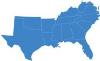 This year, 13 of the 14 Southern states — all save Florida — will have a Senate election. And a look at the map shows that the GOP needs to make a Shermanesque march across the South to have any hope of taking the Senate.
Barring any unforseen upsets, we can take nine of the 15 Southern races off the board — Virginia, South Carolina, Georgia, Tennessee, Mississippi, Alabama, Texas and two in Oklahoma.
In all of those states except Virginia and Georgia, Republican incuments are running again and are likely to win. One of the GOP-held seats in Oklahoma is open but unlikely to turn blue.
In Virginia, Democrat Mark Warner is running and favored, although the entry into the race of former Bush aide and GOP bigwig Ed Gillespie could make it interesting. The seat in Georgia is open, but, given the Peach State’s Republican proclivities, the party’s nominee would be in the driver’s seat.
That leaves five Southern races that will be pivotal — Arkansas, Louisiana, North Carolina, West Virginia and Kentucky. Democrats hold four of those seats; Republicans, only Kentucky.
If Republicans sweep all five of those seats, they will make a net gain of four seats. That would be enough to take control of the Senate if, as expected, the GOP takes away open Democratic seats in Montana and South Dakota.
But that also means that there is little room for error. Nearly all of the Southern dominoes have to fall the right way. And that’s easier said than done.
Louisiana is perhaps the weakest link for Republicans, who have been trying, and failing, to get Mary Landrieu out of the Senate for the past 18 years. She has proven herself to be the tabby cat of Louisiana politics — and of her nine lives, only three are spent.
North Carolina is also no slam dunk for the GOP, which is trying to defeat freshman Senator Kay Hagan. This is a state, after all, that Barack Obama carried in 2008 and almost carried in 2012, and the place where John Edwards won a Senate seat not that long ago.
In Arkansas, Senator Mark Pryor is in the political fight of his life against U.S. Rep. Tom Cotton. Yet, Pryor holds one of the most storied names in Arkansas political history. And this, remember, is the Land of Clinton, where Democrats still hold most of the statewide offices.
In Kentucky, Senate Minority Leader Mitch McConnell is facing a brutal primary fight with Tea Party favorite Matt Bevin, with Democratic Secretary of State Alison Lundergan Grimes waiting in the wings.
Smart money is still on McConnell, mainly because he has a mountain of money and is running in a state Obama lost by more than 20 points. But there is no question he faces a battle for survival.
At the end of the day, Republicans are likely to some of these Southern seats, maybe even most of them. But a complete sweep would seem to be a stretch.
So if they want to take back the Senate, Republicans may need to expand the map.
The best prospects for that are races in Michigan and Iowa, where Democratic incumbents are retiring, and New Hampshire, where one-time GOP star Scott Brown may cross the border from Masschusetts to take on Democratic Senator Jeanne Shaheen. Another possibility is Alaska, where Republicans have high hopes of ousting Democatic Senator Mark Begich.
Virgnia is another possibility, although Democrats could potentially also make Georgia competitive.
Any way you slice it, though, the South is where Senate control will be won or lost — and where the GOP will need the run of a lifetime in 2014.
House Majority Leader Eric Cantor will face primary challenge in Virginia
Dave Brat says he’ll bring “true conservative representation” to Congress, tying Cantor to President Obama
♦By Rich Shumate, Chickenfriedpolitics.com editor
 RICHMOND (CFP) — Add one more name to the list of Republican leaders in Congress facing a primary challenge from their Tea Party flank — House Majority Leader Eric Cantor.

Cantor challenger Dave Brat
Dave Brat, 49, an economics professor at Randolph-Macon College who lives in Henrico County, announced January 9 that he would seek the 7th District seat in Virginia, which Cantor first won in 2000.
“This will be a tough campaign, but I believe the Seventh District deserves better, and that we can restore government to the people,” Brat said in an announcement of his candidacy posted on his Web site.
Brat’s site features a picture of Cantor standing next to Obama, with the caption “Reforming Washington.”
Brat told the National Review that his campaign would “rattle some cages.”
“I want to be Eric Cantor’s term limit,” Brat said.
However, Brat will face a major hurdle in trying to unseat Cantor — cash. The congessman raised more than $3 million during the first nine months of 2013 and had $1.8 million in cash on hand, according to figures filed with the Federal Election Commission.
The 7th District includes northern and western areas of metro Richmond, then stretches northwest to the Shenandoah Valley. It is solidly but not overhwlemingly Republican, giving Mitt Romney 57 percent of the vote in 2012 percent of the vote.

House Majority Leader Eric Cantor
Cantor, 50, from Richmond, is second in the GOP hierarchy, behind House Speaker John Boehner. He won with 58 percent of the vote iin 2012, which was the closest election he’s had since first coming to the House.
Cantor has the distinction of being the only Jewish Republican in Congress.
Canton and Boehner have run into criticism from some Tea Party groups over their support for immigration reform and a recent budget deal reached with Democrats to avoid another government shutdown.
Tea Party activists have vowed to fund a primary challenge to Boehner back home in Ohio. Meanwhile, the two top Republicans in the Senate, Minority Leader Mitch McConnell of Kentucky and Minority Whip John Cornyn of Texas, are both facing primary challengers in 2014.
Arkansas Lieutenant Governor Mark Darr resigns over ethics charges
Three days after vowing he would stay in office, Darr says he no longer wants to subject his family to the “toxic business” of politics
♦Rich Shumate, Chickenfriedpolitcs.com editor
 LITTLE ROCK (CFP) — Facing impeachment and pressure for his resignation from within his own Republican Party, Arkansas Lieutenant Governor Mark Darr says he is quitting, effective February 1.

Arkansas Lieutenant Governor Mark Darr
“Politics can be a toxic business,” Darr said in a statement announcing his departure. “I will no longer subject my family to its hard lessons. All my forgiveness to those who play the games and all my respect and appreciation to those who serve with class and humility.”
Darr did not identify who he meant by “those who play the games.” However, he made a point in his statement that he was submitting his resignation “to the people of Arkansas, not an elected official.”
That was possibly an oblique reference to the Natural State’s Democratic Governor Mike Beebe, who had called on Darr to step down. The governor learned about Darr’s resignation from local media.
Beebe’s office later released a statement saying Darr’s decision to quit “is the best decision for the state of Arkansas and for Lieutenant Governor Darr.”
Darr said he had notified House Speaker Davy Carter and Senate President Pro-Tempore Michael Lamoureaux of his plans to step aside.
State law calls for a special election to be held to fill the remaining 11 months of Darr’s term. However, legislators are considering waiving that election, as was done in 2006 when then-Lieutenant Governor Win Rockefeller died in office.
The State Ethics Commission fined Darr $11,000 for violations relating to his 2010 campaign and during his time as lieutenant governor.
In its report, the commission said Darr made personal use of more than $31,000 in campaign funds and charged more than $3,500 of personal expenses on a state-issued credit card.
He was also cited for receiving improper reimbursement for nearly $3,600 in travel expenses from his home in Springdale to his office in Little Rock. The commission also sanctioned him for misreporting money he raised after the election to pay off loans he made to the campaign.
Darr conceded that he made mistakes and apologized. But in a lengthy defense issued January 7, he insisted there was “no malicious intentional disregard of the law” on his part.
He said he was entitled to accept the contributions to pay off the campaign debt and that he actually saved the state money by seeking mileage reimbursement for use of his personal vehicle, rather than having the Arkansas State Police carry him around.
After the report was issued, Beebe and the state’s entire congressional delegation — including five Republicans — called for his resignation. After a defiant Darr said he would not resign, Democrats in the state legislature said they would seek his impeachment.
Republican legislative leaders ratched up the pressure by saying they would call a special session to consider impeachment, rather than handling it in a budget session scheduled to begin in February. Darr could have been forced to pay the cost of the special session if he were removed.
Darr, 40, was a little-known restauranteur with no political experience when he won the lieutenant governorship in 2010, a campaign he based partially on his opposition to Obamacare.
He abandoned a campaign for the open 4th District U.S. House seat after his ethics problems came to light last summer.


