
Latest Posts
Latest Coverage
-
Symbolic solution in search of an actual problem
Support of 9 Southern Republicans for Respect for Marriage Act shows why Supreme Court isn’t about to ban same-sex marriage ♦By Rich Shumate, ChickenFriedPolitics.com editor…
-

West Virginia stubborn, or playing hard to get
U.S. Senator Joe Manchin pisses off his party yet again … to what end? ♦By Rich Shumate, ChickenFriedPolitics.com editor Also in this report: Atlanta DA…
-

2 Mississippi Republican U.S. House members forced into runoffs after weak primary showings
Michael Guest narrowly trails challenger in 3rd District; Steven Palazzo clears just 32% in 4th District ♦By Rich Shumate, ChickenFriedPolitics.com editor JACKSON, Mississippi (CFP) –…
-
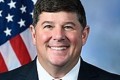
Mississippi Republican U.S. Rep. Steven Palazzo facing Tuesday primary fight amid ethics investigation
6 opponents hitting “No-Show Palazzo” over inattention to district, ethics problems ♦By Rich Shumate, ChickenFriedPolitics.com editor GULFPORT (CFP) — Mississippi U.S. Rep. Steven Palazzo —…
-

Primary Wrap: Kemp, Raffensperger survive Trump’s ire; Brooks makes Alabama U.S. Senate runoff
Texas Democratic U.S. Rep. Henry Cuellar survives challenge from the left; George P. Bush gets blown out by Attorney General Ken Paxton ♦By Rich Shumate,…
-

U.S. House’s last pro-life Democrat, Texas’s Henry Cuellar, fighting to keep seat in Tuesday primary runoff
Challenger Jessica Cisneros wanted House Democratic leaders to rescind Cuellar endorsement; they refused ♦By Rich Shumate, ChickenFriedPolitics.com editor LAREDO, Texas (CFP) — Amid the newly…
Tennessee House Speaker Glen Casada resigns over text message scandal
Casada, top aide reportedly exchanged explicit, misogynistic messages about various women
 NASHVILLE (CFP) — Bowing to mounting pressure to depart after two weeks of lurid headlines about bad behavior by his top aide, Tennessee House Speaker Glen Casada has announced that he will resign his leadership post.
In a brief statement issued May 21, the Franklin Republican said he would meet with his party’s House leadership in early June “to determine the best date for me to resign as speaker so that I can facilitate a smooth transition.”
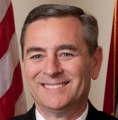
Tennessee House Speaker Glen Casada
The move comes after House Republicans approved a vote of no confidence in Casada and Republican Governor Bill Lee threatened to call the legislature into to special session to remove him as speaker.
Casada, 59, who has served in the legislature since 2003, became speaker in January. He plans to remain a member of the House.
The current speaker pro tempore, Bill Dunn of Knoxville, will become speaker upon Casada’s departure.
Earlier this month, Tennessee’s Gannett newspapers gained access to copies of text messages from a cell phone number used by Cade Cothren, Casada’s chief of staff.
In those messages, sent between 2014 and 2016 when Cothren served as press secretary for House Republicans, he bragged about his sexual exploits, referred to women with obscene and derogatory terms, and solicited sex and nude photos from an intern.
The records obtained by the newspapers showed that Casada was a participant in some of those conversations.
Cothren, 32, who made nearly $200,000 a year working for Casada, told the newspapers that he was “young and dumb and immature” when he sent the emails between three and five years ago.
Cothren also admitted to Nashville TV station WTVF that he had used cocaine at work and sent racist text messages. He said he had “turned to maladaptive coping mechanisms” because of job stress.
The station reported that Casada received at least one of the racist text messages. After first accusing WTVF of using fabricating messages, the speaker later backed away from that claim but said he did not remember receiving the message.
Casada told WTVF that Cothren had sought treatment in 2016 and that he had kept him on his staff because Cothren “deserved a shot at redemption.”
Cothren resigned on the same day the Gannett newspapers published their investigation. Casada resisted calls to step aside, at one point calling his exchanges with Cothren “locker room talk,” but saw his support crumble as national news outlets picked up on the scandal.
Republicans hold a 73-26 majority in the Tennessee House.
We tweet @ChkFriPolitics Join us!

State Senator Dan Bishop wins GOP primary in North Carolina’s 9th U.S. House District
Bishop will now face Democrat Dan McCready in September special election
♦By Rich Shumate, ChickenFriedPolitics.com editor
 CHARLOTTE (CFP) — State Senator Dan Bishop from Charlotte has easily won the Republican primary in North Carolina’s 9th U.S. House District and will now defend the seat against Democrat Dan McCready in a September special election.
Bishop took 48 percent in the May 14 vote, well above the 30 percent he needed to avoid a runoff.

State Senator Dan Bishop
Union County Commissioner Stony Rushing came in second at 20 percent, followed by former Mecklenburg County Commissioner Matthew Ridenhour at 16 percent.
McCready, who fell 900 votes short of winning the seat last November but got a second chance when the results of that election were tossed out, was unopposed in the Democratic primary.
Bishop’s victory sets up what is likely to be an expensive special election contest against McCready that will garner national attention for a seat Democrats hope to flip.
In his victory speech, Bishop came out swinging against what he called “liberal crazy” ideas like “socialism, open borders, infanticide [and] 90 percent tax rates.”
“Dan McCready went through two elections without telling anyone where he stood on anything,” Bishop said. “Voters in the 9th District deserve a clear choice, and we’re going to give them one.”
The 9th District seat has been open since state elections officials refused to certify the results of last November’s election amid allegations of absentee ballot fraud by a contractor linked to the 2018 Republican nominee, Mark Harris.
After the State Board of Elections ordered a new vote, Harris — who had defeated McCready by just 900 votes in November — opted not to run, clearing the way for Republicans to pick a new candidate.
Bishop, 54, is a social conservative best known as one of the authors of North Carolina’s “bathroom bill,” a law passed in 2016 which required transgendered people to use the restroom assigned to their birth gender in public facilities. After a public outcry and organized boycotts of the state, the law was repealed in 2017.
His campaign has been endorsed by the North Carolina Values Coalition, a conservative group that supported the restroom restrictions.
McCready, 35, is a Marine Corps veteran and solar energy entrepreneur making his first bid for political office.
Since losing to Harris, McCready has raised more than $2 million and will start the general election campaign with a $1.6 million war chest.
The district stretches across south-central North Carolina from the Charlotte suburbs to near Fayetteville.
The special election will be held September 10.
Residents of the 9th District have been without representation in Congress since Republican U.S. Rep. Robert Pittenger left office in January.
We tweet @ChkFriPoliitcs.com

Legal abortion has become fault line in Kentucky’s Democratic primary for governor
State Rep. Rocky Adkins breaks with much of his party by supporting bill banning most abortions after a heartbeat is detected
♦By Rich Shumate, ChickenFriedPolitics.com editor
 LOUISVILLE (CFP) — Rocky Adkins, the former Democratic leader of the Kentucky House, is among America’s rarest political species — a Democrat who opposes legal abortion. And that stance has become a clear fault line in the Democratic race for governor.

Kentucky State Rep. Rocky Adkins
Adkins is running in the May 20 primary against two Democrats who support legal abortion — Attorney General Andy Beshear and former State Auditor Adam Edelen — and the issue has taken on prominence not usually found in Democratic intra-party skirmishes.
“I am pro-life,” said Adkins, who represents a rural House district in eastern Kentucky, said during a recent debate. “You express the views of your constituents that you represent in the legislature for your votes, and that’s what I’ve tried to do.”
Adkins is a member of the legislature’s Pro-Life Caucus. Earlier this year, he was one of 10 Democrats in the House who voted for Kentucky’s “heartbeat bill,” which would ban most abortions once the baby’s heartbeat can be detected.
That measure was signed into law by the man these Democrats all hope to replace, Republican Governor Matt Bevin, who has made his opposition to abortion a feature of his re-election campaign.
Edelen has denounced the new law as “an experiment by the radical right to eliminate this protection for women.” Beshear, who describes himself as “pro-choice,” has refused as attorney general to defend the new law against a legal challenge.
When the issue came up in a recent debate, Beshear observed that “the only person who is excited we’re having this conversation is Matt Bevin. This is all he’s going to talk about in the general election.”
A Pew Research Center study found that 57 percent of Kentuckians thought abortion should be illegal in most cases, while only 36 percent supported legal abortion. Only four states — Alabama, Arkansas, Mississippi and West Virginia — are more pro-life.
Pew also found less support for abortion among people living in rural areas than in cities or suburbs. Edelen is from Lexington and Beshear is from Louisiville; Adkins is from Sandy Hook, population 600.
However, the issue of abortion cuts across Democratic politics in Kentucky in a way not seen in much of the rest of the country. When the heartbeat bill came up in the House earlier this year, only a minority of the Democratic caucus actively opposed the measure. Nineteen Democrats voted no, 10 voted yes — and 10 absented themselves rather than cast a vote.
The abortion crosscurrents are also visible in the Democratic race for governor. Beshear’s running mate, Jacqueline Coleman, described herself as a “pro-life Democrat” when she ran for the legislature in 2014 from a rural seat, though she now says she supports a woman’s right to choose an abortion. By contrast, Adkins’s running mate, Stephanie Horne, who is from Louisville, supports legal abortion.
Edelen and his running mate, Gill Holland, both support legal abortion, which Edelen has been using in the campaign to draw a contrast with Beshear and Adkins.
While the general election politics in Kentucky would clearly favor a candidate who doesn’t support legal abortion, Democratic primary politics are perhaps another matter. Adkins has not emphasized the issue during the campaign, has said he would “follow the Constitution” and has tied his opposition to abortion to his support for pre-K funding and bills to strengthen adoption and foster care.
“I’ve also said that we need to put warm food on the table and a roof over these babies’ heads when they’re born,” Adkins said.
Should Adkins triumph in the primary and then win the general election, he would join Louisiana Democratic Governor John Bel Edwards, who is running for re-election this fall, as the only Southern governors who oppose legal abortion.
Mississippi Democratic Attorney General Jim Hood, who is also running for governor in 2019, is also an abortion opponent.
The two other Southern Democratic governors, Roy Cooper in North Carolina and Ralph Northam in Virginia, both support legal abortion.
Cooper recently vetoed a bill that would have made it a crime for abortion doctors to kill babies born alive during an abortion procedure, saying a new law was not necessary.
Northam last year supported a bill that would have made it easier for women to obtain abortions in the third trimester, which failed to gain approval in the legislature.
We tweet @ChkFriPolitics Join us!
GOP voters in North Carolina 9th U.S. House district picking new candidate for race rerun
Tuesday’s primary will narrow field of Republican challengers to face Democrat Dan McCready
♦By Rich Shumate, ChickenFriedPolitics.com editor
CHARLOTTE (CFP) — Voters in North Carolina’s 9th U.S. House District will go to the polls Tuesday to vote in primaries for a seat that has been vacant since state elections officials refused to certify the winner of last November’s election over allegations of absentee ballot fraud.
On the Democratic side of the ballot, Dan McCready, who narrowly lost the seat in November, faces no opposition. But on the Republican side, nine candidates are jockeying for their party’s nomination after last year’s GOP nominee, Mark Harris, dropped out of the election rerun.

State Senator Dan Bishop
To clear the primary without a runoff in North Carolina, a candidate needs 30 percent of the vote, and pre-election polling has shown State Senator Dan Bishop of Charlotte right at that threshold and ahead of the other candidates in the crowded field. He has the backing of much of the Republican establishment, including Texas U.S. Senator Ted Cruz.
The only other candidate in double-digits in polling is Union County Commissioner Stony Rushing, who has gotten Harris’s endorsement.
The district stretches across south-central North Carolina from the Charlotte suburbs to near Fayetteville.
Democrats have high hopes of flipping the seat, which McCready lost to Harris by just 900 votes. He has raised more than $2 million since November and will start the general election campaign with a $1.6 million war chest.
However, Republicans in the legislature changed state law to force a primary in the special election, which cleared the way for the party to jettison Harris, whose campaign had seriously wounded by allegations that one of his campaign operatives had engaged in absentee ballot fraud in Bladen County, a rural outpost at the eastern end of the district.
After a new election was ordered, Harris — citing health concerns — declined to run.
Bishop, 54, is a social conservative best known as one of the authors of North Carolina’s “bathroom bill,” a law passed in 2016 which required transgendered people to use the restroom assigned to their birth gender in public facilities. After a public outcry and organized boycotts of the state, the law was repealed in 2017.
His campaign has been endorsed by the North Carolina Values Coalition, a conservative group that supported the restroom restrictions.

Stony Rushing as Boss Hogg
Rushing, 47, who owns a gun range, has drawn attention for dressing like Boss Hogg, the fictional political boss in “The Dukes of Hazard,” during his re-election campaign to the county commission in 2018. During the congressional campaign, he has defended Harris, saying the fraud allegations had been “blown out of proportion” and that state elections officials had erred by ordering a new vote.
McCready, 35, is a Marine Corps veteran and solar energy entrepreneur making his first bid for political office.
If no Republican candidate clears 30 percent, a runoff will be held in September. The GOP winner will face McCready in November.
Residents of the 9th District have been without representation in Congress since Republican U.S. Rep. Robert Pittenger left office in January.
We tweet @ChkFriPoliitcs.com
Southern Judiciary Committee members split on party lines in William Barr contempt vote
Committee holds attorney general in contempt for refusing to produce Mueller report
♦By Rich Shumate, ChickenFriedPolitics.com editor
 WASHINGTON (CFP) — Southern members of the House Judiciary Committee have voted along party lines to hold Attorney General William Barr in contempt for refusing to turn over an unredacted version of special counsel Robert Muller’s final report.

U.S. Rep. Lucy McBath, D-Georgia
Among the 10 Southern Democrats voting for the contempt measure May 8 was freshman U.S. Rep. Lucy McBath of Georgia, a top GOP target in 2020 in a Republican-leaning district in the Atlanta suburbs, and U.S. Rep. Debbie Mucarsel-Powell of Florida, another top Republican target next year.
Leading the charge against the contempt citation was another Georgian, U.S. Rep. Doug Collins, who is the ranking Republican member of the Judiciary panel. He accused the Democrats of sour grapes in targeting Barr.
“(They) are angry the special counsel’s report did not produce the material or conclusions they expected to pave their path to impeaching the president,” Collins said.
The committee approved the contempt resolution 24-16. It will now go to the full House, where it is expected to pass.
A contempt citation would express the displeasure of the House but would not result in any official action against Barr. However, it would mark only the second time in U.S. history that an attorney general has been held in contempt by a house of Congress.
Democrats have demanded to see a full, unredacted version of the report. But Barr has insisted that legal restrictions preclude him from turning it over.
President Donald Trump has also invoked executive privilege to avoid disclosing the report, setting off a potentially protracted legal battle with House Democrats.
Among the Democrats voting yes in addition to McBath and Mucarsel-Powell were Shelia Jackson Lee, Sylvia Garcia and Veronica Escobar of Texas; Ted Deutch and Val Demings of Florida; Hank Johnson of Georgia; Steve Cohen of Tennessee; and Cedric Richmond of Louisiana.
Republicans voting no in addition to Collins were Louie Gohmert and John Ratcliffe of Texas; Martha Roby of Alabama; Mike Johnson of Louisiana; Ben Cline of Virginia; and Greg Steube of Florida.
Matt Gaetz of Florida did not vote, although he did speak against the resolution during the debate preceding the vote.

 Chicken Fried Politics