
Latest Posts
Latest Coverage
-
Symbolic solution in search of an actual problem
Support of 9 Southern Republicans for Respect for Marriage Act shows why Supreme Court isn’t about to ban same-sex marriage ♦By Rich Shumate, ChickenFriedPolitics.com editor…
-

West Virginia stubborn, or playing hard to get
U.S. Senator Joe Manchin pisses off his party yet again … to what end? ♦By Rich Shumate, ChickenFriedPolitics.com editor Also in this report: Atlanta DA…
-

2 Mississippi Republican U.S. House members forced into runoffs after weak primary showings
Michael Guest narrowly trails challenger in 3rd District; Steven Palazzo clears just 32% in 4th District ♦By Rich Shumate, ChickenFriedPolitics.com editor JACKSON, Mississippi (CFP) –…
-

Mississippi Republican U.S. Rep. Steven Palazzo facing Tuesday primary fight amid ethics investigation
6 opponents hitting “No-Show Palazzo” over inattention to district, ethics problems ♦By Rich Shumate, ChickenFriedPolitics.com editor GULFPORT (CFP) — Mississippi U.S. Rep. Steven Palazzo —…
-

Primary Wrap: Kemp, Raffensperger survive Trump’s ire; Brooks makes Alabama U.S. Senate runoff
Texas Democratic U.S. Rep. Henry Cuellar survives challenge from the left; George P. Bush gets blown out by Attorney General Ken Paxton ♦By Rich Shumate,…
-

U.S. House’s last pro-life Democrat, Texas’s Henry Cuellar, fighting to keep seat in Tuesday primary runoff
Challenger Jessica Cisneros wanted House Democratic leaders to rescind Cuellar endorsement; they refused ♦By Rich Shumate, ChickenFriedPolitics.com editor LAREDO, Texas (CFP) — Amid the newly…

10 Republicans file to run for disputed North Carolina 9th District U.S. House seat
Winner of GOP primary will face Democrat Dan McCready for a seat Democrats hope to flip
♦By Rich Shumate, ChickenFriedPolitics.com editor
 CHARLOTTE (CFP) — Ten Republicans have filed the paperwork to run for their party’s nomination for the disputed 9th District U.S. House seat in North Carolina, setting up a primary battle to pick an opponent who can stop Democrat Dan McCready from flipping the seat from red to blue.

Dan McCready
By the close of the filing deadline for the special election on March 15, no Democrats filed to run against McCready, who lost the seat by 905 votes in November but is getting another chance after state elections officials ordered a new election amid allegations of absentee ballot fraud.
The seat has been vacant since January, and residents of the district could be without a representative in Washington until November, if the crowded Republican field requires a primary runoff.
The 10 Republicans running in the May 14 primary include four current or former elected officials: State Senator Dan Bishop from Charlotte; Union County Commissioner Stony Rushing from Wingate; former Mecklenberg County Commissioner Matthew Ridenhour from Charlotte; and Fern Shubert, a former state legislator from Marshville.
Also running are Stevie Rivenbark Hull, a sales manager from Fayetteville; Kathie Day, a real estate agent from Cornelius; Gary Dunn, a Charlotte businessman; Leigh Thomas Brown, a real estate agent from Harrisburg; Albert Wiley, Jr., a physician and frequent candidate from Salter Path; and Chris Anglin, a Raleigh attorney.

Dan Bishop
Bishop is best known for being a lead sponsor of North Carolina’s “bathroom bill,” a controversial 2016 law which required transgendered people to use bathrooms that matched their birth identity in public buildings. The legislature repealed the law in 2017 after the state faced a series of boycotts.
Bishop also also drew critical press coverage for his investment in Gab, a social media site popular with white supremacists and anti-Semites. He has said he was not aware that the site promoted hate speech when he made a crowdfunding investment in August 2017, a week after white supremacists ignited a riot in Charlottesville, Virginia.
Rushing, who owns a gun range, is serving his third term as a commissioner in Union County. He has been endorsed by Mark Harris, who was the Republican nominee in November’s disputed vote.
The State Board of Elections refused to certify Harris as the winner amid allegations that an operative hired by his campaign had improperly collected absentee ballots. After the board ordered a new vote, Harris bowed out of a rematch with McCready, citing health concerns.
Ridenhour, who lost his seat on the county commission last year after a single term, is a Marine veteran who has been active in the Tea Party movement in Charlotte.
Shubert served three terms in the House and one in the Senate. She made unsuccessful bids for governor in 2004 and state auditor in 2012.
Hull and Day are both political newcomers who live outside the 9th District, which stretches from Charlotte east along the South Carolina border toward Fayetteville. Federal law does not require candidates for Congress to live in the district they want to represent.
Brown is a Charlotte-area realtor. Dunn ran unsuccessfully for Charlotte mayor in 2017 and for the Democratic nomination for governor in 2012.
Wiley ran unsuccessfully for Congress in the neighboring 10th District in 2016 and 2018. Anglin ran unsuccessfully for the North Carolina Supreme Court in 2018. Neither man lives in the 9th District.
If none of the Republican candidates captures a majority in the May vote, a primary runoff is scheduled for Sept. 10, with a general election on Nov. 5. If a runoff isn’t required, the general election will move up to September, which could give the district representation in Washington sooner.
McCready, 34, a former Marine officer and businessman who has raised more than $500,000 since November, starts the race with a significant cash advantage over his Republican rivals and won’t need to spend any of it in a primary.
If McCready wins, the 9th District will be the only Republican-held district in North Carolina to flip Democratic in the 2018 election cycle.
We tweet @ChkFriPolitics Join us!

Former Texas U.S. Rep. Beto O’Rourke running for Democratic presidential nomination
Campaign for White House launched four months after O’Rourke came up short in U.S. Senate race
♦By Rich Shumate, ChickenFriedPolitics.com editor
 EL PASO (CFP) — Saying that the United States faces a “defining moment,” former U.S. Rep. Beto O’Rourke has announced he will seek the Democratic presidential nomination in 2020, launching a national campaign just four months after losing a U.S. Senate race in Texas.
“The challenges that we face right now — the interconnected crises in our economy, our democracy and our climate — have never been greater,” O’Rourke said in an announcement video posted on social media. “They will either consume us, or they will afford us the greatest opportunity to unleash the genius of the United States.”

O’Rourke and wife Amy in announcement video
Click photo to watch video
O’Rourke, who raised more than $80 million dollars in his unsuccessful bid to unseat Republican U.S. Senator Ted Cruz in 2018, promised to run “the greatest grassroots campaign this country has ever seen.”
“This is going to be a positive campaign that seeks to bring out the very best from every single one of us, that seeks to unite a very divided country,” he said.
In his announcement video, O’Rourke did not mention President Donald Trump by name, but he did draw a sharp contrast between himself and the president on Trump’s signature issue, immigration.
“If immigration is a problem, it is the best possible problem to have, and we should ensure that there are lawful paths to work, to be with family and to flee persecution,” he said.
Asked about O’Rourke’s announcement, Trump made light of the Texan’s propensity to use his hands as he speaks.
“I think he’s got a lot of hand hand movement. I’ve never seen so much hand movement,” Trump told reporters at the White House, “I said, ‘Is he crazy, or is that just the way he acts?'”
After posting his kickoff video, O’Rourke traveled to Iowa, which will hold the first caucuses in the 2020 election calendar. A formal campaign kickoff is scheduled for March 30 in his hometown of El Paso.
O’Rourke, 46 — whose given name is Robert but who goes by a childhood Spanish nickname, Beto — served three terms in the U.S. House representing metro El Paso before launching his campaign to unseat Cruz in 2017.
Given little chance when the race began, O’Rourke’s campaign caught the imagination of liberal activists around the country, allowing him to outraise Cruz and put what had been considered a safe seat in jeopardy.
Trump, who had a famously frosty relationship with Cruz when they competed for the White House in 2016, came to Texas to campaign for the senator as the race narrowed.
In the end, Cruz won by 215,000 votes, but O’Rourke’s showing was the best by a Democrat in a Texas Senate race in 30 years.
O’Rourke’s decision to pursue the presidency is good news for Texas’s other U.S. senator, Republican John Cornyn, who had already begin preparing for a challenge from O’Rourke in 2020.
O’Rourke is the third Southern candidate to enter crowded 2020 Democratic field, following another Texan, former San Antonio Mayor Julián Castro, and Richard Ojeda, a former state senator and unsuccessful congressional candidate from West Virginia.
We tweet @ChkFriPolitics Join us!

4 Southern GOP senators defy Trump on border emergency; North Carolina’s Thom Tillis makes about face to support president
Rubio, Paul, Wicker and Alexander break with Trump in voting to overturn emergency declaration
♦By Rich Shumate, ChickenFriedPolitics.com editor
 WASHINGTON (CFP) — With the support of four Southern Republicans and all four Southern Democrats, the U.S. Senate has voted to overturn President Trump’s declaration of a national emergency in order to find money for a barrier along the U.S.-Mexico border.

U.S. Senator Thom Tillis
But one GOP senator who had come out publicly in favor of overturning the declaration — Thom Tillis of North Carolina — reversed course and voted no, after intense lobbying from the White House and an avalanche of criticism from Trump partisans back home.
Trump has vowed to veto the resolution overturning the declaration, which passed by a 59-41 margin in the Republican-controlled Senate on March 14. The House passed it in late February by a vote of 254-182.
However, opponents of the declaration do not have enough support in either House to override Trump’s veto, which will be the first of his presidency.
The four Southern Republicans who broke the with president were Rand Paul of Kentucky, Marco Rubio of Florida, Roger Wicker of Mississippi, and Lamar Alexander of Tennessee.
All four Southern Democrats in the Senate also voted yes — Mark Warner and Tim Kaine of Virginia, Joe Manchin of West Virginia, and Doug Jones of Alabama.
Frustrated by the unwillingness of the Democrat-controlled House to vote money for the border wall, Trump declared a national emergency on February 15, which will allow him to shift $8 billion from other federal programs and use it for wall construction. Most of the money will come from appropriations for military construction and drug interdiction.

Alexander
In a floor speech before the vote, Alexander said he objected to Trump’s use of an emergency declaration to provide border wall funding after Congress failed to appropriate the money.
“The problem with this is that after a Revolutionary War against a king, our nation’s founders gave to Congress the power to approve all spending so that the president would not have too much power. This check on the executive is a crucial source of our freedom,” Alexander said.

Rubio
Rubio said he agreed with Trump that an emergency exists at the border but said he objected to shifting money out of the military construction budget to finance the border barrier.
“This would create a precedent a future president may abuse to jumpstart programs like the Green New Deal, especially given the embrace of socialism we are seeing on the political left,” he said in a statement on Twitter.
Paul and Wicker also cited constitutional considerations as the reason for their vote to overturn the declaration.

Wicker

Paul
“I stand with President Trump on the need for a border wall and stronger border security, but the Constitution clearly states that money cannot be spent unless Congress has passed a law to do so,” Paul said in a statement.
Wicker said he regretted “that we were not able to find a solution that would have averted a challenge to the balance of power as defined by the Constitution.”
“The system of checks and balances established by the Founders has preserved our democracy. It is essential that we protect this balance even when it is frustrating or inconvenient,” he said in a statement.
Tillis made a splash when he published an op-ed piece in the Washington Post on February 25 saying he would vote to overturn the emergency declaration because it would set a precedent that “future left-wing presidents will exploit to advance radical policies that will erode economic and individual freedoms.”
Tillis faced an avalanche of criticism from the president’s supporters in the Tar Heel State and was facing the likelihood of a primary challenge in his 2020 re-election race.
“A lot has changed over the last three weeks — a discussion with the vice president, a number of senior administration officials … a serious discussion about changing the National Emergencies Act in a way that will have Congress speak on emergency actions in the future,” Tillis said.
Republican senators had considered changing the National Emergencies Act to make it more difficult to declare emergencies in the future, but the plan faltered when House Democrats came out against it.
Tillis said he concluded that the crisis at the border was sufficiently serious to warrant the emergency declaration.
“We have narcotics flooding our country, poisoning our children and adults of all ages, and a lot of it has to do with the porous border and the seemingly out of control crossings,” Tillis said.
But Democrats back home pounced on Tillis for his change of heart.
“Tillis again reminded the entire state who he is — a spineless politician who won’t keep his promises and looks out for himself instead of North Carolina,” said Democratic Party spokesman Robert Howard in a statement.
Rubio and Paul do not face re-election until 2022; Wicker’s current term lasts through 2024.
Among the Democrats who voted against Trump, Jones is the only one who is running for re-election in 2020. Warner isn’t up for re-election until 2022, and Manchin and Kaine’s current terms last through 2024.
Jones is considered among the most vulnerable Democrats up for election in 2020, in a state where Trump remains popular.
We tweet @ChkFriPolitics Join us!

Kentucky U.S. Senator Rand Paul will oppose President Trump on border emergency vote
Rand’s defection means resolution to overturn Trump’s emergency declaration can pass Senate
♦By Rich Shumate, ChickenFriedPolitics.com editor
 BOWLING GREEN, Kentucky (CFP) — U.S. Senator Rand Paul of Kentucky will break with Donald Trump and vote to overturn the president’s declaration of a national emergency to find money to construct a wall along the U.S.-Mexico border.
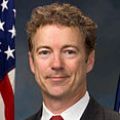
U.S. Senator Rand Paul
Paul is the fourth Republican senator to come out in favor of a resolution overturning the declaration, enough defections to get the measure through the Senate and force Trump to veto it.
Speaking at a Republican dinner Saturday in his hometown of Bowling Green, Paul cited constitutional objections to Trump’s plan to shift money to wall construction that has been earmarked by Congress for other purposes.
“We may want more money for border security, but Congress didn’t authorize it,” Paul said, according to a report in the Bowling Green Daily News. “If we take away those checks and balances, it’s a dangerous thing.”
Paul is the second Southern Republican senator to announce support for the resolution, joining North Carolina’s Thom Tillis in bolting from the party line.
Trump, frustrated by the unwillingness of the Democrat-controlled House to vote money for the border wall, declared a national emergency on February 15, which would allow him to shift $8 billion from other federal programs and use it for wall construction. Most of the money will come from appropriations for military construction and drug interdiction.
Under the law that governs national emergencies, Congress can overturn an emergency declaration with a majority vote in both houses. The House approved the measure by a vote of 245-182.
Only three of 101 Southern Republicans in the House opposed Trump’s declaration — Thomas Massie of Kentucky, Will Hurd of Texas, and Francis Rooney of Florida.
Republicans hold a 53-47 advantage in the Senate. With Paul, Tillis, Susan Collins of Maine and Lisa Murkowski of Alaska publicly opposed, the resolution overturning the declaration will pass the Senate if Democrats unite against it.
Trump has vowed to veto the resolution and has more than enough support in both houses to prevent his veto from being overridden. The battle will then move to federal court, where opponents are challenging the legality of the emergency declaration.
Paul, who doesn’t come up for re-election until 2022, had been seen as a likely yes vote on overturning the declaration. A libertarian known for opposing his party leadership on constitutional issues, Paul reportedly argued with Vice President Mike Pence about the declaration at a recent GOP party lunch.
The Southern Republicans in the Senate still deciding about whether to oppose the emergency declaration include Ted Cruz of Texas, Marco Rubio of Florida, and Lamar Alexander of Tennessee.
Paul, Cruz and Rubio were all presidential candidates against Trump in 2016. Alexander has announced he will retire in 2020.
We tweet @ChkFriPolitics Join us!

Republican Mark Harris drops out of rerun for North Carolina 9th District U.S. House seat
Harris cites ill health for bowing out of new vote triggered by voter fraud allegations against his campaign
♦By Rich Shumate, ChickenFriedPolitics.com editor
CHARLOTTE (CFP) — Back in November, Mark Harris was poised to become North Carolina’s newest U.S. House member, after appearing to win by a razor-thin margin of just 905 votes.
But after being battered by charges that an operative working for his campaign engaged in absentee ballot fraud, Harris has now brought his once-promising quest for Congress to an end.

Mark Harris
Harris announced that he will not run in a new election in the 9th District ordered by the North Carolina State Board of Elections, which will allow Republicans to pick a new nominee to take on Democrat Dan McCready.
Meanwhile, the Harris operative at the center of the fraud allegations, Leslie McCrae Dowless, was indicted by a grand jury in Raleigh on charges of obstruction of justice and conspiracy. Four of his associates were also indicted.
Harris cited ill health, including surgery scheduled for March, for the his decision to drop out of the campaign.
“While few things in my life have brought me more joy than getting to meet and know the people of this incredible part of North Carolina … I owe it to (my wife) Beth, my children and my six grandchildren to make the wisest decision for my health,” he said in a statement released February 26.
“I also owe it to the citizens of the Ninth District to have someone at full strength during the new campaign,” he said.
During a hearing by the state elections board into allegations of absentee ballot fraud, Harris, 52, had revealed that he had suffered two strokes in January while fighting an infection.
Harris endorsed Union County Commissioner Stony Rushing in the Republican primary, which, with Harris out, is likely to draw a large field of candidates.
The district runs from the suburbs of Charlotte east along the South Carolina border toward Fayetteville.
Governor Roy Cooper has yet to set a date for primaries and the special election. In the meantime, the seat remains vacant.
In November, Harris, a Baptist pastor and longtime Christian conservative activist, appeared to have defeated McCready in unofficial returns, finally winning on his third try for elective office.
But the state board refused to certify the results after allegations surfaced that Dowless orchestrated an effort to illegally collect absentee ballots in Bladen County, a rural outpost at the eastern end of the district.
Dowless has denied wrongdoing.
Harris’s decision not to run came just five days after the board ordered a new election in the district, after hearing four days of testimony about Dowless’s activities in Bladen County.
The most dramatic moment of the hearing came when Harris’s son, John, a federal prosecutor in Raleigh, testified that he had warned his father against using Dowless as an operative in the campaign because he was a “shady character.”
Harris wept as he listened to his son’s testimony, which contradicted his previous assertions that the allegations of illegal activity by Dowless came as a surprise.
In December, North Carolina’s Republican-controlled legislature changed state law to require a full primary election in the event the 9th District race was rerun, which gave the GOP the option of ditching Harris and nominating another candidate to face McCready.
McCready, 34, a former Marine officer and businessman, is not expected to face any challengers on the Democratic side. He has raised more than $500,000 since November in preparation for a new election.
If McCready wins, the 9th District will be the only North Carolina seat to shift from Republican to Democrat and would be the 11th Southern seat to shift in the 2018 cycle.
Republicans hold a 101-to-50 advantage in House seats across the 14 Southern states.

 Chicken Fried Politics