
Latest Posts
Latest Coverage
-
Symbolic solution in search of an actual problem
Support of 9 Southern Republicans for Respect for Marriage Act shows why Supreme Court isn’t about to ban same-sex marriage ♦By Rich Shumate, ChickenFriedPolitics.com editor…
-

West Virginia stubborn, or playing hard to get
U.S. Senator Joe Manchin pisses off his party yet again … to what end? ♦By Rich Shumate, ChickenFriedPolitics.com editor Also in this report: Atlanta DA…
-

2 Mississippi Republican U.S. House members forced into runoffs after weak primary showings
Michael Guest narrowly trails challenger in 3rd District; Steven Palazzo clears just 32% in 4th District ♦By Rich Shumate, ChickenFriedPolitics.com editor JACKSON, Mississippi (CFP) –…
-
Mississippi Republican U.S. Rep. Steven Palazzo facing Tuesday primary fight amid ethics investigation
6 opponents hitting “No-Show Palazzo” over inattention to district, ethics problems ♦By Rich Shumate, ChickenFriedPolitics.com editor GULFPORT (CFP) — Mississippi U.S. Rep. Steven Palazzo —…
-

Primary Wrap: Kemp, Raffensperger survive Trump’s ire; Brooks makes Alabama U.S. Senate runoff
Texas Democratic U.S. Rep. Henry Cuellar survives challenge from the left; George P. Bush gets blown out by Attorney General Ken Paxton ♦By Rich Shumate,…
-

U.S. House’s last pro-life Democrat, Texas’s Henry Cuellar, fighting to keep seat in Tuesday primary runoff
Challenger Jessica Cisneros wanted House Democratic leaders to rescind Cuellar endorsement; they refused ♦By Rich Shumate, ChickenFriedPolitics.com editor LAREDO, Texas (CFP) — Amid the newly…
GOP leaders fear Alabama-style debacle in West Virginia U.S. Senate primary
A win by jailed former mine operator Don Blankenship could ensure Democrat Joe Manchin’s re-election
♦By Rich Shumate, ChickenFriedPolitics.com editor
 CHARLESTON, West Virginia (CFP) — Republican party leaders in West Virginia are bracing for the possibility that a coal mine owner who went to prison after 29 of his workers were killed by an explosion in an unsafe mine might end up as their nominee for the U.S. Senate, handing the seat to Democrats in November.
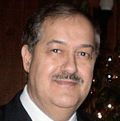
Don Blankenship
Heading into Tuesday’s primary, polls showed no clear leader in the GOP Senate race between Don Blankenship, U.S. Rep. Evan Jenkins and Attorney General Patrick Morrisey, who are all vying for the right to take on Democratic U.S. Senator Joe Manchin in November.
Blankenship, the former CEO of Massey Energy, spent a year in prison for willfully violating mine safety laws after a 2010 explosion at the Upper Big Branch mine in Montcoal killed 29 miners, the deadliest mine accident in the United States in 40 years.
GOP leaders have become alarmed at the possibility that they will be saddled with a flawed candidate and lose a winnable Senate race, a point President Donald Trump made in an election-eve tweet: “Remember Alabama. Vote Rep. Jenkins or A.G. Morrisey!”
Trump’s reference was to the race for an open Senate seat in Alabama, where Democrat Doug Jones pulled off an upset in December after the Republican nominee, Roy Moore, was accused of sexually pursuing young girls, a charge he denied.
With Republicans clinging to a one-seat majority, the race in West Virginia — which Trump won by a stunning 42 points in 2016 — presents a prime pickup opportunity that could vanish with a Blankenship victory.
Blankenship, 68, has maintained that he is innocent of the charges brought against him for the Upper Big Branch mine explosion, blaming the disaster instead on federal mine inspectors. He has poured at least $3.5 million of his own money into his Senate campaign, trying to brand himself as an anti-establishment outsider.
Among Blankenship’s targets has been the top Republican in the Senate, Majority Leader Mitch McConnell. In one ad, he calls McConnell “Cocaine Mitch,” a spurious charge based on a report that cocaine had been found on a ship belonging to a shipping company owned by the family of McConnell’s Chinese-American wife, Transportation Secretary Elaine Chao.
Although McConnell and his wife own stock in the shipping company, there is no evidence either of them or their families members had any connection with the cocaine shipment.
Until Blankenship began rising in the polls, Jenkins and Morrisey had mostly turned their fire on each other. The question now is whether either one of them will be able to defeat Blankenship and preserve Republican hopes in November.
West Virginia does not have primary runoffs, so whichever candidate wins a plurality Tuesday will get the nomination.

U.S. Senator Joe Manchin of West Virginia
Manchin, 70, is seeking a second full term in the Senate. Despite being a former two-term governor and serving in statewide office since 2001, Manchin is considered among the most vulnerable Democratic senators in the 2018 cycle because of the size of Trump’s win in 2016.
Jenkins, 57, was elected to represent the state’s 3rd District in 2014 after toppling then-U.S. Rep. Nick Rahall, a Democratic titan who had served 19 terms in Congress.
Morrisey, 50, was first elected attorney general in 2012, the first Republican to hold that post in nearly 70 years. A native of New Jersey who ran for Congress from that state in 2000, Morrisey moved in 2006 to Jefferson County, a county in the West Virginia panhandle which is part of the Washington, D.C. metropolitan area.
Also on the primary ballot are races in the the 3rd District, which takes in the lower third of the state. Seven Republicans, including four current or former state House members, are vying for the nomination to succeed Jenkins, with House Majority Whip Carol Miller of Crab Orchard establishing a strong fundraising advantage.
The likely Democratic nominee is populist State Senator Richard Ojeda, an Iraq war veteran who may be the best hope Democrats have for winning a House seat in the Mountaineer State in 2018.
Former Florida U.S. Rep. Alan Grayson will try to reclaim his old seat
Grayson is running against his successor, U.S. Rep. Darren Soto, in Democratic primary for metro Orlando seat
♦By Rich Shumate, ChickenFriedPolitics.com editor
 ORLANDO (CFP) — Liberal firebrand Alan Grayson will try to reclaim his old seat in the U.S. House, setting up a Democratic primary battle with the man who succeeded him in Congress, U.S. Rep. Darren Soto, for a seat in metro Orlando.
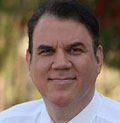
Former U.S. Rep. Alan Grayson
“We did a lot of good things for a lot of people, and I don’t see that happening right now,” Grayson said in an interview with WKMG-TV where he announced his intention to run.
With characteristic understatement, Grayson boasted that “I wrote more bills than any other member of Congress, and I got more passed than any other member of Congress.”
He is also faulting Soto for not pushing for the impeachment of President Donald Trump, which House Democratic leaders have been actively discouraging in order to avoid energizing pro-Trump voters.
Soto was elected to the 9th District seat in 2016, after Grayson gave it up to make an unsuccessful bid for the U.S. Senate. In that race, Soto defeated Grayson’s wife, Dena, who ran to succeed her husband.
The race to unseat Soto won’t be easy for Grayson. The district, which takes in southwest Orlando city and suburban Osceola County, has a growing Puerto Rican population, an advantage for Soto, who is Florida’s first congressman of Puerto Rican descent.
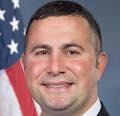
U.S. Rep. Darren Soto, D-Florida
Soto has also been endorsed by all 10 of Florida’s other Democratic congressman — a clear sign of just how much Democratic leaders don’t want to see a Grayson redux.
Grayson, 60, a Harvard-educated lawyer who made a personal fortune in the telecom industry, burst onto the national scene after his election to Congress in 2008 with a floor speech in which he said the GOP’s health care plan was for the uninsured “to die quickly.”
He has called Republicans “knuckle-dragging Neanderthals,” likened the Tea Party to the Ku Klux Klan and once compared former Vice President Dick Cheney to a vampire.
In 2009, he had to apologize after calling a female lobbyist “a K Street whore.” He is also known to subject reporters to profanity-laden tirades for stories he doesn’t like.
Grayson’s controversial profile cost him his House seat in 2010, a campaign in which he referred to his opponent, U.S. Rep. Daniel Webster, as “Taliban Dan” in a television ad. But Grayson returned to Congress in 2012, winning in a newly created Orlando-area district.
In addition to his hyperbolic comments, Grayson was also involved in a nasty divorce with his first wife, Lolita, whom he accused of bigamy and tried to have arrested for using a joint credit card to buy groceries.
Lolita Grayson has also accused him of being unfaithful and abusive, charges that dogged him during his senatorial campaign. He has denied any abuse.
Soto, 40, is an attorney who served in the Florida legislature before being elected to Congress. He was one of just three freshmen named to a leadership post in the House Democratic caucus after arriving in Washington.
In April, Soto’s wife, Amanda, was arrested for disorderly intoxication after getting into a fight with her mother at Walt Disney World. The congressman explained at the time that prior to the incident, his wife had stopped taking medication for depression under a doctor’s direction.
The winner of the Soto-Grayson primary will face Republican Wayne Liebnitzky, a businessman and professional engineer from St. Cloud whom Soto defeated in 2016.
Florida’s primary is August 28.
Florida GOP U.S. Rep. Dennis Ross will not run for re-election
Decision opens up another potential Democratic target in the Sunshine State
♦By Rich Shumate, ChickenFriedPolitics.com
LAKELAND, Florida (CFP) — Republican U.S. Rep. Dennis Ross has announced he will not seek a fifth term in November, opening up a congressional seat in Tampa’s eastern suburbs.
U.S. Rep. Dennis Ross, R-Florida
Ross’s announcement came shortly after House Speaker Paul Ryan announced he too was retiring from Congress, amid projections of a Democratic wave that could flip control of the House this year.
“I never viewed this amazing opportunity as a job or a career,” Ross said in a statement announcing his retirement. “My home has been and will continue to be in Lakeland, Florida.”
Ross said he would resume his law practice and pursue “opportunities to increase civic education for our youth, and young adults, and with that encourage more engagement and participation of future generations in government.”
Before the announcement, Ross, 58, first elected in the Republican wave of 2010, had been considered a prohibitive favorite to retain the 15th District seat, which includes the eastern suburbs of Tampa and northwestern Polk County, including Lakeland. The district tilts Republican, and Ross won 57 percent in 2016.
With filing for primary elections set to begin on May 4, the question for Democrats will be finding a candidate with enough statute to make the 15h District race competitive. Six Democrats are currently running, but none has any political experience.
While 54 incumbent House members are not running in 2018 — a retirement rate of 12 percent– Ross is just the second House member from Florida to forgo re-election in 2018. The other is Republican U.S. Rep. Ileana Ros-Lehtinen, who represents a Miami-area district that is considered a likely Democratic pickup.
Florida Governor Rick Scott announces U.S. Senate run
Race between Scott and incumbent U.S. Senator Bill Nelson could be nation’s most expensive
♦By Rich Shumate, ChickenFriedPolitics.com
ORLANDO (CFP) — Republican Florida Governor Rick Scott has made official what was widely expected — he will challenge Democratic incumbent U.S. Senator Bill Nelson in November.
Florida Governor Rick Scott
Scott’s decision, announced April 9 in Orlando, sets up what is likely to be a hard-fought and hugely expensive battle for Florida’s seat, with control of the Senate hanging in the balance.
Calling Washington “dysfunctional” and slamming “career politicians,” Scott called on Floridians to “stop sending talkers to Washington. Let’s send doers to Washington.”
“We shouldn’t be sending the same type of people to Washington. We should say we’re going to make change,” Scott said. “We can change Washington. We must change Washington. We will change Washington.”
The emphasis on changing the culture of Washington was a direct slap at Nelson, who has served in the Senate for 18 years after serving 12 years in the U.S. House.
Scott, who kicked off his campaign at a construction company that has expanded during his eight years in Tallahassee, also touted his record as a “jobs” governor, taking credit for creating 1.5 million new jobs and cutting taxes by $10 billion.
“People are flocking to Florida because this is where you can live the dream of this country,” he said. “Now, we’ve got to take that same mission to D.C.”
Scott, 65, a multimillionaire former for-profit hospital executive, was a political newcomer when he was first elected governor in 2010 after pouring more than $70 million of his own money into the race. He was re-elected by a narrow margin in 2014.
U.S. Senator Bill Nelson of Florida
Nelson, 75, was first elected to the Senate in 2000 and won re-election easily in 2006 and 2012. He is one of just five Democrats representing Southern states, along with U.S. Senators Doug Jones of Alabama, Tim Kaine and Mark Warner of Virginia, and Joe Manchin of West Virginia.
Nelson and Machin, who both represent states President Donald Trump carried in 2016, are among the top Republican targets in the 2018 election cycle. Trump had been publicly urging Scott to run against Nelson.
In response to Scott’s announcement, Nelson issued a statement saying he has “always run every race like there’s no tomorrow — regardless of my opponent” and adding that Scott “will say or do anything to get elected.”
“I’ve always believed that if you just do the right thing, the politics will take care of itself,” he said.
The race in Florida, a state that is closely divided politically and has 10 television markets, is expected to approach or break spending records, particularly because of the personal fortune Scott can bring to bear.
The most expensive Senate race in history was in Pennsylvania in 2016, where more than $160 million was spent by candidates and outside groups.
Democrats will no doubt try to tie Scott to Trump, which could have unpredictable results in what’s shaping up to be a Democratic year. Another wildcard will be the effect of Scott’s support for new restrictions on gun purchases that passed the Florida legislature after 17 people died in a mass shooting at a high school in Parkland.
The new restrictions have drawn the ire of the National Rifle Association and other gun-rights groups, although supporters of stronger controls on guns faulted the measure passed by Florida lawmakers for not going far enough.
Republicans current have a narrow 51-to-49 seat advantage in the Senate, which means all of the seats up in 2018 could be pivotal in deciding which party is in control.
Among Southern seats, Democrats’ best targets are in Texas, Tennessee and a special election for a vacant seat in Mississippi. For Republicans, Nelson and Manchin are at the top of the target list, with an outside shot at Kaine.
No other Southern states have Senate races this year.
Mississippi Agriculture Commissioner Cindy Hyde-Smith picked for U.S. Senate vacancy
Selection sets up contentious special election battle with Republican State Senator Chris McDaniel
 BROOKHAVEN, Mississippi (CFP) — State Agriculture Commissioner Cindy Hyde-Smith has been picked to fill Mississippi’s vacant seat in the U.S. Senate, marking the first time the Magnolia State has ever sent a woman to Congress.

Cindy Hyde-Smith unveiled as senator (From WJTV)
The question now is whether Hyde-Smith, a former Democratic state legislator who switched parties in 2010, can keep the seat permanently in a November special election that is likely to become a bruising battle for conservative votes against State Senator Chris McDaniel.
Governor Phil Bryant announced his selection of Hyde-Smith on March 21 in her hometown of Brookhaven.
“I pledge to you to serve all of our citizens with dignity, honor and respect,” she said in a speech where she emphasized her conservative positions against abortion and in favor of gun rights. “I’ve been a conservative all my life, and I’m very proud of my conservative record.”
She also noted that “this history of this moment is not lost on me.”
“I hope I can inspire young people to work hard to achieve their goals,” she said.
However, Bryant’s decision to pick Hyde-Smith came in for blistering criticism from McDaniel, whose supporters had been lobbying Bryant to appoint him to the seat created by the retirement of Republican U.S. Senator Thad Cochran.
“I was troubled to learn that Mississippi Governor Phil Bryant dutifully followed the orders of the Washington establishment’s Mitch McConnell,” McDaniel said in a statement. “Knowing the establishment’s opposition to conservatives, it was not at all surprising that they would choose a former Democrat.”
But in his introduction of Hyde-Smith, Bryant brushed aside suggestions that he was doing the bidding of Senate Republican leaders in picking Hyde-Smith.
“This decision is mine and mine alone,” he said. “But after it has been made, we need all Mississippians to stand with us if we are to be victorious.”
Hyde-Smith, 58, who operates a cattle farm with her husband, served in the state Senate as a Democrat from 2000 to 2010 and as a Republican from 2010 to 2012, when she left the Senate to run for agriculture commissioner. She won that race and was reelected with 61 percent of the vote in 2015.
In November, Hyde-Smith will run in an all-party special election against McDaniel and Democrat Mike Espy, a former congressman who served as federal agriculture secretary in the Clinton administration. If no candidate gains a majority, the top two finishers will meet in a runoff.
McDaniel, who nearly toppled Cochran in a 2014 primary, had originally filed to run against the state’s other GOP senator, Roger Wicker. But after Cochran announced his retirement, McDaniel changed course and decided to run for the open seat instead.
His decision to switch races led to a war of words with Bryant, who accused McDaniel of being “opportunistic” and made it clear that he would not only not appoint him to the vacant seat but would oppose his candidacy in the special election.
Bryant’s reaction to McDaniel’s candidacy shows that hard feelings have lingered from from the 2014 primary.
During that campaign, a McDaniel supporter, Clayton Kelly, sneaked into a nursing home to photograph Cochran’s wife, who was suffering from dementia, in order to collect material for a political video alleging that Cochran was involved in an extramarital affair. McDaniel denied any involvement in the scheme; Kelly later went to jail.
McDaniel has been a harsh critic of the Republican establishment, including Cochran, Wicker, and, especially, McConnell, the Senate majority leader whom he accused of meddling in Mississippi ‘s Senate races.
Though Hyde-Smith pronounced herself a supporter of President Trump in her statement accepting Bryant’s appointment, Politico reported that the White House opposed the governor’s decision because of fears that Hyde-Smith won’t carry the race in November.
However, she will be running not only with the support of Bryant but also with deep roots in the agriculture community, an important constituency in Mississippi.

 Chicken Fried Politics