
Latest Posts
Latest Coverage
-
Symbolic solution in search of an actual problem
Support of 9 Southern Republicans for Respect for Marriage Act shows why Supreme Court isn’t about to ban same-sex marriage ♦By Rich Shumate, ChickenFriedPolitics.com editor…
-

West Virginia stubborn, or playing hard to get
U.S. Senator Joe Manchin pisses off his party yet again … to what end? ♦By Rich Shumate, ChickenFriedPolitics.com editor Also in this report: Atlanta DA…
-
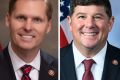
2 Mississippi Republican U.S. House members forced into runoffs after weak primary showings
Michael Guest narrowly trails challenger in 3rd District; Steven Palazzo clears just 32% in 4th District ♦By Rich Shumate, ChickenFriedPolitics.com editor JACKSON, Mississippi (CFP) –…
-
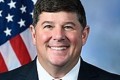
Mississippi Republican U.S. Rep. Steven Palazzo facing Tuesday primary fight amid ethics investigation
6 opponents hitting “No-Show Palazzo” over inattention to district, ethics problems ♦By Rich Shumate, ChickenFriedPolitics.com editor GULFPORT (CFP) — Mississippi U.S. Rep. Steven Palazzo —…
-

Primary Wrap: Kemp, Raffensperger survive Trump’s ire; Brooks makes Alabama U.S. Senate runoff
Texas Democratic U.S. Rep. Henry Cuellar survives challenge from the left; George P. Bush gets blown out by Attorney General Ken Paxton ♦By Rich Shumate,…
-
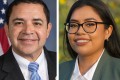
U.S. House’s last pro-life Democrat, Texas’s Henry Cuellar, fighting to keep seat in Tuesday primary runoff
Challenger Jessica Cisneros wanted House Democratic leaders to rescind Cuellar endorsement; they refused ♦By Rich Shumate, ChickenFriedPolitics.com editor LAREDO, Texas (CFP) — Amid the newly…
GOP primary in South Carolina U.S. House special election heads to a runoff
Winner of Republican contest will face Democrat Archie Parnell in June 20 election for Mick Mulvaney’s former House seat
♦By Rich Shumate, Chickenfriedpolitics.com editor
 YORK, South Carolina (CFP) — State legislators Tommy Pope and Ralph Norman survived a crowded Republican field in the battle for South Carolina’s vacant 5th District U.S. House seat and will now face off in a May 16 runoff, with the winner facing Democrat Archie Parnell on June 20.

Pope

Norman
Pope narrowly edged out Norman in the first round of voting on May 2, with each taking about 30 percent of the vote against five other competitors. Parnell took 71 percent of the vote against two competitors in the Democratic primary, avoiding a runoff.
Given the district’s strong Republican lean, the winner of the GOP runoff will be considered a heavy favorite to capture the seat, which Mick Mulvaney gave up to become director of the Office of Management and Budget in the Trump administration.

Parnell
However, Parnell, who spend 20 years as a managing director at investment giant Goldman Sachs, brings a personal fortune to the race. He also has the endorsement of John Spratt, the Democrat who held this seat for 28 years before being ousted by Mulvaney in the Republican wave of 2010.
The 5th District takes in the north central part of the state, stretching along the I-77 corridor from the suburbs of Charlotte down to near Columbia.
Pope, 54, from York, is best known as the prosecutor in the trial of Susan Smith, who was convicted in 1995 of drowning her two young sons after first claiming they had been carjacked by a black man. He has served in the state House since 2010, rising to the position of speaker pro tempore in 2014.
Norman, 63, is a real estate developer from Rock Hill who served two stints in the state House, first from 2005 to 2007 and then from 2009 until he resigned to run for Mulvaney’s seat. He was the unsuccessful Republican nominee against Spratt in 2006.
Parnell, 66, from Sumter, is a South Carolina native who is currently a senior adviser to Goldman Sachs after working there as a managing director for 20 years. He is also a former tax attorney for ExxonMobil and worked in Washington as senior counsel for a House committee from 1976 to 1980.
Florida U.S. Rep. Ileana Ros-Lehtinen bowing out after three decades in Congress
Her departure opens up a prime opportunity for Democrats to pick up a GOP-held seat
♦By Rich Shumate, Chickenfriedpolitics.com editor
 MIAMI (CFP) — U.S. Rep. Ileana Ros-Lehtinen, the dean of Florida’s House delegation, will not seek re-election in 2018 to her 27th District seat in Miami-Dade County, drawing down the curtain on three decades of service that have made her an icon in the state’s politically powerful Cuban-American community.
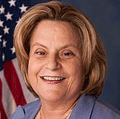
U.S. Rep. Ileana Ros-Lehtinen, R-Fla.
The decision means Republicans will now have to defend a seat from a district which Donald Trump lost by 20 points in 2016 but which had continued to return Ros-Lehtinen to office term after term.
“It’s a great job. But there comes a time when you say, you know, even though this is a wonderful life, and even though I’m doing what I love to do, there’s so many other wonderful things,” she said at a May 1 news conference announcing her retirement.
Ros-Lehtinen, a moderate Republican who has found herself at odds with Trump and other members of her own party, also insisted her departure is unrelated to the current political climate in Washington.
“I know it would be a great narrative to say people aren’t civil with each other and that there’s just a lot of infighting,” she said. “But I’ve been there so many years, I don’t recall a time when there hasn’t been infighting.”
“I’m not frustrated by that.”
Ros-Lehtinen, 64, who was born in Cuba and moved to Miami with her parents at the age of 7, won a House seat in a 1989 special election to fill the vacancy created by the death of Claude Pepper, who himself was a political icon in Miami. She became the first Cuban-American ever elected to Congress and the first Republican woman elected to Congress from Florida.
She has faced little opposition since that first election. However, as the Cuban-American community in Miami has become less monolithically Republican in the last 20 years and district lines have been been altered, the GOP has held on to the district largely because of Ros-Lehtinen’s popularity.
Still, in 2016, she won by just 10 points, as Hillary Clinton was pasting Trump in her district. Democrats were expected to try to contest the seat in 2018, although Ros-Lehtinen expressed confidence that she would have won if she had she run again.
Ros-Lehtinen has left signficant daylight between herself and Trump, refusing to endorse him and opposing both his plans to repeal and replace Obamacare and build a wall along the U.S.-Mexico border. As the mother of a transgender son, she has also been a champion for LGBT equality in Congress.
The 27th is one of just six Southern House seats held by Republicans that Clinton carried, and her margin there was the largest win in any GOP-held district in the country. Ros-Lehtinen’s departure means Democrats will have an opportunity to pick up the seat.
The race to replace Ros-Lehtinen will be a wide open affair, likely drawing a number of Cuban-American politicians from both parties into the mix. Among the Republicans being mentioned is Lieutenant Governor Carlos López-Cantera, who has run statewide and is closely allied with the state’s two top Republicans, Governor Rick Scott, and U.S. Senator Marco Rubio.
Several state legislators are also eyeing the race, which may mean that the field won’t begin to fill out until the legislature adjourns later in May.
Twice-ousted Alabama Chief Justice Roy Moore running for U.S. Senate seat
Moore, suspended for defying U.S. Supreme Court on same-sex marriage, will take on Luther Strange in GOP primary
♦By Rich Shumate, Chickenfriedpolitics.com editor
MONTGOMERY (CFP) — Roy Moore, the controversial favorite of the Christian right twice elected and twice ousted as Alabama’s chief justice after battles over same-sex marriage and the Ten Commandments, has announced he will run in a special election against U.S. Senator Luther Strange.

Former Alabama Chief Justice Roy Moore
In an April 26 speech to supporters in front of the State Capitol, Moore offered a full-throated defense of religious conservatism, saying “before we can make America great again, we have got to make America good again.”
“The foundations of our country are being shaken tremendously,” he said. “Our families are being crippled by divorce and abortion. Our sacred institution of marriage has been destroyed by the Supreme Court, and our rights and liberties are in jeopardy.”
Moore also announced he was resigning his chief justice post, just days after a panel of retired judges appointed by his colleagues on the Alabama Supreme Court turned down his appeal of a suspension handed down by a disciplinary panel in 2016.
Moore becomes the third Republican to step forward to challenge Strange, who was forced to defend his seat nearly a year before he expected to face voters after new Alabama Governor Kay Ivey reversed a decision by her disgraced predecessor and ordered a special election.
Moore was elected chief justice in 2012, but in 2016, he was suspended by a judicial disciplinary panel for the rest of his term for ethics violations after urging local officials to defy the U.S. Supreme Court decision legalizing same-sex marriage. That suspension was upheld April 20 by the panel of retired judges appointed to hear his appeal.
In 1995, Moore, then a little-known circuit court judge in Etowah County, shot to national notoriety after battling the ACLU over his practice of opening court sessions with a prayer and hanging the Ten Commandments in his courtroom.
He parlayed that prominence into election as chief justice in 2000 but was forced out in 2003 after he had a display of the Ten Commandments installed in the rotunda of the state judicial building and then defied a federal judge’s order to remove it.
Although he won two statewide races for chief justice, Moore lost races for governor in 2006 and 2010 to Robert Bentley, whose resignation led to the special election for Strange’s Senate seat.
Bentley resigned April 10 as state lawmakers were considering impeaching him over efforts to cover up a relationship with a former female aide. He pleaded guilty to two misdemeanors and agreed never to seek political office again.
In February, Bentley appointed Strange to fill the seat vacated when Jeff Sessions left the Senate to become U.S. attorney general. But he delayed a special election for the vacancy until November 2018, despite a state law mandating that vacancies be filled “forthwith.”
After taking office, Ivey reversed course and ordered the election this year. Party primaries are scheduled for August, with a general election in December.
In addition to Moore, two other Republicans have so far entered the race for the Senate seat — State Rep. Ed Henry, R-Hartselle, who launched the effort to impeach Bentley, and Randy Brinson, president of the Christian Coalition of Alabama, who will likely vie with Moore for the Christian conservative vote.
No Democrats have so far announced.
Democrat Jon Ossoff falls short of majority in Georgia U.S. House special election
Ossoff will now face an uphill climb in runoff against Republican Karen Handel
By Rich Shumate, Chickenfriedpolitics.com editor
 ATLANTA (CFP) — Democrat Jon Ossoff’s insurgent campaign to flip Georgia’s 6th District U.S. House seat in Atlanta’s northern suburbs fell short of securing a majority in an April 18 special election, setting up a high-stakes showdown with Republican Karen Handel in a June 20 runoff.

Karen Handel

Jon Ossoff
With all of the precincts in the district reporting, Ossoff had 48.1 percent of the vote, followed by Handel, a former Georgia secretary of state, at 19.8 percent. Bob Gray, a technology executive who touted his work for Donald Trump’s presidential campaign, came in third with 10.8 percent.
Ossoff’s result was a surprisingly strong showing by a Democrat in what had been seen as a safe Republican seat. But his failure to clear an outright majority means he will now have to beat Handel in a head-to-head race.
Despite not clearing that hurdle, Ossoff told his supporters that the result was “a victory for the ages” and vowed to continue the fight.
“We have defied the odds. We have shattered expectations. We are changing the world, and your voices are going to ring out across this state and across this country,” said Ossoff, a 30-year-old filmmaker and former congressional aide with no previous political experience.
“There is no amount of dark money, Super PAC, negative advertising that can overcome real grassroots energy like this. So bring it on.”
Handel, who managed to fight off attacks from her fellow Republicans to come in second, told her supporters that “nine weeks from today, we have an opportunity and a real responsibility to elect a member of Congress who shares our values.”
Telegraphing how her campaign will frame the campaign ahead, Handel called herself “a proven, independent and conservative leader who has delivered for the people of this district.”
For Handel, 55, the second-place finish was a welcome political comeback after back-to-back losses to Governor Nathan Deal in a GOP runoff in 2010 and a Republican primary for the U.S. Senate in 2014. She served as secretary of state from 2007 to 2011 and as chair of the Fulton County Commission from 2003 to 2006.
Trump was an overarching presence in the 6th District race. Ossoff used anti-Trump sentiment to whip up Democratic enthusiasm and raise a staggering $8.3 million, using the slogan “Make Trump Furious.”
That prompted the president to make a robocall to voters in the district, saying “Ossoff will raise your taxes, destroy your health care and flood our country with illegal immigrants.” However, Trump did not endorse anyone, and the four unabashedly pro-Trump candidates in the race fared poorly, taking only about 20 percent of the vote.
The June 20 runoff is likely to be a bruising affair with national implications, as Republicans try to hold on to what had been seen as a safe seat and Democrats try to embarrass Trump by snatching it away.
The first round results show the uphill climb Ossoff faces: Together, 11 Republican candidates captured 98,000 votes, besting the 93,900 votes captured by Ossoff and four other Democrats. And while Ossoff carried a majority in the part of the district that lies in DeKalb County, he failed to clear a majority in the larger slices in Cobb and Fulton counties.
The 6th District seat became vacant in February, when Tom Price left to become secretary of the U.S. Department of Health and Human Services in the Trump cabinet. The all-party special election drew a crowded field of 18 candidates.
Price had won the district by 76,000 votes in November, but Democrats smelled blood after Trump only managed to carry it by a scant 1.5 percent. Trump also lost the March 2016 Republican primary in the district to U.S. Senator Marco Rubio of Florida.
The 6th District has been previously represented by former House Speaker Newt Gingrich and Republican U.S. Senator Johnny Isakson. It had been considered so unassailable that in 2016, the Democratic nomination for the seat went to a man who didn’t even bother to campaign.
Despite public insistence by Republican leaders that an Ossoff victory was nothing more than a liberal fantasy, the National Republican Congressional Committee ran ads into the district, telling voters that Nancy Pelosi and her fellow liberals are are trying to use this race to stop the Republican agenda. The Republican National Committee has also moved resources into the district in anticipation of the runoff.
Alabama governor orders special election to fill U.S. Senate seat handed to Luther Strange
Decision truncates two-year temporary term Strange received from disgraced ex-Governor Robert Bentley
♦By Rich Shumate, Chickenfriedpolitics.com editor
 MONTGOMERY (CFP) — Alabama Governor Kay Ivey has reversed a decision by her disgraced predecessor and ordered a special election this year to permanently fill the state’s open U.S. Senate seat, forcing Republican Luther Strange to defend the seat nearly a year before he expected to face voters.

U.S. Senator Luther Strange
Strange was appointed to the seat in February by ex-Governor Robert Bentley, who delayed a special election for the vacancy until November 2018, despite a state law mandating that vacancies be filled “forthwith.” But Ivey, who took office April 10 after Bentley resigned, said the “the rule of law” required an election this year.
“I promised to steady our ship of state. This means following the law, which clearly states the people should vote for a replacement U.S. senator as soon as possible,” Ivey said in a statement. She set party primaries for September, with the general election to follow in December.
Ivey’s decision means Strange will have to defend his seat, as questions continue to swirl about his push as state attorney general first to delay Bentley’s impeachment and then downplay an investigation into his conduct after Bentley sent him to Washington.
However, the senator was publicly nonplussed about the prospect of an earlier vote.
“I’m a candidate, and I’m ready to run whether the election is next month or next year,” he said in a statement. “As the only announced candidate for this office, I will spend the next several months being the best senator I can be, upholding Alabama values and working with President Donald Trump to drain the swamp.”
Strange, 64, served as attorney general from 2011 until his appointment to the Senate. He was selected to fill the vacancy created when Jeff Sessions was confirmed as U.S. attorney general.
Bentley said he decided to hold the special election at the same time as the 2018 midterm elections to save money. But as a result, Strange would have received a temporary appointment that lasted nearly two years without facing voters.
Alabama is one of 15 states that require a special election to fill Senate vacancies. In the other 35 states, governors appoint replacements to serve until the next scheduled election.

Alabama Governor Kay Ivey
Ivey conceded that an election this year is likely to be costly, but she said “following the law trumps the expense of a special election.”
So far, no candidate in either party has stepped forward to challenge Strange, although the Bentley imbroglio could provide a political opening.
Bentley resigned as state lawmakers were considering impeaching him over efforts to cover up a relationship with a former female aide. He pleaded guilty to two misdemeanors and agreed never to seek political office again.
In November 2016, just before the presidential election, Strange asked leaders of the House Judiciary Committee to suspend their work on possible impeachment charges against Bentley because it might impact “related work” by the attorney general’s office.
But after being appointed by Bentley to the Senate, Strange tried to tamp down speculation that the governor was under investigation, telling reporters, “We have never said in our office that we are investigating the governor. I think it’s actually somewhat unfair to him and unfair to the process.”
Then, just days later, Strange’s successor as attorney general, Steve Marshall, confirmed that Bentley was indeed under investigation. And because he, too, had been appointed by Bentley, he recused himself and named a special prosecutor, who negotiated the plea deal that pried the former governor from office.
Strange has insisted that his actions as attorney general regarding the Bentley investigation were above board. However, Bessemer attorney Sam McClure has filed a complaint with the Alabama State Bar Association, asking for Strange to be disbarred for accepting the Senate appointment after delaying the impeachment proceedings, which he said violated legal ethics.
McClure has indicated he will file a similar complaint with the Alabama Ethics Commission, which could also investigate Strange.
However, a strong argument against any quid quo pro between Bentley and Strange is the fact that at the time he asked the Judiciary Committee to suspend its process, Donald Trump had not been elected. So Strange had no way of knowing that Sessions would be appointed as attorney general and a Senate vacancy would open.
In another twist, a legislator who pushed for Bentley’s impeachment, State Rep. Ed Henry, R-Hartselle, now says he met with Bentley shortly after Strange’s appointment, and the then-governor told Henry that he sent Strange to the Senate not to impede the investigation into his own conduct but because Bentley thought Strange was corrupt and wanted to get him out of the state.
Henry has now told this story in both national and state media outlets, prompting strong denials from Bentley’s attorney. Two other state legislators have now gone on the record saying that Henry told them the details of what Bentley said in that meeting, although they were not privy to the conversation.


