
Home » Posts tagged 'Bernie Sanders' (Page 5)
Tag Archives: Bernie Sanders

Analysis: Trump, Clinton’s Southern primary wins expose weaknesses for the fall
Trump needs to run the table in the South. Can Clinton stop him?
♦By Rich Shumate, Chickenfriedpolitics.com editor
 (CFP) — The primary and caucus season across the South has largely come and gone (Republicans have voted everywhere except West Virginia; Democrats, Kentucky and West Virginia), leaving behind some clear trends and evidence about how things might play out in the fall.
 First the trends: Donald Trump and Hillary Clinton cut through the region like Sherman on steroids. She won every state save Oklahoma, most by whopping margins; he took everything except Texas and Oklahoma, which he lost to U.S. Senator Ted Cruz.
Given that Clinton runs best among African-American voters, and Trump’s strongest support is among white working-class voters, this was no surprise. Both of those demographic groups dominate the Democratic and Republican vote, respectively, across the South.
The irony for Clinton, however, is that she is running extraordinarily well in a region where, as conventional wisdom would have it, she doesn’t have a prayer of winning in the fall. And the weak appeal she has exhibited among white voters turned up in Oklahoma, one of the South’s whiter states, where U.S. Senator Bernie Sanders beat her.
That bears repeating: An avowed socialist beat Clinton in Oklahoma.
Meanwhile, the thrice-married, frequently profane rich guy from Long Island rolled from Paragould to Pascagoula to Pensacola, with gobs of religious conservatives apparently willing to overlook his colorful biography in order to make America great again. More impressively, he beat Cruz in a region where the Texan should have done much better.
However, the primary results showed that there could be challenges ahead for Trump in his quest to keep the solid Republican South solid in the fall should he be the nominee.
And a Southern sweep is vital to his hopes of winning the White House. The last four times the Republican candidate carried the region, he won; the last four times he didn’t, he lost. (Bill Clinton carried four Southern states; Obama, three.)
For all of his victories, Trump did not crack 50 percent anywhere in the South, although he came close in Mississippi. That means that even in a region where his brand of populism seems to have struck a chord, more Republicans were opposed to voting for him than voted for him. In six states, he didn’t even crack 40 percent.
And it is also instructive to look at some of the places where Trump didn’t win.
He lost Atlanta and two of its suburban counties; Richmond and its suburbs; Little Rock; Oklahoma City; Columbia and Charleston, S.C.; Miami-Dade County (although that was to hometown U.S. Senator Marco Rubio); and the Raleigh-Durham-Chapel Hill area. In Tennessee, he barely carried Nashville and Memphis, winning only about 30 percent of the vote. He lost all of the major cities in Texas to Cruz, who, admittedly, had the home court advantage.
These results show that Trump’s political act may not be wearing as well with urban and suburban Southern Republicans as it is in small towns and rural areas. That probably won’t matter in the fall in places such as Mississippi, Alabama, Louisiana and South Carolina. But if he can’t win those reluctant-for-Trump voters over to his side by November, it could matter in other places.
We already know that Virginia, North Carolina and Florida will be battleground states because Obama carried all three. And he did so running against Republicans that had, more or less, the united backing of their party. Trump doesn’t have that now, and it’s unclear if he will.
And then there’s Georgia, which has a large and politically active African-American population that will crawl across broken glass to vote for Clinton. If Trump continues to show weakness in Atlanta and its suburbs, the Peach State could also be in play.
Tennessee and Arkansas are probably longer shots, primarily because Clinton will have fewer African-American voters on which she can rely. However, there is still a residual strain of affection for Clinton in some quarters in Arkansas, where she spent 10 years as first lady.
Of course, Clinton’s weakness among white voters shows why she may be the Democrat least equipped to carry anything south of the Mason-Dixon line. After all, if even white Democrats aren’t voting for her, how is she going to fare when white people who aren’t Democrats are voting against her? That hurdle could be too high to jump, even with extraordinary support among black voters.
Remember, though, that Clinton doesn’t have to win everything in the South; just two or three states could make Trump’s ascension to the White House darn near impossible. He either needs to run the table or find states elsewhere to make up the difference.
Can he do it? Well, Trump has proven that he has a knack for defying the odds, so a wise pundit doesn’t bet against him. But the primary results show it may prove a more difficult feat than the Donald expects.
Marco Rubio exits presidential race after losing Florida
Donald Trump and Hillary Clinton win primaries in Florida and North Carolina
♦By Rich Shumate, Chickenfriedpolitics.com editor
 MIAMI (CFP) — U.S. Senator Marco Rubio has of Florida ended his presidential campaign after losing the Sunshine State to Donald Trump in the Republican primary.
Trump also carried North Carolina. On the Democratic side, Hillary Clinton also easily won both Florida and North Carolina.
The only Southerner now left in the race, U.S. Senator Ted Cruz of Texas, failed to win any of the five March 15 contests. However, his losses to Trump were narrow in North Carolina and Illinois, and Missouri was a virtual tie, with Trump prevailing by less than 1,800 votes.
“After tonight, America now has a clear choice going forward,” Cruz told supporters in Houston. “Only two campaigns have a plausible path to the nomination, ours and Donald Trump’s. Nobody else has any mathematical possibility whatsoever.”
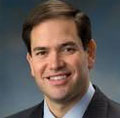
U.S. Senator Marco Rubio
Rubio, who won only two primary contests in Minnesota and Puerto Rico, had been banking on a win in his home state. But Trump carried 46 percent to Rubio’s 27 percent, with Cruz at 17 percent and Ohio Governor John Kasich at 7 percent.
Speaking to supporters in Miami after the television networks called the race for Trump, Rubio said “it is clear that while we are on the right side, this year we will not be on the winning side.”
“The fact that I’ve even come this far is evidence of how special America is,” he said.
A short time later, Cruz saluted Rubio’s campaign effort and made a direct pitch for his voters.
“To those who supported Marco, who worked so hard, we welcome you with open arms,” Cruz said.
In North Carolina, Trump took 40 percent to 37 percent for Cruz, 13 percent for Kasich and 8 percent for Rubio.
In the Democratic primary in Florida, Clinton rolled up 65 percent, to 33 percent for U.S. Senator Bernie Sanders of Vermont. The race in North Carolina was closer, with Clinton at 55 percent and Sanders at 41 percent.
With those wins, Clinton has now taken 13 of the 14 Southern states, with only West Virginia left. Trump has taken 11, losing only Texas and Oklahoma to Cruz.
Voters in West Virginia go to the polls May 10.
Trump, Clinton roll through Mississippi; Cruz wins in Idaho
Marco Rubio has another hard night, finishing last in two contests
♦By Rich Shumate, Chickenfriedpolitics.com editor
 JACKSON, Mississippi (CFP) — Donald Trump rolled through the Mississippi GOP primary, nearly capturing an outright majority in one of his strongest wins of the primary season.
On the Democratic side, Hillary Clinton, as expected, cruised to a win in the Mississippi Democratic primary, besting U.S. Senator Bernie Sanders of Vermont by a nearly 5-to-1 margin.
Meanwhile, U.S. Senator Ted Cruz of Texas won the Republican primary in Idaho, notching his sixth win in the GOP presidential contest. But it was another hard night for the other Southerner in the race, U.S. Senator Marco Rubio of Florida, who could finish no better than third in any of the four March 8 contests.
In addition to the Republican primaries in Mississippi and Idaho, Michigan held a primary, and Hawaii had a caucus; Trump won them both.
The only other Democratic contest was in Michigan, where Sanders defeated Clinton in the night’s biggest upset.
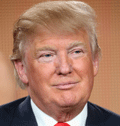
Candidate Donald Trump
In Mississippi, Trump took 47 percent of the vote, compared to 36 percent for Cruz. Rubio managed only a meager 5 percent, coming in fourth behind Governor John Kasich of Ohio.
Buoyed by the Magnolia State’s large African-American vote, Clinton won 83 percent to 17 percent for Sanders
In Michigan Cruz finished second and Rubio fourth. The Florida senator came in third place in Hawaii and Idaho.
Heading into pivotal March 15 contests in Florida and North Carolina, Trump has 458 delegates; Cruz, 359; Rubio, 151; and Kasich, 54. A total of 1,237 delegates are needed to win the nomination.
On the Democratic side, Clinton has 1,221 to 571 for Sanders, with 2,383 needed for the nomination.
Cruz wins in Maine, Kansas, but Trump scores in the South
Hillary Clinton carries Democratic primary in Louisiana
♦By Rich Shumate, Chickenfriedpolitics.com editor
BATON ROUGE (CFP) — U.S. Senator Ted Cruz of Texas bolstered his argument that he should be considered the alternative to Donald Trump in the GOP presidential race by scoring clear victories in Kansas and Maine.
However, Trump held on in the two Southern contests held on March 5, narrowly beating Cruz in a primary in Louisiana and a caucus in Kentucky.
Meanwhile, on the Democratic side, Hillary Clinton, as expected, won going away in Louisiana, a state with a large African-American population. Democrats did not vote in Kentucky.
The biggest loser of the night was U.S. Senator Marco Rubio, who finished third in Kansas, Kentucky and Louisiana and scraped in dead last in Maine, where he was shut out of the delegate count.
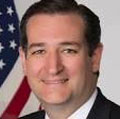
U.S. Senator Ted Cruz
Speaking to supporters in Boise, Idaho, Cruz hailed the results as “a very good day.”
“We’re seeing Republicans coming together. We’re seeing conservatives coming together,” he said. Cruz told reporters that the GOP field needs to continue to narrow in order to defeat Trump.
But Rubio, speaking at a rally in Jacksonville, Florida before the results began rolling in, showed no signs he was going anywhere, noting that he had successfully battled long odds to win a Senate seat in 2010.
“If you watch the press, they say he’s an underdog. He’s taking on an incredible task,” Rubio said, referring to himself. “Let me tell you something–America is country of underdogs.”
In Louisiana, Trump took 42 percent of the vote to 38 percent for Cruz. In Kentucky, Trump won 36 percent to Cruz’s 31 percent.
Among Democrats, Clinton won 71 percent to 24 percent for Bernie Sanders.
The next Southern stops in the presidential race are:
◾Tuesday, March 8: Mississippi (primary)
◾Tuesday, March 15: Florida (primary); North Carolina (primary)
◾Tuesday, May 19: West Virginia (primary)
Trump, Clinton roll across the South on Super Tuesday
Trump carries five of seven Southern GOP primaries; Clinton takes six on Democratic side
SUPER TUESDAY SOUTHERN RESULTS
♦By Rich Shumate, Chickenfriedpolitics.com editor
(CFP) — Donald Trump and Hillary Clinton rolled across the South on Super Tuesday, carrying 11 of the 14 primaries and the lion’s share of the delegates up for grabs.
The only outliers were Oklahoma, which both Trump and Clinton lost, and the Republican primary in Texas, which went for homestate U.S. Senator Ted Cruz
Trump and Clinton won Alabama, Arkansas, Georgia, Tennessee and Virginia in the March 1 vote. Clinton also won the Democratic primary in Texas
Super Tuesday was rough sledding for U.S. Senator Marco Rubio of Florida, who came in second place in Virginia and Georgia but could only manage a third-place finish in Alabama, Arkansas, Tennessee, Oklahoma and Texas.
In addition to winning Texas and Oklahoma, Cruz finished second to Trump in Alabama, Arkansas, Tennessee. He was third in Georgia and Virginia.
While Trump won most of the Super Tuesday primaries on the Republican side, he cleared 40 percent only one Southern state, Alabama, which he swept by 18 points.
Trump also notched double-digit wins in Georgia and Tennessee. His victories in Arkansas and Virginia were narrow, 2 and 3 percent, respectively.
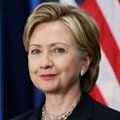
Former Secretary of State Hillary Clinton
Buoyed by her strong support among African-Americans, Clinton rolled up huge numbers across the South. With the exception of Oklahoma, which she lost by 10 points to U.S. Senator Bernie Sanders of Vermont, Clinton’s support ranged from 64 percent in Virginia to 78 percent in Alabama.
Her margin of victory ranged from 29 points in Virginia to a staggering 59 points in Alabama.
The next Southern stops in the presidential race are:
- Saturday, March 5: Kentucky (GOP caucus), Louisiana (primary)
- Tuesday, March 8: Mississippi (primary)
- Tuesday, March 15: Florida (primary); North Carolina (primary)
- Tuesday, May 19: West Virginia (primary)
Southern Super Tuesday Results
ALABAMA
Trump—43%
Cruz—21%
Rubio-19%
Carson–10%
Kasich–4%
Clinton–78%
Sanders–19%
ARKANSAS
Trump—33%
Cruz—31%
Rubio-25%
Carson–6%
Kasich–4%
Clinton–66%
Sanders–30%
GEORGIA
Trump—39%
Rubio–25%
Cruz–24%
Carson–6%
Kasich–6%
Clinton–71%
Sanders–28%
OKLAHOMA
Cruz—34%
Trump—28%
Rubio–26%
Carson–6%
Kasich–4%
Sanders–52%
Clinton–42%
TENNESSEE
Trump—39%
Cruz–25%
Rubio–21%
Carson–8%
Kasich–5%
Clinton–66%
Sanders–32%
TEXAS
Cruz–44%
Trump–27%
Rubio–18%
Carson–4%
Kasich–4%
Clinton–65%
Sanders–33%
VIRGINIA
Trump—35%
Rubio–32%
Cruz–17%
Kasich–9%
Carson–6%
Clinton–64%
Sanders–35%
 Chicken Fried Politics