
Home » Posts tagged 'Daniel Webster' (Page 2)
Tag Archives: Daniel Webster

U.S. Rep. Daniel Webster’s bid for speaker crushed by Paul Ryan wave
Webster received only nine votes, eight from his fellow Southerners
♦By Rich Shumate, Chickenfriedpolitics.com editor
 WASHINGTON (CFP) — Florida U.S Rep. Daniel Webster’s longshot bid for House speaker has come up short — 227 votes short, to be exact.

U.S. Rep. Daniel Webster
Webster, a Winter Haven Republican, garnered just nine votes in the October 29 vote, which saw the rise of U.S. Rep. Paul Ryan of Wisconsin into the top leadership spot.
Ryan received support from 236 of the chamber’s 247 Republicans. House Minority Leader Nancy Pelosi, D-California, received support from 184 out of the 188 Democrats.
Webster, 66, launched his campaign for speaker September 28, after former House Speaker John Boehner stepped down amid a rebellion by conservatives in the GOP caucus.
Initially, members of the House Freedom Caucus–made up of the House’s most conservative members–endorsed Webster, a former speaker of the state House in Florida. However, after Ryan entered the race, that support began to melt away.
Of the 38 Freedom Caucus members, only six stuck with Webster on the final vote.
Among the nine House members who supported Webster, eight were Southerners: Dave Brat of Virginia; Curt Clawson, Bill Posey and Ted Yoho of Florida; Louie Gohmert and Randy Weber of Texas; Walter Jones of North Carolina; and Thomas Massie of Kentucky.
U.S. Rep. Daniel Webster enters contest for House speaker
Florida Republican calls for decentralizing power, empowering backbenchers
♦By Rich Shumate, Chickenfriedpolitics.com editor
WASHINGTON (CFP) — U.S. Rep. Daniel Webster of Florida has announced he will run for House speaker to replace outgoing Speaker John Boehner on a platform of decentralizing the GOP leadership’s control of the House agenda by pushing down “the pyramid of power.”
U.S. Rep. Daniel Webster
“What I want to see is a principle-based, member-driven Congress,” Webster said in a September 28 appearance on Fox News where he announced his candidacy. “We don’t have that now. I’d like to have us have it.”
“We can show ourselves as leaders by opening up the process, by allowing lots of debate and lots of amendments and lost of opportunities for members,” he said.
Webster, 66, from Winter Haven in Central Florida, is serving his third term in the House. Prior to his service in Congress, Webster served 28 years in the Florida legislature and was state House speaker from 1996 to 1998.
Webster is running to replace Speaker John Boehner, who announced September 25 that he was stepping down amid conflict within the Republican House conference between Boehner’s allies and conservative backbench critics.
Earlier this year, Webster ran against Boehner in an unsuccessful attempt to bounce him from the speaker’s chair. Afterward, Boehner removed Webster from the powerful House Rules Committee.
Conservative critics of Boehner have complained about attempts to punish members who defied the House GOP leadership.
Webster will face one of those leaders, House Majority Leader Kevin McCarthy of California, in the race for speaker.
U.S. Rep. Alan Grayson off and running for Senate seat in Florida
Outspoken liberal firebrand’s campaign sets up a battle royale in the Democratic primary
♦By Rich Shumate, Chickenfriedpolitics.com editor
 ORLANDO (CFP) — U.S. Rep. Alan Grayson, the firebrand liberal notorious for caustic comments about Republicans, has announced his candidacy for the U.S. Senate in 2016, setting up what is likely to be a bruising Democratic primary battle in the Sunshine State.
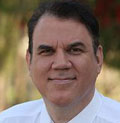
U.S. Rep. Alan Grayson
“I am unbought and unbossed,” Grayson, D-Orlando, said in a video announcing his Senate bid posted to his campaign website July 9. “I own nothing to anyone but the people.”
Grayson is running in defiance of Democratic party leaders, who are backing moderate U.S. Rep. Patrick Murphy, D-Jupiter and had hoped to avoid what is likely to be a divisive Democratic primary.
On the day of his announcement, Grayson provided a flavor of what’s to come in an interview with WKMG-TV in Orlando, in which he accused Murphy of being a closet Republican and said the Senate race “is going to live until the end of time.”
“People understand what I stand for. Patrick wants to cut Social Security, cut Medicare, and Patrick gave $2,300 to Mitt Romney’s campaign,” he said. “Patrick’s running in the wrong primary. He should be running as a Republican because that’s who he really is.”
To bring home the flavor of his political persona, Grayson is calling his campaign website SenatorWithGuts.com.
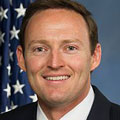
U.S. Rep. Patrick Murphy
For his part, Murphy greeted Grayson’s announcement by issuing a statement saying he was looking forward “to a clean, honest discussion of the issues in this primary.”
Grayson, 57, a Harvard-educated lawyer, burst onto the national scene after his election to Congress in 2008 with a floor speech in which he said the GOP’s health care plan was for the uninsured “to die quickly.” He has called Republicans “knuckle-dragging Neanderthals,” likened the Tea Party to the Ku Klux Klan and once compared former Vice President Dick Cheney to a vampire.
In 2009, he had to apologize after calling a female lobbyist “a K Street whore.” He is also known to subject reporters to profanity-laden tirades for stories he doesn’t like.
Grayson’s controversial profile cost him his House seat in 2010, a campaign in which he referred to his opponent, U.S. Rep. Daniel Webster, as “Taliban Dan” in a television ad. But Grayson returned to Congress in 2012, winning in a newly created Orlando-area district.
In addition to his hyperbolic comments, Grayson is also involved in a nasty divorce with his wife of 25 years, Lolita, whom he accused of bigamy and tried to have arrested for using a joint credit card to buy groceries. Lolita Grayson has charged that the congressman was unfaithful and abusive.
In his kickoff announcement, Grayson took an unabashed liberal line, calling for ending taxes on Social Security benefits, expanding Medicare to cover dental and vision care and ensuring that “every job should provide enough money to become part of the middle class.”
The Senate seat opened up when Republican U.S. Senator Marco Rubio decided to run for president. Democratic leaders are fearful that Grayson’s is too controversial and too liberal to win a statewide race in Florida — squandering an opportunity to pick up a seat that is vital to the party’s hopes of taking back the Senate.
The Democratic Senatorial Campaign Committee is backing Murphy, 32, who was a registered Republican until he switched parties to run for the House in 2012. He was re-elected in 2014 with nearly 60 percent of the vote in a competitive district.
On the Republican side, U.S. Rep. Ron DeSantis has jumped into the Senate race, and Lieutenant Governor Carlos López-Cantera is also expected to run.
Florida judge upholds new U.S. House map, but it won’t be used until 2016
Leon County Circuit Judge Terry Lewis’s ruling clears the way for the state’s August 26 primary
♦By Rich Shumate, Chickenfriedpolitcs.com editor
TALLAHASSEE, Florida (CFP) — Just days before Florida’s primary, a state judge has approved a redrawn map for the state’s 27 congressional districts but delayed its implementation until the 2016 elections.
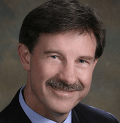
Florida Circuit Judge Terry Lewis
The August 22 ruling by Leon County Circuit Judge Terry Lewis clears the way for the August 26 primary to proceed without the possibility of a special election later in the year under the redrawn map.
The ruling was a victory for the leadership of the GOP-controlled legislature, who maintained that imposing the new map now would have wreaked havoc on the state’s electoral process.
“Thankfully, the court listened to supervisors of elections and the Secretary of State and rejected plaintiffs’ plan, which would have thrown the 2014 elections into chaos and could have resulted in our state being without congressional representation for weeks or even months,” said State Senate President Don Gaetz in a statement.
However, the groups that sued to strike down the map, including the League of Women Voters, say they will appeal the ruling, contending that the changes made by the legislature during a special session earlier in the month didn’t go far enough to fix the unconstitutional gerrymandering that prompted Lewis to strike down the original map.
Lewis ruled that the new map “adequately addresses the constitutional deficiencies” he found in the original map drawn after the 2010 Census.
While conceding that alternatives offered by the plaintiffs might be less gerrymandered, Lewis said the legislature isn’t required “to produce a map that the plaintiffs, or I, or anyone else might prefer.”
“The legislature is only required to produce a map that meets the requirements of the constitution,” Lewis said. He also said the plaintiffs had failed to prove that using the new map this year was “legally and logistically doable.”
In July, Lewis ruled that two districts in northwestern and central Florida — the majority black 5th District and the Republican-leaning 10th District — violated two constitutional amendments Florida voters approved in 2010 designed to limit political gerrymandering.
Under the new rules, districts cannot be drawn to benefit any political party and must be geographically compact. However, the amendments left redistricting in the hands of legislators, rather than turning it over to an independent outside panel.
In the original map, the 5th District, held by Democratic U.S. Rep Corrine Brown, was a majority black district that meandered from Jacksonville over to Gainesville and then down to Orlando. At one point, it is the width of a highway. The 10th District, held by Republican U.S. Rep. Daniel Webster, was anchored in central Florida west of Orlando but had an appendage that wrapped around Orlando to take in GOP voters to the east in Seminole County.
Lewis ruled that the map draw packed black voters into the 5th District to make surrounding districts more Republican and that the appendage was added to the 10th District to help Webster, both of which were unconstitutional.
In the new map, the 5th District still runs from Jacksonville to Orlando, but some black voters in the Orlando area were shifted to adjacent districts and some more rural areas were added south of Jacksonville to make the district geographically wider. The new district is 48 percent black. The new map also removed the appendage from Webster’s district.
Because House districts must have equal population, the changes to those two districts required slight changes in five surrounding districts in central Florida.
The League of Women Voters proposed a different map that would have the 5th District running due west from Jacksonville past Tallahassee — a change that would have required a wholesale revision of the map statewide.
A Democratic alternative rejected by the legislature didn’t as far as the plaintiff’s map, but it would have made the 7th and 10th districts more evenly split between Republicans and Democrats.
Although Florida is evenly divided politically, Republicans enjoy a 17-10 advantage in the state’s congressional delegation, largely due to their control of the redistricting process. The new map is not expected to change the delegation’s partisan balance.
Florida Legislature approves changes to U.S. House map
New plan makes slight alterations to 10 districts and is unlikely to disturb delegation’s GOP tilt
♦By Rich Shumate, Chickenfriedpolitics.com editor
TALLAHASSEE, Florida (CFP) — On a largely party-line vote, the Republican-controlled Florida House and Senate have approved a bill redrawing the state’s U.S. House map, which a state judge ruled last month was unconstitutionally gerrymandered.
The new map makes only minor alterations to 10 of the state’s 27 districts that are unlikely to change the House delegation’s partisan balance. The groups that sued to strike down the map, including the League of Women Voters, are demanding more substantial changes that could trigger new districts statewide and are expected to ask the judge to reject the redrawn map.
The Senate approved the new map by a vote of 25-12 on August 11. The House gave its approval a short time later by a vote of 71-38. Lawmakers rejected a democratic alternative that would have made two GOP-held districts near Orlando more competitive.
Leon County Circuit Judge Terry Lewis ruled that two districts in northwestern and central Florida — the majority black 5th District and the Republican-leaning 10th District — violated two constitutional amendments Florida voters approved in 2010 designed to limit political gerrymandering.
Under the new rules, districts cannot be drawn to benefit any political party and must be geographically compact. However, the amendments left redistricting in the hands of legislators, rather than turning it over to an independent outside panel.
Lewis ruled that the map draw by legislators packed black voters into the oddly shaped 5th District to make surrounding districts more Republican and also added an appendage to the 10th District east of Orlando to add more Republican voters.
Lewis ordered legislators to draw a new map by August 15, although he has not said whether he will order the map to be used in this year’s congressional elections. That could throw the Sunshine State’s election process into chaos as absentee ballots have already been sent out for the August 26 primary.
While Republican leaders in the legislature decided to comply with Lewis’s order to redraw the map rather than appeal, they have said they will only support using the new map beginning in 2016 and want to continue this year’s elections under the old map.
Lewis has set a hearing for August 20 to hear arguments on implementing the new map.
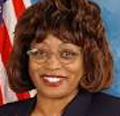
U.S. Rep. Corrine Brown
Under the original map, the 5th District, held by Democratic U.S. Rep Corrine Brown of Jacksonville, was a majority black district that meandered from Jacksonville over to Gainesville and then down to Orlando, taking in heavily black precincts to create a black majority At one point, it is the width of a highway.
In the new map, the 5th District still runs from Jacksonville to Orlando, but some black voters in the Orlando area are shifted to adjacent districts and some more rural areas are added south of Jacksonville to make the district geographically wider. The new district is 48 percent black.
Brown joined with Republicans in supporting the original map, which she said met the Voting Rights Act’s requirement to create majority minority districts wherever possible.
The new map also makes changes to the 10th District, held by U.S. Rep. Daniel Webster, and the adjacent 7th District, held by U.S. Rep. John Mica, that will make them less Republican. Because House districts must have equal population, the changes to those three districts required slight changes in seven surrounding districts in central Florida.
The League of Women Voters and the other plaintiffs are criticizing the new map, saying it doesn’t fix the geographic problems with the 5th District. They have proposed a different map that would have the 5th District running due west from Jacksonville past Tallahassee — a change that would require a wholesale revision of the map statewide.
The Democratic alternative rejected by the legislature doesn’t go as far as the plaintiff’s map, but it would have made the 7th and 10th districts more evenly split between Republicans and Democrats.
Although Florida is evenly divided politically, Republicans enjoy a 17-10 advantage in the state’s congressional delegation, largely due to their control of the redistricting process.
In his ruling striking down the map, Lewis was highly critical of the behind-the-scenes role Republican political consultants played in the redistricting process, which was supposed to be apolitical.
“They made a mockery of the legislature’s proclaimed transparent and open process of redistricting by doing all of this in the shadow of that process, utilizing the access it gave them to the decision makers, but going to great lengths to conceal from the public their plan and their participation in it,” Lewis said.
 Chicken Fried Politics