
Home » Posts tagged 'Democratic Presidential Nomination' (Page 2)
Tag Archives: Democratic Presidential Nomination

Julian Castro ends his run for Democratic presidential nomination
Former San Antonio mayor was the last Southerner left in the 2020 contest
♦By Rich Shumate, ChickenFriedPolitics.com
 SAN ANTONIO (CFP) — Julián Castro, the last Southerner and the only Latino in the 2020 presidential race, has ended his campaign for the White House.
“With only a month until the Iowa caucuses, and given the circumstances of this campaign season, I’ve determined that it simply isn’t our time,” Castro said in a video message to his supporters that he ended with the phrase “Ganaremos un día.” (One day, we’ll win.)

Julián Castro
Castro, who served as mayor of San Antonio and as housing secretary in the Clinton administration, also called for the Democratic Party to change its nominating process, which he said he believes disadvantages candidates of color.
In an appearance on MSNBC’s “Rachel Maddow Show,” Castro criticized starting the process in states such as Iowa and New Hampshire “that lack people of color ” and was also critical of the caucus process used in Iowa.
“If you didn’t know anything about the Iowa caucuses, and I told you, look, this is how we’re going to start this process — you can only vote on one day at 7 o’clock in the evening, there’s no early voting, there’s no secret ballot … people would think that Republicans designed the Iowa caucuses,” he said.
While Castro was polling poorly in Iowa and New Hampshire, he was also polling in low single digits nationally and in other early voting states such as Nevada and South Carolina that are more racially and ethnically diverse.
Castro was one of just three Southerners who entered the 2020 race. The other two — Democrat Beto O’Rourke from Texas and Republican Mark Sanford from South Carolina — had previously ended their campaigns.
We tweet @ChkFriPolitics.com Join us!

Former Texas U.S. Rep. Beto O’Rourke running for Democratic presidential nomination
Campaign for White House launched four months after O’Rourke came up short in U.S. Senate race
♦By Rich Shumate, ChickenFriedPolitics.com editor
 EL PASO (CFP) — Saying that the United States faces a “defining moment,” former U.S. Rep. Beto O’Rourke has announced he will seek the Democratic presidential nomination in 2020, launching a national campaign just four months after losing a U.S. Senate race in Texas.
“The challenges that we face right now — the interconnected crises in our economy, our democracy and our climate — have never been greater,” O’Rourke said in an announcement video posted on social media. “They will either consume us, or they will afford us the greatest opportunity to unleash the genius of the United States.”

O’Rourke and wife Amy in announcement video
Click photo to watch video
O’Rourke, who raised more than $80 million dollars in his unsuccessful bid to unseat Republican U.S. Senator Ted Cruz in 2018, promised to run “the greatest grassroots campaign this country has ever seen.”
“This is going to be a positive campaign that seeks to bring out the very best from every single one of us, that seeks to unite a very divided country,” he said.
In his announcement video, O’Rourke did not mention President Donald Trump by name, but he did draw a sharp contrast between himself and the president on Trump’s signature issue, immigration.
“If immigration is a problem, it is the best possible problem to have, and we should ensure that there are lawful paths to work, to be with family and to flee persecution,” he said.
Asked about O’Rourke’s announcement, Trump made light of the Texan’s propensity to use his hands as he speaks.
“I think he’s got a lot of hand hand movement. I’ve never seen so much hand movement,” Trump told reporters at the White House, “I said, ‘Is he crazy, or is that just the way he acts?'”
After posting his kickoff video, O’Rourke traveled to Iowa, which will hold the first caucuses in the 2020 election calendar. A formal campaign kickoff is scheduled for March 30 in his hometown of El Paso.
O’Rourke, 46 — whose given name is Robert but who goes by a childhood Spanish nickname, Beto — served three terms in the U.S. House representing metro El Paso before launching his campaign to unseat Cruz in 2017.
Given little chance when the race began, O’Rourke’s campaign caught the imagination of liberal activists around the country, allowing him to outraise Cruz and put what had been considered a safe seat in jeopardy.
Trump, who had a famously frosty relationship with Cruz when they competed for the White House in 2016, came to Texas to campaign for the senator as the race narrowed.
In the end, Cruz won by 215,000 votes, but O’Rourke’s showing was the best by a Democrat in a Texas Senate race in 30 years.
O’Rourke’s decision to pursue the presidency is good news for Texas’s other U.S. senator, Republican John Cornyn, who had already begin preparing for a challenge from O’Rourke in 2020.
O’Rourke is the third Southern candidate to enter crowded 2020 Democratic field, following another Texan, former San Antonio Mayor Julián Castro, and Richard Ojeda, a former state senator and unsuccessful congressional candidate from West Virginia.
We tweet @ChkFriPolitics Join us!
Clinton ekes out win in Democratic presidential primary in Kentucky
Lexington Mayor Jim Gray wins Democratic nomination to face Republican Rand Paul in U.S. Senate race
♦By Rich Shumate, Chickenfriedpolitics.com
 LOUISVILLE (CFP) — Hillary Clinton scored a narrow victory over U.S. Senator Bernie Sanders of Vermont in the Kentucky Democratic presidential primary, the last stop in the Southern primary season.
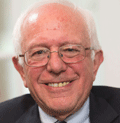
U.S. Senator Bernie Sanders
Clinton took 46.8 percent of the vote in the May 17 vote, compared to just 46.3 percent for Sanders. a margin of just 1,900 votes. That was a stark reversal from eight years ago, when Clinton walloped Barack Obama by more than 35 points in the Bluegrass State.
With the results in Kentucky, Clinton ends the Southern primary season by nearly running the table, taking 12 out of 14 contests. Sanders won only Oklahoma and West Virginia.

Lexington Mayor Jim Gray
Meanwhile, in Kentucky’s U.S. Senate primary, Lexington Mayor Jim Gray won the Democratic nomination over a crowded field, taking 58 percent of the vote. He will now face Republican U.S. Senator Rand Paul in November.
Given Kentucky’s Republican tendencies in federal elections, Paul, seeking his second term, is considered a prohibitive favorite, although Gray, as mayor of the commonwealth’s second-largest city and the wealthy owner of a family construction business, poses a credible challenge.
Gray is also trying to become the first openly gay man ever elected to the Senate.
Trump, Clinton roll through Mississippi; Cruz wins in Idaho
Marco Rubio has another hard night, finishing last in two contests
♦By Rich Shumate, Chickenfriedpolitics.com editor
 JACKSON, Mississippi (CFP) — Donald Trump rolled through the Mississippi GOP primary, nearly capturing an outright majority in one of his strongest wins of the primary season.
On the Democratic side, Hillary Clinton, as expected, cruised to a win in the Mississippi Democratic primary, besting U.S. Senator Bernie Sanders of Vermont by a nearly 5-to-1 margin.
Meanwhile, U.S. Senator Ted Cruz of Texas won the Republican primary in Idaho, notching his sixth win in the GOP presidential contest. But it was another hard night for the other Southerner in the race, U.S. Senator Marco Rubio of Florida, who could finish no better than third in any of the four March 8 contests.
In addition to the Republican primaries in Mississippi and Idaho, Michigan held a primary, and Hawaii had a caucus; Trump won them both.
The only other Democratic contest was in Michigan, where Sanders defeated Clinton in the night’s biggest upset.
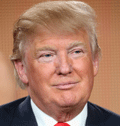
Candidate Donald Trump
In Mississippi, Trump took 47 percent of the vote, compared to 36 percent for Cruz. Rubio managed only a meager 5 percent, coming in fourth behind Governor John Kasich of Ohio.
Buoyed by the Magnolia State’s large African-American vote, Clinton won 83 percent to 17 percent for Sanders
In Michigan Cruz finished second and Rubio fourth. The Florida senator came in third place in Hawaii and Idaho.
Heading into pivotal March 15 contests in Florida and North Carolina, Trump has 458 delegates; Cruz, 359; Rubio, 151; and Kasich, 54. A total of 1,237 delegates are needed to win the nomination.
On the Democratic side, Clinton has 1,221 to 571 for Sanders, with 2,383 needed for the nomination.
Former U.S. Senator Jim Webb enters 2016 Democratic race with shot at Hillary Clinton
Webb, who left the Senate in 2012, says Americans “need to shake the hold” of political elites
♦By Rich Shumate, Chickenfriedpolitics.com editor
 RICHMOND (CFP) — Saying the United States “needs a fresh approach to solving the problems that confront us and too often unnecessarily divide us,” former U.S. Senator Jim Webb of Virginia has announced that he will seek the 2016 Democratic presidential nomination.
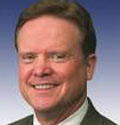
Former U.S. Senator Jim Webb
“I understand the odds, particularly in today’s political climate where fair debate is so often drowned out by huge sums of money,” Webb said in a message announcing his candidacy posted on his campaign website July 2. “Our fellow Americans need proven, experience leadership that can be trusted to move us forward.”
In his opening campaign salvo, Webb positioned himself as an outsider in the race, noting that “more than one candidate in this process intends to raise at least a billion dollars.”
“Highly paid political consultants are working to shape the ‘messaging’ of every major candidate,” he said. “We need to shake the hold of these shadow elites on our political process.”
Webb also took a direct swipe at the Democratic frontrunner, former Secretary of State Hillary Clinton, for her initial support of the 2003 invasion of Iraq, which Webb publicly opposed.
“Let me assure you, as president, I would not have urged an invasion of Iraq,” Webb said. “I warned in writing five months before that invasion that we do not belong as an occupying power in that part of the world and that this invasion would be a strategic blunder of historic proportions.”
When she ran for president in 2008, Clinton defended her vote authorizing the use of military force in Iraq — a vote which was used against her with great effect by Barack Obama. But in a 2014 book, she conceded that her vote was a mistake.
Webb also said he would have opposed military intervention in Libya in 2011 — which Obama authorized and Clinton supported as secretary of state — and that the subsequent terrorist attack on a U.S. diplomatic outpost in Benghazi on her watch “was inevitable.”
Webb, 69, is a U.S. Naval Academy graduate who served in Vietnam and was the secretary of the Navy during the Reagan administration. In 2006, he won a surprise victory to the Senate, narrowly ousting incumbent Republican George Allen in an election in which anti-war sentiment lifted Democratic fortunes.
In the Senate, Webb was considered a centrist who frequently bucked the party line, including an assertion that Obamacare would be a “disaster” for the Democratic Party. In 2012, facing the prospect of a contentious rematch with Allen, he decided not to run for re-election and left the Senate after a single term.
More recently, Webb sounded a cautionary note on the renewed drive to remove the Confederate battle emblem in the wake of the Charleston church shootings, saying in a Facebook post that “we all need to think through these issues with a care that recognizes the need for change but also respects the complicated history of the Civil War.”
“The Confederate Battle Flag has wrongly been used for racist and other purposes in recent decades. It should not be used in any way as a political symbol that divides us.”
Recent national polls have shown Webb’s support for the Democratic nomination in single digits, well behind Clinton and second-place U.S. Senator Bernie Sanders of Vermont.
In the message launching his campaign, Webb touted his sponsorship in the Senate of a GI Bill providing benefits to veterans of the Iraq and Afghanistan and his support for reform of the criminal justice system.
“It’s costing us billions of dollars. It’s wasting lives, often beginning at a very early age, creating career criminals rather than curing them. It’s not making our neighborhoods safer,” he said.
Like a number of other presidential contenders in both parties, Webb also sounded a note of economic populism.
“Let’s work to restore true economic fairness in this great country, starting with finding the right formula for growing our national economy while making our tax laws more balanced and increasing the negotiating leverage of our working people,” he said. “Our goal will be to increase the financial stability of the American workforce.”
Webb also said he would “work toward bringing the complex issue of immigration reform to a solution that respects the integrity of our legal traditions, while also recognizing the practical realities of a system that has been paralyzed by partisan debate.”
Webb is the only Southerner among the five candidates seeking the 2016 Democratic presidential nomination, although Clinton was a resident of Arkansas before moving to New York to run for the Senate in 2000.
Eight Southerners are seeking the Republican nomination: U.S. Senators Ted Cruz of Texas, Marco Rubio of Florida, Rand Paul of Kentucky and Lindsey Graham of South Carolina; former governors Jeb Bush of Florida, Mike Huckabee of Arkansas and Rick Perry of Texas; and Governor Bobby Jindal of Louisiana.
 Chicken Fried Politics