
Home » Posts tagged 'Donald Trump' (Page 42)
Tag Archives: Donald Trump

Marco Rubio reverses course, will seek re-election to the U.S. Senate
Two other GOP candidates depart race after Rubio’s decision
 MIAMI (CFP) — U.S. Senator Marco Rubio will seek re-election to the Senate this fall, reversing an earlier decision to leave political office after his unsuccessful presidential campaign.
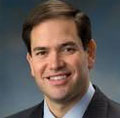
U.S. Senator Marco Rubio
After Rubio announced his decision June 22, two Republicans currently running for his seat, U.S. Rep. Ron DeSantis and Florida Lieutenant Governor Carlos López-Cantera, announced they would drop out in deference to Rubio. DeSantis will now run for re-election in Florida’s 6th District.
In a statement announcing his change of heart, Rubio, who had been under pressure from national Republican leaders to run, said he was swayed by the prospect that “the outcome in Florida could determine control of the Senate.”
“That means the future of the Supreme Court will be determined by the Florida Senate seat,” he said. “It means the future of the disastrous Iran nuclear deal will be determined by the Florida Senate seat. It means the direction of our country’s fiscal and economic policies will be determined by this Senate seat.”
Rubio also took a swipe at both Hillary Clinton and Donald Trump, saying that “no matter who is elected president, there is reason for worry.”
He said Clinton would continue President Obama’s “failed” economic and foreign policies. As for Trump, Rubio’s former presidential primary foe, the senator said he had “significant disagreements” with the Republican nominee, particularly with regard to his “unacceptable” comments about women and minorities.
“If he is elected, we will need senators willing to encourage him in the right direction, and if necessary, stand up to him,” Rubio said. “I’ve proven a willingness to do both.”
Rubio also conceded that by changing his mind about seeking re-election, “my opponents will try to use this decision to score political points against me.”
“Have at it, because I have never claimed to be perfect, or to have all the answers.”
Recent polls have shown Rubio running strongest against both of the two major Democrats in the race, U.S. Reps. Patrick Murphy of Jupiter and Alan Grayson of Orlando. A recent Quinniapiac University poll, taken before Rubio entered the race, showed him with a 7 point lead over Murphy and an 8 point lead over Grayson, with none of the other Republicans leading in head-to-head match-ups with the Democrats.
Rubio’s entry has scrambled what had been a five-way battle for the Republican nomination. DeSantis, López-Cantera and U.S. Rep. David Jolly have now all departed, leaving Carlos Beruff, a real estate developer from Manatee County, and Todd Wilcox, a defense contractor and former CIA agent from Windemere.
Beruff slammed Rubio’s decision to “break his pledge to the people of Florida.”
“This isn’t Marco Rubio’s seat; this is Florida’s seat,” Beruff said in a statement. “The power brokers in Washington think they can control this race. They think they can tell the voters of Florida who their candidates are. But the voters of Florida will not obey them.”
Poll: Clinton opens up 8 point lead over Trump in Florida
New Quinnipiac University poll finds 61 percent of Florida voters view Trump unfavorably
♦By Rich Shumate, Chickenfriedpolitcs.com editor
GAINESVILLE, Florida (CFP) — Buoyed by a nearly 20 point advantage among women, Hillary Clinton has opened up an 8 point lead over Donald Trump in the key battleground state of Florida, a new poll shows.
A Quinniapiac University poll of Florida voters, released June 21, put Clinton at 47 percent to 39 percent for Trump, well beyond the poll’s margin of error of plus or minus 3.1 percentage points.
 Compared to the same poll in May, Clinton was up 4 points and Trump was down 3 points, and what had been a statistical dead heat has turned into a solid Clinton lead.
Another question in the polls shows the uphill fight Trump may be facing in November in Florida: An outright majority of Florida voters, 52 percent, had a strongly unfavorable view of the GOP nominee and another 9 percent had a somewhat unfavorable view, for an unfavorability total of 61 percent.
Trump’s unfavorability also registered among his fellow Republicans in Florida, with 26 percent of them saying their view of him was strongly or somewhat unfavorable.
By contrast, 45 percent of voters have a strongly unfavorable view of Clinton and 8 percent viewed her somewhat unfavorably, for an unfavorability total of 53 percent. However, Clinton is viewed much more favorably by Democrats than Trump is among Republicans, with just 14 percent of them viewing her unfavorably.
Florida is a vital key to winning the White House in November. In the last 50 years, only one candidate has been elected president without carrying the Sunshine State–Bill Clinton in 1992.
The new poll found a significant gender gap that tilts in Clinton’s direction She leads Trump among women by 18 points; Trump led among men, but only by 4 points.
Clinton also enjoyed a lead of lead of nine points among self-described independents and was ahead by nearly 60 points among non-white voters. Trump had a 15-point lead among white voters.
Quinniapiac surveyed 975 Florida voters with a margin of error of plus or minus 3.1 percentage points.
North Carolina voters bounce Renee Ellmers from Congress
Ellmers ends campaign with disparaging comment about a female GOP official’s weight
♦By Rich Shumate, Chickenfriedpolitics.com editor
 RALEIGH (CFP) — Running in a redrawn district and facing a tsunami of outside spending aimed squarely at her, U.S. Rep. Renee Ellmers of North Carolina has lost her bid for a fourth term, becoming the first GOP lawmaker to fall in a primary in 2016.
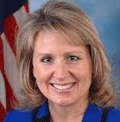
U.S. Rep. Renee Ellmers
Ellmers lost the June 7 GOP primary to U.S. Rep. George Holding, who opted to run against Ellmers after a court-ordered redraw of the Tar Heel State’s U.S. House map moved his district to another part of the state.
Her campaign ended on a bizarre note when a television camera captured Ellmers making a disparaging remark about Maggie Sandrock, a former chair of the Harnett County Republican Party, as she made her way into a polling place to vote.
“You’re eating a little too much pork barbecue. Woo,” Ellmers said in an exchange captured by Raleigh TV station WNCN.
Reacting to the comment, Sandrock, a former Ellmers supporter who now backs one of her opponents, said the congresswoman had “become a mean girl on steroids.”
Holding took 53 percent of the vote in the the 2nd District primary. Ellmers managed just 24 percent, edging past Greg Brannon, who jumped into the race after losing a U.S. Senate primary back in March.
The House primary was delayed three months after a federal court panel ordered state lawmakers to redraw the map passed after the 2010 Census. The judges ruled that two districts were improperly gerrymandered using racial considerations.
Ellmers’s district in suburban Raleigh was substantially redrawn in the new map, forcing her to run in unfamiliar territory. Her task became more difficult after Holding decided to give up his 13th District seat, which had been moved west to the Greensboro area, and run against Ellmers instead.
Ellmers, 52, a nurse, was first elected in the 2010 Tea Party wave as a critic of Obamacare, with the support of outside conservative groups such as the Club for Growth, FreedomWorks and Americans for Prosperity.
But those groups turned on Ellmers with a vengeance this year, spending more than $1 million to paint her as a Washington insider who supported wasteful spending.
In her concession speech, Ellmers said she was “disappointed” that the outside spending derailed her re-election bid, despite a high-profile endorsement from Donald Trump.
“The special interest groups with their deep pocks in Washington, unfortunately, have won today,” she said. “I hold my head up high. I’ve done what is necessary to serve the people of the (district).”
Ellmers also ran afoul of anti-abortion groups when she forced Republican leaders to carve out a rape exception in a bill outlawing abortions after 20 weeks.
In October 2015, Ellmers publicly denied rumors that she was having an extramarital affair with House Majority Leader Kevin McCarthy, which came to light after McCarthy abruptly abandoned a run for House speaker.
Holding will now face Democrat John McNeil, a Raleigh lawyer, in November, in a district with a strong Republican tilt.
Analysis: Libertarians get dream ticket, but will voters take them seriously?
Johnson and Weld will need to overcome some of their party’s more colorful positions
♦By Rich Shumate, Chickenfriedpolitics.com editor
 (CFP) –The Libertarian Party met over Memorial Day weekend in Orlando, deciding to invest its fortunes with two former Republican governors, Gary Johnson of New Mexico and William Weld of Massachusetts.
For a third party in America, that’s an unusually high-powered pedigree. And given the deep unpopularity of Donald Trump and Hillary Clinton, the Libertarians left Florida with high hopes of a breakthrough in 2016, particularly if their ticket can get into the fall debates.
But the height of the hurdle that Johnson and Weld face became apparent during the party’s presidential debate, when the candidates were asked if states should be able to issue driver’s licenses.
One after another, the candidates emphatically said no—except Johnson, who pointed out that it might not be such a bad idea for the government to make sure that people roaming around on the roadways have been vetted for basic competency.
Johnson was booed.
Here are some other statements made during the debate: Crystal meth should be as legal as tomatoes. Public education should be abolished. The Pentagon should be funded with bake sales. The second-place finisher in the presidential race, Austin Peterson, even opined that in the future, he hoped that gay people will not only be able to marry but to defend their marijuana fields with assault rifles.
And the vice presidential votes were being tabulated, a candidate for the party chairmanship took the stage, turned on some music and stripped down to his skivvies. That’s probably something we won’t see this summer in Philadelphia or Cleveland.
It was all rather entertaining, and, unlike in the Democratic and Republican contests, there was a marked absence of personal attacks between the candidates. Good for them. The question, however, is whether these positions can advance a run for the White House. Or is rigid ideological consistency the hobgoblin of electoral success?
The key to victory for any political party is to cobble together enough broad constituency groups to reach critical mass. But the Libertarians’ mishmash of unusual positions is likely to subtract from their coalition, not add to it.
For instance, religious conservatives, particularly in the South, aren’t going to cotton to their support for legalizing drugs or the fact that Johnson quit his job as head of a cannabis company to run for president. National security conservatives are going to find it difficult to get behind a militantly non-interventionist foreign policy and a drastically downsized military.
Likewise, Bernie Sanders supporters turned off by Clinton will be wary of a party that wants to eliminate virtually all social programs, turning instead to voluntary charity to take care of the old, the sick and the poor. They’re also going to have problems with a party that is as zealous in defending gun rights as the NRA.
Johnson and Weld, with their political pedigrees, may be able to transcend some of this baggage. Indeed, during the debate, Johnson often seemed to be the voice of reason, as when he said he would have signed the Civil Rights Act of 1964 (for which he was also booed.)
Certainly, Johnson can’t be held responsible for all the wild things Libertarians say, just as Republicans can’t all be held responsible for some of Trump’s more incendiary utterances. But if he and Weld distance themselves from some of the more outlandish positions of their party, they are going to draw ire from their own partisans, who proved in Orlando that they take a rather dim view of apostasy.
The Libertarians’ fondest hope is that Johnson can get to 15 percent in the polls, getting him into the debates. Then, the American public will see him as a viable alternative to Trump and Clinton, and he will catch fire, propelling Libertarians, if not to the White House, then at least to major party status.
But this presupposes that voters’ dislike of the major party nominees will be strong enough to overshadow what it is that the Libertarian Party actually believes. And Johnson has another hurdle—convincing voters he can run the country without a single member of his party in Congress. He would be forced to make an unending series of compromises with Republicans and Democrats, and compromise is something to which his party seems particularly allergic.
Of course, we have come to expect the unexpected during this topsy-turvy 2016 campaign, in which a socialist and a reality TV star are two of the last three major party candidates standing. So maybe, just maybe, Johnson and Weld can pull of the miracle. But if they do, it will be in spite of the Libertarians’ colorful positions, rather than because of them.
Libertarians choose Johnson-Weld ticket in Orlando
Former Republican governors of New Mexico and Massachusetts will lead party into the fall
♦By Rich Shumate, Chickenfriedpolitics.com editor
ORLANDO (CFP) — Former New Mexico Governor Gary Johnson has won the Libertarian Party’s presidential nomination, as the party hopes to ride the deep unpopularity of the Republican and Democratic nominees to a breakthrough result in the fall.

Libertarian nominee Gary Johnson
“I will work as hard as I can to represent everybody in this room,” Johnson told convention delegates after they made their selection May 29 in Orlando. “I think that millions of people are going to be trying to understand what it means to be a Libertarian.”
The delegates also grudgingly went along with Johnson’s request to nominate former Massachusetts Governor William Weld as his running mate, after Johnson made two separate pleas to delegates who were skeptical of Weld’s Libertarian bona fides.
“I’m asking you to give me the tools needed to actually win,” Johnson. “If it’s Bill Weld, there’s actually an opportunity to take the White House.”
Weld’s nomination was only secured with some difficulty after three of the defeated presidential candidates took the microphone to endorse other candidates. Some delegates booed and shouted at Weld.
Weld, who joined the party just two weeks before the convention, told delegates “it’s been a learning experience.”
“I think every day I become a better Libertarian,” he said. “I pledge to you that I will stay with the Libertarian Party for life.”
After two ballots, Weld managed to win a bare majority, ahead of Larry Shape, a New York City businessman.
It also took Johnson two ballots to secure the nomination, with 55 percent of the vote. He narrowly missed winning an outright majority on the first ballot, with 49 percent of the vote.
Trailing behind Johnson were Austin Petersen, a magazine publisher and former Fox Business Channel producer, and John McAfee, founder of the anti-computer virus company that bears his name.
Johnson, 63, served as governor of New Mexico as a Republican from 1995 to 2003. He was the Libertarian Party’s presidential candidate in 2012, winning just 1 percent of the vote.
But given the historically low approval ratings of both Democrat Hillary Clinton and Republican Donald Trump, Johnson and the Libertarians are hoping to do much better this time around, particularly if Johnson can get into the presidential debates.
With Weld on on the ticket, “at a minimum, I think we’re in the presidential debates,” Johnson said.
In order to get into the debates, a candidate must be on the ballot in enough states to win an Electoral College majority and must be polling at least 15 percent in national polls.
The Libertarian Party expects to be on the ballot in all 50 states, meeting the first criterion. National polls that have included Johnson have put his support at about 10 percent, below the necessary threshold.
The Libertarian and Green parties have joined in a lawsuit to force the Commission on Presidential Debates to let their candidates into the fall debates.
 Chicken Fried Politics