
Home » Posts tagged 'Florida U.S. House' (Page 2)
Tag Archives: Florida U.S. House

Charlie Crist launches run for Florida congressional seat
Crist’s latest race comes after two statewide losses and two party switches
♦By Rich Shumate, Chickenfriedpolitics.com editor
 ST. PERTERSBURG, Florida (CFP) — After losing two statewide elections in four years and changing parties twice, former Florida Governor Charlie Crist will try to resurrect his political career with a run for Congress in 2016.
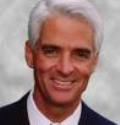
Former Florida Governor Charlie Crist
Crist announced October 20 that he will seek the Democratic nomination in Florida’s 13th U.S. House District.
“Public service is in my heart. I can’t help it. I guess that’s fairly obvious,” Crist said at his campaign kickoff. “But somebody has to step up, and somebody has to lead.”
His decision immediate drew fire from Republicans, who noted that Crist had said back in March that he would not run for office in 2016.
“What happens when the King of Flip-Flopping promises NOT to run for office in 2016… he runs for office in 2016,” said a statement on the Florida GOP’s website.
The 13th District seat opened up after the incumbent, Republican U.S. Rep. David Jolly, decided to run for the U.S. Senate. Jolly’s decision came as the Florida Supreme Court is poised to redraw the state’s House districts, which is likely to make the 13th District, centered in the St. Petersburg area, more Democratic.
Crist, 59, was elected as governor in 2006 as a Republican. In 2010, instead of running for re-election, he decided to run for the U.S. Senate, bolting the GOP to run as an independent when it became clear he was going to lose the primary to the eventual winner, U.S. Senator Marco Rubio.
After losing that race, Crist became a Democrat and made an unsuccessful run for governor in 2014, losing to Republican Governor Rick Scott.
Crist will face at least one Democratic primary challenger, Eric Lynn, a former Pentagon official. After Crist’s announcement, he issued a statement pointedly noting that, unlike Crist, he was a “life-long Democrat.”
“I’m looking forward to a spirited primary and a spirited debate on important Democratic issues,” Lynn said.
Republicans are also expected to put up a fight to keep the seat, with former St. Petersburg Mayor Rick Baker being mentioned as a possible GOP candidate.
Florida Supreme Court strikes down state’s congressional map
High court gives state legislature 100 days to draw new map to fix problems with eight districts
♦By Rich Shumate, Chickenfriedpolitics.com editor
 GAINESVILLE, Florida (CFP) — The Florida Supreme Court has struck down the state’s map of congressional districts, ruling that the Republican-controlled state legislature unconstitutionally gerrymandered the map to help the GOP’s electoral prospects.
In a 5-to-2 ruling issued July 9, the high court agreed with a lower court ruling last year that the 2011 redistricting process had been “tainted” by partisan gerrymandering, which was outlawed by Florida voters in a constitutional amendment passed in 2010.
The trial court had ordered changes in two districts, but the Supreme Court went further, ruling that eight of the state’s 27 districts were improperly drawn and giving legislators 100 days to come up with a new map that complies with the anti-gerrymandering amendment. The new map will be in place for the 2016 elections.

U.S. Rep. Corrine Brown
While the high court did not order the entire map to be redrawn, reworking the eight districts in question is likely to have an impact on many of the surrounding districts, particularly in northeast Florida, where justices ordered an oddly shaped, black plurality district represented by U.S. Rep. Corrine Brown to be completely reconfigured.
Responding to testimony in the trial court that showed Republican legislators and consultants had met behind closed doors to draw the congressional maps, the Supreme Court majority also encouraged the legislature “to conduct all meetings in which it makes decisions on the new map in public and to record any non-public meetings for preservation.”
There was no immediate word from legislative leaders as to when a special legislative session might be convened to redraw the congressional map.
The ruling was a victory for the League of Women Voters and Common Cause, which filed suit to overturn the maps. Pamela Goodman, the president of the league, called the decision a victory “against devious political scheming.”
“The Florida Supreme Court took the Florida Legislature to the woodshed,” she said in a statement. “Their egregious behavior using partisan political operatives in the redistricting process was appropriately reprimanded.”
The Republican-controlled legislature decided not to appeal the trial court’s ruling in 2014, which led to a special session of the legislature to make minor changes in the map. But the League of Women Voters appealed to the Supreme Court, arguing that those changes didn’t go far enough.
The eight districts found to be unconstitutional are equally split between Democrats and Republicans. But the changes ordered by the court are giving Democrats hopes of making inroads in Florida’s congressional delegation. Despite the state’s even political split, Republicans hold a 17-to-10 advantage among House members.
The two biggest changes ordered by the high court are in the 5th District, represented by Brown, D-Jacksonville, and the 13th District, held by U.S. Rep. David Jolly, R-St. Petersburg.
The Supreme Court ruled that Brown’s north-south district — which snakes through northeast and central Florida from Jacksonville to Orlando to pick up black voters and is at one point the width of a highway — should be redrawn in an east-west configuration from Jacksonville towards the Panhandle. The current black voting age population in the district is 48 percent.
While moving the district could create an opening for a minority candidate in the Orlando area, it might also present problems for U.S. Rep. Gwen Graham, D-Tallahassee, whose 2nd District includes areas along the Georgia border that would be shifted into the 5th District.
Brown, one of just three African-Americans in Florida’s congressional delegation, had joined with Republicans in the legislature in defending the map. She blasted the high court’s decision in a statement, saying it was “seriously flawed and entirely fails to take into consideration the rights of minority voters.”
While Brown did not indicate if she might file a federal lawsuit to stop the court-mandated redistricting, she did say that “as a people, African-Americans have fought too hard to get to where we are now, and we certainly are not taking any steps backwards.”

U.S. Rep. David Jolly
In the 13th District, which takes in most of Pinellas County, the Supreme Court held that the legislature’s decision to shift African-American voters in St. Petersburg into the neighboring 14th District, across the bay in Tampa, to make the 13th more Republican-friendly violated a requirement that districts be geographically compact wherever possible.
Shifting those voters back into the 13th District could make life more difficult for Jolly, who won the seat in a special election last year. But Jolly’s office issued a statement after the ruling saying he was not concerned about the prospect that his district might be redrawn.
“The courts and the legislature will determine next steps, and Congressman Jolly will remain focused solely on doing his job and serving all of Pinellas County,” the statement said. “If he continues to do the job he was elected to do, the politics will take care of itself.”
Here are the other districts that are affected by the Supreme Court’s ruling:
21st District and 22nd District – These two districts, in Palm Beach and Broward counties in South Florida, run parallel to each other, one along the Atlantic Coast and the other inland. The Supreme Court agreed with the plaintiffs that these two districts would be more geographically compact if they were made wider and stacked on top of each other, although the high court stopped short of ordering the legislature to adopt that configuration. The 21st District is represented by U.S. Rep. Ted Deutch, D-Boca Raton; the 22nd District by U.S. Rep. Lois Frankel, D-West Palm Beach.
25th District – The court’s objection to this district was that legislators split Hendry County, a rural county with a majority minority population, between the 25th District and the adjacent 20th District, instead of putting the county entirely in the 25th. The legislature argued that it split the county to comply with the Voting Rights Act, but the high court said legislators had not proven that putting the county in a single district would compromise the electoral prospects of minority voters. The district, which would become more Democratic if all of Hendry County is included, is represented by U.S. Rep. Mario Diaz-Balart, R-Miami.
26h District and 27th District – The court objected to the legislature’s decision to split the city of Homestead, south of Miami, between these two districts, which had the effect of creating two Republican-leaning districts, rather than one safe district for each party. The high court ordered the legislature to put all of Homestead in one district. District 26 is represented by U.S. Rep. Carlos Curbelo, R-Miami; District 27 by veteran U.S. Rep. Ileana Ros-Lehtinen, R-Miami. Whichever of them gets Homestead will have to deal with more Democratic voters, although Ros-Lehtinen said she had “no worries” about the prospect that her district lines might shift.
Florida Legislature approves changes to U.S. House map
New plan makes slight alterations to 10 districts and is unlikely to disturb delegation’s GOP tilt
♦By Rich Shumate, Chickenfriedpolitics.com editor
TALLAHASSEE, Florida (CFP) — On a largely party-line vote, the Republican-controlled Florida House and Senate have approved a bill redrawing the state’s U.S. House map, which a state judge ruled last month was unconstitutionally gerrymandered.
The new map makes only minor alterations to 10 of the state’s 27 districts that are unlikely to change the House delegation’s partisan balance. The groups that sued to strike down the map, including the League of Women Voters, are demanding more substantial changes that could trigger new districts statewide and are expected to ask the judge to reject the redrawn map.
The Senate approved the new map by a vote of 25-12 on August 11. The House gave its approval a short time later by a vote of 71-38. Lawmakers rejected a democratic alternative that would have made two GOP-held districts near Orlando more competitive.
Leon County Circuit Judge Terry Lewis ruled that two districts in northwestern and central Florida — the majority black 5th District and the Republican-leaning 10th District — violated two constitutional amendments Florida voters approved in 2010 designed to limit political gerrymandering.
Under the new rules, districts cannot be drawn to benefit any political party and must be geographically compact. However, the amendments left redistricting in the hands of legislators, rather than turning it over to an independent outside panel.
Lewis ruled that the map draw by legislators packed black voters into the oddly shaped 5th District to make surrounding districts more Republican and also added an appendage to the 10th District east of Orlando to add more Republican voters.
Lewis ordered legislators to draw a new map by August 15, although he has not said whether he will order the map to be used in this year’s congressional elections. That could throw the Sunshine State’s election process into chaos as absentee ballots have already been sent out for the August 26 primary.
While Republican leaders in the legislature decided to comply with Lewis’s order to redraw the map rather than appeal, they have said they will only support using the new map beginning in 2016 and want to continue this year’s elections under the old map.
Lewis has set a hearing for August 20 to hear arguments on implementing the new map.
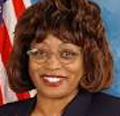
U.S. Rep. Corrine Brown
Under the original map, the 5th District, held by Democratic U.S. Rep Corrine Brown of Jacksonville, was a majority black district that meandered from Jacksonville over to Gainesville and then down to Orlando, taking in heavily black precincts to create a black majority At one point, it is the width of a highway.
In the new map, the 5th District still runs from Jacksonville to Orlando, but some black voters in the Orlando area are shifted to adjacent districts and some more rural areas are added south of Jacksonville to make the district geographically wider. The new district is 48 percent black.
Brown joined with Republicans in supporting the original map, which she said met the Voting Rights Act’s requirement to create majority minority districts wherever possible.
The new map also makes changes to the 10th District, held by U.S. Rep. Daniel Webster, and the adjacent 7th District, held by U.S. Rep. John Mica, that will make them less Republican. Because House districts must have equal population, the changes to those three districts required slight changes in seven surrounding districts in central Florida.
The League of Women Voters and the other plaintiffs are criticizing the new map, saying it doesn’t fix the geographic problems with the 5th District. They have proposed a different map that would have the 5th District running due west from Jacksonville past Tallahassee — a change that would require a wholesale revision of the map statewide.
The Democratic alternative rejected by the legislature doesn’t go as far as the plaintiff’s map, but it would have made the 7th and 10th districts more evenly split between Republicans and Democrats.
Although Florida is evenly divided politically, Republicans enjoy a 17-10 advantage in the state’s congressional delegation, largely due to their control of the redistricting process.
In his ruling striking down the map, Lewis was highly critical of the behind-the-scenes role Republican political consultants played in the redistricting process, which was supposed to be apolitical.
“They made a mockery of the legislature’s proclaimed transparent and open process of redistricting by doing all of this in the shadow of that process, utilizing the access it gave them to the decision makers, but going to great lengths to conceal from the public their plan and their participation in it,” Lewis said.
Florida’s legislative leaders won’t appeal decision to strike down U.S. House map
Senate President Don Gaetz and House Speaker Will Weatherford ask judge to delay redrawing map until after November’s election
♦By Rich Shumate, Chickenfriedpolitics.com editor
TALLAHASSEE, Florida (CFP) — Republican leaders in the Florida Legislature won’t appeal a judge’s ruling that the U.S. House map drawn in 2011 was unconstitutionally gerrymandered.
But Senate President Don Gaetz and House Speaker Will Weatherford are urging Leon County Circuit Judge Terry Lewis not to order the map redrawn until the end of the current election cycle, noting that ballots have already gone out to military and overseas voters for the August 26 primary.
“Any attempt to change the districts at this late stage of the 2014 elections process would cause chaos and confusion and would threaten the rights of our deployed military voters,” Gaetz and Weatherford said in a July 15 joint statement.
“It has been the practice in other states and in Florida to remedy maps at a future election so as not to disrupt and disenfranchise voters.”

Florida Circuit Judge Terry Lewis
In his July 10 order striking down the map, Lewis did not indicate when or how it might be redrawn. But attorneys for the plaintiffs who brought the suit, including the League of Women Voters, have said they wank the judge to change the map immediately.
The suit arose over two constitutional amendments Florida voters approved in 2010 designed to limit political gerrymandering. Under the new rules, districts cannot be drawn to benefit any political party and must be geographically compact.
However, the amendments left redistricting in the hands of legislators, rather than turning it over to an independent outside panel.
Lewis found two congressional maps — the 5th District and the 10th District — were drawn to benefit Republicans. While he rejected specific challenges to several other districts, bringing those two districts into compliance would likely trigger revisions across the state’s 27 districts.
Although Democrats are highly competitive in statewide races, Republicans hold a 17-10 majority in Florida’s congressional delegation under the map drawn by the GOP-controlled legislature.
Lewis was also highly critical of the behind-the-scenes role Republican political consultants played in drawing the map, which was supposed to be apolitical.
“They made a mockery of the legislature’s proclaimed transparent and open process of redistricting by doing all of this in the shadow of that process, utilizing the access it gave them to the decision makers, but going to great lengths to conceal from the public their plan and their participation in it,” Lewis said.
The 5th District, held by Democratic U.S. Rep Corrine Brown, is a majority black district that meanders from Jacksonville over to Gainesville and then down to Orlando. At one point, it is the width of a highway.
The 10th District, held by Republican U.S. Rep. Daniel Webster, is anchored in central Florida west of Orlando. But it has an appendage that wraps around Orlando to take in GOP voters to the east in Seminole County.
Legislative leaders have said they drew the districts to comply with the Voting Rights Act: Brown’s to create a majority black district and Webster’s to create a neighboring district in which Latino voters would have influence.
But Lewis ruled that a majority black district could have been drawn that was more compact and that putting those Republican voters in Webster’s district was unlikely to increase Latino influence.
Brown has joined with Republican leaders in defending the map,
“Minority communities do not live in compact, cookie-cutter like neighborhoods, and excessive adherence to district ‘compactness,’ while ignoring the maintenance of minority access districts, fragments minority communities across the state,” she said in a statement.
To comply with the Voting Rights Act, Republican legislators across the South have created legislative and congressional districts with black majorities, which, in order to capture as many black voters as possible, are often oddly shaped.
Because the black vote is overwhelmingly Democratic, adjacent districts have become more Republican. At the congressional level, this has meant that white Democrats have virtually disappeared, and the GOP dominates House delegations.
Florida’s 2010 constitutional amendments added a new wrinkle by forbidding both use of party considerations in redistricting and requiring geographic compactness, neither of which are required in other Southern states.
Curt Clawson wins GOP primary for vacant Florida U.S. House seat
Clawson, who billed himself as the outsider in the race, will be heavily favored to win June’s special election
♦By Rich Shumate, Chickenfriedpolitics.com editor
FORT MYERS, Florida (CFP) — Curt Clawson, a wealthy businessman and former basketball star at Purdue University, has won the Republican primary for the vacant 19th District U.S. House seat in Florida.

Republican nominee Curt Clawson
Clawson, 53, making his first bid for political office, defeated two veteran officeholders, State Senate Majority Leader Lizbeth Benacquisto and former state Rep. Paige Kreegel. Although Clawson claimed just 38 percent of the vote, he won the nomination without a majority because Florida does not have primary runoffs.
“I think we sent a pretty clear message tonight, and I think it’s a good time for an outsider or two in Congress,” Clawson said at his victory rally April 21.
Both Clawson and Benacquisto had big name endorsements — Clawson from U.S. Senator Rand Paul of Kentucky and Benacquisto from former Alaska Governor Sarah Palin and former Florida Governor Jeb Bush.
The 19th District, which is centered in Fort Myers and runs along the coast of southwest Florida, is heavily Republican, which will make Clawson will be a heavy favorite in the June 24 special election over Democrat April Freeman, who was unopposed for her party’s nomination.
The seat became vacant in January when first term U.S. Rep. Trey Radel resigned after pleading guilty to cocaine possession.
Clawson played on Purdue’s 1984 team that won the Big 12 Championship
 Chicken Fried Politics