
Home » Posts tagged 'Joe Cunningham' (Page 3)
Tag Archives: Joe Cunningham


Will South Carolina’s Mark Sanford pull the trigger on a 2020 primary challenge to President Trump?
Former governor and congressman tells Charleston newspaper he’s considering a run
♦By Rich Shumate, ChickenFriedPolitics.com editor
 CHARLESTON, South Carolina (CFP) — Last summer, President Donald Trump reacted with some glee after helping take out then-U.S. Rep. Mark Sanford, who went down to defeat in his Lowcountry district to a GOP primary challenger whom Trump endorsed.
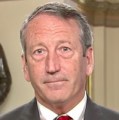
Mark Sanford
Now, Sanford is considering trying to once again resurrect his political career — with a long-shot challenge to Trump himself for the Republican presidential nomination in 2020.
“Sometimes in life you’ve got to say what you’ve got to say, whether there’s an audience or not for that message,” Sanford said in an interview with the Post and Courier newspaper, where he teased his intentions. “I feel convicted.”
Sanford said the GOP “has lost its way on debt, spending and financial matters,” issues that he said would be central to his campaign. He told the newspaper that he expects to decide within the next month whether to join the race against Trump.
 But even the possibility of a Sanford challenge to Trump set off the state’s Republican Party chairman, Drew McKissick, who released a statement saying “the last time Mark Sanford had an idea this dumb, it killed his Governorship. This makes about as much sense as that trip up the Appalachian Trail.”
The state Democratic Party took a more light-hearted tone, tweeting: “We look forward to seeing mark [sic] on the trail! Always nice to see a candidate with fewer extra marital affairs than the president.”
In 2009, Sanford, then the Palmetto State’s governor, touched off a messy personal scandal when he disappeared from public view after telling reporters that he was hiking the Appalachian Trail, when he was actually off canoodling with his Argentinian mistress.
He refused calls to resign and served out the rest of his term, then, in 2013, resurrected his political career by winning a special election in the 1st U.S. House District.
After Trump was elected in 2016, Sanford became one of a very small number of congressional Republicans willing to criticize the president, calling his behavior in office “weird,” criticizing his disparagement of Haiti and countries in Africa and calling his policy of imposing tariffs on steel and aluminum “an experiment with stupidity.”
Trump got his revenge in 2018 when State Rep. Katie Arrington defeated Sanford in the Republican primary, after getting a well-timed Twitter endorsement from the president on election day. However, the victory proved somewhat pyrrhic when Arrrington lost the seat to Democrat Joe Cunningham in November.
Sanford, 59, served a total of 13 years during his two stints in Congress and eight years as governor. He told the Post and Courier that if he doesn’t run against Trump, he won’t try to reclaim his former seat in Congress against Cunningham but might try to start a think tank focused on deficit issues.
The only Republican challenging Trump in 2020 so far is former Massachusetts Governor William Weld, who comes from the party’s moderate wing, unlike Sanford, who carved out a conservative record in Congress and as governor.
We tweet @ChkFriPolitics Join us!
Southern House Democrats in targeted seats vote to turn up pressure on Trump
House Judiciary Committee can now sue to force compliance with requests for documents, testimony
♦By Rich Shumate, ChickenFriedPolitics.com editor
 WASHINGTON (CFP) — In the first major test of how Southern Democrats in vulnerable seats will navigate through ongoing House investigations of President Donald Trump, all of them stuck to the party line in supporting new powers that could escalate those inquiries.
By a vote of 229-191 on June 11, the House authorized the Judiciary Committee to go into federal court and demand that the Justice Department comply with requests for documents and witness testimony.
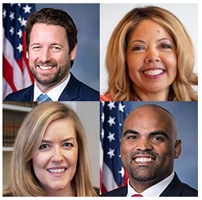
From top left clockwise: Cunningham, McBath, Allred, Weston
All 10 Southern House Democrats who flipped seats in 2018 and are at the top of the GOP hit list in 2020 agreed to give the committee the power to sue to force compliance, although none of them yet support moving toward impeaching the president.
That list includes Reps. Joe Cunningham of South Carolina; Lucy McBath of Georgia; Kendra Horn of Oklahoma; Elaine Luria, Jennifer Wexton and Abigail Spanberger of Virginia; Colin Allred and Lizzie Fletcher of Texas; and Debbie Mucarsel-Powell and Donna Shalala of Florida.
Not a single Southern Republican supported the resolution, including 11 GOP members who are on the Democrats’ target list for 2020.
The resolution is aimed squarely at Attorney General William Barr, who has refused to comply with some document requests, and former White House counsel Don McGahn, who has refused to testify at a committee hearing under instructions fro the White House.
The resolution ratchets up the pressure on the Trump administration, as an increasing number of House Democrats are calling for an impeachment inquiry.
While none of the Southern Democrats in competitive seats have so far come out in favor of an impeachment inquiry, 14 members in safe seats have done so.
That list includes Steve Cohen of Tennessee; Val Demings of Florida; Veronica Escobar, Sheila Jackson Lee, Joaquin Castro, Lloyd Doggett, Al Green, and Filemon Vela of Texas; Cedric Richmond of Louisiana; Alma Adams and G.K. Butterfield of North Carolina; Don Beyer of Virginia; Bennie Thompson of Mississippi; and John Yarmuth of Kentucky.
We tweet @ChkFriPolitics Join us!
Southern Democrats who flipped seats in 2018 post strong fundraising numbers
South Carolina’s Joe Cunningham, Texas’s Colin Allred and Lizzie Fletcher lead pack in 2020 contributions
♦By Rich Shumate, ChickenFriedPolitics.com editor
 WASHINGTON (CFP) — The 10 Southern U.S. House Democrats who flipped Republican-held seats in 2018 all posted strong fundraising numbers for their re-election campaigns during the first quarter of 2019, as they try to build the war chests they will need to stave off GOP challengers next year.

U.S. Rep. Joe Cunningham, R-South Carolina
Leading the pack was Joe Cunningham, representing the Low Country of South Carolina, who raised $663,500 during the first three months of the year, according to campaign finance reports filed with the Federal Election Commission.
He raised more money than any other Southern House incumbent in either party, except for House Majority Whip Steve Scalise, a Republican from Louisiana, who raised $2.5 million.
Cunningham was followed by two Texans — Lizzie Pannill Fletcher in Houston, who raised $582,900, and Colin Allred in Dallas, who raised $530,400. In the Atlanta suburbs, Lucy McBath, who already has two Republicans actively campaigning against her for 2020, raised $482,000.
Among the three Democrats who won seats in Virginia in 2018, Jennifer Wexton, in the Washington D.C. suburbs, raised $424,200; Abigail Spanberger, in suburban Richmond, raised $415,300; and Elaine Luria, in Hampton Roads, took in $327,000.
In metro Miami, Debbie Mucarsel-Powell raised $457,000, while Donna Shalala took in just $269,370, the lowest fundraising total among the Southern House flippers.
Kendra Horn, who won a surprise victory last November in metro Oklahoma City, raised $377,600 during the quarter.
While all of these Democrats will have stout competition in 2020, no potential Republican challengers raised any significant money during the first quarter, except the two candidates running against McBath in Georgia. So as of now, all of these Democrats are out ahead financially of their challengers.
McBath raised more money than both of her Republican rivals combined. Karen Handel, who is gunning for a rematch with McBath after losing to her in 2018, raised $259,800, and State Senator Brandon Beach raised $123,800.
Historically, freshmen House members tend to be most vulnerable during their first re-election race, particularly in a wave year such as 2018, when large numbers of seats changed hands between parties.
Six of the 10 Southern Democrats who flipped seats won by 2 points or less in 2018, and, in 2020, President Donald Trump — who won or nearly won seven of these districts — will also be on the ballot.
Cunningham and Horn face perhaps the biggest hurdle. Both won their 2018 races by less than 2 points; Trump carried their districts by 13 points.
Trump won Spanberger’s district by 7 points in 2016, and she won it by 2 points in 2018. Trump narrowly won the districts represented by McBath and Luria; they each won by less than 2 points in 2018.
In Texas, Fletcher and Allred represent districts Trump narrowly lost, but their margins of victory in 2018 were slightly larger, 5 and 7 points respectively.
Wexton, Mucarsel-Powell, and Shalala would seem to have little to fear from a Trump effect in their districts, all of which Hillary Clinton carried handily. However, Mucarsel-Powell only won her 2018 race by 2 points, and her district, the 26th, has a history of swinging back and forth between the parties.
We tweet @ChkFriPolitics Join us!

Insight: U.S. House 2020 target lists show Democrats playing defense in the South
Democratic and Republican campaign arms are targeting 25 Southern seats
♦By Rich Shumate, ChickenFriedPolitics.com editor
WASHINGTON (CFP) — The U.S. House campaign arms for both parties have released their first list of targets for 2020, with Southern Democrats playing an unfamiliar role they haven’t enjoyed in recent cycles — on defense, protecting their 2018 gains.

Chicken Fried Politics Editor Rich Shumate
Next year’s congressional battles in the South will take place almost entirely in the suburbs. Nearly all of the 25 districts being targeted by both parties contain suburban areas around large cities, territory where Democrats made major gains last November and hope to make more.
The National Republican Congressional Committee — trying to claw its way back into a majority after a disappointing 2018 — is targeting 12 Democrat-held seats across the South, 10 of which are held by by freshmen who flipped seats, including three seats in Virginia, two each in Texas and Florida, and seats won in breakthroughs in Oklahoma, South Carolina and Georgia.
Among the targets are eight Democratic freshmen who supported Nancy Pelosi’s bid for House speaker — a vote that is sure to be front and center on TV screens when 2020 rolls around.
Only two veteran Democrats, both in Florida, are on the GOP’s target list — Charlie Crist in the Clearwater-based 13th District, and Stephanie Murphy in the 7th District in metro Orlando. Both districts look competitive on paper, although neither Crist nor Murphy had much trouble in 2018.
Meanwhile, the Democratic Congressional Campaign Committee is targeting 13 Republican-held seats across the South, an audacious list that includes nine veteran GOP incumbents, some with decades of experience.

Chip Roy

Ross Spano
And while Democrats will have to defend a bumper crop of incumbents, just two of the Southern Democratic targets are freshman Republicans — Ross Spano in Florida’s 15th District and Chip Roy in Texas’s 21st District.
Defending long-term incumbents is usually easier that defending freshmen seeking a second term, which could give
Republicans an advantage overall in the South in 2020.
The GOP has another advantage — while its targets are nearly evenly split between districts that Donald Trump and Hillary Clinton carried in 2016, 12 of the 13 Democratic targets are in districts Trump carried, which will be more difficult to flip. (The lone exception is Will Hurd in Texas’s 23rd District.)
Democrats are also unlikely to replicate the wave they enjoyed in 2018, which carried them to victory in some rather unlikely places.
Still, Republicans find themselves with the unexpected — and unwelcome — prospect of spending energy and money to reclaim seats in such normally red areas as Oklahoma City, Charleston and the suburbs of Atlanta, Houston and Dallas.
Among the Republican freshman targeted, Spano, whose district stretches inland from the suburbs of Tampa, may be vulnerable in 2020 after admitting that he borrowed money from two friends that he then plowed into his election campaign, which is a violation of federal campaign finance laws.
He blamed bad advice from this then-campaign treasurer; Democrats are pushing for an investigation.
Roy, a former top aide to U.S. Senator Ted Cruz, won by just two points in 2018. His district includes suburbs of Austin and San Antonio and rural areas to the west.
One seat on the Democrats’ list, Georgia’s 7th District in Atlanta’s northwest suburbs, will be open, thanks to the pending departure of Rob Woodall, who decided to retire after winning by just 400 votes in 2018. Another seat, North Carolina’s 9th District, is vacant due to an ongoing dispute over allegations of absentee ballot fraud.
Democrats have decided to forgo, at least for now, targeting two seats that they tried and failed to flip in 2018 — Arkansas’s 2nd District in metro Little Rock, held by French Hill, and West Virginia’s 3rd District, which takes in the southern third of the state, held by Carol Miller.

Andy Barr
However, they are once again trying to flip Kentucky’s 6th District, in and around Lexington, where Andy Barr held off a spirited challenge from Democratic newcomer Amy McGrath, who raised a whopping $8.6 million.
McGrath hasn’t said if she’s running again. Senate Democrats have been encouraging her for forgo a rematch with Barr and instead challenge Senate Majority Leader Mitch McConnell.
The toughest sled for Democrats will be taking out nine veteran Republicans they have targeted, including five in Texas alone.
Among the Texas targets are five men who between them have more than 60 years of seniority: John Carter in the 31st District in the northern Austin suburbs; Kenny Marchant in the 24th District in Dallas-Ft. Worth; Mike McCaul in the 10th District that stretches from Austin toward Houston; and Pete Olson in 22nd District in Houston’s western suburbs.
Until the 2018 cycle, these Texas seats had been thought safely Republican. But Carter and Marchant won by just 3 points in 2018; McCaul won by 4 points and Olson by 5 points.
Democrats are also going after Brian Mast in Florida’s 18th District north of Palm Beach; and, in North Carolina, George Holding, in the 2nd District around Raleigh, and Ted Budd, in 13th District between Charlotte and Greensboro.

Lucy McBath

Joe Cunningham
The freshmen that Democrats will have to defend including two in the Miami area, Donna Shalala in the 27th District, and Debbie Mucarsel-Powell in the 26th District; Lucy McBath in Georgia’s 6th District in Atlanta’s northeast suburbs; Kendra Horn in the Oklahoma City-based 5th District; and Joe Cunningham, who represents the South Carolina Low Country in the 1st District.
Three freshmen Democrats in Virginia are also on the list — Elaine Luria, who represents the 2nd District in Hampton Roads; Abigail Spanberger, who represents the 7th District in the Richmond suburbs, and Jennifer Wexton, whose 10th District includes the Virginia suburbs of Washington, D.C.
The Republican target list also includes two Texas freshman: Colin Allred, who represents the 32nd District in metro Dallas, and Lizzie Pannill Fletcher, who represents the 7th District in metro Houston.
All of these freshmen, except for Spanberger and Cunningham, voted for Pelosi for speaker.
Among the GOP targets, Shalala and Wexton are likely in the least danger, as both represent districts Hillary Clinton carried easily in 2016. Horn, McBath and Cunningham — whose 2018 wins were among the biggest surprises of the election cycle — are likely in the most jeopardy.
Democrats’ success in 2018 was largely the result of raising enough money to be competitive in GOP-held districts, in many cases even outraising incumbents who didn’t take their races seriously enough.
Democratic freshmen being targeted in 2020 should have no problem raising money; neither will challengers to Republican incumbents who had close calls in 2018. Members of the majority party also tend to have easier access to campaign money than the party out of power.
Still, 2020 will no doubt see Republicans loaded for bear, with two years to regroup and build up their treasuries, leaving voters facing loud, expensive and contentious races across the South.
Heading into 2020, Republicans hold 101 seats among delegations in the 14 Southern states; Democrats have 50, with one vacant seat in North Carolina.
We tweet @ChkFri Politics. Join us!

7 new Southern U.S House Democrats who ousted Republicans support Nancy Pelosi for speaker
Cunningham of South Carolina and Spanberger of Virginia keep vow to oppose Pelosi; North Carolina’s 9th District remains vacant
♦By Rich Shumate, ChickenFriedPolitics.com
WASHINGTON (CFP) — Seven Southern Democratic U.S. House freshmen who ousted GOP incumbents in November supported Nancy Pelosi’s bid to reclaim the gavel as speaker of the U.S. House — handing Republicans an issue to use against them in 2020.
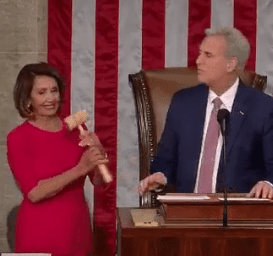
Incoming Speaker Nancy Pelosi accepts gavel from GOP Leader Kevin McCarthy (From Twitter)
Colin Allred and Lizzie Pannill Fletcher of Texas, Kendra Horn of Oklahoma, Lucy McBath of Georgia, Elaine Luria and Jennifer Wexton of Virginia, and Debbie Mucarsel-Powell of Florida all supported Pelosi in the January 3 vote.
Two other freshmen Democrats who had vowed during their campaign that they would not support Pelosi — Joe Cunningham of South Carolina and Abigail Spanberger of Virginia — kept that promise, voting instead for Cheri Bustos of Illinois.
And despite signing a letter in November calling for new leadership in the House, Filemon Vela of Texas switched course to vote for Pelosi.
Meanwhile, as the new Congress convened in Washington with 29 new Southern members, one seat sat empty — the representative from North Carolina’s 9th District, where state elections officials have refused to certify Republican Mark Harris’s narrow win over Democrat Dan McCready amid allegations of absentee ballot fraud.
In the vote for speaker, just three Southern Democratic members did not support Pelosi — Cunningham and Spanberger, who voted for Bustos, and Jim Cooper of Tennessee, who voted present.
Cooper, who has been in Congress since 1983, had been a long-time opponent of Pelosi’s speakership, having voted against her five times previously.
After the November election, a group of 16 Democratic members, including Cooper, Cunningham and Vela, signed a letter calling for “new leadership” in the Democratic caucus.
Vela changed course after Pelosi agreed to support term limits for the House Democratic leadership, which will limit her speakership to no more than four years.
Pelosi needed a majority of the 430 votes cast for speaker. In the end, she got 220 votes, four more than necessary.
Of the seven Southern Democrats who ousted Republicans and voted for Pelosi, McBath, Horn and Luria represent districts carried by President Donald Trump in 2016, while Allred and Fletcher represent districts he lost by less than 2 points.
Hillary Clinton carried Murcasel-Powell’s district in South Florida by 16 points and Wexton’s district in the Virginia suburbs of Washington, D.C. by 10 points.
Three other Southern Democratic newcomers who won open seats in November also supported Pelosi — Veronica Escobar and Sylvia Garcia of Texas, and Donna Shalala of Florida. All three represent districts Clinton carried handily.
Among Southern Republicans, only three did not support their candidate for speaker, House Minority Leader Kevin McCarthy of California.
Thomas Massie of Kentucky and Jody Hice of Georgia supported Jim Jordan of Ohio, one of the founders of the House Freedom Caucus, a grouping of the most conservative Republican members.
Walter Jones of North Carolina did not vote. He has been absent from Congress since September because of an undisclosed illness.
Of the 29 new Southern members of the House, 17 are Republicans and 12 are Democrats. Republicans hold 101 Southern seats, compared to 50 for Democrats, with North Carolina’s 9th District vacant.
The 9th District seat is likely to remain vacant until after the state elections board completes its investigation into the allegations of absentee ballot irregularities, which has been delayed until February because of a new law revamping the board.
Harris has filed a lawsuit seeking for force certification of the election.
 Chicken Fried Politics