
Home » Posts tagged 'Joe Manchin' (Page 4)
Tag Archives: Joe Manchin

GOP leaders fear Alabama-style debacle in West Virginia U.S. Senate primary
A win by jailed former mine operator Don Blankenship could ensure Democrat Joe Manchin’s re-election
♦By Rich Shumate, ChickenFriedPolitics.com editor
 CHARLESTON, West Virginia (CFP) — Republican party leaders in West Virginia are bracing for the possibility that a coal mine owner who went to prison after 29 of his workers were killed by an explosion in an unsafe mine might end up as their nominee for the U.S. Senate, handing the seat to Democrats in November.

Don Blankenship
Heading into Tuesday’s primary, polls showed no clear leader in the GOP Senate race between Don Blankenship, U.S. Rep. Evan Jenkins and Attorney General Patrick Morrisey, who are all vying for the right to take on Democratic U.S. Senator Joe Manchin in November.
Blankenship, the former CEO of Massey Energy, spent a year in prison for willfully violating mine safety laws after a 2010 explosion at the Upper Big Branch mine in Montcoal killed 29 miners, the deadliest mine accident in the United States in 40 years.
GOP leaders have become alarmed at the possibility that they will be saddled with a flawed candidate and lose a winnable Senate race, a point President Donald Trump made in an election-eve tweet: “Remember Alabama. Vote Rep. Jenkins or A.G. Morrisey!”
Trump’s reference was to the race for an open Senate seat in Alabama, where Democrat Doug Jones pulled off an upset in December after the Republican nominee, Roy Moore, was accused of sexually pursuing young girls, a charge he denied.
With Republicans clinging to a one-seat majority, the race in West Virginia — which Trump won by a stunning 42 points in 2016 — presents a prime pickup opportunity that could vanish with a Blankenship victory.
Blankenship, 68, has maintained that he is innocent of the charges brought against him for the Upper Big Branch mine explosion, blaming the disaster instead on federal mine inspectors. He has poured at least $3.5 million of his own money into his Senate campaign, trying to brand himself as an anti-establishment outsider.
Among Blankenship’s targets has been the top Republican in the Senate, Majority Leader Mitch McConnell. In one ad, he calls McConnell “Cocaine Mitch,” a spurious charge based on a report that cocaine had been found on a ship belonging to a shipping company owned by the family of McConnell’s Chinese-American wife, Transportation Secretary Elaine Chao.
Although McConnell and his wife own stock in the shipping company, there is no evidence either of them or their families members had any connection with the cocaine shipment.
Until Blankenship began rising in the polls, Jenkins and Morrisey had mostly turned their fire on each other. The question now is whether either one of them will be able to defeat Blankenship and preserve Republican hopes in November.
West Virginia does not have primary runoffs, so whichever candidate wins a plurality Tuesday will get the nomination.

U.S. Senator Joe Manchin of West Virginia
Manchin, 70, is seeking a second full term in the Senate. Despite being a former two-term governor and serving in statewide office since 2001, Manchin is considered among the most vulnerable Democratic senators in the 2018 cycle because of the size of Trump’s win in 2016.
Jenkins, 57, was elected to represent the state’s 3rd District in 2014 after toppling then-U.S. Rep. Nick Rahall, a Democratic titan who had served 19 terms in Congress.
Morrisey, 50, was first elected attorney general in 2012, the first Republican to hold that post in nearly 70 years. A native of New Jersey who ran for Congress from that state in 2000, Morrisey moved in 2006 to Jefferson County, a county in the West Virginia panhandle which is part of the Washington, D.C. metropolitan area.
Also on the primary ballot are races in the the 3rd District, which takes in the lower third of the state. Seven Republicans, including four current or former state House members, are vying for the nomination to succeed Jenkins, with House Majority Whip Carol Miller of Crab Orchard establishing a strong fundraising advantage.
The likely Democratic nominee is populist State Senator Richard Ojeda, an Iraq war veteran who may be the best hope Democrats have for winning a House seat in the Mountaineer State in 2018.
Florida Governor Rick Scott announces U.S. Senate run
Race between Scott and incumbent U.S. Senator Bill Nelson could be nation’s most expensive
♦By Rich Shumate, ChickenFriedPolitics.com
 ORLANDO (CFP) — Republican Florida Governor Rick Scott has made official what was widely expected — he will challenge Democratic incumbent U.S. Senator Bill Nelson in November.

Florida Governor Rick Scott
Scott’s decision, announced April 9 in Orlando, sets up what is likely to be a hard-fought and hugely expensive battle for Florida’s seat, with control of the Senate hanging in the balance.
Calling Washington “dysfunctional” and slamming “career politicians,” Scott called on Floridians to “stop sending talkers to Washington. Let’s send doers to Washington.”
“We shouldn’t be sending the same type of people to Washington. We should say we’re going to make change,” Scott said. “We can change Washington. We must change Washington. We will change Washington.”
The emphasis on changing the culture of Washington was a direct slap at Nelson, who has served in the Senate for 18 years after serving 12 years in the U.S. House.
Scott, who kicked off his campaign at a construction company that has expanded during his eight years in Tallahassee, also touted his record as a “jobs” governor, taking credit for creating 1.5 million new jobs and cutting taxes by $10 billion.
“People are flocking to Florida because this is where you can live the dream of this country,” he said. “Now, we’ve got to take that same mission to D.C.”
Scott, 65, a multimillionaire former for-profit hospital executive, was a political newcomer when he was first elected governor in 2010 after pouring more than $70 million of his own money into the race. He was re-elected by a narrow margin in 2014.
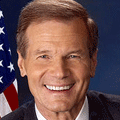
U.S. Senator Bill Nelson of Florida
Nelson, 75, was first elected to the Senate in 2000 and won re-election easily in 2006 and 2012. He is one of just five Democrats representing Southern states, along with U.S. Senators Doug Jones of Alabama, Tim Kaine and Mark Warner of Virginia, and Joe Manchin of West Virginia.
Nelson and Machin, who both represent states President Donald Trump carried in 2016, are among the top Republican targets in the 2018 election cycle. Trump had been publicly urging Scott to run against Nelson.
In response to Scott’s announcement, Nelson issued a statement saying he has “always run every race like there’s no tomorrow — regardless of my opponent” and adding that Scott “will say or do anything to get elected.”
“I’ve always believed that if you just do the right thing, the politics will take care of itself,” he said.
The race in Florida, a state that is closely divided politically and has 10 television markets, is expected to approach or break spending records, particularly because of the personal fortune Scott can bring to bear.
The most expensive Senate race in history was in Pennsylvania in 2016, where more than $160 million was spent by candidates and outside groups.
Democrats will no doubt try to tie Scott to Trump, which could have unpredictable results in what’s shaping up to be a Democratic year. Another wildcard will be the effect of Scott’s support for new restrictions on gun purchases that passed the Florida legislature after 17 people died in a mass shooting at a high school in Parkland.
The new restrictions have drawn the ire of the National Rifle Association and other gun-rights groups, although supporters of stronger controls on guns faulted the measure passed by Florida lawmakers for not going far enough.
Republicans current have a narrow 51-to-49 seat advantage in the Senate, which means all of the seats up in 2018 could be pivotal in deciding which party is in control.
Among Southern seats, Democrats’ best targets are in Texas, Tennessee and a special election for a vacant seat in Mississippi. For Republicans, Nelson and Manchin are at the top of the target list, with an outside shot at Kaine.
No other Southern states have Senate races this year.
Report: Tennessee U.S. Senator Bob Corker to stick with retirement
Decision clears way for Senate showdown between GOP U.S. Rep. Marsha Blackburn and former Democratic Governor Phil Bredesen
♦By Rich Shumate, ChickenFriedPolitics.com editor
 WASHINGTON (CFP) — After reconsidering his decision to retire from the U.S. Senate, Republican Bob Corker has now ruled out seeking another term this year, setting up a general election match-up between U.S. Rep. Marsha Blackburn and former Democratic Governor Phil Bredesen that could determine control of the Senate.

U.S. Senator Bob Corker
In an February 27 interview with Politico, Corker’s chief of staff, Todd Womack, said the senator has decided to stick with the decision he made last September not to seek a third term, despite being urged by other Republicans to reconsider amid fears that Blackburn could have trouble keeping the seat in GOP hands in November.
A week earlier, former U.S. Rep. Stephen Fincher, Blackburn’s chief opponent in the Republican primary, ended his campaign and publicly called on Corker to run again.
Central to the considerations about whether to reverse course was Corker’s contentious relationship with President Donald Trump.
Last August, the senator said Trump “has not yet been able to demonstrate the stability nor some of the competence that he needs to demonstrate in order to be successful” and also referred to the White House as an “adult day care center.” After his criticisms triggered a presidential pillorying on Twitter, Corker said Trump “debases our country” and has “great difficulty with the truth.”

U.S. Rep. Marsha Blackburn
Blackburn, 65, who was first elected in 2002 to represent Tennessee’s 7th District, which takes in Nashville’s southern suburbs and the west-central part of the state, served on Trump’s transition team and has positioned herself as a strong supporter. She has also been critical of the current Republican leadership in the Senate, in which Corker chairs the Foreign Relations Committee.
Although the departures of Fincher and Corker have cleared the Republican field for Blackburn, she will face a formidable obstacle in Bredesen, 74, who served as governor from 2003 to 2011 and has the distinction of being the last Democrat to win a statewide election in the Volunteer State. He is also a multimillionaire who could pour his own resources into the campaign.

Former Governor Phil Bredesen
Bredesen had initially declined to run for the Senate seat after Corker announced his retirement. But in December, a week before Democrats picked up a Senate seat in Alabama that had been thought to be unwinnable, Bredesen jumped into the race. Nashville attorney James Mackler, who had been seen as the presumptive Democratic nominee, then dropped out.
With Republicans holding a slim 51-49 majority in the U.S. Senate, the unexpectedly competitive race in Tennessee complicates the GOP’s efforts to keep control. However, Democrats haven’t won a Senate race in Tennessee in 28 years.
The contest in Tennessee is one of five Southern U.S. Senate races that could potentially be competitive in 2018:
- In Texas, Republican U.S. Senator Ted Cruz will face Democratic U.S. Rep. Beto O’Rourke; Democrats haven’t won a Senate in the Lone Star State since 1988.
- In Florida, Democratic U.S. Senator Bill Nelson appears likely to face a challenge from Republican Governor Rick Scott in what is likely to be the 2018 cycle’s most expensive Senate race.
- In West Virginia, Democratic U.S. Senator Joe Manchin will face the winner of a GOP primary between U.S. Rep. Evan Jenkins and state Attorney General Patrick Morrisey, in a state Trump won by 40 points in 2016.
- In Virginia, five Republicans will vie in a June primary to take on Democratic U.S. Senator Tim Kaine, in an increasingly Democratic state that Hillary Clinton carried.
Of the 28 senators representing Southern states, only four are Democrats, three of whom are up for re-election in 2018. The fourth is Doug Jones, who won a special election in Alabama in December.
Alabama Democratic U.S. Senator Doug Jones sworn in
Jones is first Alabama Democrat to sit in the Senate since 1997
 WASHINGTON (CFP) — Democrat Doug Jones has been officially sworn in as a U.S. senator, capping the remarkable and improbable political feat of capturing a Senate seat in one of the nation’s most Republican states.

U.S. Senator Doug Jones is sworn in. (Courtesy C-SPAN)
Jones, flanked by former Vice President Joe Biden, was sworn in on January 3 by Vice President Mike Pence, alongside Democrat Tina Smith, who assumed the Senate seat from Minnesota vacated by Al Franken. The ceremony was then re-enacted in the Old Senate Chamber, where Jones was accompanied by his family.
Jones assumed the seat once held by his mentor and former boss, the late U.S. Senator Howell Heflin, who was the last Democrat to represent the Yellowhammer State when he retired in 1997.
With Jones in the Senate, Republicans will hold a scant 51-49 advantage. With Pence available to break ties, Democrats need just two Republican votes to stop the majority from passing legislation.
Jones, 63, a former federal prosecutor from Birmingham, was given little chance to win the seat when a special election was called in April to pick a permanent replacement for Republican Jeff Sessions, who resigned to become U.S. attorney general.
But interest in Jones began picking up after the man picked to fill Session’s seat on a temporary basis, Luther Strange, was defeated in a Republican primary runoff by Roy Moore, the controversial former chief justice of the Alabama Supreme Court. And then, a month before the December 12 election, the race was rocked by allegations that Moore had sexually pursued teenage girls when he was in his 30s.
Moore vehemently denied the charges. But GOP Senate leaders quickly disavowed him and tried to push him out of the race, to no avail. Alabama Republican U.S. Senator Richard Shelby was among Moore’s detractors, saying publicly that he would not vote for Moore.
Almost alone among Republicans, President Donald Trump stood by Moore, telling his supporters that letting a “liberal” like Jones into the Senate would harm his agenda. But Republican defections, coupled with a strong turnout by African American voters, put Jones over the top by 22,000 votes.
Jones is one of only five Democrats representing Southern states in the Senate, joining U.S. Senators Mark Warner and Tim Kaine of Virginia, Joe Manchin of West Virginia, and Bill Nelson of Florida. The other 23 Southern senators are Republicans.
Jones will now serve the remainder of Sessions term, which comes up for election again in 2020.
West Virginia U.S. Rep. Evan Jenkins will challenge Joe Manchin in U.S. Senate race
Jenkins hopes to parlay state’s increasing GOP tilt to unseat venerable Democratic incumbent
♦By Rich Shumate, Chickenfriedpolitics.com editor
HUNTINGTON, West Virginia (CFP) — In 2014, GOP U.S. Rep. Evan Jenkins toppled a West Virginia political giant to get to Congress. In 2018, he’ll try to be a giant killer again.
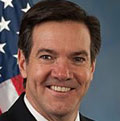
U.S. Rep. Evan Jenkins, R-West Virginia
Jenkins announced that he is giving up his House seat in an effort to defeat Democratic U.S. Senator Joe Manchin, in what is expected to become one of the South’s hottest Senate races.
In a campaign video released May 8, Jenkins went after Machin, accusing him of straying from the values he was elected to represent by supporting Hillary Clinton and Barack Obama.
“Joe changed when he got to Washington. West Virginia values? Not anymore,” Jenkins said. “Somewhere alone the way, Joe became one of them.”
Jenkins also tied himself firmly to Donald Trump, who won the Mountaineer State by a staggering 41 points in 2016, his second strongest showing in any state, behind only Wyoming.
“With Donald Trump in the White House, we’ve got a real chance to turn things around,” Jenkins said. “He needs our help, and I need your help … We can’t let liberal New York millionaires and D.C. lobbyists buy this race or the Senate.”
Jenkins, 56, was elected in 2014 to represent the 3rd District, which takes in the southern and western parts of the state. In that race, he unseated Nick Rahall, a Democrat who had been in Congress since 1977 and was, like Manchin, a political institution in West Virginia.
Jenkins had served 18 years in the state legislature as a Democrat before switching parties to run against Rahall.
West Virginia’s changing political climate has made Machin is a top Republican target in 2018. In 2014, the GOP captured all three U.S. House seats and a majority in the state legislature for the first time since 1931. In 2016, Shelley Moore Capito became the first Republican to win a U.S. Senate election since 1956.
Trump’s win was also the fifth in a row for Republican presidential candidate, in what had been considered a Democratic stronghold into the 1990s.
U.S. Senator Joe Manchin of West Virginia
However, Machin, 69, is a political institution in West Virginia, where he was first elected to political office in 1982 and was governor for six years before being elected to the Senate in 2010.
Manchin has styled himself as a political moderate, opposing legal abortion, supporting a balanced budget amendment and opposing efforts by the Obama administration to curtail use of coal, which is a mainstay of the West Virginia economy. He also broke ranks with other Democratic senators to support Trump’s Cabinet nominees and his selection of Neil Gorsuch for the U.S. Supreme Clourt.
One question mark in the race will be the issue of gun rights. Although Manchin has long received support from the National Rifle Association, he drew fire from some gun rights advocates after co-sponsoring legislation to strengthen background checks on firearms after the Sandy Hook school shooting in Newtown, Connecticut in 2012.
Jenkins took direct aim at Manchin on the gun issue in his opening campaign video, accusing the senator of violating a pledge he made in his first campaign to protect gun rights.
Jenkins’s decision to run against Manchin will open a House seat in West Virginia that could be a potential target for Democrats, although the GOP will be favored.
Jenkins may also have to survive a primary for the right to oppose Manchin, as state Attorney General Patrick Morrisey is thought to be eyeing the race.
 Chicken Fried Politics