
Home » Posts tagged 'Johnny Isakson' (Page 3)
Tag Archives: Johnny Isakson

U.S. Senate: Republicans hold on to all 8 of their Southern seats
Rubio and Burr beat back challenges in Florida, North Carolina; Kennedy and Campbell will contest runoff in Louisiana
♦By Rich Shumate, Chickenfriedpolitics.com editor
 (CFP) — Republicans held on to all eight of their Southern U.S. Senate seats, with Marco Rubio in Florida and Richard Burr in North Carolina turning back strong Democratic challengers.
Meanwhile, in Louisiana’s all-party “jungle” primary, State Treasurer John Kennedy and Democratic Public Service Commissioner Foster Campbell will advance to a December 10 runoff for the open seat being vacated by Republican U.S. Senator David Vitter.
Kennedy led with 25 percent, with Campbell at 18 percent, edging out Republican U.S. Rep. Charles Boustany at 15 percent.
Because Republicans already secured their 51-seat Senate majority, the Louisiana runoff will not affect the balance of power.
In addition to Rubio and Burr, Republican incumbents also won re-election in Alabama, Arkansas, Georgia, Kentucky, Oklahoma and South Carolina.
With the wins on November 8, Republicans will hold 23 of the 28 Southern Senate seats, with Louisiana still to be decided.
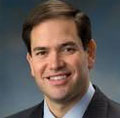
U.S. Senator Marco Rubio
In Florida, Rubio had initially decided to give up his Senate seat to pursue the Republican presidential nomination. But after losing the White House contest, he changed course and filed to run for a second term, improving the GOP ‘s prospects for keeping the seat.
Rubio took 52 percent, defeating Democratic U.S. Rep. Patrick Murphy, who took 44 percent.
Alluding to his withdrawal from the presidential race in March, he told election night supporters in Miami, “This is a lot better than the last time I did one of these.”
Rubio, who had been a critic of Trump before reluctantly endorsing him, did not mention his party’s victorious presidential standard-bearer in his speech, but he did make a plea for civility in politics.
“While we can disagree on issues, we cannot share a country where people hate each other because of their political affiliations,” Rubio said.

U.S. Senator Richard Burr
In North Carolina, Burr, seeking a third term, took 51 percent of the vote, defeating Deborah Ross, a former state legislator and Duke University law professor, who took 45 percent.
“I am truly humbled by the support I’ve received from people across this state,” Burr said at a victory celebration in Winston-Salem. “This is a victory for all of those who have believed in me.”
In a state notorious for exchanging Senate seats between parties, Burr becomes the first senator to win three consecutive terms since Jesse Helms in 1984.
Here are the other Southern Senate results:

Shelby
Alabama: Republican U.S. Senator Richard Shelby won a seventh term by defeating Democrat Ron Crumpton, a marijuana rights activist. by a margin of 64-36 percent. At the end of his new term, Shelby will be 88 and will have served in Congress for 44 years.

Boozman
Arkansas: Republican U.S. Senator John Boozman won a second term by taking 60-36 percent for Democrat Conner Eldridge, a former federal prosecutor from Fayetteville. Boozman suffered an aortic aneurysm in 2014 that kept him away from Washington for two months.

Isakson
Georgia: Republican U.S. Senator Johnny Isakson won a third term in the Senate by defeating Democrat Jim Barkdale, a wealthy Atlanta businessman, by a 55-41 percent margin. Isakson ran for re-election to a third term despite announcing in 2015 that he had been diagnosed with Parkinson’s disease.

Paul
Kentucky: Republican U.S. Senator Rand Paul defeated Lexington Mayor Jim Gray by a margin of 57-43 percent. Paul had pursued re-election simultaneously with a presidential campaign until he dropped out of the White House race in February.

Lankford
Oklahoma: Republican U.S. Senator James Lankford easily won his first full six-year term by defeating Democrat Mike Workman, a Tulsa political consultant, by a margin of 68-25 percent. In 2014, Lankford was elected to finish out the final two years of Tom Coburn’s term after he resigned.

Scott
South Carolina: Republican U.S. Senator Tim Scott, the only black Republican in the Senate, easily won a full six-year term by defeating Democrat Thomas Dixon, a Charleston pastor, by a margin of 61-36 percent. In 2014, Scott was elected to serve out the remaining two years of Jim DeMint’s term, after he resigned.
Republican U.S. Senate incumbents trying to fight off Democratic challengers
Florida and North Carolina are Senate battlegrounds; Louisiana holds all-party primary for Vitter’s seat
♦By Rich Shumate, Chickenfriedpolitics.com editor
(CFP) — Nine GOP-held Southern U.S. Senate seats are up for grabs in the November 8 election, with Republican incumbents heavily favored in six races.
The exceptions are Florida, where Republican U.S. Senator Marco Rubio is facing off against Democratic U.S. Rep. Patrick Murphy, and in North Carolina, where the GOP incumbent, U.S. Senator Richard Burr, is facing Deborah Ross, a former state legislator and Duke University law professor.
And in Louisiana, 24 candidates are running in an all-party “jungle” primary, with the top two vote-getters advancing to a December 10 runoff, which could potentially decide the balance of power in the Senate.
Pre-election polls have shown Republican State Treasurer John Kennedy in the lead, followed by Public Service Commissioner Foster Campbell, a Democrat; Republican U.S. Rep. Charles Boustany of Lafayette; and Democrat Caroline Fayard, a New Orleans lawyer.
If Kennedy and Boustany can both clear the runoff, the GOP would be guaranteed of keeping the seat, now held by U.S. Senator David Vitter. But if Campbell or Fayard can come through, the December 10 runoff will be the last word on Senate races this year — and, if the Senate is closely divided, decide which party controls the chamber.
In addition to Rubio and Burr, Republican incumbents are seeking re-election in Alabama, Arkansas, Georgia, Kentucky, Oklahoma and South Carolina.
All are heavily favored, although the race in Georgia between U.S. Senator Johnny Isakson and Democratic businessman Jim Barksdale is somewhat more competitive.
In Alabama, Richard Shelby faces Democrat Ron Crumpton, a marijuana rights activist; in Arkansas John Boozman is seeking a second term against Democrat Conner Eldridge, a former federal prosecutor from Fayetteville; and in Kentucky, Rand Paul is running against Lexington Mayor Jim Gray.
In Oklahoma, James Lankford faces Mike Workman, a Tulsa political consultant, and in South Carolina, Tim Scott, the only black Republican in the Senate, faces Democrat Thomas Dixon, a Charleston pastor.
State of the Races: U.S. Senate 2016
GOP favored in 7 of 9 Southern contests; Democrats have a shot at 2
♦By Rich Shumate, Chickenfriedpolitics.com editor
 (CFP) — The 2016 election will feature nine contests across 14 Southern states, all of which are currently held by Republicans. And there appears to be precious little opportunity for Democrats to make inroads in the GOP’s regional hegemony.
Florida and North Carolina appear to be the best shots Democrats have to reverse the region’s GOP tide, although the decision by Marco Rubio to run for re-election significantly bolsters Republican chances in the Sunshine State. Louisiana is another possibility if the 24-candidate free-for-all in the Pelican State’s all-party jungle primary creates an unexpected Democratic opportunity. The other six races are foregone conclusions, barring some unforeseen Republican calamity.
Republicans currently hold 24 of the 28 Southern Senate seats, including both seats in 11 out of the 14 Southern states.
Here is the 2016 rundown:

Shelby
Alabama: Republican U.S. Senator Richard Shelby is running for a seventh term. Democrats aren’t putting up a fight, letting their nomination go to a marijuana rights activist. Given that a Democrat hasn’t won a Senate race in the Yellowhammer State since 1990, Shelby is virtually assured of another term, at the end of which he’ll be 88 years old. RATING: SAFE GOP

Boozman
Arkansas: Republican U.S. Senator John Boozman is seeing a second term, despite suffering an aortic aneurysm in 2014 that kept him away from Washington for two months. The Democrats were unsuccessful in getting their top pick, former Governor Mike Beebe, to run, though they did manage to recruit a credible challenger in Conner Eldridge, a former federal prosecutor from Fayetteville. Still, a statewide race is a hard slog these days for a Democrat in the Natural State. RATING: PROBABLY GOP

Rubio

Murphy
Florida: Republican U.S. Senator Marco Rubio’s decision to reverse course and seek re-election significantly improved Republican prospects for keeping this seat. Rubio will face U.S. Rep. Patrick Murphy from Jupiter, who won the primary over liberal firebrand Alan Grayson with support from the Democratic establishment. Rubio has to be considered a favorite here, but if Hillary Clinton turns out to have coattails in the Sunshine State, this could be a race in November. RATING: GOP FAVORED

Isakson
Georgia: Republican U.S. Senator Johnny Isakson is running for re-election, despite publicly disclosing that he has been diagnosed with Parkinson’s disease. Peach State Democrats have recruited Jim Barksdale, the owner of an Atlanta investment firm, to take on Isakson. However, that strategy didn’t work in 2014 with Michelle Nunn, and there is little indication that Isakson is in trouble this time around. RATING: PROBABLY GOP

Paul
Kentucky: Now that Republican U.S. Senator Rand Paul ended his presidential run, he will be a prohibitive favorite for re-election. Democrats have managed to recruit a high-profile challenger with deep pockets, Lexington Mayor Jim Gray. But in a state that hasn’t sent a Democrat to the Senate since 1992, Gray will have a big mountain to climb. RATING: PROBABLY GOP

Vitter
Louisiana: After losing a bid for governor, Republican U.S. Senator David Vitter announced he would not seek re-election to the Senate, leaving his seat up for grabs. A gaggle of 24 candidates are seeking the seat, running in the state’s all-party jungle primary in November, with the top two advancing to a December runoff.
Democrats running include Public Service Commissioner Foster Campbell and Caroline Fayard, a New Orleans lawyer. The Republican side of the ballot includes two sitting U.S. House members, Charles Boustany of Lafayette and John Fleming of Minden; State Treasurer John Kennedy; Joseph Cao, a Vietnamese-American who represented the New Orleans area in Congress from 2009 to 2011; and Rob Maness, who made a spirited but unsuccessful Tea Party-backed bid for the Senate in 2014. White racist David Duke also filed on the GOP ticket.
While Republicans should be favored to keep this seat, Vitter’s loss to a Democrat in the governor’s race shows a flip for the Democrats is possible, if they can unite behind a high-profile challenger. Democrats could also benefit by having fewer candidates dividing up their vote in the primary. RATING: PROBABLY GOP

Lankford
Oklahoma: Republican U.S. Senator James Lankford is facing voters for the second time in two years after being elected to serve out the remainder of former U.S. Senator Tom Coburn’s term in 2014. Given that Lankford cruised to victory with 68 percent of the vote last time and Democrats haven’t won a Senate race in Oklahoma in 25 years, this race is a foregone conclusion. RATING: SAFE GOP

Burr
North Carolina: Republican U.S. Senator Richard Burr is running for a third term, and he dodged a major bullet when former Democratic U.S. Senator Kay Hagan, who was bounced from the Senate in 2014, decided not to run against him. Instead, he will face Deborah Ross, a former state legislator and Duke University law professor. North Carolina is a state where Democrats can still win statewide races, but Ross starts from well behind. RATING: PROBABLY GOP

Scott
South Carolina: Republican U.S. Senator Tim Scott, the only black Republican in the Senate, is facing voters for the second time in two years, after being appointed in 2013 to replace former U.S. Senator Jim DeMint. This time, he’s running for a full term in his own right, and he has not drawn a major challenger. He took 61 percent of the vote in 2014; count this race as a slam dunk. RATING: SAFE GOP
Georgia U.S. Senator Johnny Isakson announces he has Parkinson’s disease
Despite the diagnosis, the Republican lawmaker plans to run again in 2016
♦By Rich Shumate, Chickenfriedpolitics.com editor
 ATLANTA (CFP) — U.S. Senator Johnny Isakson has publicly disclosed that he is suffering from Parkinson’s disease, but the Georgia Republican says he still plans to run for a third term in 2016.
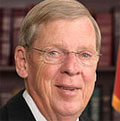
U.S. Senator Johnny Isakson
“My diagnosis has not impacted my ability to represent the state of Georgia in the U.S. Senate,” Isakson said in a June 10 statement. “I am busier and have more responsibility today than ever before in my political career, and I couldn’t be happier about that.”
“I am eager to take my record of results to the voters of Georgia as I run for re-election in 2016.”
Isakson, 70, who was first elected to the Senate in 2004, said he was diagnosed with Parkinson’s disease, a progressive and potentially debilitating neurological disorder, in 2013. He said he is still in the early stages of the disease “and my main symptoms are the stiffness in my left arm and a slowed, shuffling gait.”
Isakson’s office released a statement from his Georgia-based neurologist, Dr. Thomas Holmes, saying “I believe he is fully capable of continuing to perform his duties as a U.S. senator, and I believe he is fully capable of running for re-election and serving for another term.”
Prior to disclosure of his diagnosis, Isakson was considered a prohibitive favorite for re-election in 2016. Georgia trends strongly Republican in statewide races, and a May poll put Isakson’s approval rating at a whopping 71 percent among state GOP voters.
In his statement, Isakson said he “wrestled” with whether to disclose his illness publicly.
“In the end, I decided I should handle my personal health challenge with the same transparency that I have championed throughout my career,” he said.
Isakson came to the Senate after a long career in the Georgia legislature, where he rose to the position of House minority leader.
After failed campaigns for the Peach State’s governorship in 1990 and the U.S. Senate in 1996, he was elected to the U.S. House in 1999, replacing former House Speaker Newt Gingrich after Gingrich unexpectedly resigned. He rose to the Senate after Democrat Zell Miller decided to retire in 2004.
Isakson is chairman of two Senate committees, Ethics and Veterans Affairs.
 Chicken Fried Politics