
Home » Posts tagged 'Lamar Alexander' (Page 2)
Tag Archives: Lamar Alexander

Tennessee Governor Bill Haslam won’t run for U.S. Senate; U.S. Rep. Marsha Blackburn is in
Haslam’s decision portends wide open, crowded GOP primary race
♦By Rich Shumate, ChickenFriedPolitics.com editor
 NASHVILLE (CNN) — Outgoing Gov. Bill Haslam has decided not to seek Tennessee’s open U.S. Senate seat in 2018, which means the chase for the GOP nomination will likely be fought out among a crowded slate of candidates without his statewide electoral experience.
As Haslam announced he wouldn’t run, a veteran member of the Volunteer State’s U.S. House delegation, Marsha Blackburn from Brentwood, announced that she was would seek the Republican nomination for the seat being vacated after two terms by the retiring U.S. Senator Bob Corker.

U.S. Rep. Masha Blackburn, R-Tennessee
In her announcement video, Blackburn — describing herself as a “hardcore card-carrying Tennessee conservative” with a gun in her purse — offered a full-throated blast at sitting senators in her own party.
“The fact that our majority in the U.S. Senate can’t overturn Obamacare, or will not overturn Obamacare, it’s a disgrace,” she said. “Too many Senate Republicans act like Democrats or worse, and that’s what we have to change.”
Blackburn, 65, was first elected in 2002 to represent Tennessee’s 7th District, which takes in Nashville’s southern suburbs and the west-central part of the state. She served on President Trump’s transition team after his election in 2016.
After Corker announced his retirement on September 26, the attention in Tennessee political circles turned to Haslam, who is term-limited in 2016 but retains strong approval ratings after eight years in office. The governor is also a billionaire, thanks to his family’s truck stop business, which would have given him considerable personal financial resources to bring to a Senate race.

Tennessee Governor Bill Haslam
But announcing his decision not to run on Twitter, Haslam said a Senate run “would be a distraction” during his last 15 months as governor.
“I want to remain completely focused on my job,” he said. “At the end of my term, I will have been in public office for 15 years. I feel like I can be most helpful in my next service as a private citizen.”
Haslam, 59, was mayor of Knoxville before being elected governor in 2010. He was re-elected in 2014 with 70 percent of the vote.
Corker’s departure creates a wide open field on the Republican side that is likely to become a battle between the party’s establishment and populist factions. Among those considering the race are former State Rep. Joe Carr, who waged an unsuccessful attempt to oust U.S. Senator Lamar Alexander in 2014, and State Senator Mark Green, whom Trump nominated as Secretary of the Army earlier this year.
Green later withdrew his nomination after controversy arose over his past derogatory statements about transgendered people and Muslims.
Blackburn is so far the only member of the House delegation to jump into the Senate race, although former U.S. Rep. Stephen Fincher, who left the House in 2017 after serving three terms, is considering a run.
The only Democrat in the race so far is James Mackler, a Nashville attorney and Iraq war veteran, although Chattanooga Mayor Andy Berke may also be considering a run. Former Gov. Phil Bredesen, the last Democrat to win a statewide race in Tennessee back in 2006, has bowed out.
A Democrat has not won a Senate race in the Volunteer State since 1990, when Al Gore was re-elected. But the unexpected opening created by Corker’s retirement creates a vacancy that could help Democrats as they try to claw their way back into the Senate majority.
Six Southern states will select Senators in 2018, and incumbents are expected to run in all but Tennessee — Texas, Mississippi, Florida, Virginia, and West Virginia. The seats in Florida, Virginia, and West Virginia are held by Democrats; Texas and Mississippi are held by Republicans.
Tennessee U.S. Senator Bob Corker won’t seek re-election in 2018
Departure of former Chattanooga mayor sets off scramble for suddenly vacant Senate seat
♦By Rich Shumate, ChickenFriedPolitics.com editor
NASHVILLE (CFP) — U.S. Senator Bob Corker of Tennessee has announced that he won’t seek re-election to a third term in 2018, setting off what’s likely to be a high-octane battle between establishment and populist Republicans vying to succeed him, along with providing a possible opening for Democrats.

U.S. Senator Bob Corker
“When I ran for the Senate in 2006, I told people that I couldn’t imagine serving for more than two terms,” Corker said in a statement announcing his retirement. “Understandably, as we have gained influence, that decision has become more difficult. But I have always been drawn to the citizen legislator model, and while I realize it is not for everyone, I believe with the kind of service I provide, it is the right one for me.”
In his statement, Corker also made this oblique reference that will likely set off much rumination over what he meant: “The most important public service I have to offer our country could well occur over the next 15 months, and I want to be able to do that as thoughtfully and independently as I did the first 10 years and nine months of my Senate career.”
Corker, 65, served four years as mayor of Chattanooga before being elected to the Senate in 2006 to replace the retiring Bill Frist, after a hard-fought race with Democratic U.S. Rep. Harold Ford, Jr. He was re-elected in 2012 with 65 percent of the vote, and became chairman of the Senate Foreign Relations Committee in 2015.
Had he sought re-election, Corker would have been the prohibitive favorite in 2018, but he would also have faced a primary challenge from the populist wing of the GOP, whose activists are expected to target a number of Senators in the Republican leadership in 2018.
Corker made headlines in August when he told a local television station in Chattanooga that President Trump “has not yet been able to demonstrate the stability nor some of the competence that he needs to demonstrate in order to be successful.”
Trump responded with a Tweet: “Strange statement by Bob Corker considering that he is constantly asking me whether or not he should run again in ’18. Tennessee not happy!”
Corker’s departure creates a wide open field on the Republican side that is likely to become a battle between the party’s establishment and populist factions. Among those considering the race are former State Rep. Joe Carr, who waged an unsuccessful attempt to oust U.S. Senator Lamar Alexander in 2014, and State Senator Mark Green, whom Trump nominated as Secretary of the Army earlier this year.
Green later withdrew his nomination after controversy arose over his past derogatory statements about transgendered people and Muslims.
Among the establishment Republicans being mentioned are U.S. Rep. Marsha Blackburn, from Williamson County near Nashville, and outgoing Gov. Bill Haslam from Knoxville, who is term limited in the governorship in 2018.
The only Democrat in the race so far is James Mackler, a Nashville attorney and Iraq war veteran. Former Gov. Phil Bredesen, the last Democrat to win a statewide race in Tennessee back in 2006, has said he does not plan to run.
A Democrat has not won a Senate race in the Volunteer State since 1990, when Al Gore was re-elected. But the unexpected opening created by Corker’s retirement creates a vacancy that could help Democrats as they try to claw their way back into the Senate majority.
Six Southern states will select Senators in 2018, and incumbents are expected to run in all but Tennesse — Texas, Mississippi, Florida, Virginia, and West Virginia. The seats in Florida, Virginia, and West Virginia are held by Democrats; Texas and Mississippi are held by Republicans.
Analysis: Midterms a show of woe for Southern Democrats
GOP has a particularly strong showing in the upper South, where Democrats have recently been competitive
♦By Rich Shumate, Chickenfriedpolitics.com editor

(CFP) — One look at a color-coded map of midterm election results in any Southern state tells the story – there’s a tsunami of red and a shrinking pool of blue.
Take Texas, for example, with its 254 counties. Republican U.S. Senator John Cornyn carried 236 of them; the Republican candidate for governor, Attorney General Greg Abbott, carried 235. The only blue is found in Dallas, El Paso, Austin and along the Mexican border.
But that’s still more blue than in Oklahoma, where both Republican U.S. Senate candidates swept all 77 counties, and in West Virginia, where GOP Senate candidate Shelley Moore Capito swept all 55, despite the fact that Democrats have a 350,000-person lead in voter registration.
A deeper look at the numbers from the midterm elections shows just how far Democrats have fallen from the halcyon days when they had an iron grip on the solid South. They’re not just losing; lately, they’re not even competitive.
And perhaps even more troubling for Democrats is the fact that the dam seems to have burst in states in the upper South, where the party had been holding its own at the state level.
This year, 13 of 14 Southern states — all but Florida — had a U.S. Senate election, and two states — Oklahoma and South Carolina — had two. Setting aside Louisiana, which is headed to a runoff, and Alabama, which Democrats didn’t even bother to contest, GOP candidates won by an average of nearly 21 points.
Democrats couldn’t crack 30 percent in either Oklahoma race. They failed to crack 40 percent in six others. In fact, Republicans won by double digits in 10 races. Only Virginia, Georgia and North Carolina were close, with the GOP taking the latter two.
Things were just about as bad in races for governor, where the GOP margin of victory was about 18 percent. Republicans won by double digits in six of the eight governor’s races. Only Florida and Georgia were even remotely close.
The news was particularly bad for Democrats in three upper South states that were politically competitive a decade ago – West Virginia, Arkansas and Tennessee.
In West Virginia, Democrats not only lost the U.S. Senate race, but they lost all three U.S. House seats, and Republicans took control of both houses of the state legislature for the first time since 1931.
With Democratic U.S. Senator Mark Pryor’s loss, Arkansas will have an all-Republican congressional delegation for the first time since Reconstruction. Heading into the election, Democrats held five out of the seven statewide constitutional officers. In the midterm, they lost all seven.
Tennessee used to be split between Republicans in the east and Democrats in the west. Now, the GOP is winning everywhere, holding seven of the state’s nine U.S. House seats. Both Alexander and Governor Bill Haslam, re-elected with 71 percent of the vote, carried Shelby County, which includes the Democratic bastion of Memphis.
Increasingly, Democrats seem to be doing better in the deep South, where they can rely on the support of black voters, than in the upper South, where black populations are smaller.
For example, Republican U.S. Senator Lindsey Graham of South Carolina, despite being a long-time incumbent in a very red state, won by a smaller margin than did Republican Tom Cotton, who beat Pryor like a rug in Arkansas.
Some might attribute Graham’s narrower margin to his Tea Party problems. But Alexander — who faced a similar Tea Party dynamic — managed to win by 30 points in Tennessee.
What is clear from the midterms is that despite recent gains at the presidential level in states such as North Carolina and Virginia, Democrats are becoming less competitive across the region, and the South is becoming more monolithically red.
Indeed, the midterm results support the argument that in most of the South, the two-party system is becoming a relic of the past.
Analysis: Southern Senate races expose fault line that GOP must correct
Incumbents’ weak victories show bitter primaries have become the new normal
♦By Rich Shumate, Chickenfriedpolitics.com editor
 Tea Party-backed insurgents struck out in their quest to unseat sitting Southern Republican U.S. senators this year, with a final tally of 0-for-5.
 But while those results are arguably a significant victory for the powers that be in the GOP, a closer look at the results shows a deep and potentially problematic fault line running right through the party. And the rancor and contention generated by the establishment’s aggressive push back against the Tea Party has made that fault line wider.
Historically, sitting senators rarely face much of a battle for renomination. If they have any opposition at all, it is usually dispatched with an easy majority of 70 or 80 percent. While that is still largely true for Democrats, for Republicans — in the South and elsewhere — bitter primary contests seem to have become the new normal. True, all the incumbents survived this year. But they didn’t exactly set the world on fire.
In Tennessee, Lamar Alexander — a well-respected former Cabinet secretary and university president who has won statewide office four times — could only manage a meager 50 percent, while in Mississippi, Thad Cochran was dragged into a runoff that he only survived with the help of Democrats.
John Cornyn in Texas and Lindsey Graham in South Carolina did a bit better (59 percent and 56 percent, respectively), but they should be thankful that their opposition was as weak as it was. If bigger names had gotten into either of these races, the outcome might have been very different.
The Southern GOP senator who performed the best was Senate Minority Leader Mitch McConnell, who took 60 percent in his race, despite an avalanche of outside help given to his opponent, Matt Bevin. But that brutish primary did nothing to help McConnell’s prospects in a tough race this fall with Democratic Secretary of State Alison Ludergan Grimes.
What these races, collectively, show is that 40 percent or more of the Republican primary electorate is unhappy enough with their own elected leaders that they are prepared to vote them out — even if that means nominating little known candidates who, in many cases, seem less than fit to sit in the Senate.
For the time being, the GOP might be able to ignore this fault line because there is little indication, except perhaps in Kentucky, that Democrats will be able to take advantage of the Republican schism to flip seats in November.
But if Republicans can’t figure out a way to avoid this internal warfare, Democrats are eventually going to figure out a way to use it to their advantage. And that presents a real and present danger to the political hegemony that the GOP has built in the South.
Yes, 2014 was a victory for the establishment. But it was also a danger-Will-Robinson moment. And the bitterness left over from these primary fights has probably made the divisions within the party even worse, particularly in Mississippi.
Few of those Tea Party Republicans who feel scorned by their party are going to vote Democratic in November, but more than a few may stay home. Is this hemorrhage from the base likely to imperil these sitting Southern senators? No, except maybe for McConnell. But if the establishment can’t find a way to bridge this divide, there is certainly potential for trouble ahead.
Tennessee primary: Lamar Alexander wins, Scott DesJarlais in cliffhanger
Alexander beats back Tea Party U.S. Senate challenger; DesJarlais battles to keep U.S. House seat amid messy personal scandal
♦By Rich Shumate, Chickenfriedpolitics.com editor
NASHVILLE (CFP) — U.S. Senator Lamar Alexander has taken a major step towards securing a third term by easily beating back a Tea Party-inspired GOP primary challenge from State Rep. Joe Carr.
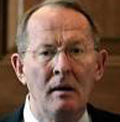
U.S. Senator Lamar Alexander
Alexander took 50 percent of the vote in the August 7 primary, where he faced Carr and five other challengers. Carr, who had the support of Tea Party and outside conservative groups that had targeted Alexander for defeat, took 41 percent.
Alexander was one of five sitting Southern Republican senators targeted in primaries this year. All five survived.
In a closely-fought Democratic primary, Gordon Ball, a former federal prosecutor, narrowly defeated Terry Adams, a Knoxville attorney, by less than 2,000 votes. Ball will face Alexander in November.
After a fractious primary in which half of the voters from his own party voted for someone else, Alexander, 74, sounded a note of conciliation in his victory speech at a Nashville pizza parlor, reaching out not only to his GOP opponents but also to Democrats and independents.
“After we make our speeches, we’re going to have to roll up our sleeves, get together, work with each other and get something done,” he said. “That’s the Tennessee way. That’s the American way.”
Meanwhile, in Tennessee’s 4th District, with some absentee and provisional ballots still to be counted, incumbent Republican U.S. Rep. Scott DesJarlais held a lead of just 35 votes over his primary challenger, State Senator Jim Tracy, amid a messy personal scandal that took a toll on DesJarlais’s popularity.
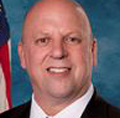
U.S. Rep. Scott DesJarlais
Given the district’s strong GOP tendencies, the GOP nominee will be favored for re-election in November over Democrat Lenda Sherrell, a retired accountant from Monteagle.
DesJarlais, 49, was facing voters for the first time since lurid details emerged from the case file of his bitter 2001 divorce from his first wife. In it, the congressman admitted having a string of extra-martial affairs and — perhaps even more damaging for an avowed right-to-life lawmaker — encouraging his then-wife to have two abortions.
DesJarlais (pronounced Dez-yar-lay), a medical doctor, also admitted having relationships with two female patients, which prompted the Tennessee State Board of Medical Examiners to reprimand him for unprofessional conduct and fine him $500.
Details about DesJarlais’s divorce became an issue in his contentious 2012 re-election campaign, which he won with just 56 percent of the vote. However, he successfully fought to prevent release of the full transcript of the case file until after the election.
 Chicken Fried Politics